
Headlines
2020: What a Year!


By Eric Elezuo
When many had thought that the year 2020 had done the worse it could, they were jolted with the announcement, on Christmas Day, of the death of veteran Nollywood producer, Chico Ejiro, who was also known as Mr Prolific. Even as the celebration of the birth of Jesus Christ was underway, not a few found the strength to mutter the expression, ‘what a year’.
His death was coming on the heels of the loss of billionaire business titan, Chief Harry Akande and Polo buff, Dapo Ojora. Both were just committed to mother earth. And not forgetting the Publisher of Leadership Newspapers, Sam Ndah Isaiah, who died at 58. He will be buried on December 28.
Without mincing words, the world has not seen a year so devastating, so hazardous and uncompromising as the dying Year 2020. It is not like hazardous events, and deaths were not recorded in other years, but it is believed that the trend of 2020 is quite different from all other years. From the reported missing star, which didn’t explode into supernovas before disappearing into the ‘black hole’ to the mysterious drones noticed in Colorado and Nebraska, and of a particular monkey snatching COVID-19 samples from three patients and escaping to a tree. There was also the accidental invasion of Czech Republic by Poland and the spotted asteroid seen heading to the earth among other inanities noticed in the folding year.
The year 2020 showed that it held little or no promises when on December 9, 2019, the dreaded Coronavirus, which was later renamed COVID-19, was discovered in the Chinese town of Wuhan. What started like a child’s play was later to metamorphosed into a full blown pandemic, paralysing the world’s economy, ruin social and entertainment and religious lives of the people as well as creating a distance between one and another.
According to Science Direct, “the coronavirus disease 19 (COVID-19) is a highly transmittable and pathogenic viral infection caused by severe acute respiratory syndrome coronavirus 2 (SARS-CoV-2), which emerged in Wuhan, China and spread around the world. Genomic analysis revealed that SARS-CoV-2 is phylogenetically related to severe acute respiratory syndrome-like (SARS-like) bat viruses, therefore bats could be the possible primary reservoir.”
By January 2020, the virus had eaten deep into the fabrics of the society, causing nations to systematically declare unspoken sanctions against one another as international travels became totally restricted. No one wanted the other into his territorial space. Apart from the war declared on humanity by the virus, there was also a silent war declared by man against man; do not trespass into my territory. There were dire consequences for defaulters. The world was on lockdown!
While COVID-19 was warming up for its devastating blow, the world was hit with one of the very first of its series of blows when on January 26, 2020, a retired Los Angeles Lakers star, Kobe Bryant, 41, and his daughter Gianna, 13, were killed in a helicopter crash near Calabasas, Calif.
Bryant was among the passengers traveling onboard the helicopter. Nine people died in the crash, including the pilot. The other victims of the crash included John Altobelli, a longtime baseball coach at Orange Coast College, a junior college in Costa Mesa. Calif., as well as Altobelli’s wife, Keri, and daughter Alyssa.
On May 25, 2020, George Floyd, a 46-year-old black man, was killed in Minneapolis, Minnesota, while being arrested for allegedly using a counterfeit bill. During the arrest Derek Chauvin, a white police officer with the Minneapolis Police Department, knelt on Floyd’s neck for about nine and a half minutes after he was handcuffed and lying face down. Two police officers, J. Alexander Kueng and Thomas Lane, assisted Chauvin in restraining Floyd, while another officer, Tou Thao, prevented bystanders from interfering with the arrest and intervening as events unfolded. The death of Floyd sparked a series of protest across the world with the tag, #blacklivesmatter. It further exposed the fragile world to the coronavirus, which at this time was claiming thousands of lives across board with Italy and the United States of America accounting for highest number of death toll, running into hundreds of thousands.
In Nigeria, the matter of COVID-19 assumed greater seriousness when on April, one of the supposedly strong men of the Muhammadu Buhari’s administration, who was the Chief of Staff, Mallam Abba Kyari died from complications from the disease. This was barely two months after the first case was reported in Nigerian, on February 26, 2020, of an Italian expatriate, who inadvertently recovered from the ailment.
Nigeria was not the only country that lost its CoS, as Guinea also recorded the death of Sékou Kourouma. He was the second high-profile death from COVID-19 within a 24-hour period after that of elections body head, Amadou Salif Kebe.
From then onwards, there was no looking back as the ailment claimed personality after personality, not to talk of ‘ordinary’ people who did not get a mention as a result of their status.
The peace of entertainment, religious and social circle of Nigeria was shattered on June 14, when the death of energetic wife of Founder, Trinity House, Church, Ibidunni Ighadalo, rented the air. She was one month shy of her 40th birthday.
On June 25, another Nigerian political heavyweight, Senator Abiola Ajimobi, bowed to the disease. He was 70 years. Abiola was a two term governor of Oyo State. A few days later, an accomplished industrialist who was also the Parakoyi of Ibadanland and the Chairman of Madandola Group, Chief Bode Akindele, also died. Shortly afterwards, Senator Kashamu Buruji followed suit.
In July, another heavyweight of the Buhari administration, Isah Funtua, joined the fray of fallen heroes. He was a notable force in Nigeria’s political terrain.
It is worthy of note that almost all the state governors had contracted the virus at one time or another. Some of them are Governor of Oyo, Seyi Makinde, Kaduna State’s Nasir El-Rufai and Bala Mohammed of Bauchi State, Others are Governor Okezie Ikpeazu of Abia State, Governor Babajide Sanwo-Olu of Lagos State among others.
Elsewhere, in July, Naya Rivera bowed out, just as the US Supreme Court Justice, Ruth Bader Ginsburg died at age 87. It was a moment of emotion as beloved Black Panther star Chadwick Boseman died at age 43, and Jeopardy! host, Alex Trebek died at age 80. These were men and women regarded as movers and shakers of world’s politics and policy makers.
The disease was no respecter of persons. It claimed the heavyweight and paperweight, the young, the not very young as well as the aged in its sweeping movement.
As at April, 2020, the virus had cleared over 1000 African personalities from former presidents, prime ministers and lawmakers, to entertainment icons and top sportsmen. The agony of the of the deaths was that most of these greats could not get the send-off they would have been accorded in “normal times.”
Dr. Anastasie Akamba, head of a district hospital in Yaounde, Cameroon, died from COVID-19. In the same vein, 56-year-old South African Queen Noloyiso Sandile, widow of the late King Maxhobha Sandile, passed away on 8 July 2020 following a short illness.
Ghana was not spared as it lost prominent medical experts in one fell swoop including an Orthopaedic Surgeon, a General Surgeon, a paediatrician and a Consultant Physician/Academic.
The casualties were Professor Jacob Plange-Rhule, Dr. Harry Boateng, a Specialist Paediatrician and Medical Superintendent at the Kwadaso SDA Hospital. A retired Orthopaedic Surgeon, Dr. Emmanuel Twagirayesu as well as Dr. Richard Kisser, a Consultant Surgeon with the Trust Hospital in the capital Accra.
On the political scene, Anthony K. K Sam, the Mayor of the Western Region’s oil-rich twin city of Sekondi-Takoradi had succumbed to the disease on Friday, June 12 before enigmatic leader, John Jerry Rawlings fell to the virus as well days after giving his mother a befitting burial.
Across Africa, and the world at large, the story remained the same; a tale of deaths and untold crises.
In Nigeria, while the government was relaxing the third phase of lockdown, the mother of all protests erupted; the #EndSARS Protests. These protests swept through the length and breath of the country, and leaving in its wake a tale of sorrow, tears and blood. Two weeks after the the protests kicked off, the Nigerian Army were accused of opening fire on armless protesting civilians at the Lekki Tollgate. Yet to be confirmed reports said a lot of the protesters were gunned down. The incident has since come to be known as Lekki Massacre.
The aftermath of the reported shooting led to the looting and massive destruction of government property and public utilities, leading to more deaths of police personnel and civilians. At the end, it was estimated that over a trillion naira will be required to rebuild damaged infrastructure in Lagos alone, just as the Inspector General of Police, Mohammed Adamu, announced that 37 police officers were murdered in the ensuing fiasco.
The long list of destroyed public and private property in Lagos were named as Ajeromi Ifelodun Local Government secretariat; Palace of the Oba of Lagos; Lagos High Court, Igbosere; Oyingbo BRT terminus; Ojodu Berger BRT terminus; Vehicle Inspection Office, Ojodu Berger; Lagos State Public Works Corporation, Ojodu Berger; Lagos City Hall and Circle Mall, Lekki; numerous luxury shops in Surulere, The Nation Newspaper, TVC and Shoprite Lekki.
The #EndSARS protests resulted in another round of compulsory lockdown, and invariably another phase of economic lockdown. It was not therefore a surprise when the Buhari-led government announced another recession, the second in less than five years, and the worst since 1987. The country is yet to come out of the recession.
The year 2020 did not spare the sports industry as it claimed the arguably greatest soccer player ever, Diego Armando Maradona. The great Argentine star, who was known for his Hand of God goal against England in the 1986 Mexico World Cup, succumbed to heart failure. While the world was mourning his death, another world cup winning star Paulo Rossi was snatched by the cold hands of death. As if that wasn’t enough, Papa Diop of Senegal, who dazzled the world during the Korea/Japan 2002 World Cup also passed on.
On the home front, the likes of ex-Super Eagles defender, Ajibade Babalade died a day after taking ill. He was 48. John Felagha, who manned the goalpost for the U17 and U23 teams also died just as Nasarawa United defender, Chineme Martins slumped and died during a match in Lafia. Basketball referee, Razak Okedeyi, 16-year-old basketball hopeful, Deborah Onu and Nigeria-American basketball player, Michael Ojo, among many others also kissed the dust.
On the good side, Napoli announced the signing of Nigerian striker Victor Osimhen from Ligue 1 side Lille on a five-year deal. According to French sports newspaper L’Equipe, the deal is worth more than $96m (81.3m euros) making him the most expensive African player of all time.
In like manner, British-Nigerian boxer, Anthony Joshua, knocked out Bulgarian boxer, Kubrat Pulev, in the ninth round of their world title bout at the SSE Arena, Wembley, to retain his WBA (Super), IBF, WBO, and IBO heavyweight titles.
In America however, the citizens succeeded in upturning the presidency of Donald Trump, handing it over to Democratic candidate, Joe Biden after an intense electioneering and equally intense vote counting which lasted for days; a novel occurrence in the history of America.
The intrigues of the year notwithstanding, it can also be noted that Nigeria’s Adewunmi Adesina was reelected as President of the African Development Bank (AfDB) after intrigues initiated by the United States to throw out the Nigerian hopeful. Again, Nigeria’s former Minister of Finance, Mrs Ngozi Okonjo-Iweala, has received a unanimous endorsement to become the Director-General of the World Trade Organisation (WTO).
It will not be forgotten in a hurry that in 2020, banditry, unchecked Fulani herdsmen raids and Boko Haram insurgency took a new dimension. While the COVID-19 disease was claiming as many as it could, the insurgents were doing a yeoman’s job at the corner, slaughtering innocents who survived the pandemic.
On November 28, a number not less than 40 rice farmers were slaughtered in their farms in Zabarmari village, Borno State, by Boko Haram insurgents. They were systematically beheaded. On December 11, about 344 students of Government Science Secondary School, an all-boys boarding school in the rural town of Kankara in Katsina State, were abducted in the middle of the night by gunmen. They were however, retrieved a week later, in an operation the Katsina government claimed was purely based on negotiation. Many Nigerians felt there was more to the abduction and rescue saga.
This is a year that was ushered in with the best of hopes and pomp, but while many are short of words to describe 2020, some can only say, dis year sef.
The year 2020 has proved to be one year many won’t subscribe to its repeating. They said it was tense. The world wishes a better 2021!
TheBoss


The Confederation of African Football (CAF) has confirmed that the 2026 edition of its annual awards ceremony will take place in Lagos, Nigeria, on December 7.
The decision was reached at a virtual meeting of the CAF Executive Committee (EXCO), chaired by the organisation’s president, Patrice Motsepe, on Friday, 2 October.
The meeting also approved the CAF Competitions Calendar for 2026–2030, alongside amendments to the regulations governing the continent’s interclub competitions.
Nigeria will host another major CAF event, the organisation’s Ordinary General Assembly, on 21 November.
The 2026 CAF Awards will bring together leading footballers, coaches, clubs and administrators to celebrate outstanding performances in African football.
The ceremony recognises achievements across men’s and women’s football, including the Player of the Year, Coach of the Year, Goalkeeper of the Year, Young Player of the Year and Club of the Year categories.
Nigeria has enjoyed considerable success at the awards, particularly in the men’s and women’s Player of the Year categories.
Ademola Lookman won the men’s award in 2024, following Victor Osimhen’s triumph in 2023, making them the first Nigerian pair to secure consecutive victories in the category since Nwankwo Kanu and Victor Ikpeba achieved the feat in 1996 and 1997, respectively.
The 2024 ceremony, held in Marrakech, Morocco, also saw Nigeria’s Super Falcons named Women’s National Team of the Year, while goalkeeper Chiamaka Nnadozie received the Women’s Goalkeeper of the Year award.
At the 2025 edition held in Rabat, Morocco dominated the ceremony during a historic night in Rabat, with Achraf Hakimi (Morocco/Paris Saint-Germain) and Ghizlane Chebbak (Morocco/Al Hilal) winning the Men’s and Women’s Player of the Year awards, respectively.
Yassine Bounou (Morocco/Al Hilal) and Nigeria’s Chiamaka Nnadozie (Brighton & Hove Albion) claimed the Men’s and Women’s Goalkeeper of the Year honours, and Othmane Maamma (Morocco/Watford) and Doha El Madani (Morocco/AS FAR) were named Men’s and Women’s Young Players of the Year, respectively.
Beyond the awards announcement, the EXCO approved significant changes to the regulations governing the CAF Champions League and CAF Confederation Cup.
Under the revised rules, players will be permitted to represent more than one club during a single CAF interclub season, a change that could provide clubs with greater flexibility in managing their squads.
The committee also approved an increase in the number of players clubs can register, setting the maximum at 40 players at any point during the season.
Clubs will additionally be allowed to replace four players during the final registration window, provided those players have not featured in any CAF interclub match during the season.
Another significant amendment concerns disciplinary proceedings. All disciplinary matters will now be referred to the CAF Disciplinary Board, removing that responsibility from the Interclub Committee.
The changes are expected to influence how clubs approach player recruitment, registration and squad management in continental competitions.
The EXCO also approved the dates for the 2026 CAF Women’s Champions League, with the final tournament scheduled to run from 1 to 15 November.
The competition, which brings together the leading women’s club sides from across Africa, has become a major platform for the development and visibility of women’s football on the continent.
Nigeria’s Edo Queen’s participation in this year’s competition is presently being challenged following the annulment of their victory at the WAFU B tournament after a protest by Ampem Dakoa.
In another decision, CAF confirmed that Senegal will host the 2026 Beach Soccer Africa Cup of Nations from 28 November to 6 December.
The West African country, which won the previous edition, will host the tournament as it seeks to defend its continental title.

The African Democratic Congress Presidential Campaign Council (ADC PCC) has faulted the claim by Vice President Kashim Shettima that President Bola Tinubu saved Nigeria from economic collapse.
The council said the current administration cannot disown the record of the All Progressives Congress (APC) government under former President Muhammadu Buhari.
Reacting through the Director of Media and Publicity of ADC PCC, Kola Ologbondiyan, it said if Nigeria was heading towards economic collapse before Tinubu assumed office, as claimed by the Vice President, then APC must accept responsibility, having controlled Federal government for eight years under Buhari.
He recalled that Tinubu had said his government would build on Buhari’s legacy.
“Nigerians know APC. It is the APC, on whose platform President Tinubu is seeking second term,” he said.
Ologbondiyan said administration had not delivered on expectations in areas such as roads, electricity, cost of living and public institutions.
He said the immediate concern of Nigerians is access to affordable food and basic necessities.
“President Tinubu has not saved Nigeria from collapse; he has pushed country deeper into economic challenges marked by hunger, inflation and high cost of living,” he said.
He said Nigerians were already experiencing economic hardship, not merely heading towards it.
He also questioned Shettima’s promise to deploy 10,600 electric tricycles, 300 buses and electric taxis under e-logistics programme in coming weeks, and reminded Vice President of his earlier promise that transportation costs would come down by October 1, 2026.
ADC PCC urged APC to acknowledge challenges confronting country and focus on solutions.
Council assured Nigerians that ADC remains committed to providing credible political alternative.
It called on Nigerians to support quest for government that would make life more affordable.
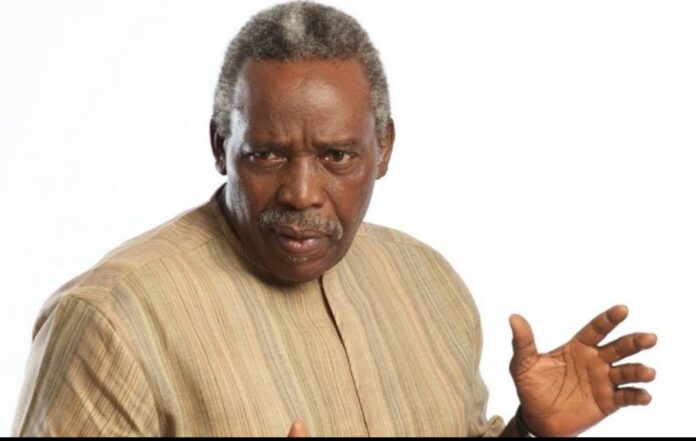
Nollywood practitioners, colleagues, family members and associates of late veteran actor, Olu Jacobs, on Wednesday night, celebrated his life and contributions to the entertainment industry.
The event, which held at Glover Memorial Hall, Lagos Island, attracted prominent actors, filmmakers and other stakeholders in the creative industry who gathered to honour the late thespian whose career spanned more than five decades.
Celebrities at the event reflected on his professionalism, humility, mentorship and immense influence on generations of actors.
Richard Mofe-Damijo described Jacobs as a father figure whose influence helped shape the careers of many actors, including himself.
He said Jacobs’ decision to return to Nigeria and invest his talent in the local industry helped create opportunities for younger performers.
“Uncle Olu was more than a colleague; he was a father figure to many of us.”
“His professionalism, discipline and commitment to excellence set a standard we continue to aspire to.”
“His legacy is not just in the films he made, but in the people he inspired and the industry he helped build.”
Sola Sobowale described Jacobs as a remarkable actor whose talent, kindness and humility made him a treasured figure in the industry.
She said his ability to command attention on screen was matched by his warmth and generosity off screen.
“Uncle Olu was a rare gift to Nigerian cinema, and we are blessed to have witnessed his greatness.”
“He carried himself with dignity, humility and a level of professionalism that every actor should learn from.”
“His legacy will continue to live through the stories he told and the generations he inspired.”
Segun Arinze described Jacobs as one of the defining figures of Nigerian acting, noting that his career provided a benchmark for aspiring performers.
He said the late actor’s contributions extended beyond his memorable performances to the standards he established for the profession.
“He was one of the people who showed us what it truly means to be an actor.”
“His dedication to his craft and his ability to bring every character to life were exceptional.”
“Olu Jacobs may have taken his final bow, but his influence on Nigerian entertainment will never fade.”
Fred Amata described Jacobs as an exceptional actor whose professionalism and dedication to the craft inspired generations.
“Uncle Olu was a master of his craft and he brought dignity and excellence to acting.
“His legacy will continue to inspire us.”
Jide Kosoko described Jacobs as a respected colleague whose contributions to Nollywood would remain unforgettable.
“He was a brother and a great professional and his impact on this industry cannot be overstated.
“We will forever cherish the memories and lessons he left behind.” he said.
Veteran actor, Adebayo Salami, popularly known as Oga Bello, described Jacobs as one of the pillars of Nigerian acting.
“Olu Jacobs was a great ambassador of our profession and he represented excellence, discipline and humility.
“His contributions to the industry will never be forgotten.” he said.
The late Oludotun Baiyewu Jacobs was born on July 11, 1942, in Abeokuta, Ogun State.
He trained at the Royal Academy of Dramatic Art (RADA), London, before building an international career in theatre, television and film.
He later returned to Nigeria, where he became one of the most respected figures in the country’s entertainment industry.
His distinguished career earned him several recognitions, including the national honour of Member of the Order of the Federal Republic (MFR), the Africa Movie Academy Award for Best Actor in a Leading Role and the Industry Merit Award at the Africa Magic Viewers’ Choice Awards.
Beyond his remarkable performances, Jacobs was celebrated for his contribution to the professionalisation of acting, mentorship of younger talents and promotion of Nigerian stories.
The Night of Tributes provided an opportunity for the industry to celebrate a man whose artistry, integrity and commitment to excellence helped shape Nigerian entertainment.
As colleagues and admirers remembered him, the gathering reaffirmed Jacobs’ enduring place in the history of Nigerian theatre and cinema.
The funeral service is scheduled for Friday, October 2, at This Present House, Lekki Phase 1, Lagos.
NAN


