
Headlines
AFCON 2025: CAS Suspends CAF Verdict

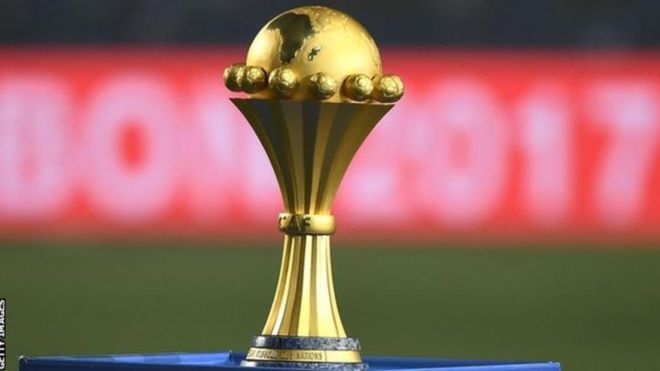
African football has been plunged into fresh uncertainty after the Court of Arbitration for Sport (CAS) provisionally suspended a controversial ruling that stripped Senegal of their Africa Cup of Nations (AFCON) title and awarded it to Morocco.
In an interim decision issued on Monday, CAS accepted Senegal’s appeal against the Confederation of African Football (CAF) Appeals Board and ordered a “freeze” on the implementation of its verdict.
The move effectively places the 2025 AFCON title in legal limbo pending a full hearing.
The dispute stems from a chaotic final played in January 2026, where the Teranga Lions of Senegal defeated the hosts, the Atlas Lions of Morocco, 1–0 after extra time. The match took a dramatic turn late on when a contentious penalty was awarded to Morocco.
Although the spot kick was missed, Senegal’s players briefly walked off the pitch in protest, prompting confusion before play eventually resumed, and the match was concluded. Weeks later, Morocco’s federation challenged the outcome, citing provisions within AFCON regulations relating to match forfeiture.
On March 17, CAF’s Appeals Board ruled in Morocco’s favour, declaring that Senegal’s walk-off constituted a breach severe enough to forfeit the match. The result was overturned to a 3–0 victory for Morocco, with Senegal stripped of the title.
Senegal swiftly condemned the decision as unjust and escalated the matter to CAS, arguing that the sanction was disproportionate and undermined the integrity of the on-field result.
CAS has now sided, at least temporarily, with Senegal’s request for urgent intervention.
By granting provisional measures, the tribunal signalled that enforcing CAF’s ruling before a full hearing could cause irreparable harm, particularly in a case involving the revocation of a major continental title.
The immediate consequence is that AFCON 2025 currently has no officially recognised champion. The trophy remains unassigned while legal proceedings continue.


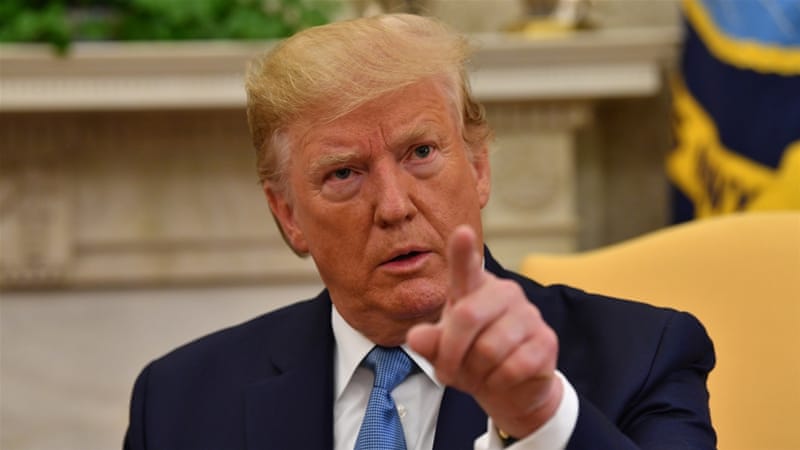
US President, Donald Trump, said on Tuesday that Iran gave him a “very big present” related to the Strait of Hormuz, boosting his confidence that he is talking to the right people in Tehran to end the war.
The cryptic announcement came a day after Trump unexpectedly postponed threatened attacks on Iran’s power plants and said Washington is in negotiations with unspecified figures in Iran.
Tehran has, however, denied being part of any talks to end the war, which is now in its fourth week and has disrupted global oil supplies passing through the strategic Hormuz Strait.
“They did something yesterday that was amazing actually. They gave us a present and the present arrived today. And it was a very big present worth a tremendous amount of money,” Trump told reporters in the Oval Office.
“That meant one thing to me — we’re dealing with the right people.”
Speaking at the swearing-in ceremony for new US Homeland Security Secretary Markwayne Mullin, Trump said the “gift” was “very significant”, adding that it was “oil and gas-related.”
Asked if it was related to his demand that Iran reopen the Strait of Hormuz to oil traffic, Trump replied: “Yeah, it was related to the flow and to the strait.”
The US president added that the “present” was not related to Iran’s nuclear program, but repeated his claim that the Iranian side “agreed they will never have a nuclear weapon.”
Trump has not yet revealed who the United States is negotiating with in Tehran, saying only on Monday as he postponed a threat to attack Iran’s energy sites by five days that it is a “top person.”
“We’re actually talking to the right people, and they want to make a deal so badly,” Trump said.
Former Iranian supreme leader Ali Khamenei was killed on the first day of the joint Israeli-US air campaign, and successor Mojtaba Khamenei has not been seen in public.
But Trump said that the killing of Khamenei senior and a host of other top Iranian officials meant “we have really regime change. The leaders are all very different with the ones that we started off with.”
US Vice President, JD Vance, Secretary of State Marco Rubio, global envoy Steve Witkoff and Trump’s son-in-law Jared Kushner were all involved in the Iranian talks, Trump said.
But he did not confirm reports that Witkoff and Kushner were headed to Pakistan for talks with Iran, with Vance possibly to follow afterward if the negotiations appeared serious.
Pakistani Prime Minister Shehbaz Sharif offered on Tuesday to act as a mediator to end the conflict.
He said he had spoken with Iranian President Masoud Pezeshkian, promising Islamabad’s help to bring peace to the region.
Trump meanwhile joked that Secretary of Defense Pete Hegseth “didn’t want it to be settled” because he wanted to keep striking Iranian targets.
“We see ourselves as part of this negotiation as well. We negotiate with bombs,” Hegseth said when he was called to the podium by Trump.
Agency Report
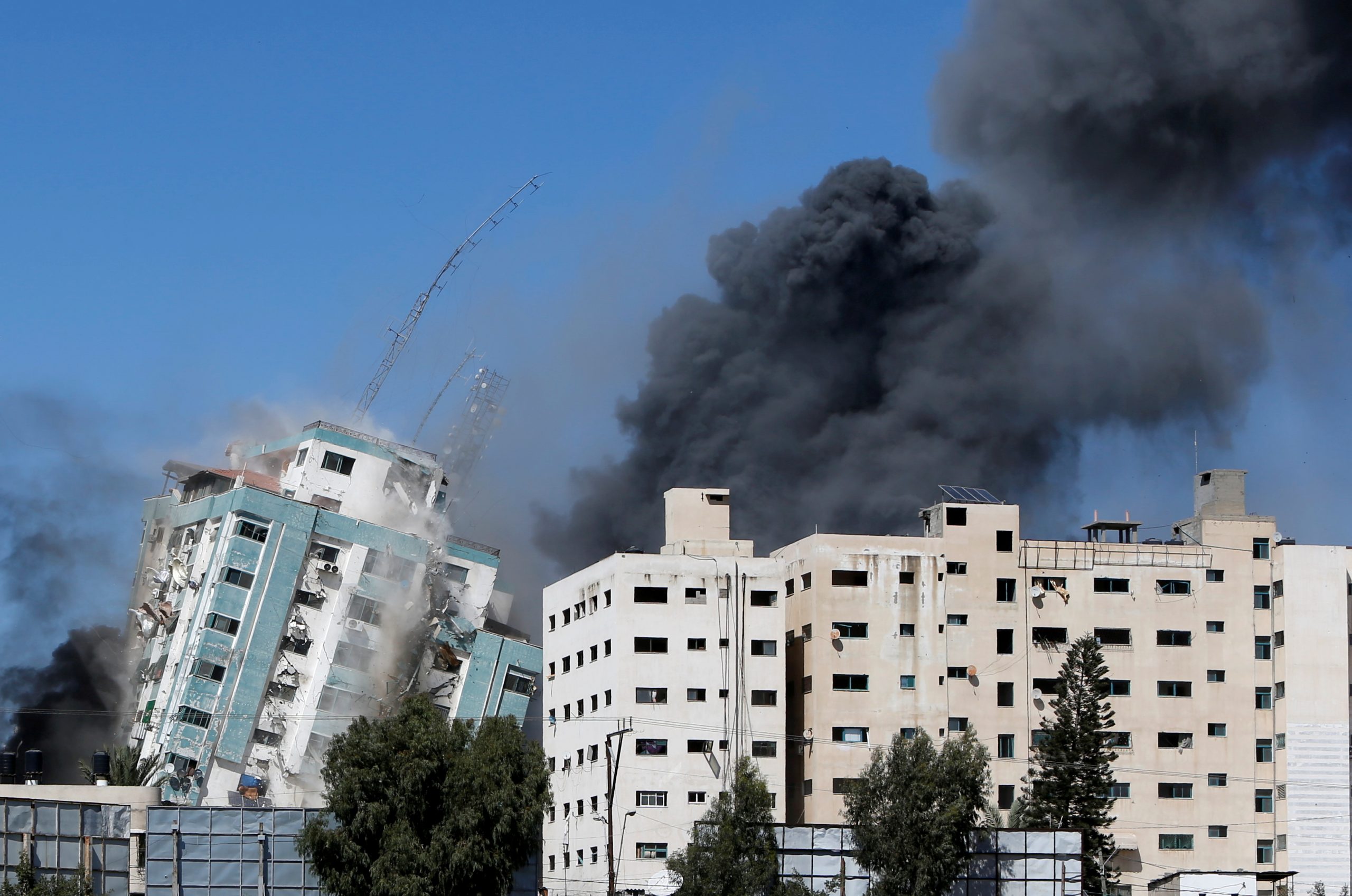
Iran, on Tuesday, fired a fresh broadside of missiles at Israel, causing damage and injuries in Tel Aviv, as uncertainty swirled over possible talks to end the three-week Middle East war.
AFP images showed rubble-strewn streets and the side of a building in Israel’s commercial hub in ruins, as first responders scrambled to assist at least four people lightly injured at four different locations.
Tel Aviv mayor, Ron Huldai, told reporters a “direct strike” had targeted a building in the upscale neighbourhood, as AFP video showed the facade of the three-storey block torn open.
According to several Israeli media outlets, police believe the damage was caused by a cluster munition missile equipped with three to four warheads, each carrying around 100 kilograms of explosives.
Iranian media reported US-Israeli warplanes had struck two gas facilities and a pipeline, hours after President Donald Trump stepped back from his threat to attack energy sites citing “very good” talks to end the war.
Trump said his administration was speaking with an unidentified “top person”, warning if talks failed in the next five days “we’ll just keep bombing our little hearts out”.
But Tehran’s parliamentary speaker, Mohammad Bagher Ghalibaf, reportedly involved in talks, said “no negotiations” were underway, insisting Trump was seeking “to manipulate the financial and oil markets.”
Stock markets soared and oil prices saw brief respite after Trump’s abrupt about-turn that came ahead of a deadline he had set to reopen the Strait of Hormuz shipping lane or see the US “obliterate” Iran’s power plants.
US media outlet – Axios – reported negotiators Steve Witkoff and Jared Kushner may meet an Iranian delegation for talks in Pakistan as soon as this week, with Vice President JD Vance possibly joining.
White House spokeswoman, Karoline Leavitt, did not deny the reports, saying “speculation about meetings should not be deemed as final until they are formally announced by the White House.”
Pakistan’s Prime Minister, Shehbaz Sharif, said on Monday he spoke with Iran’s President Masoud Pezeshkian, promising Islamabad’s help to bring peace to the region.
Iranian foreign ministry spokesman, Esmaeil Baqaei, said messages were received from “some friendly countries indicating a US request for negotiations aimed at ending the war”, but denied any such talks had taken place, Iran’s official IRNA agency reported.
Israeli Prime Minister, Benjamin Netanyahu, said he had spoken to Trump and acknowledged Washington thought a deal was possible, but vowed to continue striking Iran and Lebanon to protect Israel.
“Trump believes there is a chance to leverage the tremendous achievements of the IDF and the US military… in an agreement,” he said.
Israel kept up its bombardment on Beirut’s southern suburbs throughout the night, while a strike on Bshamoun, south of the capital, killed two people on Tuesday, according to Lebanon’s health ministry.
AFP images showed smoke billowing from gutted buildings in Beirut, as rescuers picked through the rubble and twisted metal.
Strikes also targeted several service stations linked to Iran-backed Hezbollah that Israel has vowed to dismantle.
Israel’s attacks in Lebanon have killed more than 1,000 people and displaced more than a million, according to Lebanon’s health ministry.
The war has killed at least 3,230 Iranians, including 1,406 civilians, according to the US-based Human Rights Activists News Agency. AFP cannot access strike sites nor independently verify tolls in Iran.
On Monday, Iran’s neighbours breathed a sigh of relief after Trump stepped back from his threat to target the country’s power infrastructure.
Tehran had vowed to deploy naval mines and strike power and water infrastructure across the region in retaliation, threatening to escalate an energy crisis of already historic proportions.
“Trump has been a master of sudden pivots and switches. So it’s sometimes hard to know if there is a strategy or if it’s just always improvisation,” said Garret Martin, a professor of international relations at American University in Washington.
Thousands of US Marines are headed to the Middle East, reinforcing America’s presence following weekend speculation Trump was mulling ground operations either to seize Iranian oil assets or to forcibly reopen the Strait of Hormuz.
Since the war erupted, Tehran has retaliated against US-Israeli attacks by throttling traffic through the Strait, a conduit for one-fifth of global crude, and by hitting Gulf energy sites and US embassies as well as targets in Israel.
International Energy Agency chief Fatih Birol warned if the war is protracted, daily oil losses would pave the way for a crisis worse than the combined impact of both 1970s oil shocks and Russia’s invasion of Ukraine.
Oil prices have been driven above $100 a barrel by the conflict, but they tumbled sharply after Trump’s announcements.
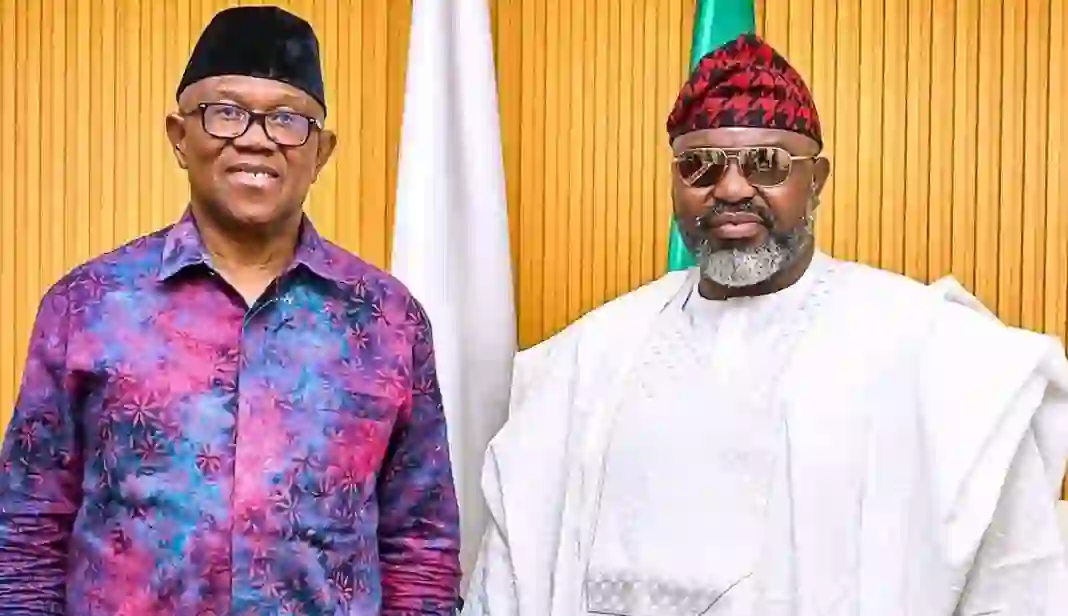
Former Anambra State Governor and ex-Labour Party presidential candidate, Peter Obi, has condemned the reported arrest of a prominent Islamic cleric, Sheikh Ahmad Tijjani Umar, describing it as a troubling sign for Nigeria’s democracy.
In a post via his verified X handle on Tuesday, Obi said he had been informed that the cleric was arrested shortly after hosting him in Kaduna on Sunday.
“I have just been made aware early this morning that revered religious leader, Sheikh Ahmad Tijjani Umar, has been arrested by authorities shortly after hosting me in Kaduna on Sunday,” Obi said.
The former governor warned that the development reflects a broader pattern of intolerance and repression in the country.
“This development underscores the deeply troubling state of our nation and our democracy, where freedom of speech and movement is increasingly threatened, and where citizens and perceived political opponents face harassment and unnecessary persecution. This cannot be allowed to continue,” he stated.
Obi stressed the importance of protecting civil liberties, noting that democratic governance depends on the protection of fundamental rights.
“This country must defend freedom and free speech, which are the hallmarks of every democratic society. Suppression and intimidation of dissent can never stand in a democratic society, and this Nigerian government must understand this fact,” he added.
He further called on authorities to uphold the rule of law and democratic principles in their dealings with citizens.
“I respectfully call on all those bent on undermining our already fragile democracy to please stop and apply the rule of law and tenets of democracy in dealing with citizens,” Obi said.


