
News
Afenifere Recalls 31 Times Tinubu Dragged FG to Court over Restructuring

- /home/rhoncare/pointblank.ng/wp-content/plugins/mvp-social-buttons/mvp-social-buttons.php on line 27
https://pointblank.ng/wp-content/uploads/2021/09/Ayo-Adebanjo-1000x600.jpg&description=Afenifere Recalls 31 Times Tinubu Dragged FG to Court over Restructuring', 'pinterestShare', 'width=750,height=350'); return false;" title="Pin This Post">
- Share
- Tweet /home/rhoncare/pointblank.ng/wp-content/plugins/mvp-social-buttons/mvp-social-buttons.php on line 69
https://pointblank.ng/wp-content/uploads/2021/09/Ayo-Adebanjo-1000x600.jpg&description=Afenifere Recalls 31 Times Tinubu Dragged FG to Court over Restructuring', 'pinterestShare', 'width=750,height=350'); return false;" title="Pin This Post">
Afenifere, on Tuesday, advised President Bola Tinubu not to jettison the calamour for the restructuring of the country, having been in the vanguard for the struggle during his administration.
The Pan-Yoruba socio-political group also said that the blueprint on restructuring of the country is ready.
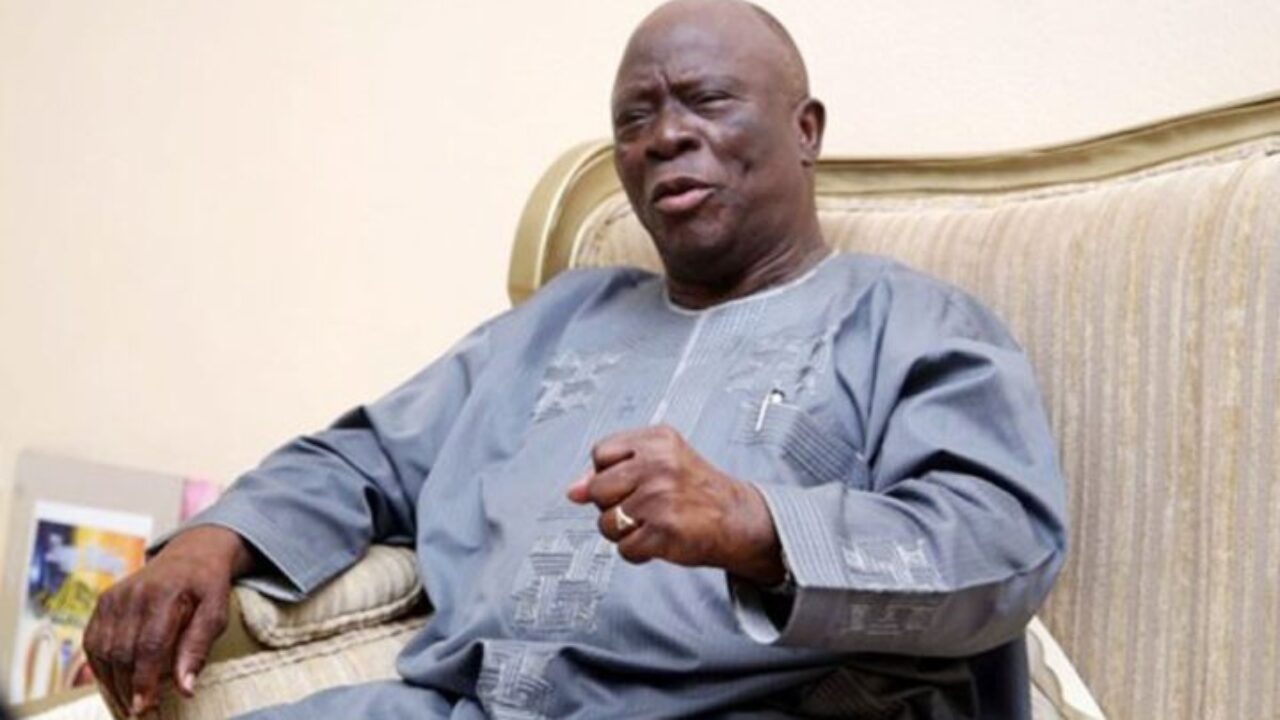
The Publicity Secretary of Afenifere, Mogaji Gboyega Adejumo, disclosed this while briefing journalists shortly after the caucus meeting of the group held at the Isanya Ogbo Ijebu residence of its leader, Pa Ayo Adebanjo.
Afenifere posited the idea of restructuring the country geared towards adoption of the parliamentary system of government.
Adejumo noted that the idea would help in cutting down huge amounts of money being spent on the electioneering campaign and more importantly, the heavy cost of governance under the Federal system of government.
“What we have here today is the caucus meeting of Afenifere and the germane national issue that took the centre stage was restructuring.
“Sometime last year, in November, a committee under the leadership of Oba Oladipo Olaitan was set up to aggregate Afenifere’s view on restructuring and today, the committee said that the report is ready.
“However, this report will still be considered by the executives of the group, after which it will be taken to the general assembly where all the members will get to know what we stand on restructuring as Afenifere, and we shall then print the report, do our various publicity on it for people to be enlightened on what we believe on restructuring.
“Tinubu, himself, is a product of Afenifere. He was elected (governor of Lagos State) on the platform and ideology of Afenifere. He took the Federal government to court under the leadership of former President Obasanjo for 31 times in an effort to implement restructuring.
“He didn’t do anything when former President Buhari was there for eight years, probably he was bidding his time because he knew that northerners won’t implement restructuring because they thought it won’t favour them.
“But Tinubu is there now as the President, he is answerable to us all as a product of Afenifere and as what the whole Yoruba did under the Afenifere in Adamasingba, Ibadan, Oyo State in 2017 that what we want is nothing but restructuring.
“For this 2017 meeting, we invited the South South, South East and the Middle Belt and this is the beginning of what we called Southern and Middle Belt Leaders Forum.
“So we are still meeting at this forum when other zones will also submit their recommendations, so what we took to 2014 Confab is what we are submitting even though some things have changed. We will then take it before the National Assembly for their approval.
He hinted that Afenifere is proposing a parliamentary system of government in the greater interest of Nigeria.
The Publicity Secretary added, “What we are actually proposing is the parliamentary system of government. Late Chief Obafemi Awolowo didn’t have to campaign in Ijebu Igbo, all he had to do was to win in Ikenne to become a member of the House and whoever is the leader of the party becomes the Prime Minister or the Premier.
“The old Western Region was from Badagry in Lagos to Asaba in present day Delta State, but he never had to be campaigning everywhere as we do now. It makes governance so cheap, nobody will have to spend billions on campaigns again. You will need as much as N100m to campaign for local government chairmanship elections.
“So, until under this system you will from your constituency come into the House of Assembly and from here you will choose your Ministers and your Commissioners, you are not going to be appointed anyone again from outside but those that have been elected into the house of Assembly.
“With this system of government, we are going to be spending one tenth of the humongous resources we are using to run this presidential system of government”.
In attendance at the meeting presided over by Pa Adebanjo were the Deputy Leader, Oba Oladipo Olaitan; Chief Supo Sonibare; former deputy governor of Lagos State, Chief Mrs Kofoworola Bucknor Akerele; Prince Justice Faloye; Chief Segun Ojo and Bashorun Segun Sanni.


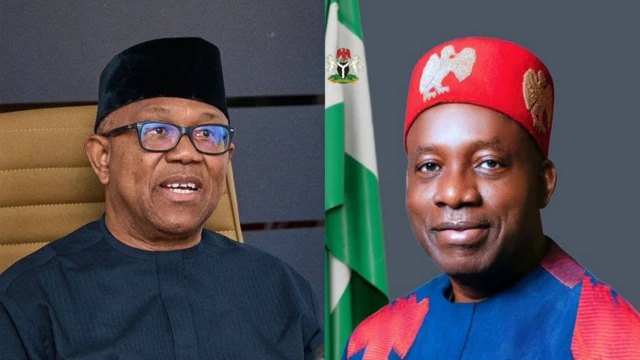
The Nigeria Democratic Congress (NDC) presidential candidate, Peter Obi, has released his handover document to counter the Anambra State Government’s claims that his administration left behind loans and other financial liabilities.
Obi’s challenge followed the release of his handover note, which showed the financial position of the State at the end of his administration.
The Interim National Coordinator of the Obedient Movement, Dr. Yinusa Tanko, published the handover document dated March 17, 2024, on Wednesday.
The document contained a summary of Anambra State’s financial position as of the close of business that day and showed a net positive balance of over N86 billion.
Tribune Online had earlier reported that the Anambra State Government said it is still repaying loans obtained by previous administrations, including those of former governors Peter Obi and Willie Obiano.
The Commissioner for Finance, Izuchukwu Okafor, disclosed this on Sunday while speaking on the Ndi Anambra podcast released by the government’s New Media team.
Okafor said the inherited loans remained part of the financial commitments of the current administration, despite the Soludo government’s decision not to obtain fresh commercial bank loans since taking office.
Obi, however, rejected the claim and asked the Soludo administration to provide evidence to support its position. He also said he would end his campaign for the 2027 presidency if the allegation could be proven.
The Anambra State Government later disputed Obi’s claim that he left office without outstanding debts or other unpaid financial obligations.
The government maintained that its records showed that some liabilities incurred during Obi’s administration, as well as obligations inherited by it, remained unpaid.
In a statement titled; “Gov Peter Obi and Record of Public Debt in Anambra: Facts Beyond Propaganda and Lies,” the Commissioner for Information and Value Reorientation, Law Mefor, described Obi’s position on the State’s debt profile as false.
Mefor said eight external loans connected to projects implemented during Obi’s administration, or inherited by it, were still outstanding.
According to him, the loans had a combined balance of $92.35 million, which the State government said was equivalent to N127.37 billion as of June 30, 2026.
By Henry Ukazu
Dear Destiny Friends,
Greatness is something we all should aspire to attain as we explore what life has in store for us. To attain greatness is no joke. It takes a lot of sacrifice, patience, knowledge, wisdom, understanding, perseverance, and dedication. Isn’t it true that nothing good comes easy? According to my late dad, Chief Lazarus Anthony Ukazu, “If you want to bear a bear name, one must work hard to earn it”
That means success is not attained on a platter of gold. One must strategically work hard to attain any height or title one desires to have. If one desires to be a President, one must be intentional in the way they live their life. If a student desires to have a perfect Grade Point Average (GPA), the student must begin from their first year of college to have good grades; if an employee desires to rise up to a managerial position, the employee must put in the work by ensuring that they are punctual and their work ethic is top-notch. I can go on, but as the sage will say, a word is enough for the wise.
Aspiring for greatness can be difficult, no doubt, but it’s doable. One of the easiest ways of attaining greatness is by knowing yourself. Knowing who you are is a critical and fundamental tool necessary for success because it helps to speed up the process. One may be wondering why I said knowing oneself is the easiest and fastest way to succeed in life. Well, the answer is not far-fetched. According to Oscar Wilde, “Be yourself because others are taken”. This simply means one must focus on what they are naturally good at. It makes no sense to struggle to be what you are not. Like, I always say, you can copy my style, but you can’t imitate my creativity.
That said, it’s important for one to ask oneself: what’s that one thing they are good at; what’s that one thing one doesn’t struggle to do; what’s that one thing most people compliment about them; what’s that one thing you can do and you won’t be stressed; what’s that thing you can do for free and you’ll care less whether you are paid or not; what’s that one thing you can do with relative ease if you are woken from the sleep and you’ll do it well? If you were able to answer any of these questions, then you are fifty percent nearer to greatness. The other fifty percent is for one to develop that inherent talent or gift in them.
The interesting thing about self-discovery is that it helps one to spend less time and energy on a project that won’t add value to their life. For instance, if you know you are good at a particular project or subject, or have expertise or creativity in a particular skill, you’ll stand a better chance of succeeding faster in life when you hone it than learning a new skill that you’ll have to develop. That’s why it’s good to know oneself.
During my formative years in the USA, I engaged in many activities trying to figure out my path. I began by studying taxation law at New York Law School, a major I didn’t like. I worked in a tax firm, hoping I would find joy in the money I made. That turned out to be an illusion. I worked in a small boutique law firm; I worked in a Not-for-profit organization; I worked in a private corporation as a Case Manager; I also worked as an entrepreneur at one point, and now I am currently in the public sector. I did all this just to figure out my path.
In all of these, I was still confused, trying many things. My clarity began when I got a job as a Case Manager; that job gave me clarity, focus, and purpose to know what I should be focusing on.
Again, my writing skills gave me a better understanding of who I am because it projected my image. Today, some people look at me and say I am great simply because I have three books to my name; I have written hundreds of articles in addition to meeting great people the world has celebrated. But the truth is that I discovered what I love, what I am doing and building, and the universe conspired to connect me to the right people, in addition to attracting opportunities to me.
I can say for a fact that, assuming I worked in a tax firm as advised just because of the associated money I might make, I would be feeling frustrated and depressed, even though I might have made money, which is not even guaranteed.
The same principle is applicable to anyone who studies a major or works in an establishment they don’t like. They might make money, but not in the major. I have seen nurses, doctors, engineers, lawyers, etc. who are making good money but are not happy, and I have seen people who didn’t study professional courses, some didn’t even have a college degree, yet are extremely successful and happy.
What does that tell you? They have either discovered what makes them unique, or they are happy with their major. Alternatively, it can be a combination of both.
The message here is to focus on what you are good at and develop it. The world will come to seek your services wherever you may be on planet Earth.
Furthermore, according to John Maxwell’s father, if you want to be great, you need three things: Value people, believe in people, and unconditionally love people for who they are. These are great ways to succeed in life, especially if one desires to make a fortune out of life.
For me, when I write, I think about valuing people, believing in people, and unconditionally loving people. Also, when I speak, I value people, I believe in people, and unconditionally love them. Why? Because people do well when people think well of them. It’s wonderful when a person believes in the leader, but it’s powerful and wonderful when the leader believes in the people.
Do you know that when you value people, it brings out the best in them? People love to be appreciated; people love to get approval, people love to get attention; people love to be accepted for who they are; and people love to be valued and respected. The simple truth about value is that when I value people, it brings out the best in me.
Today, I will ask you: are you aspiring for greatness in your family, school, workplace, community, etc. If yes, your task will be to focus on developing what you are naturally good at.
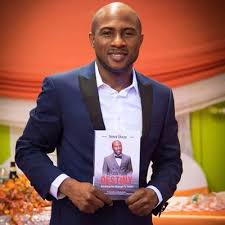
Henry Ukazu writes from New York. He works with the New York City Department of Correction as the Legal Coordinator. He’s the founder of Gloemi. He’s a Transformative Human Capacity and Mindset coach. He is also a public speaker, youth advocate, creative writer, and author of Design Your Destiny- Actualizing Your Birthright to Success, Unleash Your Destiny, and The Six Pillars of Success. He can be reached via info@gloemi.com

The United States has delivered military equipment to the Nigerian Air Force as part of efforts to strengthen the country’s fight against terrorism, banditry, and kidnapping.
The supplies, which were disclosed in an X post by the US African Command (AFRICOM) on Thursday, were part of a foreign military sales agreement between Abuja and Washington.
“PARTNERSHIP IN ACTION: A U.S. Air Force C-17 delivers equipment to the Nigerian Air Force this weekend. The equipment is part of a foreign military sales agreement that furthers the U.S.-Nigerian partnership and will aid in Nigeria’s efforts to counter terrorism in the region.” U.S. Africa Command (AFRICOM) posted on X.
The development comes after US troops left Nigeria amid diplomatic engagement between Washington and Abuja over security challenges, particularly the activities of jihadist groups operating in parts of Nigeria.
The Nigeria’s Defence Headquarters (DHQ) clarified that the reported withdrawal of about 200 United States personnel from Nigeria will not affect the country’s security cooperation with the US.
The Director of Defence Information, Maj. Gen. S. Uba, made the clarification on Tuesday during the joint security spokespersons’ briefing.
Uba described the development as a routine, mission-specific adjustment linked to particular operational and counterterrorism objectives, stressing that it should not be interpreted as a breakdown or termination of the longstanding Nigeria-US security partnership.
“The Armed Forces of Nigeria wishes to clarify that the reported withdrawal of about 200 United States personnel should not be interpreted as a breakdown or termination of the Nigeria-United States security partnership,” he said.
He said the relationship between both countries remained “strong, enduring, and mutually beneficial”, adding that intelligence cooperation, training and information sharing would continue.
According to him, Nigeria remained primarily responsible for defending its territory and protecting its citizens, while US support was aimed at strengthening the capabilities of the Nigerian military.
“Our cooperation with the United States is designed to strengthen our capabilities through intelligence sharing, training, technical assistance, and other forms of professional military cooperation,” he said.


