
Featured
Akinwunmi Adesina and Another Tenure Well Deserved


By Eric Elezuo
“I will stay calm and resolute. I will not be distracted. No amount of lies can ever cover up the truth. Soon the truth will come out” – Akinwunmi Adesina
The re-election of the President of African Development Bank, Dr. Akinwunmi Adesina, for another five years tenure, has proved that challenges are created to build the man of honour. Much as detractors meant it for his downfall, posterity elevated the man of candour to a fame of indescribable height.
It is not every day that spotlessly honest Nigerians walk the space of leadership within the country’s administrative sphere. Akinwunmi Adesina is one Nigerian who has left the footprint of achievements, nostalgia, accomplishment and determination in the sands of time, culminating in his unequivocal acceptance by well meaning peoples of the earth, the distraction created by the United States of America notwithstanding.
Born to a Nigerian farmer in Ibadan, Oyo State, on February 6, 1960, Adesina attended a village school and graduated with a Bachelors in Agricultural Economics with First Class Honors from the University of Ife, Nigeria in 1981. He was basically the first student to be awarded this distinction by the university. He followed up his studies at Purdue University in Indiana, briefly returning to Nigeria in 1984 to get married.
Afterwards, he returned to school, obtaining his PhD (Agricultural Economics) in 1988 from Purdue, winning the Outstanding Ph.D Thesis for his research work in the bargain.
Adesina’s professional career kicked off proper in 1990, when he served as a Senior Economist at West African Rice Development Association (WARDA) in Bouaké, Ivory Coast. He served till 1995.
He worked at the Rockefeller Foundation since winning a fellowship from the Foundation as a senior scientist in 1988. From 1999 to 2003 he was the representative of the Foundation for the southern African area. And from 2003 until 2008, he was an Associate Director for food security.
In 2010, he was appointed Nigerian Agriculture Minister, a post he held till 2015 when the administration of former President Goodluck Jonathan ended.
Adesina was named as Forbes African Man of the Year for his reform of Nigerian agriculture. He introduced more transparency into the fertiliser supply chain. He also said that he would give away mobile phones to farmers but this proved too difficult as a result of lack of mobile network in rural areas.
In 2010, United Nations Secretary General, Ban Ki-moon appointed him as one of 17 global leaders to spearhead the Millennium Development Goals.
On May 28, 2015, just before he completed his tenure as the Nigerian Minister of Agriculture, a position he had held for four years, Adesina was elected the presumptive President of the African Development Bank. He began his tenure of the office on September 1 2015. He is the eighth president in the organization’s history, and the first Nigerian to hold the post.
On resumption at the AfDB, He launched a strategy based on energy, agriculture, industrialization, regional integration and bettering Africans’ lives. The Board of Executive Directors approved the reorganization of the structure around these five priorities.
In September 2016, Adesina was appointed by United Nations Secretary-General Ban Ki-moon to serve as member of the Lead Group of the Scaling Up Nutrition Movement.[10]
In 2017, he was awarded 2017 World Food Prize. Upon receiving the prize on October 21, 2017. Adesina donated the $250,000 he received to the development of African youth in agriculture. That is how generous and benevolent he is.
Adesina is not all work; he is reportedly very close to his God. While at Purdue University, he, his wife, along with another couple, started a Christian group called the African Student Fellowship. He and his wife Grace have two children, Rotimi and Segun.
As an Agricultural Economist, Dr. Akinwumi Adesina has been a leader in agricultural innovation for over 30 years. He has contributed greatly to food security in Africa, aimed at improving the lives of millions currently living in poverty, throughout the African continent. The Sunhak Committee acknowledges Dr. Akinwumi Adesina’s achievements in promoting Good Governance of Africa, which boosts Africa’s capacity to feed itself and transform its total economies for generating wealth for millions of rural and poor African farmers.
At the Cape Town International Convention Center, the Sunhak Peace Prize Committee announced him as a co-winner of the 2019 Laureates for the Sunhak Peace Prize, the other person is Waris Dirie, 53 year-old world-class supermodel and anti-FGM activist.
Dr. Akinwumi Adesina has been a leader in agricultural innovation in Africa for over 30 years, bringing great improvement to Africa’s food security. contributing to Africa’s dynamic growth. His leadership is building stepping-stones for Africa’s dynamic growth.
Chairman of the Sunhak Peace Prize Committee, Dr. Il Sik Hong, stated that “the Sunhak Peace Prize was established based upon the vision of “One Family Under God.” The 2019 Sunhak Peace Prize gives special attention to peace and human development in Africa.”
Dr. Hong added “in order for us to build an era of peace and coexistence in the 21st century, we want to encourage continuous development in Africa. Africa is a rising star and its growth will contribute global progress and development throughout the 21st century.”
The Sunhak Peace Prize honors individuals and organizations who have made significant contributions to the peace and the welfare of the future generations. The Sunhak Peace Prize includes a cash prize totaling one million dollars. The 2019 Sunhak Peace Prize Award Ceremony will take place in February, 2019 in Seoul, Korea.
Dr. Akinwumi Adesina pioneered major transformations in the agricultural field, including expanding rice production by introducing high yielding technologies, designing and implementing policies to support farmers’ access to technologies at scale, increasing the availability of credit for millions of smallholder farmers, attracting private investments for the agricultural sector, rooting out the corrupt elements in the fertilizer industry, and assisting in establishment of major agricultural policies for Africa’s green revolution.
The “Africa Fertilizer Summit,” which he organized in 2006, was one of the largest high-level meetings in Africa’s history that had a focus on solving Africa’s food issues. During this Summit, Dr. Adesina was instrumental in developing the “Abuja Declaration on Fertilizer for the African Green Revolution,” whereby the participants stated their commitment to the “eradication of hunger in Africa, by 2030.”
Dr. Adesina worked with various banks and international NGOs in order to create an innovative financing system, providing loans to small farmers, providing a way for them to rise out of poverty. This move leveraged $100 million in loans and provided opportunities for small farmers to increase their agricultural productivity, and their income.
Dr. Akinwumi Adesina currently serves as the president of the African Development Bank Group which plays a central role in Africa’s development. As an “economic commander” of Africa, he promotes the “High 5 Strategy” that include: light up and power Africa, feed Africa, industrialize Africa, integrate Africa and improve the quality of life for the people of Africa. As a result of his work, the lives of millions of people throughout Africa have been improved.
He was instrumental in gathering no fewer than 200 leading African political, business, and diplomatic leaders in Johannesburg for the 8th African Leadership Magazine Persons of the Year Award dinner. He was the cynosure of all eyes. Adesina’s achievements shone like a million stars as he was named and honored as the African of the Year 2019, the most popular vote-based third-party endorsement in Africa.
The event which was themed ‘Africa for Africans – Exploring the Gains of a Connected Continent’, brought together dignitaries including South African Deputy President, David D Mabuza, South AfricanMinisters Nkosazana Dlamini-Zuma and Lindiwe Zulu, and Dr. Ken Giami, Publisher of African Leadership Magazine.
In the keynote speech he delivered on the night, Adesina’s passion for the continent was seen as palpable, connecting with the attentive audience. Much as he deserved the honour by every standard, he nonetheless expressed deep humility in being recognised, clasifying his giant strides as ‘modest achievements and contributions to Africa’.
“Humbled to be nominated by what I gather to be 60% of the votes cast by some 1 million people, humbled to be at the helm of an organisation that is making a tremendous difference across Africa – the African Development Bank. An organisation that is daily making prosperity a reality,” he said.
He dedicated the award to his wife, Grace, the Board, staff, and colleagues at the bank, his mother, and “to the young mothers, struggling to bring up a child, to the farmer in search of a better tomorrow, to the youth of Africa longing for a better future, and to Africa’s journalists who risk their lives in helping to tell Africa’s true story.”
Seen as the visionary behind the African Development Bank’s High 5 strategy, he noted that the primary focus of the African Development Bank is “to light up and power Africa, to feed Africa, to industrialise Africa, to integrate Africa, and to improve the quality of life of the people of Africa. Five simple, strategic, and highly focused objectives.” The truth is he has never reneged in achieving the feats.
The African Leadership Magazine Persons of the Year Awards is now the most popular vote-based third-party endorsement in Africa.
Under his leadership, the bank has helped 18 million people get electricity, 141 million people get agricultural technologies, 13 million people get finance through private sector investee companies, 101 million people get improved transport services, and 60 million people get better water and sanitation.
“Africa does not need anyone to believe in her or to affirm her place and position in history. Africa will and must develop with pride. For right on the inside of us, as Africans, lies our greatest instrument of successes: confidence!” Here is a man who loves Africa with an undying passion.
On January 16, 2020, Adesina came face to face with can arguably be termed the greatest challenge of his career if not his life when allegations of ethical breaches were leveled against him by whistleblowers with the backing of the United States of America. The complaint was conveniently leaked paving the way for assault and a smear campaign.
Consequently, a high powered Ethics Committee, comprising Executive Directors representing shareholder nations, deliberated over every single dot and cross of the allegations, and in May 2020 gave Adesina a clean bill of health. In their words, the allegations were frivolous, baseless, and without merit or evidence. The report and conclusive deliberations of the Ethics Committee was subsequently sent to all Finance Ministers, better referred to as Governors of the Bank’s 81 shareholder counties, including the United States for ratification.
Not even one of the allegations stuck, making the originators bow their faces in shame. A cross section of respondents told the Boss that Adesina would have to be removed as President of the Bank and made ineligible for re-election originally scheduled for May 2020 if one allegation has scaled through.
Adesina’s watertight innocent was upheld by almost everyone that has a voice from across his country of birth, Nigeria, and across Africa.
The Nigerian government protested that the governance procedures of the Bank during the investigation were followed to the letter including painstaking analysis of facts, evidence and documents. It noted that the whistleblowers were even prevailed upon to produce any more evidence at their disposal, but they failed they do so. It therefore, wondered at the sudden turnaround of the United States to call for another ‘independent investigation’.
“The Ethics Committee, following three months of work to examine the whistleblowers’ allegations made against the President, dismissed each and every one of the allegations of the whistleblowers against the President as unsubstantiated and baseless.
“The Nigerian Government welcomes this conclusion of the Ethics Committee and the decision of the Chair of the Board of Governors”, the statement read. The probe committee was headed by Takuji Yano, the institution’s Japanese Executive Director.
Towing the line of the Nigeria government, a former President of Nigeria, Chief Olusegun Obasanjo, mobilised former African leaders to the rescue of the embattled president. In a letter, the former leader personally signed and copied about 13 former heads of state, cutting across all regions of Africa, Obasanjo proposed that the leaders jointly issue a press statement to support the laid down procedures embarked upon to evaluate the allegations against the President of the Bank.
Just as the Nigerian government, Obasanjo went further to highlight Adesina’s achievements, noting that under his leadership AfDB “has been actively positioned as an effective global institution ranked fourth globally in terms of transparency among 45 multilateral and bilateral institutions.”
Other achievements include taking bold measures to ensure the bank can respond proactively to support African countries and got its board of directors to approve a $10 billion crisis response facility to support African countries during the thick of the COVID-19 pandemic as well as successfully launching a $53 billion ‘Fight COVID-19’ social impact bond on the international capital market at 0.75 per cent interest rate.”
Africa Leaders, on their part, under the aegis of Concerned African Leaders, released a statement titled Leadership of the African Development Bank: A Need for Caution, announcing their solidarity with Adesina, stating inter alia:
“The African Development Bank is a pride for all of Africa, and its President, Dr. Adesina, has taken the Bank to enviable heights. At this critical time that Africa is battling with COVID-19, the Bank and its President should not be distracted.”
Nigeria’s President, Muhammadu Buhari, personally assured him that he would stand by him, and was so elated at the announcement of his reelection, saying ‘you deserve it’. He also thanked the African Union for its endorsement of Adesina, and to the shareholders of the bank.
Also on the trail of congratulatory messages were former Finance Minister, Ngozi Okonjo-Iweala, Speaker of the House of Representatives, Hon Femi Gbajabiamila among others.
Adesina has been fearless in the discharge of his duties, creating many firsts and stepping on supposedly powerful toes.
“In 2019, he successfully led the Bank’s shareholder General Capital Increase from $93 billion to $208 billion. In the process, he became the first Bank President to take the risk of championing a case for increasing capital for Africa’s development during a first term in office. It was a gambit that paid off in spite of initial strong American opposition.
“In 2018, Adesina championed and helped create the Bank-sponsored Africa Investment Forum which in 2018 and 2019 attracted more than $80 billion in infrastructure investment interests into the continent. This was an unprecedented initiative. The U.S. representative was said to have considered the Forum a departure from the Bank’s original mandate. Some also saw this as an attempt by Adesina to help wean African nations off a dependency on foreign aid. Some critics also suggested that Adesina was attempting to burnish his credentials among African Heads of State via the investment forum.
In the next five years, when his tenure will climax, the accomplished technocrat and reputable entrepreneur is sure to quadruple his achievements of the last five years.
Courtesy: TheBoss


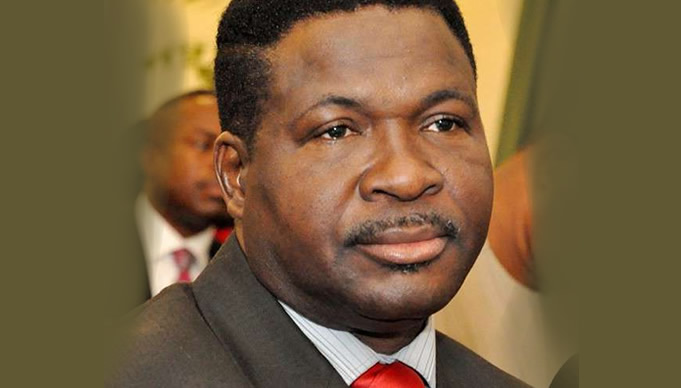
By Prof Mike Ozekhome SAN
INTRODUCTION
The last installment of this series continued from where the inaugural one stopped: the analogy of each corpse buried without justice being a clause in the Constitution buried in effigy. It then explained how inequality breeds violence, before moving onto how systemic lapses in law enforcement is the hidden engine of insecurity and erosion of rights. Later, it examined the contrast between constitutional mandate and institutional reality, followed by the politicization and weaponization of law enforcement; corruption as operational culture; and finally operational weaknesses and structural management. The week, we shall continue with same theme, after which we shall delve into the failure of internal accountability; collusion with criminal networks; erosion of civil liberties through enforcement practices; the cycle of impunity; abuse of judicial power and executive lawlessness targeted at the Bench. Thereafter, we shall consider various pathways and recommendations for addressing insecurity, rights protection and institutional weakness. Enjoy.
OPERATIONAL WEAKNESSES AND STRUCTURAL MISMANAGEMENT
Nigeria’s police-to-population ratio remains alarmingly low. With about 371,800 officers serving a population of over 236 million people, the country is well below the United Nations’ recommended benchmark of 222 officers per 100,000 people. This manpower gap severely hampers the Force’s capacity to tackle crime, especially in volatile areas plagued by insurgency and communal violence. To make matters worse, many of the limited officers available are deployed to safeguard high-profile politicians and elites rather than serving the broader public. In rural communities, especially in conflict-affected northern states, residents report waiting hours, sometimes days, for police to respond to distress calls, if they ever respond at all.
Compounding this problem is inadequate training. Many recruits receive minimal exposure to forensic methods, human rights protocols, or community policing principles. As a result, investigative work relies heavily on confessions, which are frequently extracted through coercion or torture. This not only violates constitutional guarantees against inhuman treatment but also produces unreliable evidence that weakens prosecutions.
Logistical deficits are equally damaging. Many police divisions operate without functioning patrol vehicles, secure communication equipment, or modern crime labs. The Inspector General of Police has acknowledged that, outside of Lagos, forensic capability is virtually non-existent. Without scientific investigation, crimes are either left unsolved or result in wrongful arrests, further undermining public trust
FAILURE OF INTERNAL ACCOUNTABILITY
In a functioning democracy, law enforcement personnel are subject to robust oversight, both internally and through independent bodies. In Nigeria, oversight mechanisms exist in name but not in consistent practice. The Police Service Commission (PSC), which is meant to handle recruitment, promotion, and discipline, is itself politically influenced and suffers from inadequate funding. Complaints of misconduct often disappear into opaque disciplinary processes, and there is little transparency about the outcomes.
When abuses are too public to ignore, as with the October 2020 End SARS protests, Commissions of Inquiry are established, testimonies are heard, and reports are submitted. Yet, implementation of recommendations remains rare. In Lagos, for example, despite the panel’s findings implicating specific officers in excessive force and unlawful killings, few have been prosecuted. Instead, many have returned quietly to duty. This pattern sends a dangerous message to the rank-and-file officers: violations carry reputational risk but rarely legal consequence.
COLLUSION WITH CRIMINAL NETWORKS
Perhaps the most alarming dimension of enforcement failure is the documented collusion between security personnel and criminal actors. In the Niger Delta, security forces have been implicated in illegal oil bunkering, the very crime they are deployed to prevent. In parts of the North-West, reports from Amnesty International and local media allege that bandit groups pay “protection fees” to avoid military or police raids.
Such collusion transforms law enforcement from an adversary of crime into a stakeholder in it. This is not merely passive negligence; it is active participation in the shadow economy of insecurity. In these areas, communities quickly learn that reporting crimes may not only be futile but dangerous, as information shared with authorities can be leaked to perpetrators.
EROSION OF CIVIL LIBERTIES THROUGH ENFORCEMENT PRACTICES
The systemic lapses in law enforcement also directly erode civil liberties. Arbitrary arrests, prolonged detentions without trial, suppression of lawful assembly, and harassment of journalists are not isolated acts but part of an entrenched enforcement culture. The constitutional right to personal liberty under Section 35 is regularly violated under the guise of maintaining public order.
Protesters face preemptive crackdowns, often justified by vague references to national security. During the #Revolution Now protests in 2019, dozens of demonstrators were detained, some for weeks, without formal charges. In many cases, court orders for their release were ignored by security agencies, underscoring the absence of legal consequence for disobedience of judicial authority.
This disregard for civil liberties creates a chilling effect on political participation and civic engagement. Citizens learn that speaking out carries personal risk, and self-censorship becomes a survival strategy. Over time, this quietens public dissent, enabling further abuses by both government and non-state actors.
THE CYCLE OF IMPUNITY
The combination of politicization, corruption, operational weakness, and lack of accountability feeds into a self-reinforcing cycle of impunity. Officers learn that their actions are judged not by legality but by political expediency. Politicians, in turn, see law enforcement as a tool to protect themselves and punish adversaries. Criminal networks exploit these gaps, securing protection through bribery or political patronage.
Once entrenched, this cycle is difficult to break. Each unpunished violation becomes a precedent, normalizing the idea that power grants immunity from the law. This normalization spreads beyond law enforcement to other institutions, eroding the very foundations of democratic governance.
THE ABUSE OF JUDICIAL POWER AND EXECUTIVE LAWLESSNESS AGAINST THE BENCH
In a functioning democracy, the judiciary serves as the impartial referee between the powerful and the powerless. It is the last line of defence for the citizen and the final hope for justice. But what happens when that sacred institution itself becomes the object of aggression? What happens when the enforcers of state power turn their weapons not on criminals, but on the judges who interpret the law? Nigeria confronted these very questions in October 2016, when the homes of senior judges across the country were invaded by heavily armed operatives of the Department of State Services under the cover of night.
These raids, carried out in Abuja, Gombe, and Port Harcourt, targeted some of the most senior members of the judiciary, including Justices Walter Onnoghen and Sylvester Ngwuta of the Supreme Court, and Federal High Court judges Adeniyi Ademola and Nnamdi Dimgba. The DSS claimed they were investigating corruption, yet their conduct betrayed a more sinister motive. Homes were stormed in Gestapo fashion, judges were treated like fugitives, and search warrants reportedly carried incorrect names or were not presented at all. The judiciary was under siege. In Rivers State, Governor Nyesom Wike arrived at the residence of one of the judges to intervene and was reportedly shoved, injured, and threatened by DSS operatives. It was not an arrest. It was a constitutional assault.
I spoke firmly and publicly against this invasion. I said then what I still affirm now: the DSS acted outside the bounds of the law. As I told journalists and as reported by Premium Times, the operation was not only illegal and unconstitutional but a dangerous desecration of the rule of law. No agency of government, including the DSS, has the authority to arrest or search the premises of serving judicial officers without going through the National Judicial Council, which is constitutionally empowered to discipline judges. If there are allegations of corruption, there is a process. That process was willfully ignored. What we saw instead was a show of force meant to intimidate and humiliate. It was executive lawlessness under the guise of anti-corruption.
The greatest tragedy, however, was not merely that these events occurred. It was the manner in which they were received. The Bar, which ought to have risen as a united force, was sluggish in its response. Statements were issued, but no real action followed. There were no mass protests, no urgent court filings to challenge the illegality. The judiciary itself offered little more than murmurs of disapproval. That silence was deafening. It spoke to a larger issue: the slow death of institutional courage. When judges are raided in their homes and lawyers look away, then the entire legal profession stands indicted. If we cannot defend our own, how then can we defend the people?
This unfortunate episode also calls into question the internal health of the judiciary. The Nigerian Law Society recently criticized the widespread abuse of power within judicial institutions, pointing to opaque appointments, poor welfare, and inconsistent rulings. According to their statement reported by the Guardian, the lower courts remain underpaid and under-respected, leaving many judicial officers vulnerable to compromise. It is undeniable that some within the judiciary have failed in their duties, and that corruption has indeed crept into its chambers. However, even in the face of that, the remedy is never brute force. It is lawful accountability, constitutional procedure, and institutional reform. The rule of law must never be sacrificed on the altar of expediency.
When security agents raid the homes of judges without due process, they are not upholding the law, they are undermining it. And when the legal community reacts with silence or justification, it invites a repeat. What began with judges will not end there. Such violations set a precedent that can easily extend to journalists, lawmakers, academics, and eventually, ordinary citizens. Today it is the gavel. Tomorrow it will be the pen, the vote, the voice. That is how authoritarianism begins not always with a declaration, but often with silence.
It is not too late to reset the balance. But we must remember that a judiciary that submits to fear is no judiciary at all. A legal profession that only whispers in the face of injustice is unworthy of its robes. We must return to our roots, as defenders of liberty and protectors of due process. Let the judiciary regain its independence, and let the Bar reclaim its courage. Only then can we begin to restore the broken faith between the Nigerian people and the system that was meant to serve them.
PATHWAYS AND RECOMMENDATIONS FOR ADDRESSING SECURITY, RIGHTS PROTECTION, AND INSTITUTIONAL WEAKNESS IN NIGERIA
The challenges outlined in this paper reveal a complex web of governance failures, enforcement gaps and systemic disregard for constitutional rights. Addressing these issues requires deliberate and sustained action across multiple fronts. The following ten pathways provide a practical blueprint for reform.
Reform of Law Enforcement Institutions
The Nigerian Police Force, the Department of State Services, and related agencies need deep structural reforms. Recruitment should be based on merit and integrity rather than political patronage. Training should include human rights education, forensic investigation, and conflict-sensitive community policing. The practice of diverting a large proportion of officers to serve political elites must be stopped so that policing resources are redirected toward public safety.
Creation of Independent Oversight and Accountability Mechanisms
A civilian-led oversight authority should be established with the power to investigate and prosecute cases of misconduct by law enforcement officials. This body must have full access to records, the ability to compel testimony, and legal safeguards for whistleblowers. Its findings should be made public to ensure transparency and build trust. (To be continued).
THOUGHT FOR THE WEEK
“Money and corruption are ruining the land, crooked politicians betray the working man, pocketing the profits and treating us like sheep, and we’re tired of hearing promises that we know they’ll never keep”. (Ray Davies).

Women of Substance, founded by renowned media consultant Chief Ify Onyegbule (Ada Di Ora Mma), is set to host the maiden edition of the “Sisters’ Hangout”, a strategic networking and empowerment gathering for women across diverse sectors, designed to foster collaboration, visibility, personal growth, and impactful partnerships.
Scheduled as an exclusive lunch-table conversation for Women, by Women, and powered by Women, the Sisters’ Hangout brings together established and emerging voices in journalism, business, education, media, fintech, philanthropy, data science, food services, and grassroots development.
The Hangout has already confirmed an extraordinary lineup of accomplished women, each bringing unique perspectives and deep industry insights.
1. Petra Akinti Onyegbule — Corporate Communications Strategist
Petra is an authority in leadership communication, storytelling, and brand clarity. She will lead conversations on how to keep a brand alive, relevant, and competitive in a saturated marketplace.
2. Theresa Moses — Journalist, Humanitarian & Media Leader
Theresa Moses, Convener of Pad Me A Girl Initiative, Head of Gatmash Media, Chairperson of Nigeria Online Media Alliance (NOMA), and CEO of Vita Baites Foods (makers of premium Kuli-Kuli), will share how she successfully combines media leadership with running a fast-growing FMCG brand.
3. Anthonia Ojenagbon — Founder, Silton African Kitchen
A food service expert specializing in large-scale catering, Anthonia will discuss navigating the pressures of cooking for large events and remaining excellent outside one’s comfort zone.
4. Chioma Iroabuchi — Digital Transformation Leader
Chioma, a driver of fintech-enabled process optimization, will break down the beginner steps into opportunities in the fintech sector, especially for women exploring tech.
5. Oluwatomisin Adebukola — Award-Winning Broadcast Journalist
A leadership coach and community development advocate, she will highlight realities of working in grassroots spaces, and how passion-driven initiatives bring hope to underserved communities.
6. Olayinka Mayaki-Yusuf — General Manager, Shipshape Cleaners Limited
Olayinka will share the business of professional cleaning, project management, and what it takes to thrive in a highly competitive service industry.
7. Temitayo Oluwatobi Adetoba — Data Scientist & Girls’ Education Advocate
Tayo will educate attendees on how data shapes decision-making and why women must tap into the booming data ecosystem.
8. Cordy Nachi Opara — Educator & Relationship Coach
Cordy will shed light on nurturing children with different personalities, and how mothers can be intentional leaders in the home.
9. Chief Yinka Kenny — Broadcast Journalist & Gender Champion
Yinka brings decades of media experience and will reveal the behind-the-scenes challenges faced by women in media, along with strategies for thriving in the industry.
10. Ijeoma Uzozie Mark-Abii — Estate Surveyor & Travel Expert
Ijeoma will demystify the business of tourism and hospitality, sharing what most people are never told about the travel industry.
11. Anusiem DO (Nwachukwu Delphine Onyinye) — Author & Humanitarian
The visionary behind Brisa Women Foundation will highlight stories of women impacted through empowerment programs and the importance of community-driven action.
12. Wemimo Adebiyi — Therapist & Child Mental Health Advocate
UK-trained therapist and educator, Wemimo will engage women on child mental health, school systems, and the power of effective communication at home.
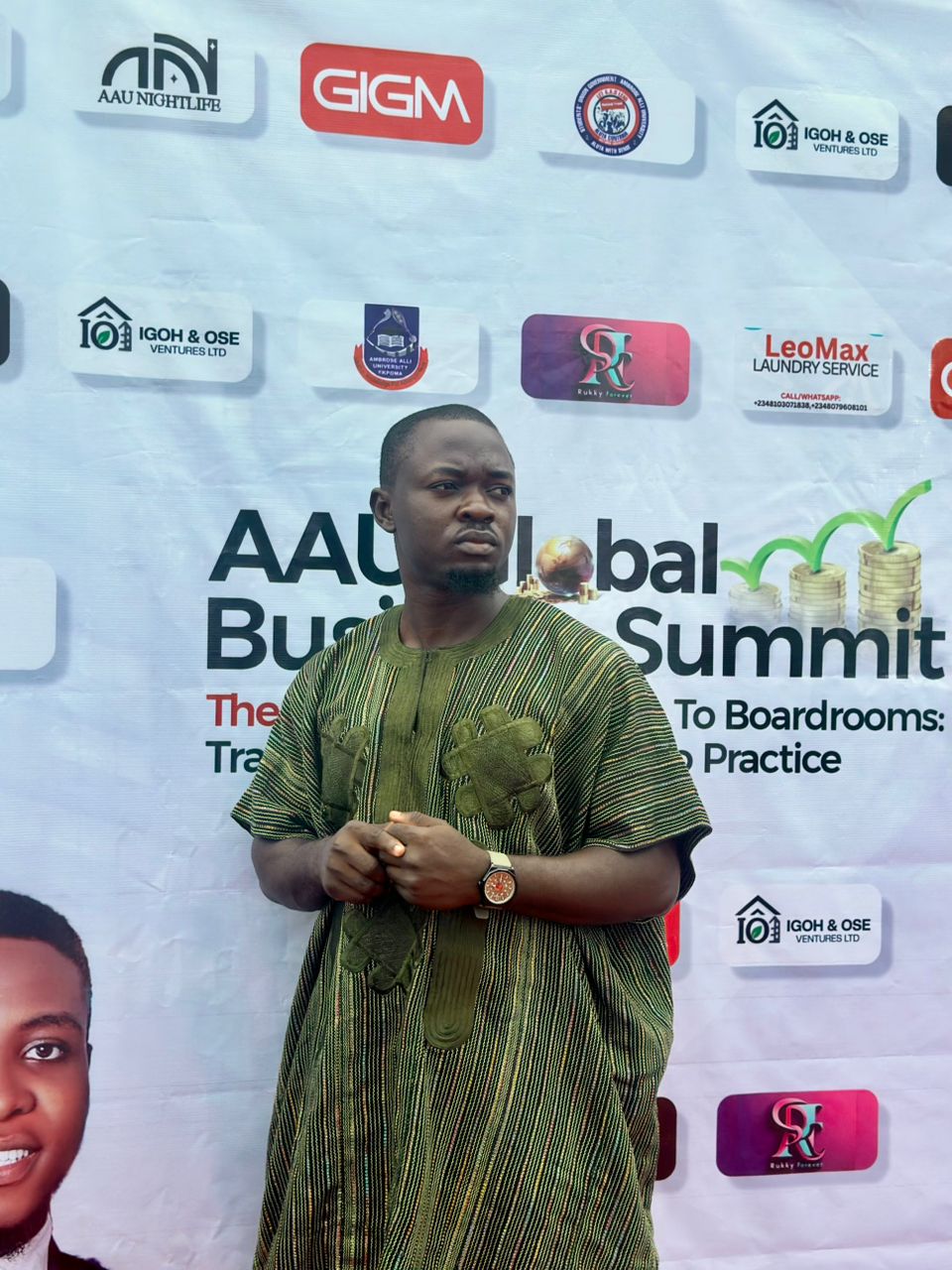
By Ayo Oyoze Baje
“Our goal is to bring the experience of home-cooked Nigerian food to more people, one community at a time. By this, we are celebrating culture and culinary excellence” – Olorunsomo Smart Adeola, aka Alamalla
In a vibrant celebration of culture, food, and community spirit, Amala Spot with Adeola Alamala recently hosted the much-anticipated Amala Day 2025, followed closely by the grand opening of its brand-new AAU Campus Outlet in Ekpoma. The events, held on Friday, 31st October, and Saturday, 1st November 2025, with the outlet officially opening on Monday, 10th November 2025, marked a major milestone for the fast-growing local food brand known for its authentic Nigerian dishes and warm customer experience.
Amala Day 2025 wasn’t just another food event it was a festival of culture, taste, and togetherness. For two full days, from 12 PM to 8 PM, the atmosphere at Amala Spot on Sec School Road, Ujemen, Ekpoma, was filled with excitement, laughter, and the irresistible aroma of freshly served Amala, Ewedu, and Gbegiri.
Customers trooped in large numbers, eager to partake in the special 20% discount offered throughout the event. From students to working professionals and local food lovers, everyone came together to celebrate the timeless Nigerian delicacy that unites people across generations.
Olorunsomo Smart Adeola, popularly known as Adeola Alamala, is a graduate of Ambrose Alli University, Ekpoma, Edo State, from the Department of Medical Laboratory Science. Long before his university days, he had already been actively involved in the food industry, where he developed a strong passion for culinary excellence and customer satisfaction.
Adeola Alamala, the passionate founder and face behind Amala Spot, described the event as “a moment to celebrate our roots, appreciate our customers, and introduce new faces to the real taste of Amala done right.”
Guests were treated to well-prepared meals featuring the perfect blend of soft Amala, rich Ewedu soup, and the flavorful Gbegiri option. Many attendees commended the brand for maintaining high food standards and consistency while creating an environment that felt like home.
Beyond the delicious food, Amala Day was also about community connection. Adeola and the team interacted directly with customers, creating a friendly, family-like atmosphere. There were light games, cheerful moments, and even spontaneous dance sessions that kept the energy alive throughout the event.
What truly stood out was the spirit of togetherness Amala Spot successfully turned an ordinary weekend into a memory-filled culinary celebration. Patrons expressed their satisfaction, with many sharing positive feedback on social media and promising to return with friends.
One student attendee commented, “Amala Spot isn’t just a food place anymore; it’s a vibe. Adeola and the team made everyone feel special.”
The two-day festival didn’t just end with satisfied customers it also built momentum for something bigger: the expansion of Amala Spot into new territory.
The Launch of Amala Spot AAU Campus Outlet
Barely a week after the successful Amala Day, Amala Spot with Adeola Alamala took another bold step by launching its AAU Campus Outlet on Monday, 10th November 2025, at 2:00 PM, located before Igbinedion Hostel, AAU Campus, Ekpoma.
This new branch, designed as a “Take-Out Only” outlet, represents the brand’s innovative approach to convenience and accessibility for students and staff within the Ambrose Alli University community. The opening day featured a 10% discount on all take-out orders, drawing a crowd of enthusiastic customers eager to be among the first to experience the new spot.
Adeola Alamala expressed gratitude for the overwhelming support and explained that the AAU Campus branch was inspired by high demand from university students who wanted easier access to their favorite meals. “We realized many of our loyal customers are students who love our Amala but find it difficult to leave campus often. This new outlet brings Amala closer to them,” he said.
The new outlet is a reflection of Adeola Alamala’s long-term vision to make Amala Spot not just a local eatery, but a recognizable food brand across multiple campuses and cities in Nigeria. The Ekpoma expansion shows the brand’s commitment to growth while maintaining its strong focus on taste, quality, and customer satisfaction.
According to Adeola, the success of the Amala Day celebration reaffirmed the community’s love for authentic Nigerian meals and reinforced the need to spread that joy beyond one location. “Our goal is to bring the experience of home-cooked Nigerian food to more people, one community at a time,” he said proudly.
Both the Amala Day event and the new outlet launch demonstrate the brand’s unique philosophy combining culinary excellence with cultural pride. Amala Spot is not just about serving food; it’s about sharing a cultural experience that connects people emotionally to their roots.
By offering discounts, engaging directly with customers, and expanding thoughtfully, Adeola Alamala continues to redefine what a modern local food brand can achieve. The emphasis on trust, transparency, and consistency has earned Amala Spot a loyal following and positioned it as a leading destination for traditional meals in Edo state.
As Amala Spot with Adeola Alamala looks to the future, the brand’s mission remains clear: to celebrate Nigerian cuisine, promote food entrepreneurship, and create spaces where food, friendship, and culture meet beautifully.
The success of the 2025 Amala Day and the launch of the AAU Campus outlet are only the beginning. With the love and support of its growing community, Amala Spot is well on its way to becoming a household name one bowl of Amala at a time.
Kudos to Alamala for his patriotic efforts to bring a local delicacy, such as Amala to the global stage.



2 Comments