
Headlines
And Sanwo-Olu Makes His first Mistake?


- Share
- Tweet /home/rhoncare/pointblank.ng/wp-content/plugins/mvp-social-buttons/mvp-social-buttons.php on line 69
https://pointblank.ng/wp-content/uploads/2019/05/Sanwo.jpg&description=And Sanwo-Olu Makes His first Mistake?', 'pinterestShare', 'width=750,height=350'); return false;" title="Pin This Post">
By Eric Elezuo
The best footballers are always those watching from the stands or from their living rooms via cable transmission. These set of people know exactly what a particular player should do or should have done with the ball at any point in time. They know the moves that should result to goals and are quick to heap abuses and insults on the footballers for any slip, no matter how inconsequential. But give this group an opportunity to play the actual game, you will be amazed at the height of their folly. This describes the fact that there is a difference between the game outside and the actual game.
Having said that, it is imperative to recall that not long ago, the governor-elect of Lagos State, Mr. Babajide Sanwo-Olu, supposedly played to the gallery, as believed in some quarters, when he informed a set of audience that he would fix permanently the dreaded Apapa gridlock within the first two months of his administration – 60 days in his exact words. Yes, there is nothing wrong with making promises or setting targets for yourself as regards a particular assignment, but the seasoned technocrat should have been guided by precedence as well as the situational variables at work before making such a lofty promise.
Every Lagosian understands how hungry Sanwo-Olu is to make a difference considering the great standard his predecessors vis a vis Asiwaju Bola Tinubu, Mr. Babatunde Fashola and Mr. Akinwumi Ambode, who is billed to leave office in a couple of days, have set. This is even considering the circumstance surrounding his emergence as his party’s flag bearer in spite of Ambode. The party leadership roundly rejected Ambode, paving the way for Sanwo-olu. At this point, Sanwo-Olu feels he needs to prove a point, but has he done it the right way with the 60 days target of revamping the Apapa gridlock, which has defiled all known solutions so far.
Has Sanwo-Olu consulted the likes of Fashola and his would-be immediate predecessor, Ambode, to find out the situation that assaulted their breakthrough in that regard? Has he done a thorough preliminary or feasibility study of the situation to decide the timing of action and completion?
He would not have made a mistake if by a dint of hard work or stroke of luck he succeeds – the applaud will be loud and sharp. But should he fail; the jeers will last him a lifetime and make a mess of his four years administration. He would spent the rest of his days explaining the whys and hows of the failure. Ask Fashola how he is fairing with the unguarded statement of 2014 that “any serious government will fix the power situation within six months”. No matter how hard he tries to keep a straight face or defend his statement and actions, deep down in his heart, he knows he shouldn’t have said that, and of course he has learnt his nations.
Sanwo-Olu’s zeal to serve the people Lagos State is very obvious and commendable, but common sense demands that he should have kept the timing close to his chest, face the challenge headlong and surmount it without pressure from any quarters. Of course, he is going to be under serious pressure now.
He is already the governor-in-waiting, and has no reason to play to the gallery for anyone to dance or make any political statement – the campaign seasons are over.
Now you have said it sir, it imperative you prove as many that thinks you have made a mistake wrong. Let the Apapa gridlock be the first in your priority list. In fact, whatever plans you have should hit the ground running very early on Thursday, May 30, 2019.
May this utterance not be counted as a mistake against you by July 30, 2019 when 60 days would have elapsed. Nigerians don’t forget!


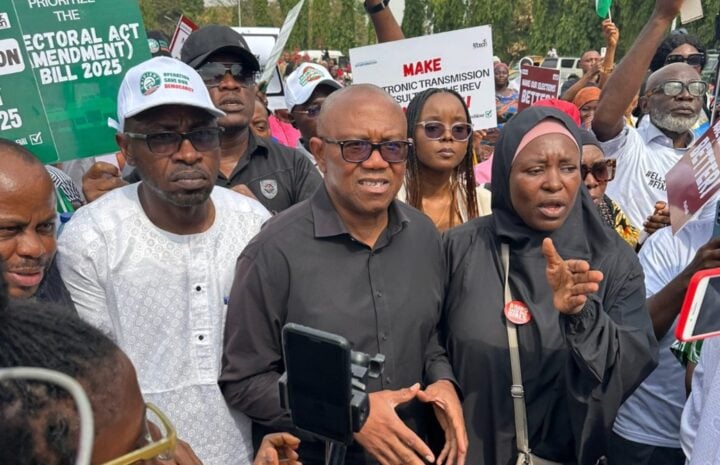
The Nigeria Democratic Congress (NDC) presidential candidate, Peter Obi, has questioned how the Federal government’s 30-day petrol price discount would reduce poverty, unemployment, insecurity and inequality in the country.
Obi raised the questions in a statement posted on his X platform on Sunday, describing the initiative as a reactive policy that substitutes political optics for sound economic planning.
He argued that the discount, which he said amounts to less than five per cent of petrol costs, is unlikely to address the wider economic challenges facing Nigerians.
“The announcement by the APC-led Federal government offering a 30-day discount on price of petrol to relieve the acute hardship and hunger caused Nigerians by its unplanned removal of subsidy can only be described as another very reactive and confused approach to governance that is now the culture of the Tinubu government,” he said.
Obi said he had delayed commenting on the policy to allow time to assess its outcome, but maintains that the measure has not demonstrated a sustainable approach to addressing the country’s economic difficulties.
He recalled that President Bola Tinubu removed the petrol subsidy on May 29, 2023, arguing that the decision was taken without adequate consultation or a proper assessment of its likely effects on the economy and the livelihoods of ordinary Nigerians.
According to Obi, the subsidy removal was followed by other policies, including the floating of the Naira and tax reforms, which he argued are being implemented without proper sequencing and coordination.
He also criticised the government’s handling of multiple budgets, arguing that the combined effect of the policies has contributed to inflation and rising costs of goods and services.
Obi attributed what he described as increasing multidimensional poverty, business closures, unemployment, insecurity, widening inequality and youth migration to the economic pressures arising from the policies.
He also said the policies had weakened the general well-being of Nigerians, insisting that the government should assess their impact before introducing temporary relief measures.
The former Anambra State governor called for a detailed and publicly available regulatory impact assessment of government policies, arguing that such an exercise would help identify their effects and guide necessary adjustments.
He said a government committed to sustainable economic growth should engage stakeholders and ordinary citizens in consultations to develop inclusive policies that improve living conditions and expand economic opportunities.
Questioning the objectives of the petrol discount, Obi asked whether it would increase productivity and exports or whether it was intended to determine if the subsidy should be restored.
“Will it reduce poverty, unemployment, insecurity, and inequality? Will it increase productivity and exports? Is it a test to ascertain if subsidy should be restored? Is it another political gambit in the face of threats of electoral loss in the 2027 election?” he asked.
“Too many questions, no answer!” the former Governor of Anambra State added.
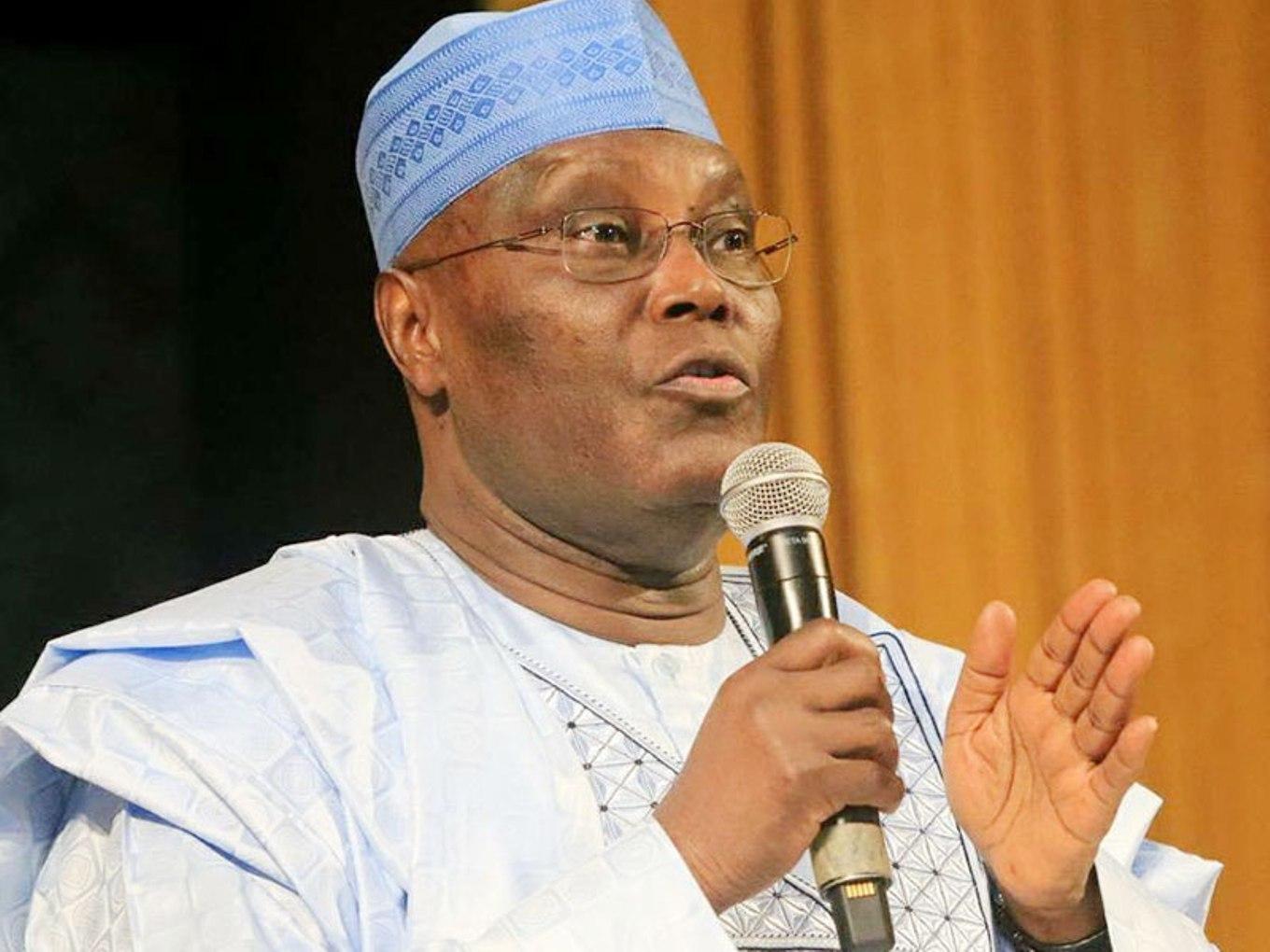
The African Democratic Congress (ADC) presidential candidate, Atiku Abubakar, has raised concerns over the lack of transparency surrounding the production of sensitive materials for the 2027 general elections, urging the Independent National Electoral Commission (INEC) to disclose the companies handling the printing.
Atiku warned that keeping details of the contracts and the process of selecting contractors from the public could weaken confidence in the electoral process.
In a statement issued by his Director of Strategic Communication, Phrank Shaibu, on behalf of the ADC Presidential Campaign Council, the former vice-president also called on INEC to explain recent changes involving officials in key departments responsible for election operations and information technology.
Reports said that Director Isa Magaji Gum has been moved from the Electoral Operations Department to the Voter Registry Department, while Mrs. Oluyemi Titilayo Adeyemi-Showunmi has been appointed to head Electoral Operations.
Dr. Lawrence Bayode was also identified as head of Information and Communication Technology.
Atiku said the commission has a responsibility to explain the reasons for the changes, and demonstrate that the decisions followed due process.
“These departments are at the heart of election administration. INEC must explain these decisions, publish the criteria applied and show that every appointment and redeployment followed due process, was based on merit and was free from political interference,” he said.
He also asked INEC to confirm or deny reports that Hitech, or a company linked to it, had secured a contract to print sensitive election materials for 2027.
“We are concerned by reports that more than half of the sensitive election materials, including presidential ballot materials, may have been allocated to an undisclosed company reportedly based in France. There are also questions about reports that the Nigerian Security Printing and Minting Plc is handling materials for only 15 to 17 states, while private companies are responsible for the remaining states.”
The former vice-president said Nigerians deserve to know which companies are producing their ballots and how the contracts were awarded.
“Nigerians should not have to depend on unnamed sources to discover who is producing their ballots,” he said.
The statement called for the publication of the names of the contractors, contract allocations, procurement procedures and security arrangements.
Atiku further argued that any contract awarded to Hitech or an associated company would raise questions about the commission’s neutrality.
He cited publicly reported business ties between the Chagoury family, which owns Hitech, and the Tinubu family.
He also referred to controversies surrounding major Hitech contracts under President Tinubu’s administration, including the Lagos-Calabar Coastal Highway project.
However, Atiku said INEC should clearly address the matter if neither Hitech nor any company linked to it has been selected to print election materials.
He also called on the Central Bank of Nigeria to disclose allocations for banknote printing and explain the roles of local and foreign contractors.
“We urge INEC to maximise the capacity of local security-printing firms and ensure that all ballot papers and result sheets are properly secured and accounted for at every stage of the electoral process. Any attempt to manipulate the 2027 elections will be resisted through the ballot, lawful civic action and other democratic means available to Nigerians,” he said.
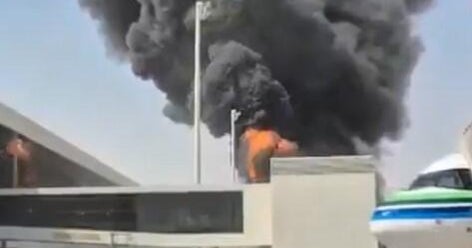
One person has been killed and 11 injured in a second strike on the international airport in the Saudi capital Riyadh, officials have said.
A Saudi military spokesman said a projectile had hit King Khalid International Airport on Sunday, causing a fire in one of its passenger halls. Saudi Arabia’s civil aviation authority said in a statement on X that one person, a Pakistani resident, had been killed in the attack.
It comes a day after a strike on the same airport killed 13 people and injured 308 others, following similar strikes earlier this week.
The Houthis in Yemen said they were behind the attacks and warned airlines and passengers against using Saudi Arabian airports and airspace.
The group said they had targeted the airport with a mix of ballistic and cruise missiles, as well as drones in the past 24 hours.
They also attacked oil facilities and Dammam airport in eastern Saudi Arabia, their military spokesman Brig Gen Yahya Saree said.
He vowed to continue the “escalating operations deep inside Saudi Arabia”, warning that all Saudi airports were potential targets apart from those in the holy cities of Mecca and Medina.
The Houthis have said they are targeting Saudi Arabia over its support for government forces in Yemen’s civil war, as well as an air strike on the airport in Sanaa.
On Sunday Maj Gen Turki al-Maliki, spokesman for the Saudi-led military coalition, said air defences had intercepted a missile near the airport in Riyadh, while authorities were dealing with the fire caused by an “unknown projectile” that hit Passenger Hall No 4.
US President Donald Trump has said the US would “make a decision” and “move very quickly” on whether to strike the Houthis, while UK Defence Secretary Wes Streeting suggested the UK could “potentially” provide more support for Saudi Arabia.
Saturday’s strike was the deadliest single attack on a Gulf Arab country since the war between Israel, the US and Iran began in February. The Saudi-led coalition vowed to respond, calling it a “war crime”.
Four Saudi nationals, two people from Bangladesh and one person each from the US, Jordan, Palestine, Syria, Sudan and Egypt were among the dead, the Saudi civil aviation authority said.
The Indian embassy in Saudi Arabia said on Sunday that an Indian man had succumbed to the injuries he sustained in the attack.
US Secretary of State Marco Rubio condemned the attacks and confirmed that a US citizen was killed in the strikes. Foreign Secretary Ed Miliband said he was “appalled”.
The UK Foreign Office is advising against all travel to parts of Saudi Arabia, including areas within 10km (6.2 miles) of the border with Yemen, while other western embassies have warned their nationals about travel in the region.


