
Headlines
Army Set to Enforce Movement Restriction, Secure Food Supplies


The army is to embark on a special operation with a multidimensional approach, which includes enforcing the restriction of movement and compulsorily moving sick people to hospitals
This is as part of the government’s strategy to prevent the spread of coronavirus disease, a document obtained by PREMIUM TIMES has revealed.
The Operation, tagged ‘Op-Second Eleven’, has been sanctioned by the Chief of Army Staff, Tukur Buratai.
This was contained in a memo signed by Nigeria Army’s Chief of Policy and Plans, Lamidi Adeosun, and copied to 112 recipients, including all the subdivisions of the army.
The memo directs the suspension of all projected 2020 events of the army that involves large gatherings including meetings, briefings, and conferences.
Mr Adeosun, a lieutenant general, recalled that the army chief had, early this year, predicted the likely activation of ‘Op-Second-Eleven in the course of the year 2020.
He said with the recently recorded cases of COVID-19 in Nigeria, the likelihood of the federal government calling for the activation of ‘Op-Second-Eleven’ may not be ruled out.
Mr Adeosun said Mr Buratai, a lieutenant general, has directed that aside suspension of most programmes slated for this year, the army is also making plans to lease out excavators, trucks, water tankers and other relevant vehicles to aid the operation in the area of possible mass burial, water, and essential food/drugs supplies.
The memo said the army also plans “forceful transfer of the sick to hospitals, enforcement of government movement restriction order” among others.
The army also plans the closing of all army schools and training centers.
It is also planning coordination with sister services, Nigeria Police, Nigeria Security and Civil Defence Corps, Fire Services and others on enforcing a restriction on movements and other directives by the government.


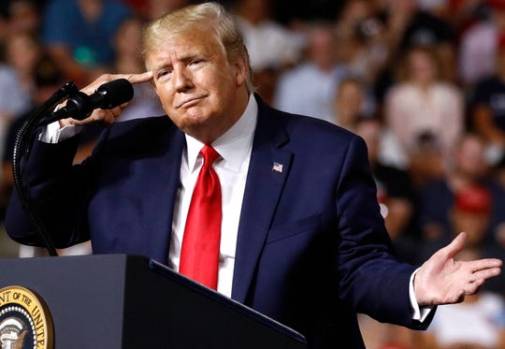
A strong and passionate appeal has been made to US President, Donald Trump, and the international community, to take immediate and conclusive actions, in collaboration with the Nigerian government, to halt the upsurge of genocidal killings and maiming, being carried out by extreme Islamist terrorists and other insurgents, in the country, particularly its northern region.
The ‘Save Our Souls’ (SOS) message was contained in a statement from the Save Nigeria Group (SNGUSA), a civil society body based in the USA, endorsed by Stephen Osemwegie and Victor O. Ben, its President/Founder and respectively.
The statement was against the backdrop of renewed killings and kidnapping by the armed militants in the northern Nigeria’s Middle Belt, including on Sunday, January 18, 2026, where innocent Christians were attacked in Kajulu, Kaduna State, resulting in the abduction of over 177 worshippers, during Sunday worships.
While expressing the group’s profound gratitude to President Trump, for his pivotal leadership and empowering the 2025 Christmas Day’s fatal airstrikes against the ISIS and Lakurawa camps in Sokoto, which it said was a powerful message to terrorists and that it brought hope to persecuted communities across Nigeria, the statement asserted that the recent brutal attacks in Kaduna and others indicated that the job was not finished.
(SNGUSA), the US-based not-for-profit, which collaborates in its activities with the Save Nigeria Initiated (SNI), a coalition based in Nigeria, also called on religious groups, traditional rulers and the civil society leaders to synergise, in order to halt the massacres and insecurity, and prevail on the United Nations’ Secretary General and others global bodies, to urgently intervene in Nigeria’s worsening insecurity and humanitarian crisis.
The massive kidnap of Christian worshippers in Kajulu, Kaduna, which was initially denied by the Nigerian police, but later confirmed by it, had been condemned across the world, hence the appeal by SNGUSA.
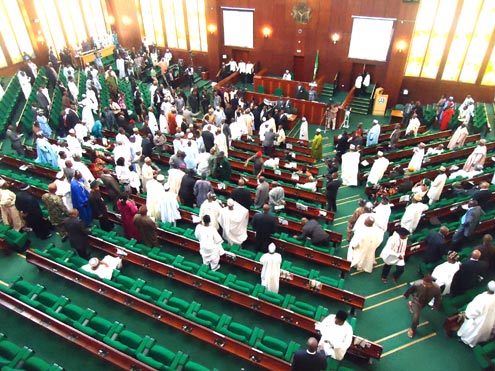
The House of Representatives Minority Caucus Ad-hoc Committee on Tax Laws, on Friday, said it had confirmed that illegal alterations were made to some tax reform laws passed by the National Assembly and assented to by the President, raising concerns about legislative integrity and constitutional breaches.
The committee made the disclosure in its interim report on allegations of discrepancies between the laws passed by parliament and versions later published in the official gazette.
The controversy began after a member of the House, Abdulsamad Dasuki, raised the alarm during plenary over the circulation of an “authorised” tax law version that differed from what lawmakers passed.
Following public outrage, the minority caucus issued a statement on December 28, 2025, vowing to “unconditionally protect the independence of the Legislature and our democracy.”
The caucus warned that foisting fake laws on Nigerians amounts to an attack on the constitutional role of the National Assembly.
Fact-finding committee
To investigate the allegations, the caucus, led by Kingsley Chinda, on January 2, 2026, constituted a seven-man ad-hoc committee, chaired by Afam Ogene and six others.
They are Aliyu Garu (Bauchi), Stanley Adedeji (Oyo), Ibe Osonwa (Abia), Marie Ebikake (Bayelsa), Shehu Fagge (Kano), and Gaza Jonathan (Nasarawa).
The mandate was to establish the facts surrounding the alleged manipulation of the tax laws.
In the statement signed by Ogene, the committee said that on January 3, 2026, the House, through its spokesman, Akintunde Rotimi, announced that the Speaker, Abbas Tajudeen, directed the public release of the four tax reform Acts duly signed into law by the President.
The Speaker also ordered an internal verification and immediate release of Certified True Copies (CTCs) to eliminate doubts and preserve the sanctity of the legislature.
The Acts released were Nigeria Tax Act, 2025; Nigeria Tax Administration Act, 2025; National Revenue Service (Establishment) Act, 2025, and Joint Revenue Board (Establishment) Act, 2025.
According to the House, the Clerk to the National Assembly was instructed to align the Acts with the Federal Government Printing Press to ensure accuracy and uniformity.
Findings
The committee said that by comparing the Certified True Copies of the Acts released officially by the House of Representatives as directed by the Speaker, with the already gazetted version already in circulation before the alarm was raised by the House, it could can confirm “that there were some alterations as alleged by Dasuki on the floor of the House of Representatives, especially in the Nigeria Tax Administration Act, 2025”.
“There were three different versions of the documents in circulation, particularly the Nigeria Tax Administration Act, 2025. The order to the Clerk of the National Assembly, to take steps to ‘aligning the Acts – duly passed, assented to, and certified – with the Federal Government Printing Press to ensure accuracy, conformity, and uniformity,’ is a clear indication that there were some procedural anomalies in the previously gazetted version that illegally encroached on the core mandate of the National Assembly, as the only organ of government constitutionally empowered to make laws for the good of the people, as prescribed.
“This is a grave concern that would be deeply looked into,” it added.
Contentious portions
The committee, in its preliminary findings, confirmed that
alterations were made especially in the Nigeria Tax Administration Act, 2025.
“The Nigeria Tax Administration Act (NTAA), 2025, has a number of discrepancies from the version passed by the National Assembly and the version earlier published in the official gazette. These discrepancies are obvious, going by the released Certified True Copies (CTCs) by the House referenced earlier,” it stated.
Citing section 29(1) and 41 (8 and 9) on reporting thresholds, introducing new subsections, and prescribing a mandatory 20 per cent deposit for appeals, respectively, the committee said, “While the NASS Certified version provided for a tax compliance reporting threshold of ₦50 million for individuals and ₦100 million for companies, the gazetted version lowered the reporting thresholds for individuals to (₦25 million from ₦50 million) and (₦100 million from ₦250 million) for companies.
“This is a clear case of the Executive undermining legislative powers by illegally altering an already passed law to drag more taxpayers into the net.
“The gazetted version introduced new subsections 41(8) and 41(9), which required taxpayers to deposit 20 per cent of the disputed tax amount as a condition for appealing Tax Appeal Tribunal (TAT) decisions to the High Court. These sections were not in the authentic version passed by NASS.”
On Section 64, dealing with enforcement and power of arrest, it said that the gazetted law illegally increased the powers of the tax authority to include the power to arrest individuals suspected of tax violations through law enforcement agencies, and allowed for the sale of seized assets without a court order.
Citing Section 3(1) (b), which focuses on the definition of federal taxes, the panel said that while the NASS certified version defines Federal taxes to include income tax, petroleum income tax, stamp duties, and VAT, the gazetted version removed petroleum income tax and VAT from the definition of taxes under the federal government’s administration.
“We consider this an affront to the exclusive powers of the National Assembly to make laws,” it said.
“Section 39(3): Currency of Tax Computation. The illegally altered gazetted Act mandated that tax computations for petroleum operations be made in US dollars. But in the actual version passed by the National Assembly, it prescribed tax calculations in the currency of the transaction,” it added.
On Section 30(1) (d), & 30(3) — National Assembly Oversight Provisions — of the Nigerian Revenue Service (Establishment) Act, it disclosed that it observed, “with grave concern,” that while the authentic version passed by NASS provided that NASS can summon, demand reports or enforce accountability in line with its constitutional role of oversight, the altered gazetted version “curiously deleted” this provision requiring quarterly and annual reporting to parliament regarding the Nigeria Revenue Services, in total disregard and disrespect of the institution of the National Assembly and the doctrine of checks and balances, an important bedrock of democracy.
The committee, therefore, stated that the current evidence was sufficient to warrant a deeper investigation.
“Given the anomalies, illegalities, and impunity observed, which clearly undermine the National Assembly’s constitutional powers and democracy, the Committee finds the current evidence sufficient to warrant a deeper investigation.
“This will ensure accountability for the affront against the legislature. To achieve this, the Committee respectfully requests an extension to conduct a more thorough examination of the matter,” it added.
In June, 2025, President Bola Tinubu assented to the four tax reform bills recently passed by the National Assembly.
According to the presidency, the new tax laws will significantly transform tax administration in the country, leading to increased revenue generation, improved business environment, and a boost in domestic and foreign investments.
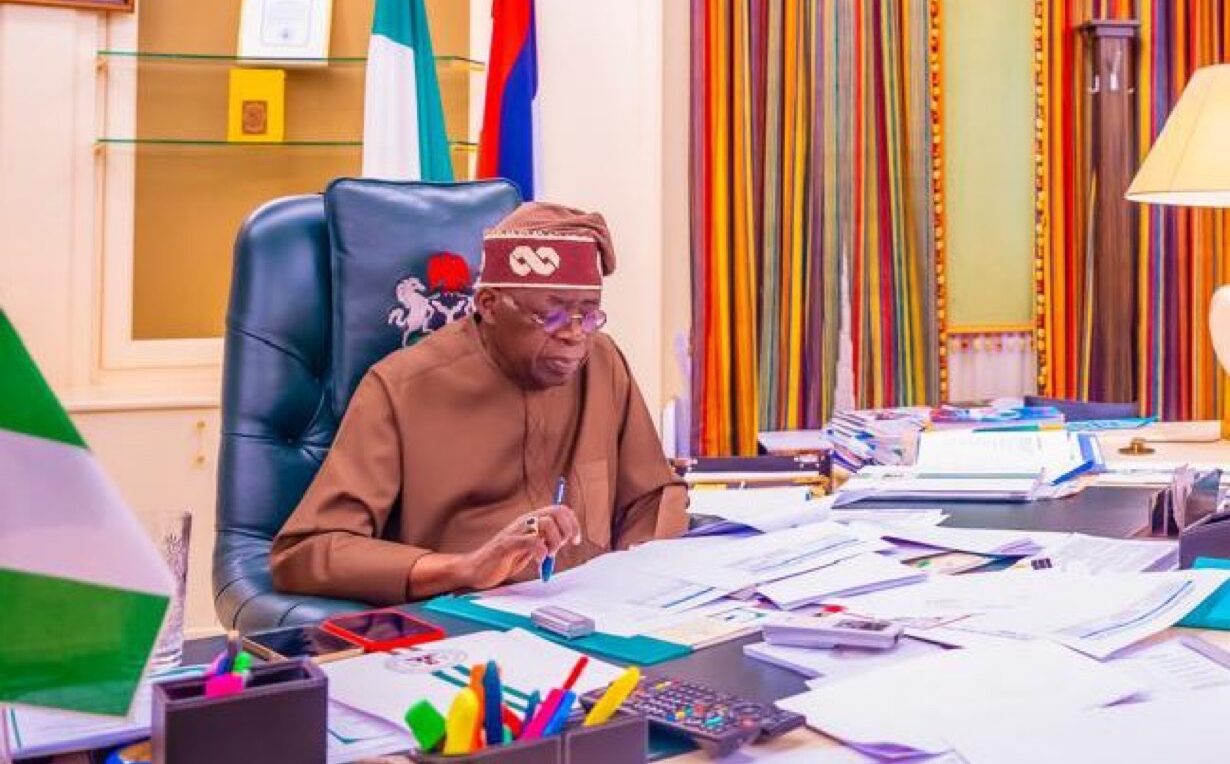
President Bola Tinubu has approved the posting of four ambassador-designates out of the 68 confirmed by the Senate last December.
The approvals were conveyed in a statement signed by Bayo Onanuga, Special Adviser to the President on Information and Strategy, dated January 22, 2024.
According to the statement, Ambassador Ayodele Oke has been posted as ambassador-designate to France, while Colonel Lateef Are has been posted as ambassador-designate to the United States of America.
Also confirmed by the President is the posting of Ambassador Amin Dalhatu, former ambassador to South Korea, as the high commissioner-designate to the United Kingdom.
Usman Isa Dakingari Suleiman, former governor of Kebbi, is the ambassador-designate to Turkey, where the President is scheduled to begin a state visit next week.
In a memo to the Ministry of Foreign Affairs, President Tinubu urged the ministry to notify the governments of the four countries about the ambassador-designates, in accordance with diplomatic procedures.


