
Headlines
Beware of Security Agents, IPOB Warns, Vows Never to Enforce Sit-at-Home Again

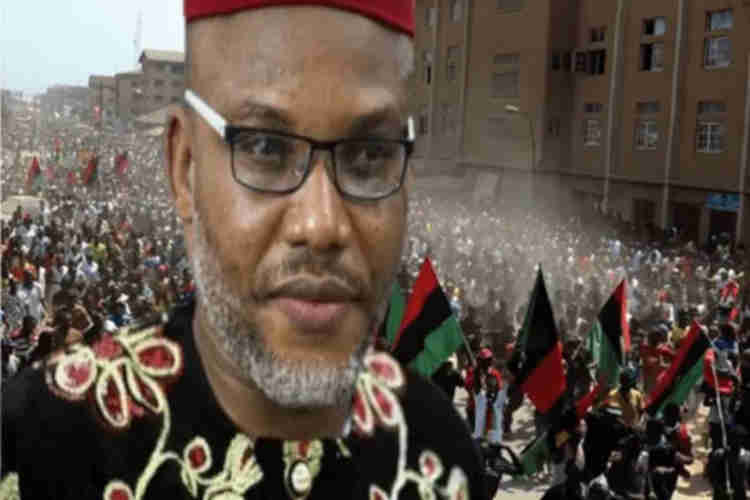
The leadership of the Indigenous People of Biafra has warned the people of the South-East to be vigilant on Monday (today), claiming security agents may unleash mayhem on innocent citizens and blame it on members of the Eastern Security Network.
This is as the secessionist group reiterated that it had no plan to enforce its hitherto weekly sit-at-home order, alleging that it had uncovered a plot by security operatives to disguise as its members and those of ESN to “attack traders who come out tomorrow for their legitimate businesses”.
IPOB noted that it was expedient for the global community to be aware that it had since two weeks ago suspended its earlier weekly sit-at-home order.
The proscribed group stated this in a statement signed by its Director of Media and Publicity, Emma Powerful, a copy of which was made available to The PUNCH on Sunday.
The statement read in part, “The intelligence unit of IPOB has uncovered secret plots by the Nigeria security agencies, most especially the DSS and the police to disguise as IPOB and ESN operatives to attack traders who come out tomorrow for their legitimate businesses.
“IPOB restates that there is no longer Ghost Mondays in Biafra land in solidarity with our detained leader, Mazi Nnamdi Kanu. Sit-at-home will only be observed on the days our leader will be making appearances in court. Such days will be well publicised ahead of time.
“Everybody is hereby placed on alert about this wicked plot. IPOB will not tolerate any attack on any Biafran or resident of Biafra under any guise.
“Security agencies have perfected plans to unleash attacks on innocent people in the name of ESN and IPOB volunteers. We have no plans again to enforce any sit-at-home order.
“We understand that all DPOs, DCOs other senior police officers in Enugu held meeting to perfect this plan to attack innocent Biafrans and tag it ESN attacks.
Reacting, the spokesman for the Enugu State Police Command, Daniel Ndukwe, described the allegation as the imagination of its purveyors and calculated to tarnish the image of the police.
Reacting, the Enugu State Police spokesman, Daniel Ndukwe, said, “Police in Enugu remain committed to the protection of lives and property. We have asked all law abiding Nigerians resident in Enugu to go about their normal businesses on Monday as police will ensure their safety.”
The Punch


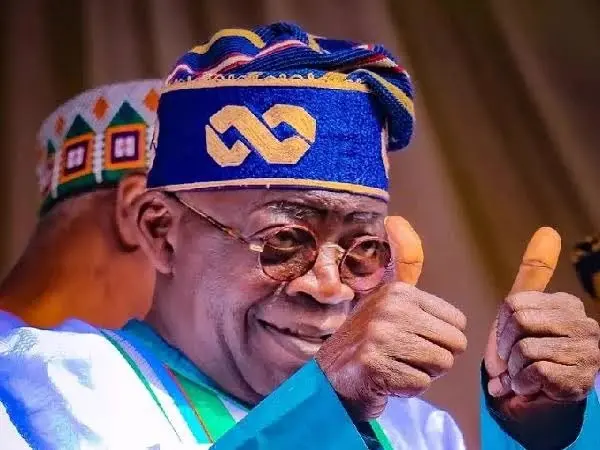
President Bola Tinubu has nominated Ibok-Ete Ekwe Ibas, the immediate past sole administrator of Rivers State and a former Chief of Naval Staff, as a non-career ambassador.
Tinubu also nominated Ita Enang, a former senator; Chioma Ohakim, former First Lady of Imo State; and Abdulrahman Dambazau, former Minister of Interior and ex-Chief of Army Staff, as non-career ambassadors.

The United States Department of State on Wednesday announced that it is outlining new measures to address violence against Christians in Nigeria and other countries.
The policy, according to a statement released by the department, targets radical Islamic terrorists, Fulani ethnic militias, and other actors responsible for killings and attacks on religious communities.
“The United States is taking decisive action in response to the mass killings and attacks on Christians carried out by radical Islamic terrorists, Fulani militias, and other violent groups in Nigeria and beyond,” said Secretary of State Marco Rubio in a statement.
According to the statement, a new policy under Section 212(a)(3)(C) of the Immigration and Nationality Act allows the State Department to restrict visas for individuals who have “directed, authorised, significantly supported, participated in, or carried out violations of religious freedom,” and, when appropriate, extend those “restrictions to their immediate family members.”
The briefing, led by House Appropriations Vice Chair and National Security Subcommittee Chairman Mario Díaz-Balart, included members of the House Appropriations and House Foreign Affairs Committees, as well as religious freedom experts.
Participants included Representatives Robert Aderholt, Riley Moore, Brian Mast, Chris Smith, US Commission on International Religious Freedom Chair Vicky Hartzler, Alliance Defending Freedom International’s Sean Nelson, and Dr Ebenezer Obadare of the Council on Foreign Relations.
President Bola Tinubu recently approved Nigeria’s delegation to the new US–Nigeria Joint Working Group, formed to implement security agreements from high-level talks in Washington led by National Security Adviser Nuhu Ribadu.
The move follows growing concerns over terrorism, banditry, and targeted attacks on Christians in Nigeria, prompting increased US scrutiny and warnings about the protection of vulnerable faith communities.
On November 20, the US House Subcommittee on Africa opened a public hearing to review Trump’s redesignation of Nigeria as a Country of Particular Concern, placing the country under heightened scrutiny for alleged religious-freedom violations.
Lawmakers examined the potential consequences of the designation, which could pave the way for sanctions against Nigerian officials found complicit in religious persecution.
The Punch
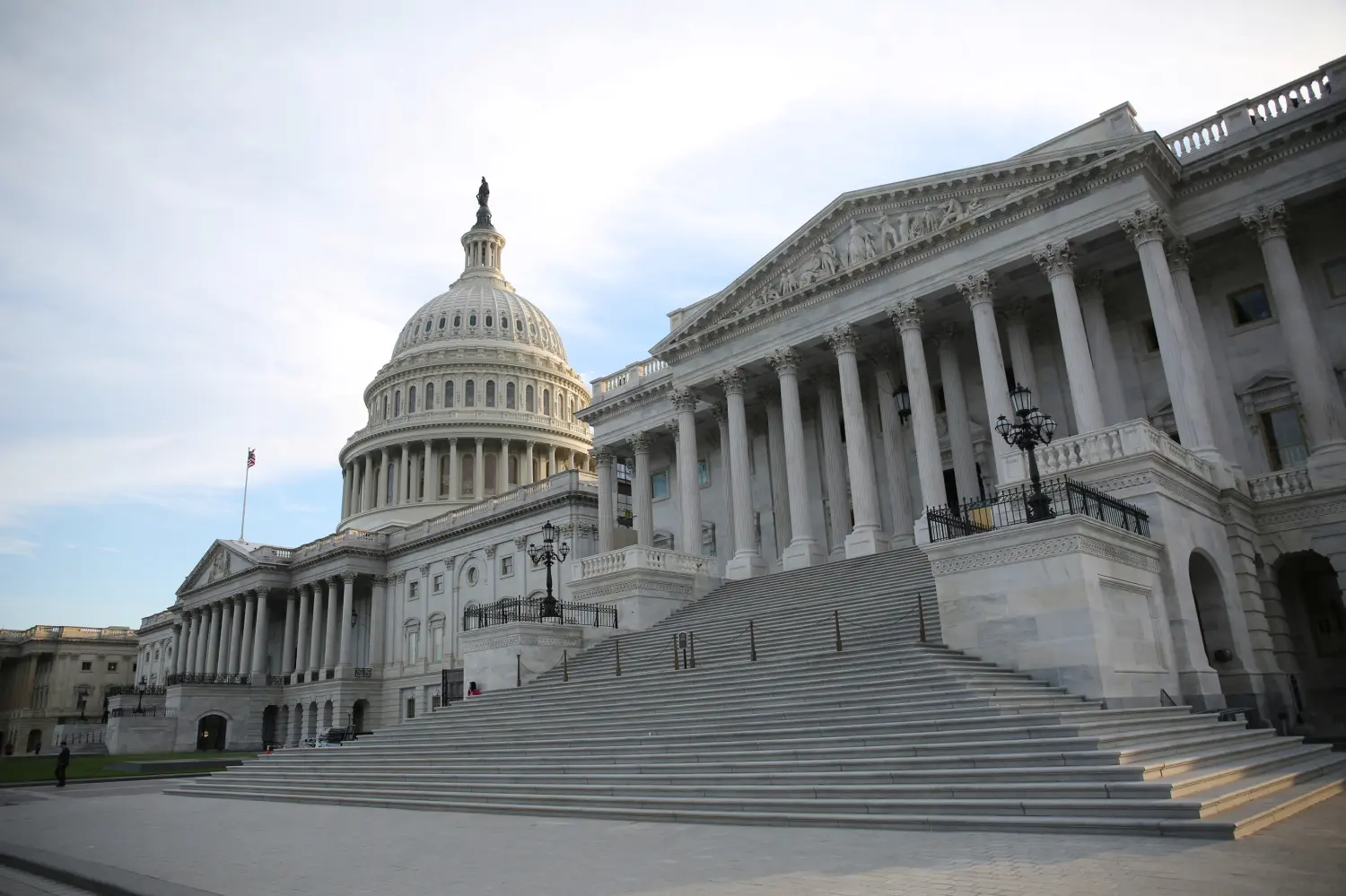
United States of America lawmakers have sharply contradicted the Nigerian government’s position on the ongoing massacres in the country, describing the violence as “escalating,” “targeted,” and overwhelmingly directed at Christians during a rare joint congressional briefing on Tuesday.
The closed-door session – convened by House Appropriations, Vice Chair Mario Díaz-Balart, as part of a Trump-ordered investigation – examined recent killings and what Congress calls Abuja’s “deeply inadequate” response.
President Trump has asked lawmakers, led by Reps. Riley Moore and Tom Cole, to compile a report on persecution of Nigerian Christians and has even floated the possibility of U.S. military action against Islamist groups responsible for the attacks.
At the briefing, Vicky Hartzler, chair of the U.S. Commission on International Religious Freedom, warned that “religious freedom [is] under siege” in Nigeria, citing mass abductions of schoolchildren and assaults in which “radical Muslims kill entire Christian villages [and] burn churches.” She said abuses were “rampant” and “violent,” claiming Christians are targeted “at a 2.2 to 1 rate” compared with Muslims.
While acknowledging Nigeria’s recent move to reassign 100,000 police officers from VIP protection, Hartzler said the country is entering a “coordinated and deeply troubling period of escalated violence.” She urged targeted sanctions, visa bans, asset freezes and tighter conditions on U.S. aid, insisting Abuja must retake villages seized from Christian communities so displaced widows and children can return home.
The strongest rebuke came from Dr. Ebenezer Obadare of the Council on Foreign Relations, who dismissed Abuja’s narrative that the killings are not religiously motivated. He called the idea that extremists attack Muslims and Christians equally a “myth,” stressing the groups operate “for one reason and one reason only: religion.” Higher Muslim casualty figures, he argued, reflect geography, not equal targeting.
Obadare described Boko Haram as fundamentally anti-democratic and accused the Nigerian military of being “too corrupt and incompetent” to defeat jihadist networks without external pressure. He urged Washington to push Nigeria to disband armed religious militias, confront security-sector corruption and respond swiftly to early warnings.
Sean Nelson of ADF International called Nigeria “the deadliest country in the world for Christians,” claiming more Christians are killed there than in all other countries combined and at a rate “five times” higher than Muslims when adjusted for population. He said extremists also kill Muslims who reject violent ideologies, undermining Abuja’s argument that the crisis is driven mainly by crime or communal disputes.
He pressed for tighter oversight on U.S. aid, recommending that some assistance be routed through faith-based groups to avoid corruption. Without “transparency and outside pressure,” he said, “nothing changes.”
Díaz-Balart criticised the Biden administration’s reversal of Trump’s designation of Nigeria as a “country of particular concern” in 2021, saying the decision had “clearly deadly consequences.” Lawmakers from the Appropriations, Foreign Affairs and Financial Services committees signaled further oversight actions as they prepare the Trump-directed report.
Hartzler pointed to recent comments by Nigeria’s Speaker of the House acknowledging a “coordinated and deeply troubling period of escalated violence,” calling it a rare moment of candor. She also welcomed the redeployment of police officers as “a promising start after years of neglect.”
But she stressed that these gestures are far from sufficient, insisting the Nigerian government must demonstrate a real commitment to “quell injustice,” act swiftly on early warnings, and embrace transparency.
The Nigerian Embassy did not immediately respond to a request for comment, according to source.


