
Headlines
Buhari Pardons Dariye, Nyame for Stealing Nbillions, 157 Others

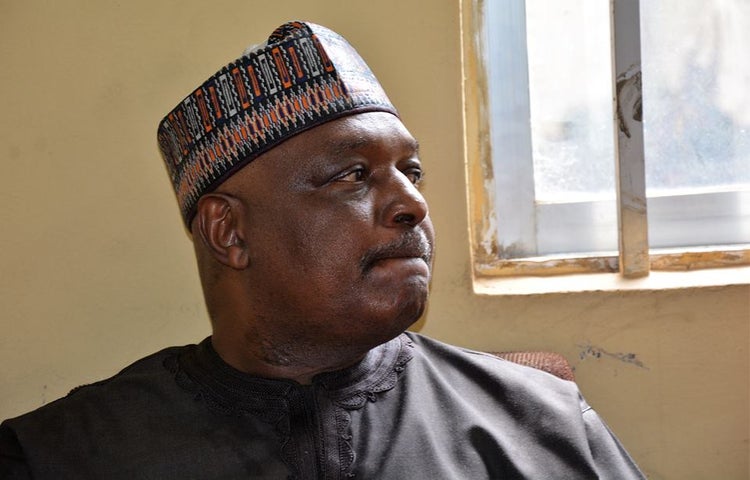
The Council of State led by President Muhammadu Buhari has approved the pardon of 159 convicts including a former Governor of Plateau State, Senator Joshua Dariye; and ex-Governor Jolly Nyame of Taraba State, who were both imprisoned for stealing N1.16bn and N1.6bn respectively.
Confirming Dariye’s pardon, the Plateau State Commissioner for Information, Dan Manjang, told The PUNCH that the ex-governor had been given a second chance.
He added “Every Plateau man is happy about it and we give kudos to the President for honouring us in this manner .We want to also thank whoever that has a hand in making it happen because everybody makes mistakes and you can make errors while in governance.
“As of today, he (Dariye ) has been given a reprieve as if nothing has happened and that is the spirit we have to imbibe as a people that when we make mistakes, we have to forgive because nobody is above error “
The Director of Press and Public Affairs, Government House, Dr Macham Makut, also confirmed that Governor Simon Lalong was at the council of State meeting where Dariye was granted state pardon.
The Speaker of the Taraba State House of Assembly, Prof. Joseph Kunini, also hailed Nyame’s pardon in a statement on Thursday while The PUNCH reported that there was jubilation in some parts of the state following the news.
The Spokesman for Dariye, Mr. Christopher John, confirmed the pardon of both Dariye and Nyame to one of our correspondents.
John said the pardon of the ex-governors had nothing to do with the fact that they were members of the All Progressives Congress.
He claimed that both men were unfairly convicted, adding that their pardon was a form of vindication.
Dariye’s aide added, “We are so excited about this. We’ve been expecting for a long time and fortunately, it has come at this time. We thank God and the government for granting him this pardon. The Nigerian system has made many court judgments unreliable. You can be roped into things you know nothing about.
“I believe that it is the will of God for him to be released. I don’t trust the Nigerian court system. Jolly Nyame was also released and we thank God. It has nothing to do with them being in the APC. It was even the PDP that charged them to court. The APC was not in power when this thing started. We know the genesis
Dariye and Nyame were convicted by Justice Adebukola Banjoko of the Federal Capital Territory High Court in 2018. Dariye, who was governor from 1999 to 2007, was jailed for laundering public funds to the tune of N1.162bn and was sentenced to 14 years in prison by Justice Banjoko who has since been elevated to the Court of Appeal.
Dariye’s prison term was later reduced to 10 years by the Court of Appeal in Abuja while his conviction was affirmed by the Supreme Court.
For Rev Nyame, who was governor of Taraba State from 1999 to 2007, he was sentenced to 12 years in prison for stealing N1.6bn from the state’s treasury, a judgment which was also upheld by the Supreme Court.
Addressing journalists after the Council of State meeting in Abuja on Thursday, the Attorney General of the Federation and Minister of Justice, Abubakar Malami, said the council approved 159 out of 162 applications presented for consideration for the prerogative of mercy for convicts and inmates in correctional facilities nationwide.
According to Malami, the council rejected a proposal to grant pardon to one of the prisoners sentenced to 120 years for theft of over N25bn. The pardon, he said, was sought on health grounds.
Though the AGF kept mum over the identity of the prisoner in question, a top presidency source identified a former Managing Director of Platinum Habib Bank, Francis Atuche, as one of the people not fortunate to be pardoned.
The Council of State is an organ of the Federal Government responsible for advising the executive on policy matters.
Members include the President, past Presidents, the Vice-President, Senate President, Speaker of the House of Representatives and both serving and past Chief Justices of Nigeria.
Others include the Attorney General of the Federation, all governors and the Minister of Federal Capital Territory.
In attendance were Vice President Yemi Osinbajo, Secretary to the Government of the Federation, Boss Mustapha, National Security Adviser, Major General Babagana Monguno (retd.) and Chief of Staff to the President, Prof. Ibarahim Gambari and governors.
Former heads of state physically in attendance were Gen. Yakubu Gowon, Gen. Abdusalami Abubakar and Goodluck Jonathan.
The Punch



The draw for the Champions League last 16 and knockout play-offs has been completed.
One of the most interesting fixtures, will see Benfica play Real Madrid.
The two teams clashed on the last day of the league phase with Jose Mourinho’s men winning 4-2 in Portugal.
That result saw Benfica sneak into the play-offs and denied Madrid an automatic spot.
Clubs have been paired together based on where they finished at the end of the league phase to form seeded and unseeded pairs.
The teams that finished ninth to 16th were in the seeded pairs, while 17th to 24th were in unseeded pairs.
PLAY-OFF DRAWS:
Borussia Dortmund vs Atalanta
Olympiacos vs Bayer Leverkusen
Galatasaray vs Juventus
Club Brugge vs Atletico Madrid
Monaco vs PSG
Qarabag vs Newcastle
Benfica vs Real Madrid
Bodo/Glimt vs Inter
Knockout play-off round: February 17-18, February 24-25
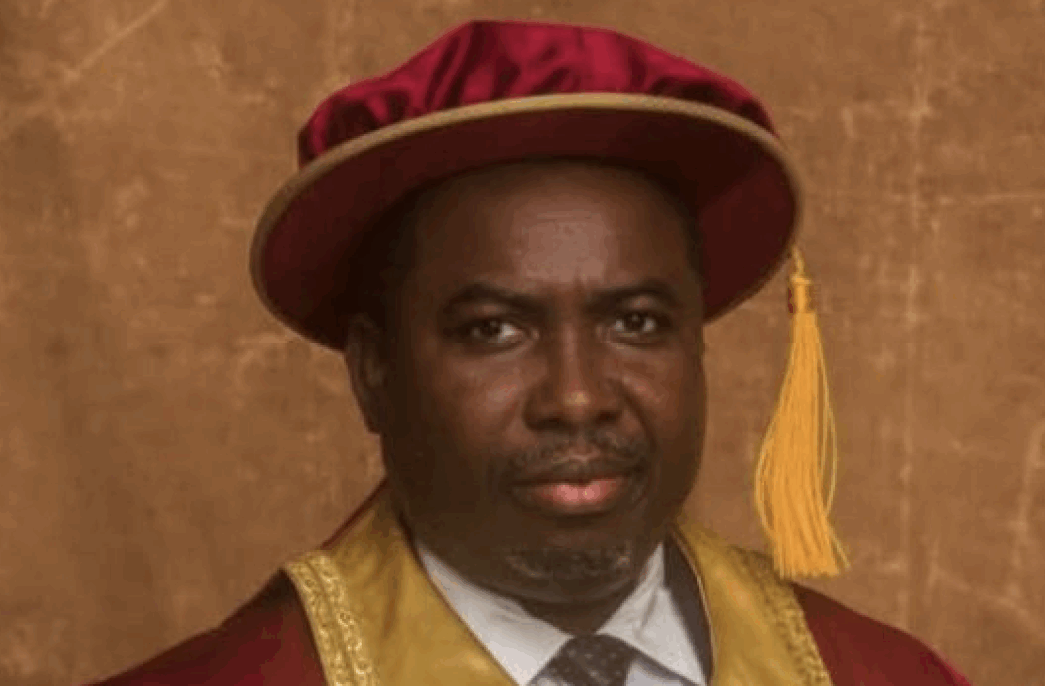
The Christian Association of Nigeria (CAN) in the 19 Northern states and the Federal Capital Territory (FCT) has rejected the call by the Supreme Council for Shari’ah in Nigeria (SCSN) seeking the removal of the Chairman of the Independent National Electoral Commission (INEC), Professor Joash Amupitan.
The Shari’ah Council, earlier this week, demanded the immediate removal and prosecution of Amupitan, as members of the Council questioned his integrity over a legal brief in which he reportedly acknowledged claims of persecution constituting genocide of Christians in Nigeria.
Reacting to the development in a statement on Thursday, the Chairman of Northern CAN, Reverend Joseph John Hayab, and the Secretary General of Northern CAN, Bishop Mohammed Naga, questioned the motive behind the demand, asking who was sponsoring the call and why such interests are hiding behind the platform of a religious body.
Describing the call as a dangerous attempt to politicise religion and undermine a critical national institution, Hayab stressed that Professor Amupitan has a constitutional right to freedom of religion, adding that expressing concern over challenges faced by his religion does not amount to bias or disqualification from public service.
He also pointed out that many Muslims who had served in key government positions in the past had troubling religious antecedents, yet were not subjected to similar scrutiny, urging national actors to prioritise competence and national interest over sectarian sentiment.
Hayab, who warned that the controversy further reinforces concerns about persistent religious discrimination against Christians in Nigeria, particularly in appointments to sensitive national offices, recalled that the two immediate past INEC chairmen were Muslims from Northern Nigeria, and warned against narratives suggesting that only adherents of a particular religion are qualified to lead the electoral body.
“Anyone hiding under the guise of the Shari’ah Council to demand the removal of the INEC chairman over political or sectarian interests should come out boldly. Otherwise, the ploy has died naturally, he said.
“”Are they saying that no other religion should serve as INEC chairman except Muslims? The most important question Nigerians should ask is whether Professor Amupitan is competent or not.
That should be the focus, not his faith,” the statement added.
The association commended President Bola Ahmed Tinubu for what it described as a deliberate effort to promote national unity by appointing a Christian as INEC Chairman, despite being a Muslim.
It noted that the decision reflected statesmanship and inclusivity, similar to precedents set under the previous administration of President Goodluck Jonathan, who kept a northern Muslim as INEC Chairman against all odds.
The Christian leaders advise the Shari’ah Council to publicly identify any individual or group behind the campaign against the INEC chairman, insisting that religious platforms must not be used as “cheap cover” to pursue political interests or intimidate public officials.They, however, called on the INEC chairman not to be distracted by the controversy, urging him to remain focused on his constitutional responsibility of conducting free, fair and credible elections.
“He should concentrate on doing the right thing for Nigerians and not behave like others who openly manipulated elections in the past and now seek to remain relevant through religious blackmail,” the statement said.
Northern CAN also raised concerns about what it described as emerging signals of a coordinated political agenda ahead of the 2027 general election, citing recent comments by the Minister of Culture, Tourism and Creative Economy, Hannatu Musawa, who warned that the All Progressives Congress (APC) risks electoral defeat if it drops a Northern Muslim-Muslim ticket from President Bola Tinubu’s re-election ticket.
According to the association, such statements, when viewed alongside the sustained attacks on a Christian INEC chairman, raise legitimate questions about whether there is a deliberate effort to undermine Christian participation and confidence in the country’s political process.
Headlines
FCT Council Polls: Mammoth Crowd Troops Out in Solidarity As Peter Obi Campaigns for ADC Candidates
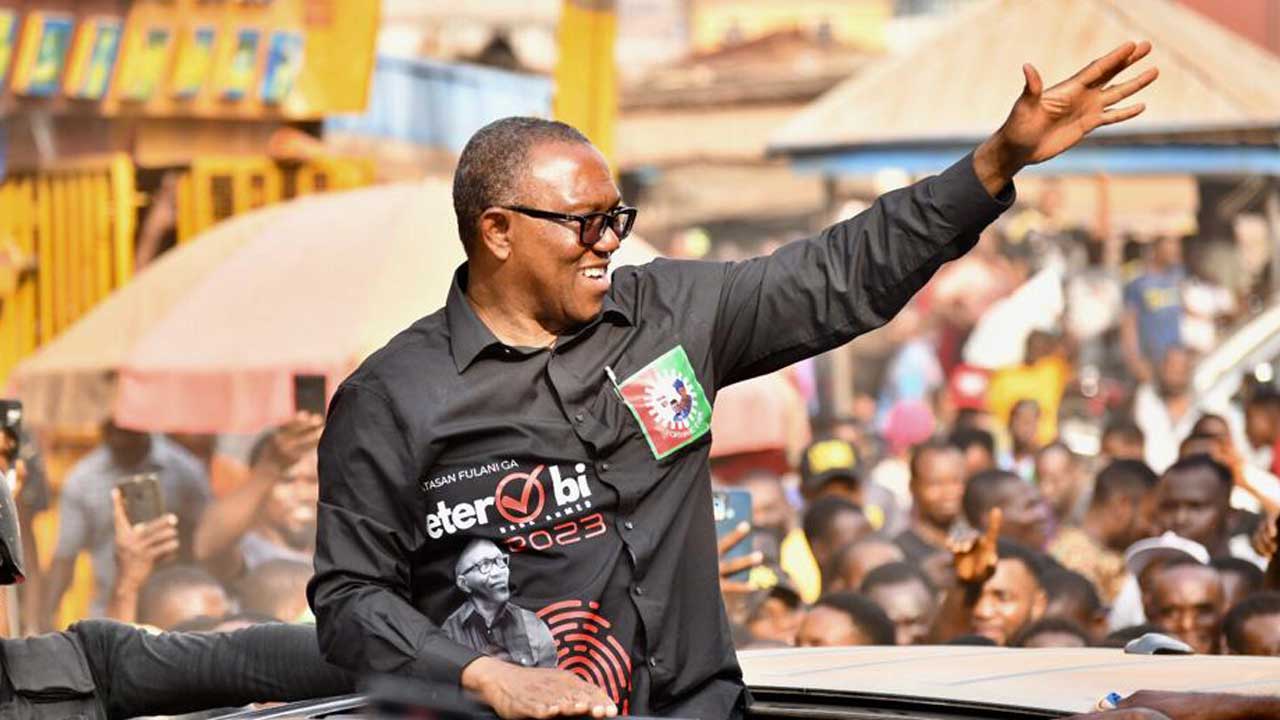
Leading presidential aspirant of the African Democratic Party (ADC), Peter Obi, on Tuesday embarked, on an early morning grassroots engagement across several area councils in the Federal Capital Territory (FCT) as part of activities ahead of the council polls.
Obi, in a post on X, said he set out as early as 6:30 am from his office in the Abuja Municipal Area Council (AMAC) to interact directly with residents and reinforce his vision of people-centred leadership.
His first stop was Abaji Area Council, where he campaigned alongside Dr. Mohammed Ibrahim, the African Democratic Congress (ADC) chairmanship candidate.
Peter Obi took a one-hour walk through the community, engaging the grassroots and listening to their concerns.
He later proceeded to Kwali Area Council to support Hon. Jeremiah Badoji, the ADC chairmanship candidate, where he again spent time walking through the community and interacting with locals, stressing that leadership must be accessible and rooted in the everyday realities of the people.
The former Anambra governor also visited Zuba in Gwagwalada Area Council to campaign for Pharmacist Iko Danjuma, the ADC chairmanship candidate, before moving to Deidei Market.
At the market, Obi engaged traders and residents while canvassing support for Dr Moses Paul, the ADC chairmanship candidate for AMAC.
He used the engagements to reiterate his commitment to inclusive development and grassroots-driven leadership that prioritises the welfare and aspirations of ordinary citizens.


