
Headlines
China Takes over Closed US Consulate in Chengdu

The American flag was lowered at the US consulate in China’s Chengdu city on Monday and Chinese authorities entered the building, as Beijing carried out a Cold War-style retaliatory closure of the mission.
Earlier in the morning state broadcaster, CCTV showed footage of the flag being lowered, after diplomatic tensions soared between the two powers with both alleging the other had endangered national security.
Beijing later confirmed the consulate had closed at 10am (0200 GMT).
“Afterwards, Chinese authorities entered through the front entrance and took it over,” the foreign ministry said in a statement.
“Afterwards, Chinese authorities entered through the front entrance and took it over,” the foreign ministry said in a statement.
Relations have deteriorated in recent weeks in an intensifying standoff, with the Chengdu mission Friday ordered to shut in retaliation for the forced closure of Beijing’s consulate in Houston, Texas.
Both consulates closed 72 hours after the order was made.
Footage from state media showed officials arriving at the consulate in a minibus and walking into the front of the building.
They were followed by several workers in full hazmat suits and goggles, carrying cleaning equipment.
Two men wearing white gloves were shown covering up a US consulate sign on the wall outside the building with a large grey sheet.
The road leading to the Chengdu mission was closed on Monday, with police and cordons blocking the way. State media reported that staff members had left the compound at around 6 am Monday morning.
A crowd gathered outside the now-closed mission, and one man was escorted away by police after waving a banner and two Chinese flags while shouting “Long Live China’s Communist Party”.
The US embassy in Beijing posted a farewell to the Chengdu mission its the Twitter-like Weibo platform on Monday.
“Today, we bid farewell to the US consulate in Chengdu. We will miss you forever,” it read.
Over the weekend, removal trucks entered the site and cleaners were seen carting large black rubbish bags from the consulate.
AFP reporters saw workers removing the US insignia from the front of the building.
The US consulate in the city covered China’s southwest, including Tibet. Many Tibetans accuse the central government of religious repression and eroding their culture.
Beijing says closing the consulate was a “legitimate and necessary response to the unreasonable measures by the United States”, and has alleged that staff at the diplomatic mission endangered China’s security and interests.
Foreign ministry spokesman Wang Wenbin told reporters that some US staff in the Chengdu consulate “were engaged in activities outside of their capacity, interfered in China’s internal affairs, and endangered China’s security and interests”.
Washington officials, meanwhile, said there had been unacceptable efforts by the Chinese consulate in Houston to steal US corporate secrets and proprietary medical and scientific research.
– Tensions –
Tensions have soared between the world’s two biggest economic powers on a range of fronts including trade, China’s handling of the novel coronavirus and a tough new security law for Hong Kong, with US officials warning of a “new tyranny” from China.
The last Chinese diplomats left the Houston consulate last Friday, with officials there seen loading large sacks of documents and other items onto trucks, and throwing some in bins.
Beijing said Saturday that US agents “forcibly” entered the Houston consulate, which it said was “China’s national property”.
Its statement warned that “China will make a proper and necessary response in this regard”.
Nationalistic tabloid the Global Times warned in an editorial Monday that if Washington was “determined to push China-US ties in the worst direction… the 21st century will be darker and even more explosive than the Cold War era”.
It said the rising tensions could lead to “unprecedented catastrophe”.
(AFP)


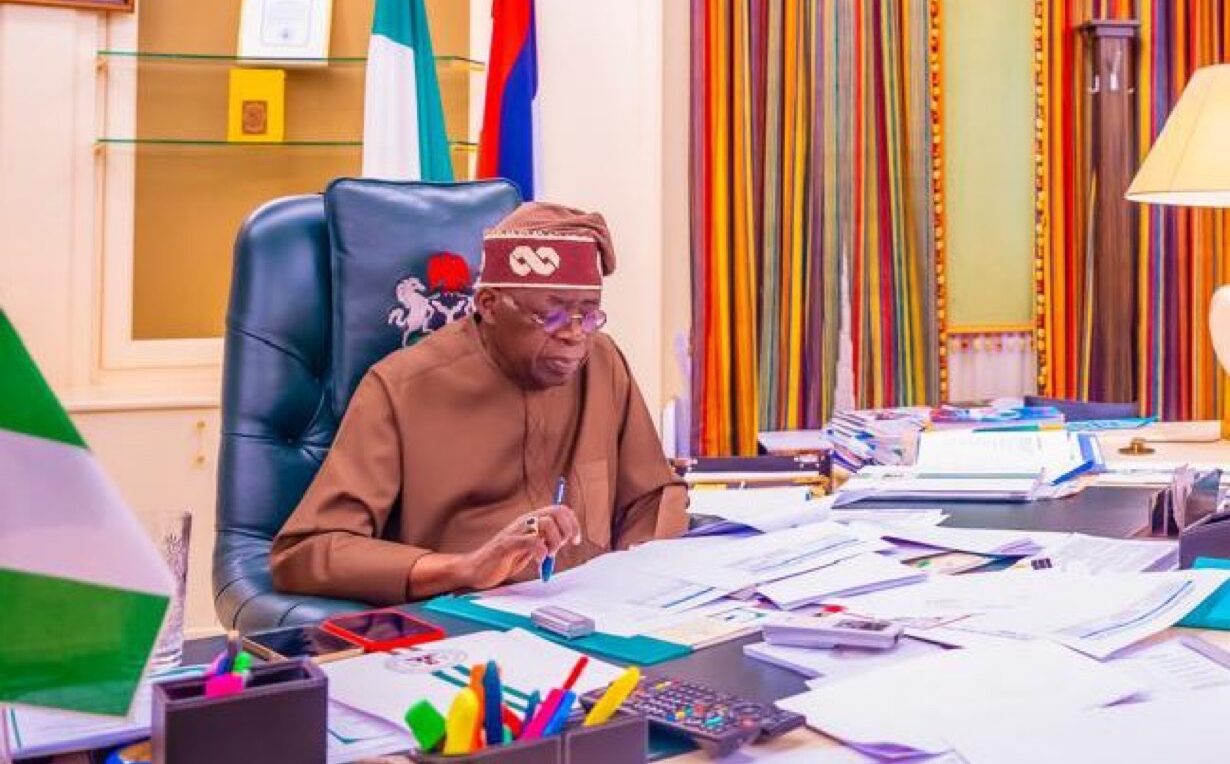
President Bola Tinubu has assured Nigerians that 2026 will be a more prosperous year for all.
Tinubu stated this in his New Year message on Thursday, adding that his administration would sustain the momentum on its major reforms.
“During 2025, we sustained the momentum on our major reforms. We had a fiscal reset and also recorded steady economic progress.
“Despite persistent global economic headwinds, we recorded tangible and measurable gains, particularly in the economy.
“These achievements reaffirm our belief that the difficult but necessary reforms we embarked upon are moving us in the right direction with more concrete results on the horizon for the ordinary Nigerian,” the President said in the statement he personally signed.
Consolidating gains
Tinubu said that the focus in 2026 would be on consolidating the gains and continuing to build a resilient, sustainable, inclusive, and growth-oriented economy.
According to him, Nigeria closed 2025 on a strong note, as despite the policies to fight inflation, it recorded a robust GDP growth each quarter, with annualised growth expected to exceed four per cent for the year.
Tinubu explained that the nation maintained trade surpluses and achieved greater exchange rate stability while inflation declined steadily and reached below 15 per cent, in line with his administration’s target.
“In 2026, we are determined to reduce inflation further and ensure that the benefits of reform reach every Nigerian household. In 2025, the Nigerian Stock Exchange outperformed its peers, posting a robust 48.12 per cent gain and consolidating its bullish run that began in the second half of 2023.
“Supported by sound monetary policy management, our foreign reserves stood at $45.4 billion as of December 29, 2025, providing a substantial buffer against external shocks for the Naira. We expect this position to strengthen further in the New Year,” he said.
“Foreign direct investment is also responding positively. In the third quarter of 2025, FDI rose to $720 million, up from $90 million in the preceding quarter, reflecting renewed investor confidence in Nigeria’s economic direction, which global credit rating agencies, including Moody’s, Fitch, and Standard & Poor’s, have consistently affirmed and applauded,” Tinubu added.
Tax reforms
The President further assured that with patience, fiscal discipline, and unity of purpose, Nigeria would emerge in 2026 stronger and better positioned for sustained growth.
According to him, as inflation and interest rates moderate, his administration expects increased fiscal space for productive investment in infrastructure and human capital development.
“We are also confronting the challenge of multiple taxation across all tiers of government. I commend states that have aligned with the national tax harmonisation agenda by adopting harmonised tax laws to reduce the excessive burden of taxes, levies, and fees on our people and on basic consumption.
“The new year marks a critical phase in implementing our tax reforms, designed to build a fair, competitive, and robust fiscal foundation for Nigeria.
“By harmonising our tax system, we aim to raise revenue sustainably, address fiscal distortions and strengthen our capacity to finance infrastructure and social investments that will deliver shared prosperity,” he added.
National security
Tinubu said that though the path of reform is never easy, his administration remains mindful that economic progress must be accompanied by security and peace.
“Our nation continues to confront security threats from criminal and terrorist elements determined to disrupt our way of life. In collaboration with international partners, including the United States, decisive actions were taken against terrorist targets in parts of the Northwest on December 24.
“Our Armed Forces have since sustained operations against terror networks and criminal strongholds across the Northwest and Northeast,” he said.
But the President stated that in 2026, Nigeria’s security and intelligence agencies would deepen cooperation with regional and global partners to eliminate all threats to national security.
“We remain committed to protecting lives, property, and the territorial integrity of our country.
“I continue to believe that a decentralised policing system with appropriate safeguards, complemented by properly regulated forest guards, all anchored on accountability, is critical to effectively addressing terrorism, banditry, and related security challenges,” he added.
Investments in infrastructure
The New Year marks the beginning of a more robust phase of economic growth, with tangible improvements in the lives of our people.
Tinubu also said that his government would accelerate the implementation of the Renewed Hope Ward Development Programme, aiming to bring at least 10 million Nigerians into productive economic activity by empowering at least 1,000 people in each of the 8,809 wards across the country.
“Through agriculture, trade, food processing, and mining, we will stimulate local economies and expand grassroots opportunities.
“We will also continue to invest in modernising Nigeria’s infrastructure – roads, power, ports, railways, airports, pipelines, healthcare, education, and agriculture to strengthen food security and improve quality of life. All ongoing projects will continue without interruption,” he said.
He, however, urged Nigerians to play their part to achieve the objectives in 2026 by standing together in unity and purpose, upholding patriotism, and serving the country with honour and integrity in their respective roles.
Let us resolve to be better citizens, better neighbours, and better stewards of our nation.
An Abuja High Court has cleared the way for the implementation of Nigeria’s new tax regime scheduled to commence on January 1, 2026, dismissing a suit seeking to halt the programme.
The ruling gives the Federal government, the Federal Inland Revenue Service (FIRS) and the National Assembly full legal backing to proceed with the take-off of the new tax laws.
The suit was filed by the Incorporated Trustees of African Initiative for Abuse of Public Trustees, which dragged the Federal Republic of Nigeria, the President, the Attorney-General of the Federation, the President of the Senate, Speaker of the House of Representatives and the National Assembly before the court over alleged discrepancies in the recently enacted tax laws.
In an ex-parte motion, the plaintiff sought an interim injunction restraining the Federal Government, FIRS, the National Assembly and related agencies from implementing or enforcing the provisions of the Nigeria Tax Act, 2025; Nigeria Tax Administration Act, 2025; Nigeria Revenue Service (Establishment) Act, 2025; and the Joint Revenue Board of Nigeria (Establishment) Act, 2025, pending the determination of the substantive suit.
The group also asked the court to restrain the President from implementing the laws in any part of the federation pending the hearing of its motion on notice.
However, in a ruling delivered on Tuesday, Justice Kawu struck out the application, holding that it lacked merit and failed to establish sufficient legal grounds to warrant the grant of the reliefs sought.
The court ruled that the plaintiffs did not demonstrate how the implementation of the new tax laws would occasion irreparable harm or violate any provision of the Constitution, stressing that matters of fiscal policy and economic reforms fall squarely within the powers of government.
Justice Kawu further held that once a law has been duly enacted and gazetted, any alleged errors or controversies can only be addressed through legislative amendment or a substantive court order, noting that disagreements over tax laws cannot stop the implementation of an existing law.
Consequently, the court affirmed that there was no legal impediment to the commencement of the new tax regime and directed that implementation should proceed as scheduled from January 1, 2026.
The new tax regime is anchored on four landmark tax reform bills signed into law in 2025 as part of the Federal Government’s broader fiscal and economic reform agenda aimed at boosting revenue, simplifying the tax system and reducing leakages.
The laws — the Nigeria Tax Act, 2025, Nigeria Tax Administration Act, 2025, Nigeria Revenue Service (Establishment) Act, 2025, and the Joint Revenue Board of Nigeria (Establishment) Act, 2025 — consolidate and replace several existing tax statutes, including laws governing companies income tax, personal income tax, value added tax, capital gains tax and stamp duties.
Key elements of the reforms include the harmonisation of multiple taxes into a more streamlined framework, expansion of the tax base, protection for low-income earners and small businesses, and the introduction of modern, technology-driven tax administration systems such as digital filing and electronic compliance monitoring.
The reforms also provide for the restructuring of federal tax administration, including the creation of the Nigeria Revenue Service, to strengthen efficiency, coordination and revenue collection across government levels.
While the Federal government has described the reforms as critical to stabilising public finances and funding infrastructure and social services, the laws have generated intense public debate, with some civil society groups and political actors alleging discrepancies between the versions passed by the National Assembly and those later gazetted.
These concerns sparked calls for suspension, re-gazetting and legal action, culminating in the suit dismissed by the Abuja High Court.
Reacting to the judgment, stakeholders described the ruling as a major boost for the reforms, saying it has removed all legal obstacles that could have delayed the implementation of the new tax framework.
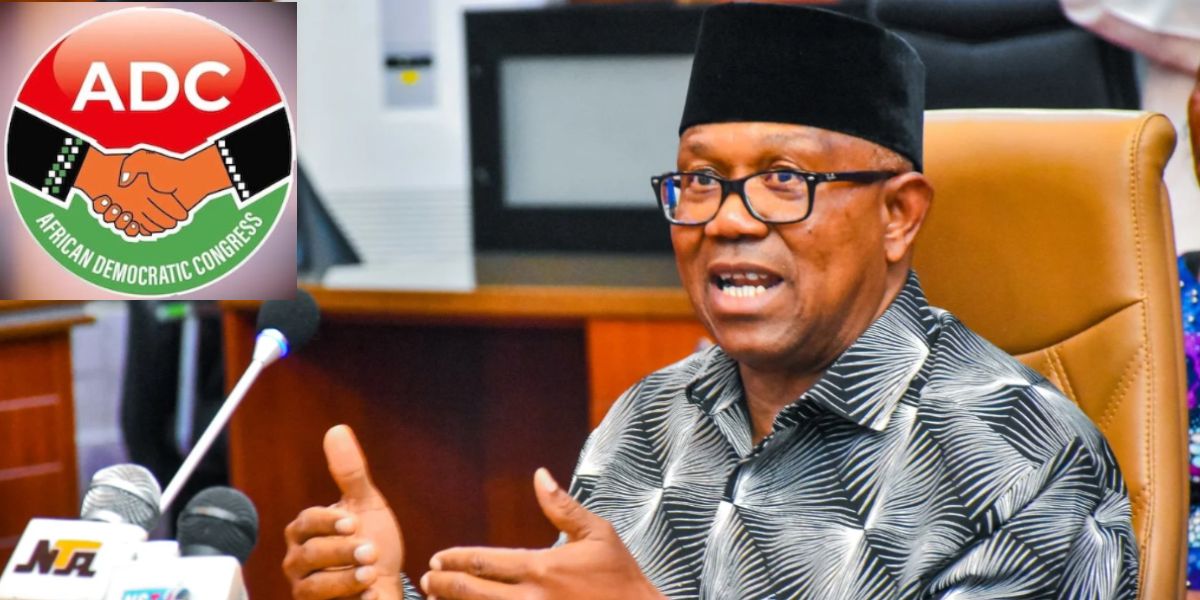
Former governor of Anambra State, presidential candidate of the Labour Party (LP) in the 2023 election, Mr. Peter Obi, has officially defected to the coalition-backed African Democratic Congress (ADC).
Obi announced the decision on Tuesday at an event held at the Nike Lake Resort, Enugu.
“We are ending this year with the hope that in 2026 we will begin a rescue journey,” Obi said.
The National Chairman of the ADC, David Mark, was among the attendees.


