
Headlines
Corruption Allegations: NMDPRA Boss Farouk Ahmed Meets Tinubu, Resigns

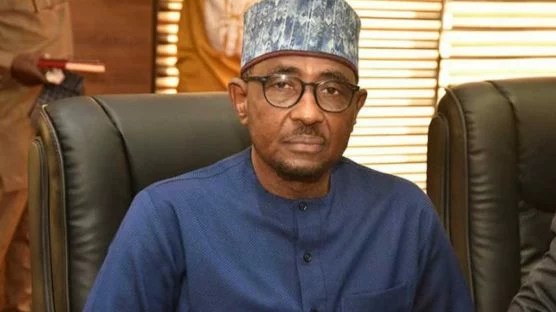
The Chief Executive Officer (CEO) of the Nigerian Midstream and Downstream Petroleum Regulatory Authority (NMDPRA), Farouk Ahmed, has resigned following a meeting with President Bola Tinubu amid corruption allegations.
Tinubu, on Wednesday, summoned Ahmed to the Presidential Villa in Abuja, following allegations of economic sabotage and corruption.
Also caught in the web of resignation was the CEO of the Nigeria Upstream Petroleum Regulatory Commission (NUPRC), Gbenga Komolafe, according to a statement on Wednesday by Bayo Onanuga, special adviser to the president on information and strategy.
Tinubu was said to have nominated successors to the senate for approval.
“Tinubu has asked the Senate to approve the nominations of two new chief executives for the Nigerian Midstream and Downstream Petroleum Regulatory Authority (NMDPRA) and the Nigerian Upstream Petroleum Regulatory Commission (NUPRC),” the statement reads.
“The requests followed the resignation of Engineer Farouk Ahmed of the NMDPRA and Gbenga Komolafe of the NUPRC.
“Both officials were appointed in 2021 by former President Buhari to lead the two regulatory agencies created by the Petroleum Industry Act (PIA).
“To fill these positions, President Tinubu has written to the Senate, requesting expedited confirmation of Oritsemeyiwa Amanorisewo Eyesan as CEO of NUPRC and Engineer Saidu Aliyu Mohammed as CEO of NMDPRA.”
Onanuga said the two nominees are seasoned professionals in the oil and gas industry.


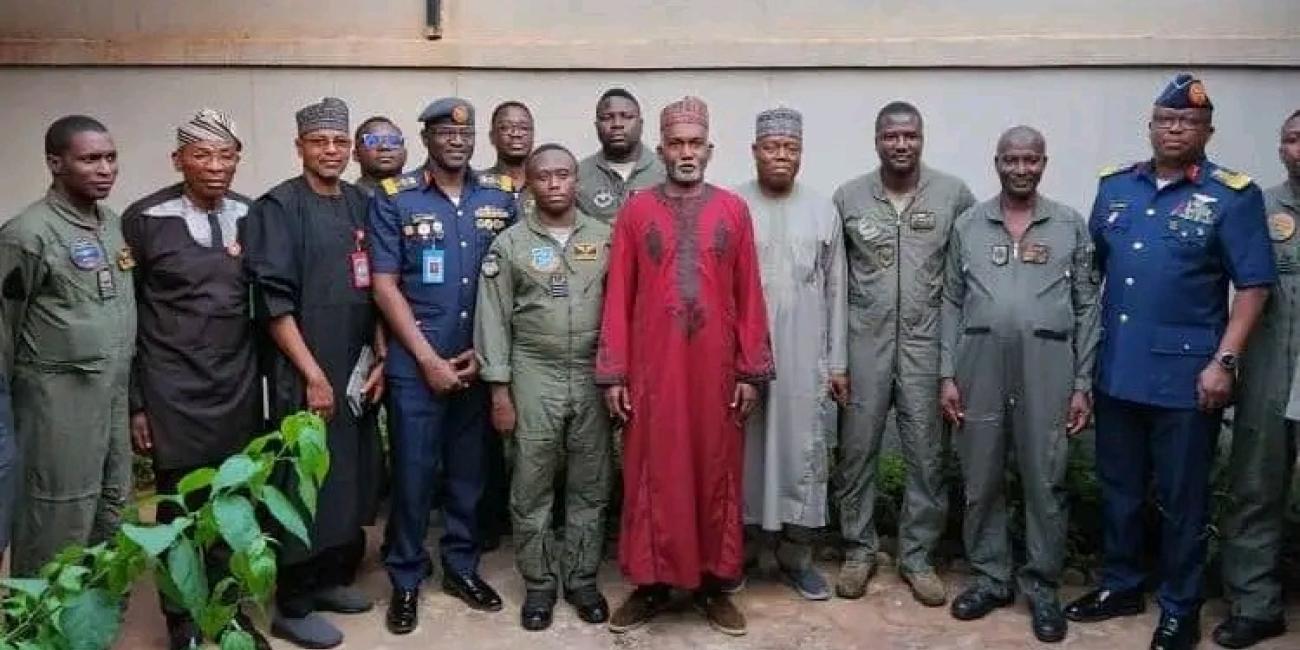
Burkina Faso has released Nigerian soldiers who were detained after their aircraft made a forced landing in the Sahelian country earlier this month, Nigerian officials said.
In a statement, Alkasim Abdulkadir, Tuggar’s spokesperson, said both sides resolved the matter amicably and secured the release of the Nigerian Air Force pilots and crew.
The soldiers had been held for nearly two weeks after the Confederation of Sahel States (AES) described the aircraft’s landing as an “unfriendly act” carried out in defiance of international law.
The Nigerian Air Force, however, said the crew encountered a technical issue that required a precautionary landing in Bobo-Dioulasso, the nearest available airfield. It said the landing complied with standard safety procedures and international aviation protocols.

The Chief Executive Officer of the Nigerian Midstream and Downstream Petroleum Regulatory Authority (NMDPRA), Engr. Farouk Ahmed, has responded to recent claims regarding the financing of his children’s education and his integrity in office, insisting that the allegations are misleading and ill-timed.
Ahmed said the allegations “necessitated this response, not because I fear scrutiny of my finances, which I welcome, but because the timing and nature of these claims demand context that only three decades of public service can provide.”
Ahmed highlighted his career in Nigeria’s petroleum sector, which began in 1991, noting that he rose through merit rather than political patronage.
He recalled his experience across technical divisions, crude oil marketing, gas supply monitoring, and downstream operations, stressing that his decisions have always been guided by Nigeria’s national interest.
“I spent my formative years in the technical divisions, where decisions are measured not by political expediency but by engineering precision and market realities,” he said.
He further outlined his rise to General Manager of the Crude Oil Marketing Division in 2012 and later Deputy Director in 2015, before being appointed NMDPRA Chief Executive in 2021.
On assuming the role, Ahmed said, he understood the challenges of implementing reforms under the Petroleum Industry Act, acknowledging that enforcing transparency in a sector long characterised by opacity would inevitably meet resistance.
Addressing the allegations about his children’s education, Ahmed said the claim that he spent $5 million on their Swiss schooling was misleading. “Three of my four children received substantial merit-based scholarships ranging from 40% to 65% of tuition costs, verifiable information are available to any authorised investigation,” he said, adding that contributions from his late father, a Northern Nigerian businessman, further supported the education costs.
He added: “When scholarships, family contributions, and my own savings accumulated over three decades are properly accounted for, my personal financial obligation was entirely consistent with someone of my professional standing and length of service.”
Ahmed confirmed that his annual compensation of approximately N48 million, including allowances, is publicly documented, and that he has submitted detailed asset declarations to the Code of Conduct Bureau throughout his career.
The CEO also linked the timing of the allegations to recent regulatory actions taken by NMDPRA.
“These allegations resurface precisely when NMDPRA has enforced quality standards revealing substandard petroleum products in the market, implemented stricter licensing requirements, and insisted on transparent pricing mechanisms that eliminate opacity benefiting certain market players. This timing is not coincidental,” Ahmed said.
He defended the authority’s import licensing decisions, emphasizing that they comply with Section 7 of the Petroleum Industry Act, which mandates supply security and prevention of scarcity.
“Granting import licenses when domestic supply proves insufficient is not sabotage, it is our legal duty,” he said.
Ahmed invited formal investigations into his finances and tenure, stating: “I formally and publicly request the Code of Conduct Bureau to conduct comprehensive review of all my asset declarations since 1991, the Economic and Financial Crimes Commission to examine all my financial transactions and sources of income, and the National Assembly to exercise its oversight function regarding any allegations of regulatory compromise during my tenure. I will cooperate fully, provide all documentation, and answer all questions under oath if required.”
Concluding, Ahmed reaffirmed his commitment to regulatory independence and transparency.
“Three decades of service to Nigeria’s petroleum sector have taught me that integrity is tested not in comfortable moments but when powerful interests demand compromise. My response is simple: investigate thoroughly, examine every claim, scrutinize every transaction. My record both financial and professional will withstand any legitimate inquiry.”
Headlines
US Congressman Recounts Harrowing Experience in Nigeria, Confirms ‘Systematic Genocidal Campaign’

United States Congressman, Riley Moore, has described his recent visit to Nigeria as distressing, recounting harrowing encounters with victims of violent attacks, particularly in the Middle Belt region.
Moore last week led a congressional delegation on a fact-finding visit to Nigeria over killings in the northern part of the country.
The five-member team arrived in Nigeria last Sunday and spent several days in Benue State, meeting internally displaced persons, survivors of attacks, Christian leaders, traditional rulers, and communities affected by violence.
They also held meetings in Abuja with the National Security Adviser, Nuhu Ribadu, and the Attorney General of the Federation, Lateef Fagbemi.
The delegation expected to brief President Donald Trump on their findings before the end of the month.
Speaking in an interview with Fox News, Moore said his trip exposed him to the human cost of insecurity in Nigeria, particularly among vulnerable communities affected by terrorism and communal violence in the North.
The West Virginia lawmaker posted the interview on his X handle on Saturday.
Speaking on his experience, Moore said he met women who had survived brutal assaults that claimed the lives of their families.
He recalled meeting a woman who watched all five of her children murdered in her presence.
“It is really heartbreaking. I met a woman who unfortunately had to witness all five of her children murdered right in front of her. I met another woman in an internally displaced persons camp who lost her husband and her two daughters, and the Fulani Islamic radicals had murdered her unborn child—they took it out of her. She survived that, and they are all living in these IDP camps.
“There is a systematic genocidal campaign by the Fulani Muslim radicals in the Middle Belt of this country to push these Christians off their ancestral land,” he said.
The US lawmaker alleged that the violence in parts of the Middle Belt amounted to a coordinated campaign against Christian communities, claiming they are being driven off their ancestral lands.
“There is a systematic genocidal campaign by the Fulani Muslim radicals in the Middle Belt of this country to push these Christians off their ancestral land,” he reiterated.
Despite the grim accounts, Moore said his delegation held what he described as a positive meeting with the Nigerian government, expressing optimism that concrete steps could follow.
“We did have a positive meeting with the Nigerian government. There are positive things coming out of that government that I think will put us on a path toward a strategic security framework and a cooperative agreement to start addressing these issues,” he said.
Moore added that the protection of Christians facing violence remained a top concern for both him and the US President, noting the broader security challenges posed by terrorist groups in other parts of the country.
“First and foremost, my concern, and the President’s concern, is for these Christians, our brothers and sisters who are being slaughtered,” he said. “But there is also the terrorist threat in the North East from Boko Haram and ISIS, who are responsible for the unwanted deaths of Christians, non-Christians, and Muslims alike,” he added.
The Congressman described Nigeria’s security crisis as multi-layered, stressing the need for a comprehensive approach that addresses both terrorism in the North East and what he termed persecution in the Middle Belt.
“The problem is two-tier, and we have to address this Christian persecution and genocide that is happening in the Middle Belt of this country,” he said.
Source: The Punch


