
Headlines
Court Restrains Security Agencies from Removing Sanusi As Emir of Kano

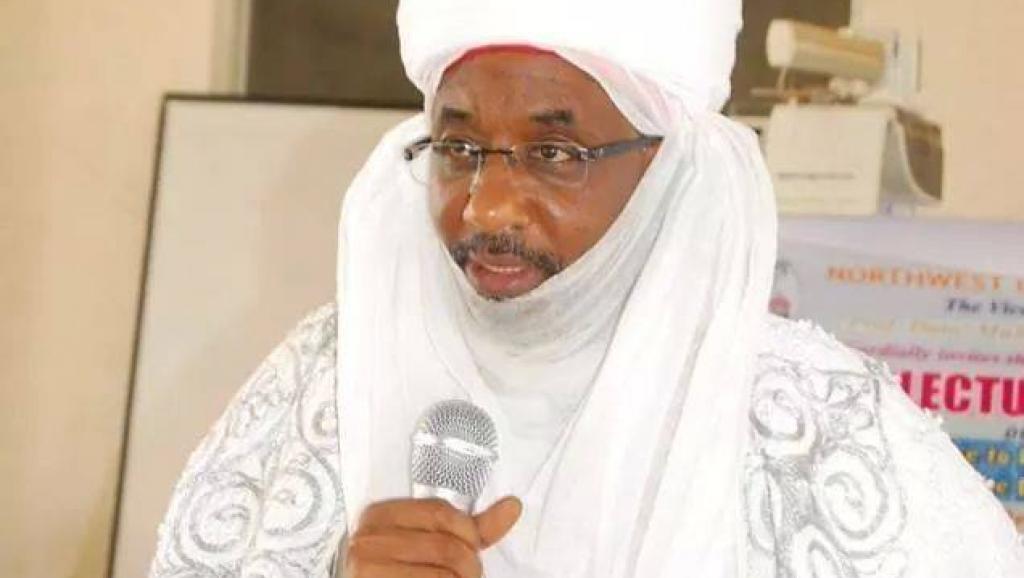
A Kano State High Court has restrained the Police, the Department of State Services (DSS), and the Nigerian Army from evicting Muhammadu Sanusi II, the reinstated Emir of Kano.
Amina Adamu Aliyu, the presiding judge, gave the order on Tuesday in a case filed by the Emir and four kingmakers of Kano.
The respondents are the Kano Commissioner of Police, Inspector-General of Police (IGP), Director of DSS, Chief of Defence Staff, and Aminu Ado Bayero.
The judge restrained the respondents from “attempting to hijack” the symbols of authority meant for the Emir of Kano pending the determination of the suit.
“That an order of interim injunction is hereby granted restraining the respondents either by themselves, their agents, privies, representative, and assigns from further harassing, intimidating, inviting, arresting and or invading the personal or official residence of the applicants (Gidan Rumfa), his servants and or any of the Kano emirate kingmakers of doing such acts that would be capable of interfering with the applicants’ rights generally in relation to this suit pending the hearing and determination of the motion on notice,” the judge rules.
“That an order of interim injunction is hereby made restraining the respondents from taking further steps in connection with the matter or maintaining status quo of staying all action pending the hearing and determination of the motion on notice.
“That an order of interim injunction is hereby granted restraining the respondents from attempting to hijack, pick, commandeer, confiscate any of twin spear of authority, the Royal Hat of Dabo, the Ostrich-feathered shoes, the knife and sword of the Emir of Kano as well as symbols of authority pending the hearing and determination of the motion on notice.”
The case was adjourned to June 13.
On Monday, the same judge issued an order restraining Bayero from parading himself as the Emir of Kano pending the determination of the suit.
The judge also restrained the dethroned four other emirs of the disbanded emirates from parading themselves as monarchs in Kano.
The suit was filed by the attorney-general of Kano, the speaker, and the Kano house of assembly.
The respondents were Bayero, Nasiru Ado Bayero, Ibrahim Abubakar II, Kabiru Muhammad Inuwa, Aliyu Ibrahim Gaya, IGP, director of the DSS, Nigeria Security and Civil Defence Corps (NSCDC), and the Nigerian Army.
TheCable



World-renowned boxer Anthony Joshua on Monday survived a ghastly road accident in Makun, Ogun State.
Eyewitnesses report that the incident occurred along a busy highway of the Lagos-Ibadan expressway.
The vehicle carrying Joshua, a Lexus Jeep with the number plate, KRD 850 HN, reportedly collided with a stationary truck under circumstances that are still being investigated.
Joshua reportedly sustained minor injuries, while two persons were said to have died on the spot.
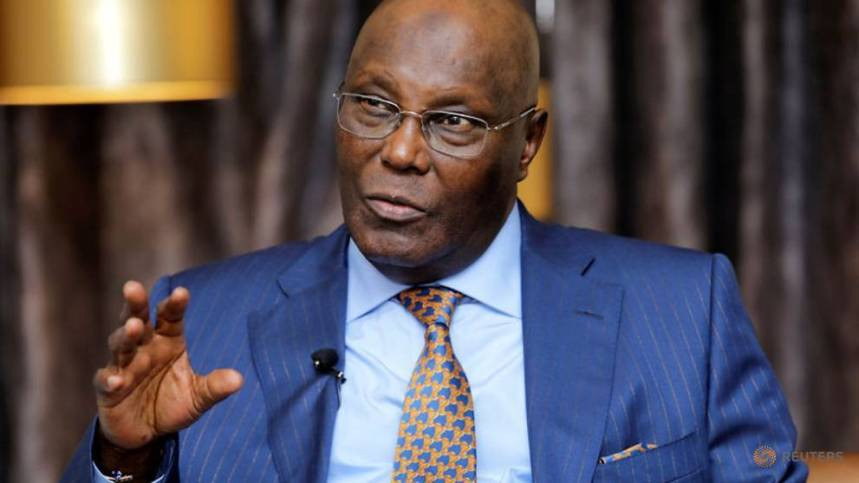
Former Vice President Atiku Abubakar has cautioned that any attempt to hurriedly re‑gazette Nigeria’s new tax laws could undermine parliamentary oversight and set a dangerous constitutional precedent.
Atiku’s warning follows public scrutiny over reports that the Tax Reform Acts signed by President Bola Tinubu differ from the versions passed by the National Assembly. Lawmakers, including Abdussamad Dasuki, raised concerns that the alterations could pose serious legal and constitutional risks, noting that they were not backed by any constitutional framework.
In a statement on X, Atiku said the directive to re-gazette the Acts effectively confirms “that the gazetted version of the Tinubu Tax Act does not reflect what was duly passed by the National Assembly,” calling it “a grave constitutional issue.”
He emphasized that under Section 58 of the 1999 Constitution, a bill only becomes law after passage by both chambers, presidential assent, and gazetting.
“Gazetting is merely an administrative act of publication. It does not create, amend, or validate a law,” Atiku said, adding that any post-passage insertion, deletion, or modification without legislative approval constitutes forgery rather than a clerical error.
Atiku further warned that rushing a re-gazetting while legislative investigations are ongoing “undermines parliamentary oversight and sets a dangerous precedent,” stressing that the only lawful approach is “fresh legislative consideration, re-passage by both chambers, fresh presidential assent, and proper gazetting.”
The former vice president clarified that his position is not opposition to tax reform but a defence of constitutional order.
“This is a defence of the integrity of the legislative process and a rejection of any attempt to normalise constitutional breaches through procedural shortcuts,” he said.
The Federal government has denied wrongdoing, insisting the laws will take effect as scheduled on January 1, 2026, while the National Assembly has directed the issuance of Certified True Copies of the Acts to ensure clarity and accuracy.
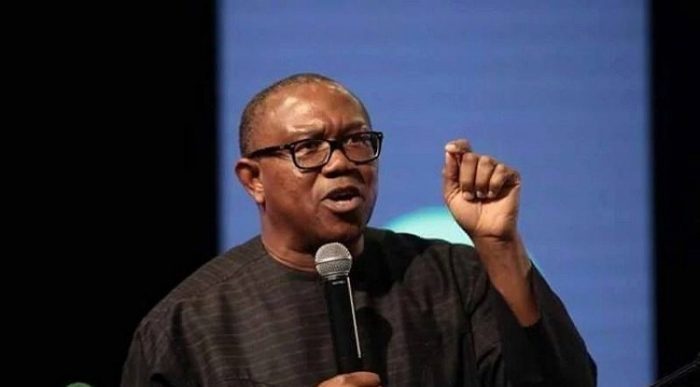
Barring unforeseen circumstances, the Labour Party (LP) Presidential Candidate in the 2023 elections, Mr. Peter Obi, is set to formally join the African Democratic Congress (ADC) on December 31, 2025.
The development would put to rest months of speculation about where the former Governor of Anambra State would pitch his tent in the coming elections.
Reports claim that Obi would be defecting with serving senators and other lawmakers elected on the platform of the LP, as well as remnants of the Peoples’ Democratic Party (PDP) in the South East region.
Specifically, Obi would be defecting alongside the Senator representing Anambra Central, Victor Umeh; that of Anambra North, Tony Nwoye; Abia South, Enyinnaya Abaribe; PDP chieftain Ben Obi; and members of the Obidient movement in the region.
It is not clear if the Abia State governor, Alex Otti, is part of the planned movement to the ADC.
The governor was recently approached by the PDP to join the party and re-contest his current position in 2027.
Further reports quoted Obi’s spokesperson, Valentine Obienyem, as confirming the planned defection of his boss to the ADC.
“Yes, it is true,” he reportedly said on Sunday.
Senator Umeh said the event would hold in Enugu, adding that it would involve all Obi’s supporters across the South East region.
“They will come from Abia, Anambra, Ebonyi and Imo states to join those in Enugu, where this exercise will hold on 31st December,” he reportedly added.
Sources hinted that Obi, who has not hidden his intention to appear on the ballot in 2027, would contest the presidential ticket of the ADC.
On his part, Chief Chekwas Okorie, reportedly said that the expected formal defection of Obi to the ADC is a healthy development that could reshape the thinking and permutations of the 2027 general elections.
“I imagine that he would be defecting along with most of his associates and followers. I believe that a fortified and strong ADC will add value to the opposition and assuage the general fear of a possible one-party option to Nigerians come 2027. The APC, ADC and possibly the PDP locking horns in the 2027 democratic encounter promises a vibrant and robust electioneering campaign that will provide Nigerians the required options to make informed choices in electing their preferred leaders at all levels. I imagine that the APC leadership will return to the drawing table to map out the strategy to confront the emerging challenge. Nigerians are in interesting times,” Okorie stated.
National President of Njiko Igbo Forum (NIF), Rev Okechukwu Obioha, vouched support for Obi to ensure he reaches the pinnacle of his political career. He, however, cautioned that the ADC should not compromise merit and integrity in the choice of its presidential candidate, stressing that Obi remains the “hope for the restoration of the country on the path of greatness.”


