
Headlines
Doctor Who Warns of Coronavirus Dies As Crisis Deepens


A Chinese doctor who was punished after raising the alarm about China’s new coronavirus died from the pathogen on Friday, sparking an outpouring of grief and anger over a worsening crisis that has now killed more than 630 people.
At least 31,000 people have now been infected by a virus that ophthalmologist Li Wenliang brought to light in late December.
The disease has since spread across China, prompting the government to lock down cities of tens of millions of people, and panic has spiralled around the globe as more than 240 cases have emerged in two dozen countries.
A quarantined cruise ship in Japan now has 61 confirmed cases.
Chinese President Xi Jinping and US President Donald Trump, whose countries have tussled over trade and human rights, spoke on the phone about the health emergency.
Xi urged “the US side to respond reasonably to the novel coronavirus outbreak”, according to the official Xinhua news agency.
Trump expressed his “confidence” in China’s ability to tackle the epidemic, the White House said.
Beijing has been angered by bans on arrivals from China instituted by the United States and other countries.
Li, 34, died early Friday, Wuhan Central Hospital said in a post on China’s Twitter-like Weibo platform, an announcement that triggered deep sadness on social media over a doctor hailed as a hero.
“He is a hero who warned others with his life,” a fellow Wuhan doctor wrote on Weibo.
There was also a rare collective bout of anger at the authorities and bold demands, including the hashtag “we demand freedom of speech”, which was censored.
“Those fat officials who live on public money, may you die from a snowstorm,” wrote another Weibo user in a comment that was later scrubbed.
In a sign that the criticism has shaken the Communist government, its anti-graft agency announced that it was sending a team to Wuhan to “conduct a comprehensive investigation into issues involving Dr. Li Wenliang reported by the masses”.
The foreign ministry and the National Health Commission expressed condolences for his death.
– Death censored –
Li’s death has also highlighted the enormous risks that frontline doctors have taken to treat patients in overwhelmed and under-equipped hospitals in Wuhan, the quarantined city of 11 million people where the virus emerged in December.
Medical staff are overstretched and lack sufficient protective gear, the deputy governor of Hubei province admitted Thursday.
Li sent out a message about the new coronavirus to colleagues on December 30 in Wuhan — the city at the epicentre of the crisis — but was later among a group of people summoned by police for “rumour-mongering”.
He later contracted the disease while treating a patient.
Censors appeared to struggle with how to deal with his death.
State-run newspaper Global Times and state broadcaster CCTV first reported on Weibo that Li had died late Thursday, only to delete their posts after the death rapidly surged to be among the top topics on the popular platform.
The World Health Organization reacted to the first reports of his death to express sadness.
Analysts have said that local authorities played down the extent of the outbreak in early January because they were holding political meetings at the time and wanted to project an aura of stability.
The first fatality was reported on January 11. The death toll has since soared to 636, with 73 more reported on Friday and an additional 3,000 new infections.
– Global spread –
The virus is believed to have emerged from a market selling exotic animals in Wuhan before jumping to humans and spreading across China and abroad as millions travelled for the Lunar New Year holiday.
Researchers at the South China Agricultural University have identified the pangolin as a “potential intermediate host” for the disease as the genome sequences of viruses found on the scaly mammal are 99 per cent identical to those on coronavirus patients.
To control the spread, authorities have placed some 56 million people in Wuhan and surrounding cities under virtual lockdown.
Authorities in Wuhan are “combing” communities to find people suspected or confirmed to have the virus and place them in quarantine, state media said.
Major airlines have suspended flights to and from the country, while several countries have advised their citizens to leave China.
But cases keep emerging.
Two cruise ships carrying thousands of holidaymakers in Hong Kong and Japan have been placed under quarantine as authorities test people for infections.
On Friday another 41 people tested positive aboard the Diamond Princess in Japan, bringing the total number of infected cases on the ship to 61.
Another cruise ship carrying a passenger suspected of infection with coronavirus will not be allowed to dock in southern Japan, the government said Friday.
In Hong Kong, 3,600 people are facing a third night confined aboard the World Dream, where eight former passengers have tested positive for the virus.
(AFP)


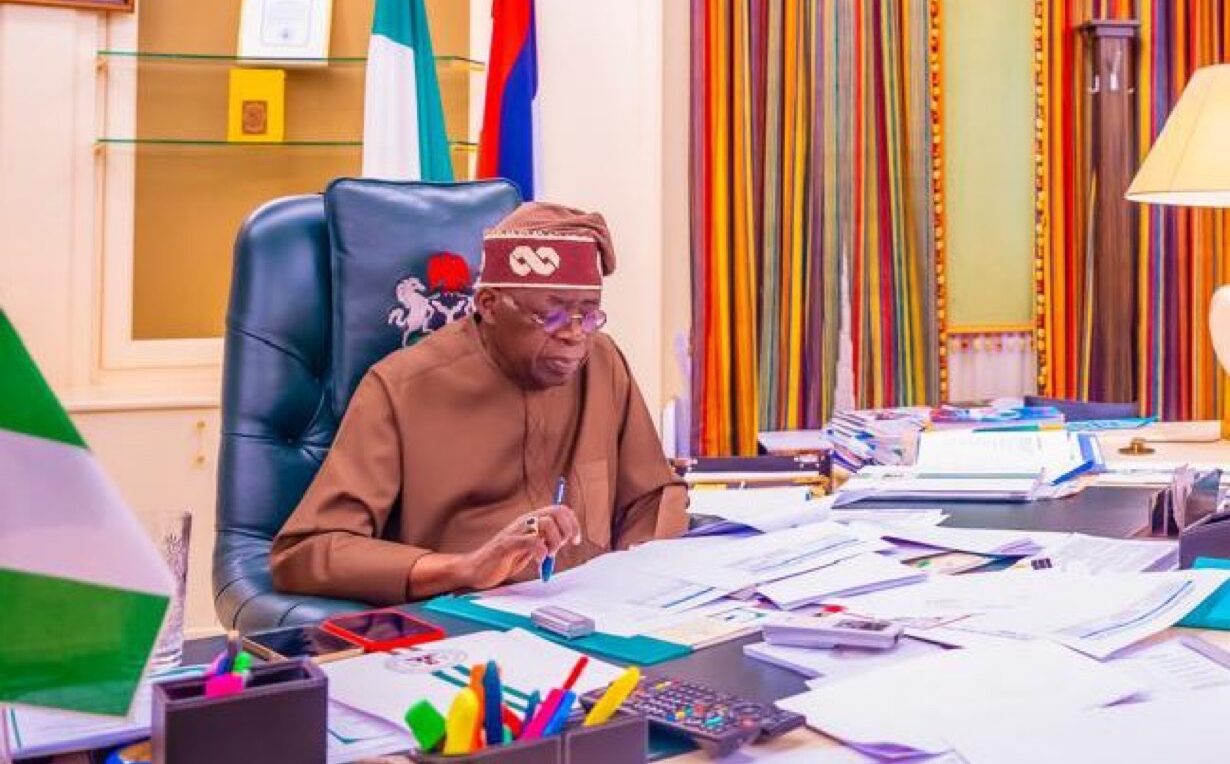
An Abuja High Court has cleared the way for the implementation of Nigeria’s new tax regime scheduled to commence on January 1, 2026, dismissing a suit seeking to halt the programme.
The ruling gives the Federal government, the Federal Inland Revenue Service (FIRS) and the National Assembly full legal backing to proceed with the take-off of the new tax laws.
The suit was filed by the Incorporated Trustees of African Initiative for Abuse of Public Trustees, which dragged the Federal Republic of Nigeria, the President, the Attorney-General of the Federation, the President of the Senate, Speaker of the House of Representatives and the National Assembly before the court over alleged discrepancies in the recently enacted tax laws.
In an ex-parte motion, the plaintiff sought an interim injunction restraining the Federal Government, FIRS, the National Assembly and related agencies from implementing or enforcing the provisions of the Nigeria Tax Act, 2025; Nigeria Tax Administration Act, 2025; Nigeria Revenue Service (Establishment) Act, 2025; and the Joint Revenue Board of Nigeria (Establishment) Act, 2025, pending the determination of the substantive suit.
The group also asked the court to restrain the President from implementing the laws in any part of the federation pending the hearing of its motion on notice.
However, in a ruling delivered on Tuesday, Justice Kawu struck out the application, holding that it lacked merit and failed to establish sufficient legal grounds to warrant the grant of the reliefs sought.
The court ruled that the plaintiffs did not demonstrate how the implementation of the new tax laws would occasion irreparable harm or violate any provision of the Constitution, stressing that matters of fiscal policy and economic reforms fall squarely within the powers of government.
Justice Kawu further held that once a law has been duly enacted and gazetted, any alleged errors or controversies can only be addressed through legislative amendment or a substantive court order, noting that disagreements over tax laws cannot stop the implementation of an existing law.
Consequently, the court affirmed that there was no legal impediment to the commencement of the new tax regime and directed that implementation should proceed as scheduled from January 1, 2026.
The new tax regime is anchored on four landmark tax reform bills signed into law in 2025 as part of the Federal Government’s broader fiscal and economic reform agenda aimed at boosting revenue, simplifying the tax system and reducing leakages.
The laws — the Nigeria Tax Act, 2025, Nigeria Tax Administration Act, 2025, Nigeria Revenue Service (Establishment) Act, 2025, and the Joint Revenue Board of Nigeria (Establishment) Act, 2025 — consolidate and replace several existing tax statutes, including laws governing companies income tax, personal income tax, value added tax, capital gains tax and stamp duties.
Key elements of the reforms include the harmonisation of multiple taxes into a more streamlined framework, expansion of the tax base, protection for low-income earners and small businesses, and the introduction of modern, technology-driven tax administration systems such as digital filing and electronic compliance monitoring.
The reforms also provide for the restructuring of federal tax administration, including the creation of the Nigeria Revenue Service, to strengthen efficiency, coordination and revenue collection across government levels.
While the Federal government has described the reforms as critical to stabilising public finances and funding infrastructure and social services, the laws have generated intense public debate, with some civil society groups and political actors alleging discrepancies between the versions passed by the National Assembly and those later gazetted.
These concerns sparked calls for suspension, re-gazetting and legal action, culminating in the suit dismissed by the Abuja High Court.
Reacting to the judgment, stakeholders described the ruling as a major boost for the reforms, saying it has removed all legal obstacles that could have delayed the implementation of the new tax framework.
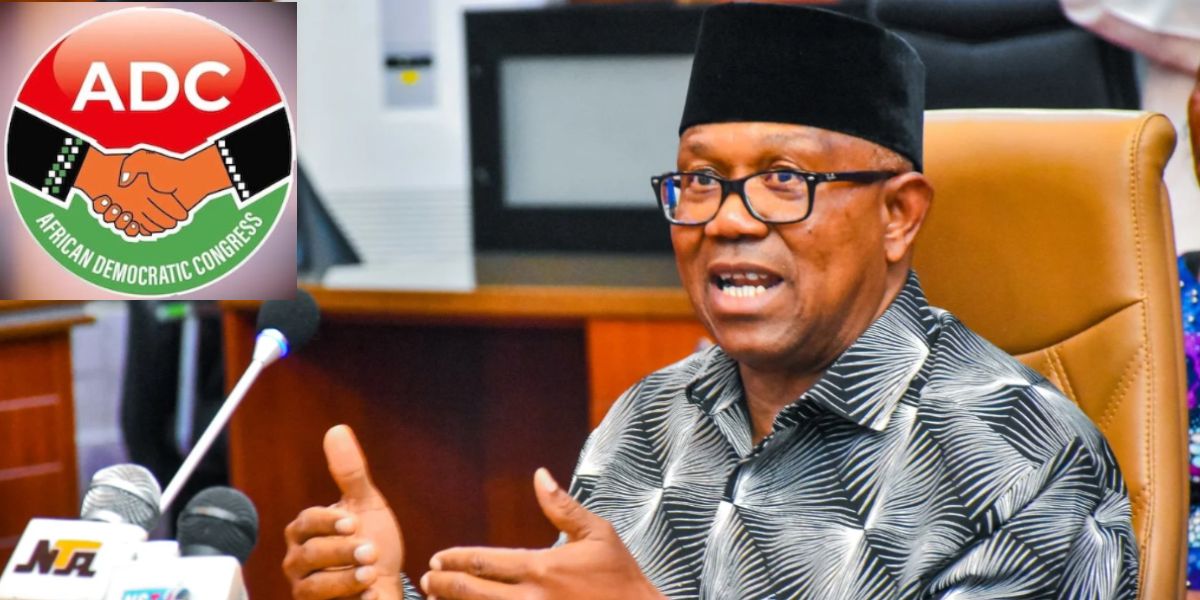
Former governor of Anambra State, presidential candidate of the Labour Party (LP) in the 2023 election, Mr. Peter Obi, has officially defected to the coalition-backed African Democratic Congress (ADC).
Obi announced the decision on Tuesday at an event held at the Nike Lake Resort, Enugu.
“We are ending this year with the hope that in 2026 we will begin a rescue journey,” Obi said.
The National Chairman of the ADC, David Mark, was among the attendees.

United States Representative Riley Moors has said further military strikes against Islamic State-linked militants in Nigeria could follow recent operations ordered by President Donald Trump, describing the actions as aimed at improving security and protecting Christian communities facing violence.
Moore made the remarks during a televised interview in which he addressed U.S. military strikes carried out on Christmas Day against militant targets in North-west Nigeria.
The strikes were conducted in coordination with the Nigerian government, according to U.S. and Nigerian officials.
“President Trump is not trying to bring war to Nigeria, he’s bringing peace and security to Nigeria and to the thousands of Christians who face horrific violence and death,” Moore said.
He said the Christmas Day strikes against Islamic State affiliates had provided hope to Christians in Nigeria, particularly in areas affected by repeated attacks during past festive periods.
According to U.S. authorities, the strikes targeted camps used by Islamic State-linked groups operating in parts of north-west Nigeria.
Nigerian officials confirmed that the operation was carried out with intelligence support from Nigerian security agencies as part of ongoing counter-terrorism cooperation between both countries.
The United States Africa Command said the operation was intended to degrade the operational capacity of extremist groups responsible for attacks on civilians and security forces.
Nigerian authorities have described the targeted groups as a threat to national security, noting their involvement in killings, kidnappings and raids on rural communities.
Moore said the strikes marked a shift from previous years in which attacks were carried out against civilians during the Christmas period. He said the U.S. administration was focused on preventing further violence by targeting militant groups before they could launch attacks.
U.S. officials have said the military action was carried out with the consent of the Nigerian government and formed part of broader security cooperation between the two countries. Nigeria has received intelligence, training and logistical support from international partners as it seeks to contain militant activity.
Moore had previously called for stronger international attention to attacks on Christian communities in Nigeria and has urged continued U.S. engagement in addressing extremist violence. He said further action would depend on developments on the ground and continued coordination with Nigerian authorities.
Nigerian officials have maintained that counter-terrorism operations are directed at armed groups threatening civilians, regardless of religion, and have reiterated their commitment to restoring security across affected regions.


