
Headlines
Faye Sworn-in As Senegal’s New President

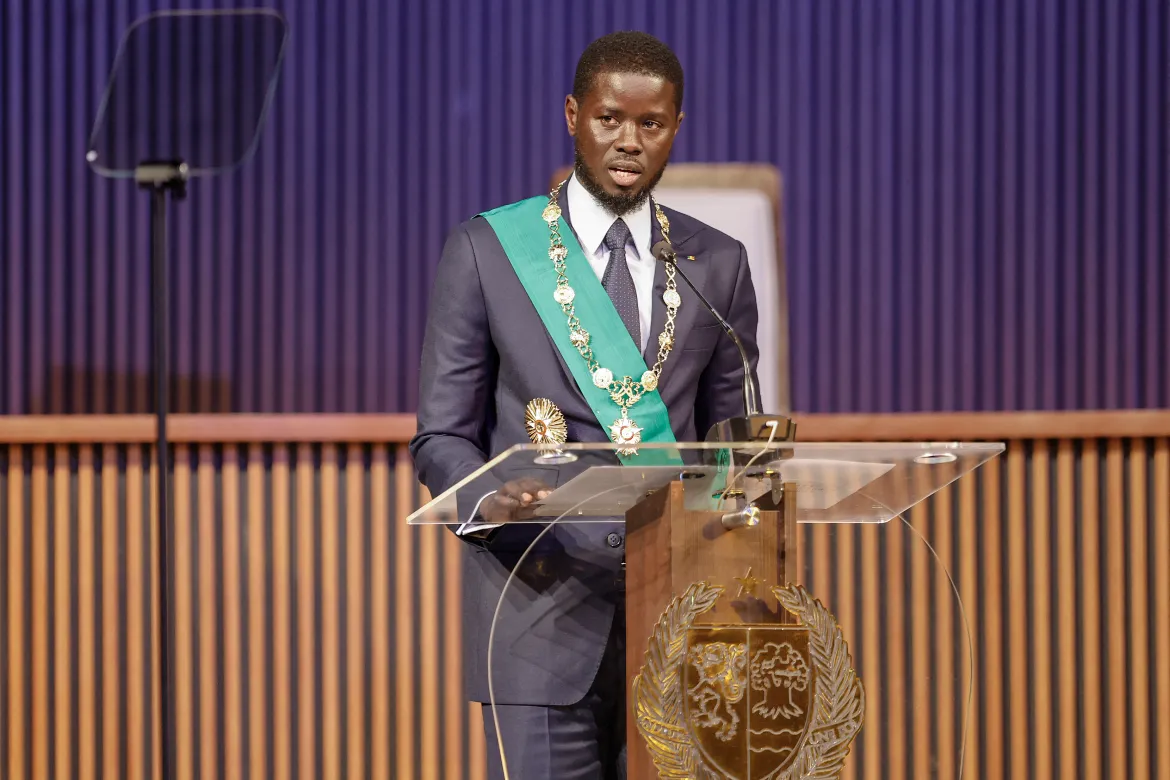
Bassirou Diomaye Faye, a left-wing pan-Africanist, has been sworn-in as Senegal’s youngest president after sweeping to a first-round victory on a pledge of radical reform 10 days after he was released from prison.
The 44-year-old has never before held an elected office but several African leaders attended the ceremony in the new town of Diamniadio, near the capital Dakar.
“Before God and the Senegalese nation, I swear to faithfully fulfill the office of President of the Republic of Senegal,” Faye said before the gathered officials.
He also vowed to “scrupulously observe the provisions of the Constitution and the laws” and to defend “the integrity of the territory and national independence, and to spare no effort to achieve African unity”.
The formal handover of power with outgoing President Macky Sall will take place at the presidential palace in Dakar.
Faye was among a group of political opponents freed from prison 10 days before the March 24 presidential ballot under an amnesty announced by Sall, who had tried to delay the vote.
Faye’s campaign was launched while he was still in detention.
The former tax inspector becomes the West African state’s fifth president since independence from France in 1960 and the first to openly admit to a polygamous marriage.
Working with his populist mentor Ousmane Sonko, who was barred from the election, Faye declared their priorities in his victory speech: national reconciliation, easing a cost-of-living crisis and fighting corruption.
The anti-establishment leader has vowed to restore national sovereignty over key assets such as the oil, gas and fishing sectors.
Faye wants to leave the regional CFA franc, which he sees as a French colonial legacy, and to invest more in agriculture with the aim of reaching food self-sufficiency.
But he has also sought to reassure investors that Senegal “will remain a friendly country and a sure and reliable ally for any partner that engages with us in virtuous, respectful and mutually productive cooperation.”
After three tense years and deadly unrest in the traditionally stable nation, his democratic victory was hailed from Washington to Paris, via the African Union and the European Union.
US Secretary of State Antony Blinken on Monday spoke with the president-elect by telephone and “underscored the United States’ strong interest in deepening the partnership” between their two countries, the State Department said.
On the international stage, Faye seeks to bring military-run Burkina Faso, Mali and Niger back into the fold of the regional Economic Community of West African States (ECOWAS) bloc.
New generation of politicians
Commonly known as Diomaye, or “the honourable one” in the local Serer language, he won the election with 54.3 percent of the vote.
It was a remarkable turnaround after the government had dissolved the Pastef party he founded with Sonko in 2014, with Sall postponing the election.
Faye, a practising Muslim from a humble background with two wives and four children, represents a new generation of youthful politicians.
He has voiced admiration for US ex-president Barack Obama and South African anti-apartheid hero Nelson Mandela.
However, Faye and the government he must unveil will quickly face major challenges.
He does not have a majority in the National Assembly and will have to look to build alliances to pass new laws, or call a legislative election, which will become an option from mid-November.
The biggest challenge will be creating enough jobs in a nation where 75 percent of the 18-million population is aged under 35 and the unemployment rate is officially 20 percent.
Many youths have considered the future so bleak they have risked their lives to join the waves of migrants trying to reach Europe.
Sall, meanwhile, has been appointed special envoy of the Paris Pact for People and Planet, created to combat poverty, protect the planet and support vulnerable countries.


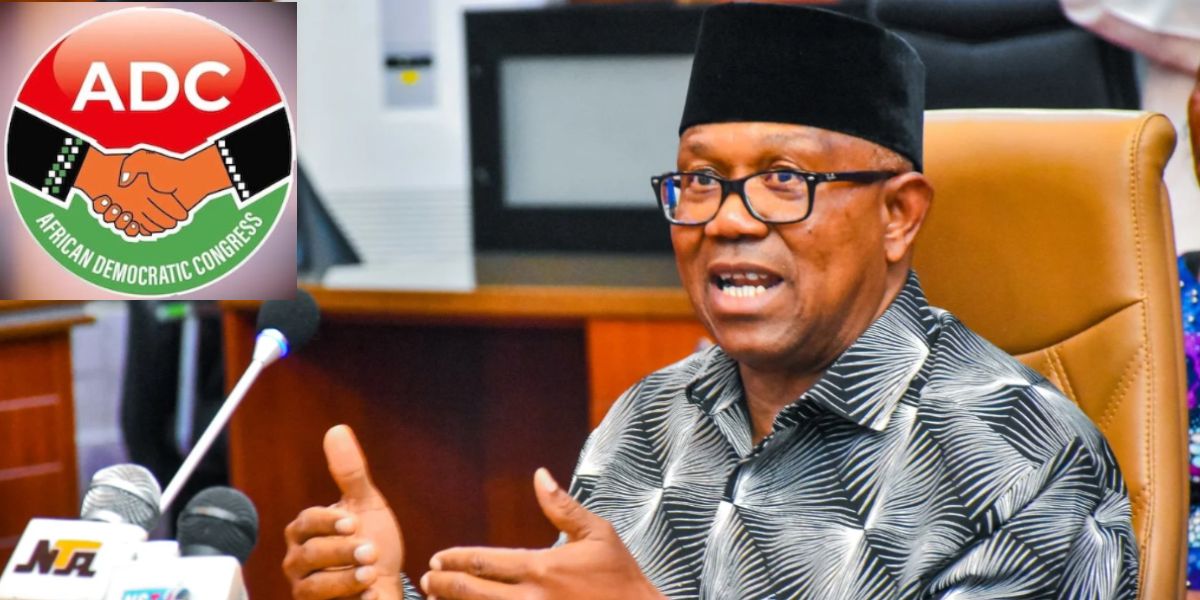
Former governor of Anambra State, presidential candidate of the Labour Party (LP) in the 2023 election, Mr. Peter Obi, has officially defected to the coalition-backed African Democratic Congress (ADC).
Obi announced the decision on Tuesday at an event held at the Nike Lake Resort, Enugu.
“We are ending this year with the hope that in 2026 we will begin a rescue journey,” Obi said.
The National Chairman of the ADC, David Mark, was among the attendees.

United States Representative Riley Moors has said further military strikes against Islamic State-linked militants in Nigeria could follow recent operations ordered by President Donald Trump, describing the actions as aimed at improving security and protecting Christian communities facing violence.
Moore made the remarks during a televised interview in which he addressed U.S. military strikes carried out on Christmas Day against militant targets in North-west Nigeria.
The strikes were conducted in coordination with the Nigerian government, according to U.S. and Nigerian officials.
“President Trump is not trying to bring war to Nigeria, he’s bringing peace and security to Nigeria and to the thousands of Christians who face horrific violence and death,” Moore said.
He said the Christmas Day strikes against Islamic State affiliates had provided hope to Christians in Nigeria, particularly in areas affected by repeated attacks during past festive periods.
According to U.S. authorities, the strikes targeted camps used by Islamic State-linked groups operating in parts of north-west Nigeria.
Nigerian officials confirmed that the operation was carried out with intelligence support from Nigerian security agencies as part of ongoing counter-terrorism cooperation between both countries.
The United States Africa Command said the operation was intended to degrade the operational capacity of extremist groups responsible for attacks on civilians and security forces.
Nigerian authorities have described the targeted groups as a threat to national security, noting their involvement in killings, kidnappings and raids on rural communities.
Moore said the strikes marked a shift from previous years in which attacks were carried out against civilians during the Christmas period. He said the U.S. administration was focused on preventing further violence by targeting militant groups before they could launch attacks.
U.S. officials have said the military action was carried out with the consent of the Nigerian government and formed part of broader security cooperation between the two countries. Nigeria has received intelligence, training and logistical support from international partners as it seeks to contain militant activity.
Moore had previously called for stronger international attention to attacks on Christian communities in Nigeria and has urged continued U.S. engagement in addressing extremist violence. He said further action would depend on developments on the ground and continued coordination with Nigerian authorities.
Nigerian officials have maintained that counter-terrorism operations are directed at armed groups threatening civilians, regardless of religion, and have reiterated their commitment to restoring security across affected regions.
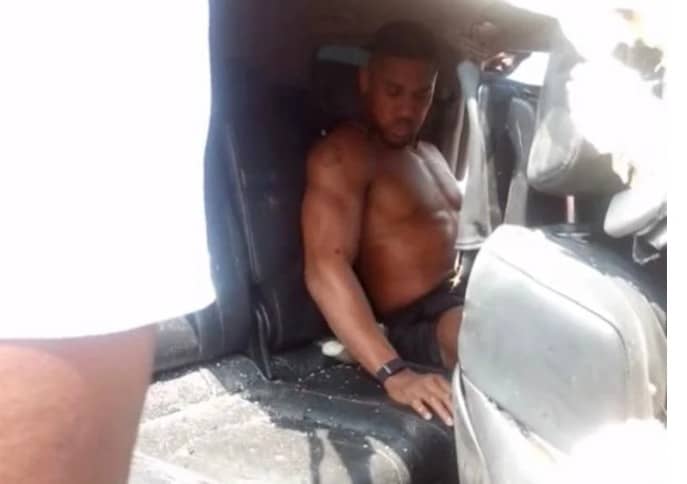
World-renowned boxer Anthony Joshua on Monday survived a ghastly road accident in Makun, Ogun State.
Eyewitnesses report that the incident occurred along a busy highway of the Lagos-Ibadan expressway.
The vehicle carrying Joshua, a Lexus Jeep with the number plate, KRD 850 HN, reportedly collided with a stationary truck under circumstances that are still being investigated.
Joshua reportedly sustained minor injuries, while two persons were said to have died on the spot.


