
Headlines
FG Fires Togo, Benin Degree Holders from MDAs


The Federal Government has fired some civil servants with degrees from private tertiary institutions in Benin Republic and Togo, according to The Punch report.
The directive affected federal workers who graduated from the institutions from 2017 to date.
The Director of Information and Public Relations in the Office of the Secretary to the Government of the Federation, Segun Imohiosen, confirmed the development to one of our correspondents on Wednesday.
In August, the Federal Government announced that only eight universities had been accredited to award degrees to Nigerians in Togo and Benin Republic.
This followed an undercover investigation report in which a Daily Nigerian journalist acquired a degree from a university in Benin Republic in two months and used it to participate in the National Youth Service Corps scheme.
Following the report, the government banned the accreditation and evaluation of degrees from tertiary institutions in Benin Republic and Togo.
The Federal Government also set up an Inter-Ministerial Investigative Committee on Degree Certificate Milling to probe the activities of certificate racketeers.
The then Minister of Education, Tahir Mamman, revealed that over 22,500 Nigerians obtained fake degree certificates from Benin Republic and Togo and such certificates would be cancelled.
Mamman explained that the revelation was part of a report submitted to the Federal Executive Council by the investigative committee instituted to probe degree certificate racketeering by foreign and local universities in Nigeria.
He insisted there was no going back on the Federal Government’s decision to cancel the about 22,500 certificates awarded to Nigerians by some “fake” universities in the two francophone countries.
Mamman maintained that the decision to invalidate the certificates was not harsh as Nigerians who obtained degree certificates from such tertiary institutions dent the country’s image.
He said, “Most of those parading the fake certificates didn’t even leave the shores of Nigeria but got their certificates through racketeering in collaboration with government officials at home and abroad.
“The fake universities capitalised on the gullibility of Nigerians patronising such fake schools. The Federal Government, through the offices of the Head of Civil Service and the Secretary to the Government of the Federation, would fish out those in the government’s employment with such fake certificates. I also urge the private sector to follow suit.”
Although the exact number of affected civil servants could not be ascertained, it was gathered that the Office of the Secretary to the Government of the Federation (Cabinet Affairs) had issued a memo to all the Ministries, Departments, and Agencies to implement the order.
A source, who pleaded anonymity because she was not authorised to speak on the matter, told The Punch that the sacking of the affected workers was based on the inter-ministerial committee’s recommendation.
The official stated, “There was a letter from the SGF cabinet affairs directing all ministries, departments and agencies of government to identify and terminate the appointments of workers employed with certificates obtained from the private universities in the Republic of Benin and Togo from 2017 to date.
“The decision is part of the recommendations of the committee set up to investigate the certificates of people who graduated from the universities.”
Our correspondent also gathered that some agencies like the National Youth Services Corps have commenced the implementation of the directive.
The NYSC Director of Information, Caroline Embu, confirmed to our correspondent that five members of staff had been sacked in line with the SGF’s directive.
She said, “Five members of staff were affected by the directive contained in the letter from the office of the SGF. No more.”


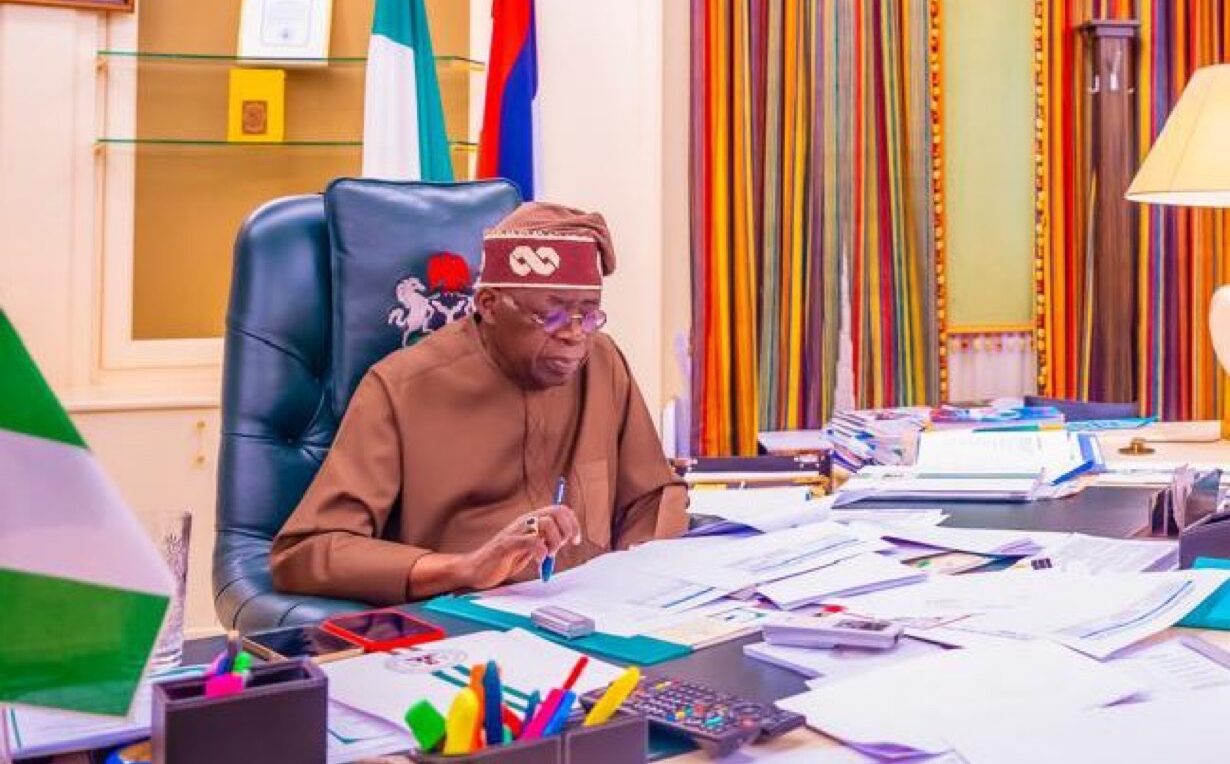
President Bola Tinubu has approved the posting of four ambassador-designates out of the 68 confirmed by the Senate last December.
The approvals were conveyed in a statement signed by Bayo Onanuga, Special Adviser to the President on Information and Strategy, dated January 22, 2024.
According to the statement, Ambassador Ayodele Oke has been posted as ambassador-designate to France, while Colonel Lateef Are has been posted as ambassador-designate to the United States of America.
Also confirmed by the President is the posting of Ambassador Amin Dalhatu, former ambassador to South Korea, as the high commissioner-designate to the United Kingdom.
Usman Isa Dakingari Suleiman, former governor of Kebbi, is the ambassador-designate to Turkey, where the President is scheduled to begin a state visit next week.
In a memo to the Ministry of Foreign Affairs, President Tinubu urged the ministry to notify the governments of the four countries about the ambassador-designates, in accordance with diplomatic procedures.

The Chief Judge of Rivers State, Justice Simeon Amadi, has declined to set up a judicial panel to investigate Governor Siminalayi Fubara, citing a court order.
The Rivers State House of Assembly had requested that Amadi set up a seven-member panel to probe Fubara and his deputy, Ngozi Odu, over allegations of gross misconduct.
However, in a letter dated January 20 and addressed to the Speaker of the House, Martins Amaewhule, the chief judge cited two court orders barring him from receiving, forwarding, or considering any requests to form such a panel.
The judge stated that the orders were served on his office on January 16, 2026 and remain in force.
The chief judge emphasised that constitutionalism and the rule of law require all authorities to obey subsisting court orders, irrespective of their perception of the orders’ validity.
He referenced legal precedents, noting that in a similar case in 2007, the Chief Judge of Kwara State was condemned for ignoring a restraining court order when setting up an investigative panel, a decision later voided by the Court of Appeal.
Justice Amadi further observed that the Speaker has already filed an appeal against the court orders at the Court of Appeal, adding another layer to the ongoing legal proceedings surrounding the allegations.
“By the doctrine of ‘lis pendens’, parties and the court have to await the outcome of the appeal,” he said.
Justice Amadi further stated that the existence of the injunctions and the pending appeal had effectively tied his hands.
“In view of the foregoing, my hand is fettered, as there are subsisting interim orders of injunction and appeal against the said orders. I am therefore legally disabled at this point from exercising my duties under Section 188(5) of the Constitution in the instant,” he said.
The chief judge appealed to the lawmakers to recognise the legal constraints surrounding the matter.
Justice Amadi, therefore, urged the state assembly to be “magnanimous enough to appreciate the legal position of the matter.”

The Federal High Court sitting in Abuja has reportedly affirmed the removal of Julius Abure as the national chairman of the Labour Party, LP.
The Court also ordered the Independent National Electoral Commission, INEC, to recognize the Senator Nenadi Usman-led National Caretaker Committee as the party’s lawful leadership.
The development was disclosed by human rights lawyer, Inibehe Effiong, in a post on X, where he said he was present at the Federal High Court when the judgment was delivered in a related case.
Effiong stated that Justice Lifu delivering judgment on Wednesday, upheld the Nenadi Usman-led committee as the only valid and lawful leadership of the Labour Party, reaffirming that Abure’s tenure had elapsed in line with an earlier Supreme Court judgment.
The court consequently directed INEC to immediately recognize Nenadi Usman as the party’s leader.
He wrote: “I am currently before the Federal High Court in Abuja for a case. I listened to judgement delivered in an another case.
“Honourable Justice Lifu has just upheld Senator Nnadi Esther Usman-led National Caretaker Committee as the only valid and lawful leadership of the Labour Party.
“The Judge reaffirmed that by the Supreme Court’s judgement, Julius Abure’s tenure had since elapsed.


