
Headlines
FG Suspends Nigeria Air, Says Project’s a Fraud

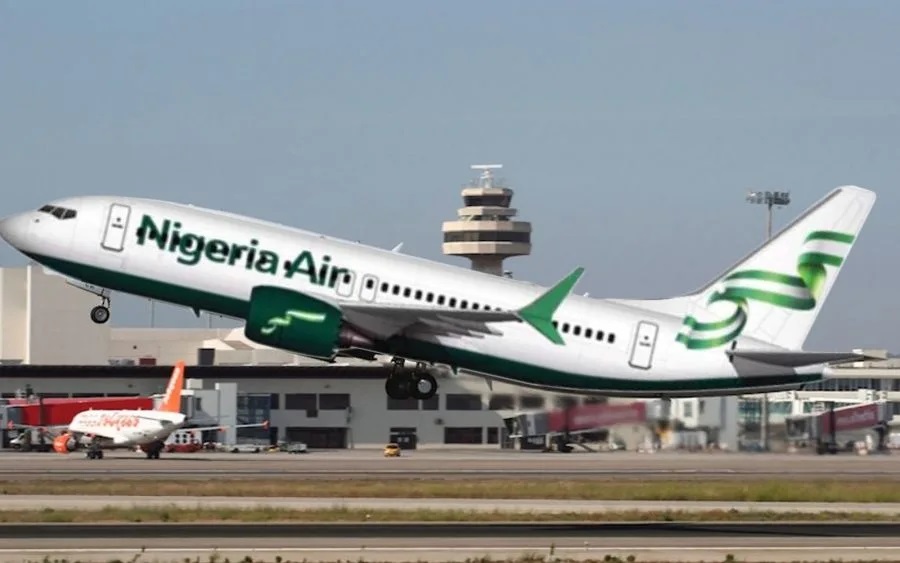
The Minister of Aviation and Aerospace Development, Festus Keyamo, has described the controversial Nigeria Air unveiled during the Muhammadu Buhari administration as a fraud, adding that it has been suspended.
Keyamo, who gave details about the project, noted that the ‘national carrier’ that was supposed to be an indigenous project and one that was supposed to spark hope for Nigerians, was flawed with a lot of secrecy and fraudulent activities.
The minister made the declaration on Nigeria Air while fielding questions from journalists during the second day of the Ministerial Sectoral update on Monday, in Abuja.
According to him, Keyamo it is anti-Nigeria.
He said: “It was never Air Nigeria. It was Ethiopian trying to flag our flag and not Air Nigeria. That is the truth; it was not Nigeria.
“It only printed Air Nigeria. It was an Ethiopian airline trying to fly our flag. If it is so, why not allow our local people to fly our flag? Why bring a foreigner to fly our flag?
“So nobody should deceive you that it is Air Nigeria. Air Nigeria must be indigenous, wholly Nigeria or must be for the full benefit of Nigerians. Not that 60 percent of the profit is given to another country.
“How does that benefit us? It remains suspended. It remains so,” he added.


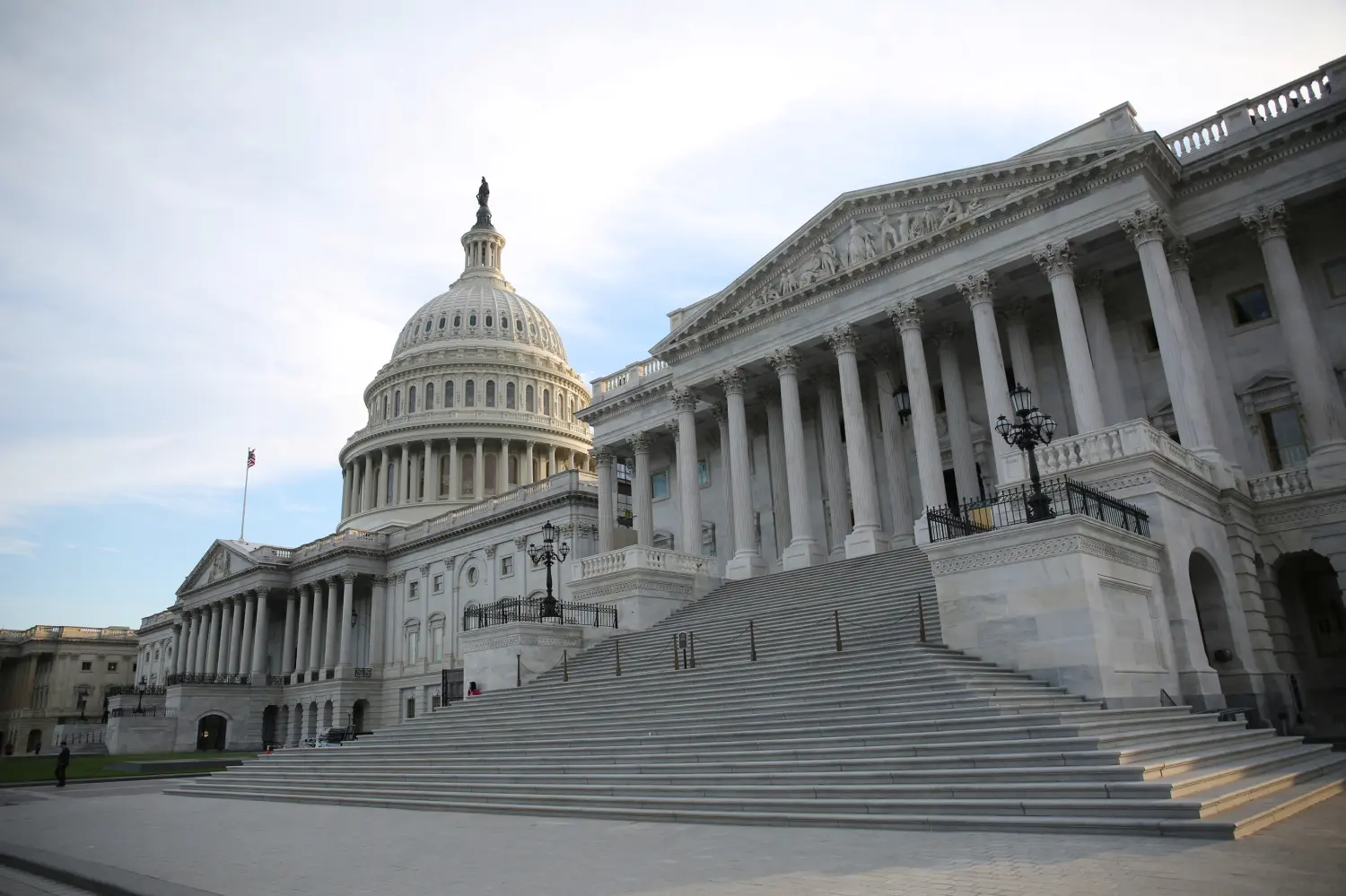
United States of America lawmakers have sharply contradicted the Nigerian government’s position on the ongoing massacres in the country, describing the violence as “escalating,” “targeted,” and overwhelmingly directed at Christians during a rare joint congressional briefing on Tuesday.
The closed-door session – convened by House Appropriations, Vice Chair Mario Díaz-Balart, as part of a Trump-ordered investigation – examined recent killings and what Congress calls Abuja’s “deeply inadequate” response.
President Trump has asked lawmakers, led by Reps. Riley Moore and Tom Cole, to compile a report on persecution of Nigerian Christians and has even floated the possibility of U.S. military action against Islamist groups responsible for the attacks.
At the briefing, Vicky Hartzler, chair of the U.S. Commission on International Religious Freedom, warned that “religious freedom [is] under siege” in Nigeria, citing mass abductions of schoolchildren and assaults in which “radical Muslims kill entire Christian villages [and] burn churches.” She said abuses were “rampant” and “violent,” claiming Christians are targeted “at a 2.2 to 1 rate” compared with Muslims.
While acknowledging Nigeria’s recent move to reassign 100,000 police officers from VIP protection, Hartzler said the country is entering a “coordinated and deeply troubling period of escalated violence.” She urged targeted sanctions, visa bans, asset freezes and tighter conditions on U.S. aid, insisting Abuja must retake villages seized from Christian communities so displaced widows and children can return home.
The strongest rebuke came from Dr. Ebenezer Obadare of the Council on Foreign Relations, who dismissed Abuja’s narrative that the killings are not religiously motivated. He called the idea that extremists attack Muslims and Christians equally a “myth,” stressing the groups operate “for one reason and one reason only: religion.” Higher Muslim casualty figures, he argued, reflect geography, not equal targeting.
Obadare described Boko Haram as fundamentally anti-democratic and accused the Nigerian military of being “too corrupt and incompetent” to defeat jihadist networks without external pressure. He urged Washington to push Nigeria to disband armed religious militias, confront security-sector corruption and respond swiftly to early warnings.
Sean Nelson of ADF International called Nigeria “the deadliest country in the world for Christians,” claiming more Christians are killed there than in all other countries combined and at a rate “five times” higher than Muslims when adjusted for population. He said extremists also kill Muslims who reject violent ideologies, undermining Abuja’s argument that the crisis is driven mainly by crime or communal disputes.
He pressed for tighter oversight on U.S. aid, recommending that some assistance be routed through faith-based groups to avoid corruption. Without “transparency and outside pressure,” he said, “nothing changes.”
Díaz-Balart criticised the Biden administration’s reversal of Trump’s designation of Nigeria as a “country of particular concern” in 2021, saying the decision had “clearly deadly consequences.” Lawmakers from the Appropriations, Foreign Affairs and Financial Services committees signaled further oversight actions as they prepare the Trump-directed report.
Hartzler pointed to recent comments by Nigeria’s Speaker of the House acknowledging a “coordinated and deeply troubling period of escalated violence,” calling it a rare moment of candor. She also welcomed the redeployment of police officers as “a promising start after years of neglect.”
But she stressed that these gestures are far from sufficient, insisting the Nigerian government must demonstrate a real commitment to “quell injustice,” act swiftly on early warnings, and embrace transparency.
The Nigerian Embassy did not immediately respond to a request for comment, according to source.
Headlines
Book of Infamy: Umo Eno, Umar Bago, Egbetokun Listed Among Media Unfriendly Public Officers
Niger and Akwa Ibom state governors, Umar Bago and Umo Eno respectively, have been listed in the “Book of Infamy” by the International Press Institute (IPI) Nigeria as the worst offenders of media repression in the country.
The IPI also included the Inspector General of Police, Kayode Egbetokun, in the blacklist for continued police harassment and attacks on journalists.
This was made known on Tuesday during the IPI Annual Conference in Abuja, with Vice President Kashim Shettima and Minister of Information and National Orientation, in attendance.
At the conference, IPI President Musikilu Mojeed said the governors and the police chief have consistently prevented journalists from performing their legitimate responsibilities.
He said, “Mohammed Umar Bago, Niger Governor, Umo Eno, Governor of Akwa Ibom and the IG of Police, Kayode Egbetokun, are hereby written in the book of infamy.”
Mojeed added that Egbetokun was added for “failing to uphold his constitutional duties and allowing systematic media oppression”.
In recent years, media reports have highlighted multiple instances of repression under the two governors.
In August 2025, Governor Umar Bago was reported to have ordered the closure of Badeggi FM, a privately owned radio station in Minna, Niger State, accusing it of inciting violence.
The station was sealed by security agents, prompting condemnation from rights organisations such as Amnesty International and the Nigerian Bar Association, which described the move as unlawful and an attack on independent journalism.
Earlier in 2025, a postgraduate student at Ibrahim Badamasi Babangida University, Lapai, Isah Mokwa was reportedly arrested and detained after criticising Governor Bago on social media.
In Akwa Ibom State, under Governor Umo Eno, a Channels Television reporter and cameraman were expelled from the Government House Press Centre in May 2025 after airing a video in which the governor allegedly announced plans to defect from his political party.
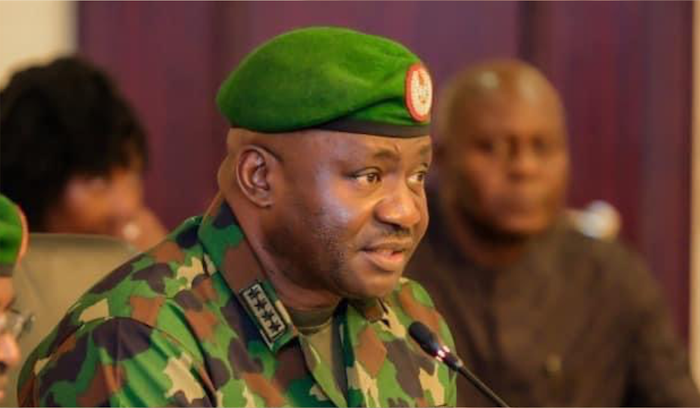
President Bola Tinubu has named retired General Christopher Gwabin Musa as the new Minister of Defence.
This comes barely 24 hours after the presidency announced the resignation Of Mohammed Badaru Abubakar from the position.
While presidential spokesman, Bayo Onanuga, had said Badaru resigned on health grounds, the 63-year-old former Jigawa State governor’s resignation may not be unconnected with the recent surge in insecurity in the country.
Onanuga said, “In a letter to Senate President Godswill Akpabio, President Tinubu conveyed General Musa’s nomination as the successor to Alhaji Mohammed Badaru Abubakar, who resigned on Monday.”
General Musa, 58, served as Chief of Defence Staff from 2023 until October 2025.
He won the Colin Powell Award for Soldiering in 2012.
Born in Sokoto in 1967, General Musa received his primary and secondary education there before attending the College of Advanced Studies in Zaria. He graduated in 1986 and enrolled at the Nigerian Defence Academy the same year, earning a Bachelor of Science degree upon graduation in 1991.
In 2019, he served as Deputy Chief of Staff, Training/Operations, Headquarters Infantry Centre and Corps; Commander, Sector 3, Operation Lafiya Dole; and Commander, Sector 3 Multinational Joint Task Force in the Lake Chad Region.
In 2021, General Musa was appointed Theatre Commander, Operation Hadin Kai. He later became Commander of the Nigerian Army Infantry Corps before being appointed Chief of Defence Staff by President Tinubu in 2023.
In the letter to the Senate, President Tinubu expressed confidence in General Musa’s ability to lead the Ministry of Defence and further strengthen Nigeria’s security architecture.


