
Business
FG to Disburse N649.4bn Paris Club Refund Balance to States

- /home/rhoncare/pointblank.ng/wp-content/plugins/mvp-social-buttons/mvp-social-buttons.php on line 27
https://pointblank.ng/wp-content/uploads/2019/04/43690aeb-zainab-ahmed-800x600.jpg&description=FG to Disburse N649.4bn Paris Club Refund Balance to States', 'pinterestShare', 'width=750,height=350'); return false;" title="Pin This Post">
- Share
- Tweet /home/rhoncare/pointblank.ng/wp-content/plugins/mvp-social-buttons/mvp-social-buttons.php on line 69
https://pointblank.ng/wp-content/uploads/2019/04/43690aeb-zainab-ahmed-800x600.jpg&description=FG to Disburse N649.4bn Paris Club Refund Balance to States', 'pinterestShare', 'width=750,height=350'); return false;" title="Pin This Post">
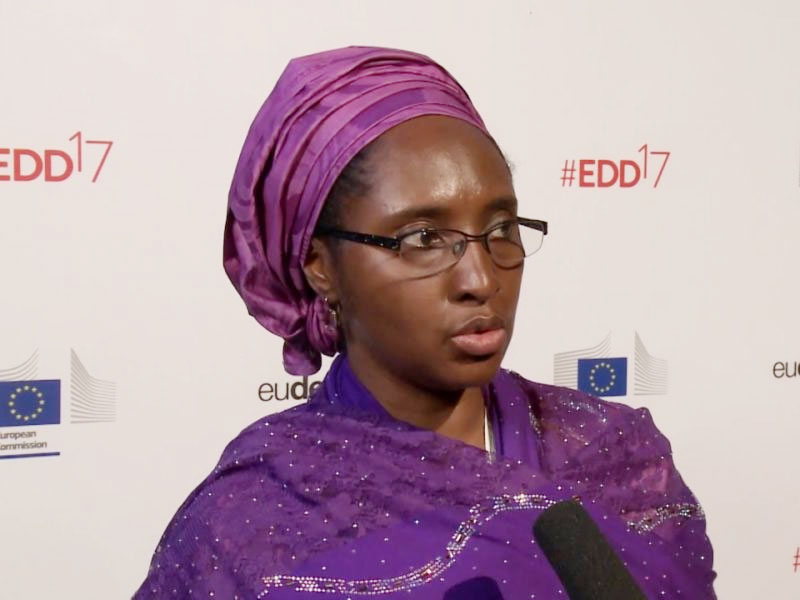
States yet to collect their balance of the Paris Club debts refunds would soon be paid, the Supervising Minister of Finance, Zainab Ahmed, said on Thursday.
The Minister who disclosed this in Abuja during her quarterly briefing with journalists on the activities of the Finance Ministry, said about N649.434 billion has been released for that purpose.
“For the final phase of the Paris Club debts refunds, the total sum of N649.434 billion was verified by the Ministry as the outstanding balance to be paid to the State Governments,” the Minister said.
The amount to be paid is lower than about N691.560 billion the Central Bank of Nigeria (CBN) paid as at March 2019 partly as a result of the exchange rate differential at the point of payment.
She assured that States with outstanding balances of the refund would be paid in due course.
‘Exit from recession’
According to the Minister, the implementation of policies under the Economic Recovery & Growth Plan (ERGP) led the economy to exit recession and currently on a path of sustainable, inclusive and diversified growth.
She, however, lamented the country’s “unsatisfactory revenue performance”, particularly in the non-oil sector, saying this has negatively impacted financing of critical sectors such as health, education, and infrastructure.
The Minister said the significant improvement in the country’s external reserves from $28.3 billion in 2015 to $44.69 billion as at May 13, 2019 has helped stabilise the currency exchange rates and economy.
On the role of domestic revenue mobilisation for continued economic success and inclusive growth in the country, Mrs Ahmed said time to act to accelerate all revenue initiatives is now.
She said she has accepted President Muhammadu Buhari’s call to action, by prioritising revenue generation, and strategic revenue growth initiatives and cost-cutting interventions aimed at boosting revenue performance.
On the progress recorded in the economy, the Minister said the country achieved “seven consecutive quarters of Gross Domestic Product (GDP) growth since exiting recession in the second quarter of 2017.”
“As at Q4 2018, the economy grew by 2.38 per cent in real terms (year-on-year), representing an increase of 0.27 per cent compared to Q4 2017 and, a rise of 0.55 per cent, compared with the growth rate in Q3 2018.
“Overall, GDP grew at an annual rate of 1.93 per cent in 2018 compared with 0.82 per cen in 2017, representing an overall increase of 1.11 per cent year on year,” she said.
In 2018, she said the country’s budgeted revenue was about N7.2 trillion, against the realised figure of N3.96 trillion, signifying a negative variance of 45 per cent.
Despite the shortfall, she said the government “was able to fully pay workers’ salaries and service its debts 100 per cent.”
On capital releases, the Minister said, as at May 14, 2019, “seven months overhead was released for 2018, two months for 2019, and N2.079 trillion capital expenditure.”
Strategies
“We have adopted a prudent debt management strategy which ensures we invest what we borrow in capital projects. Although our debt by international standards, at 19.09 per cent Nigeria’s debt to GDP ratio, is well below the threshold of 56 per centfor countries similar to Nigeria. The government is addressing the issue of reducing the debt service to revenue through a combination of debt substitution strategies.”
On ongoing reforms by her Ministry at the Federal Inland Revenue Services (FIRS) and the Joint Tax Board (JTB), she said the country’s taxpayer database has been expanded to 35 million from nine million in the four years of the Buhari-led administration.
She said this figure is expected to grow to 45 million individual and corporate payers when the ongoing integration of different biometric databases is completed.
“Through reforms at the Federal Inland Revenue Services (FIRS) and the Joint Tax Board (JTB), we have been able to harmonise the Tax Identity Number (TIN) database to cover Federal, States and Local Governments to establish a unified identity number system for uniquely identifying tax payers,” she said.
Premium Times


The United Bank for Africa (UBA) is poised to give five young Nigerians a shot at getting a share of N41million in educational grants towards their university education.
The Bank, through UBA Foundation National Essay Competition (NEC), is the much talked about life changing opportunity and it is back for with the 16th edition, and this year, with even more reason for young writers to put pen to paper and change their lives in the process.
Previously, there was a lot of talk around education not given priority or due reward as against reality shows or ephemeral activities. Now that talk is gone with the wind.
The UBA annual competition is designed to give senior secondary school students across Nigeria a platform to express their ideas, showcase their writing and critical thinking skills, which will see the top five finalists, receive financial support throughout their university education.
Most importantly, the prize pot has just gotten bigger as the first-place winner will receive a N15 million university grant, while the second and third-place winners will receive N10 million and N7.5 million respectively. It gets even more rewarding as the fourth and fifth-place winners – introduced for the first time ever in the competition – will also receive N5 million and N3.5 million each.
Participants will be expected to tackle a question that directly affects Nigeria’s future: “No nation can develop without food security. How can Nigeria deal with this problem?” That means this is a chance not just to write, but to think, question, and propose practical ideas for a challenge that affects everyone.
The opportunity is open to Nigerian every senior secondary school student.
According to a statement made available to this medium, applications close Friday, October 23, 2026.
The essay is expected to be handwritten and in not more than 750 words, with applications submitted through the competition’s digital portal, https://www.ubagroup.com/nec/
Business
Dangote Refinery Surpasses Nameplate Capacity, Strengthens Nigeria’s Energy Security, Export Position
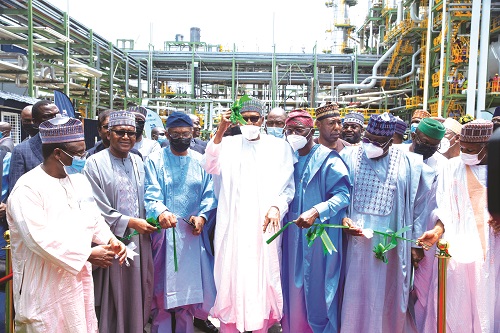
Dangote Petroleum Refinery has achieved a significant operational milestone, recording an average capacity utilization of 105.21 percent in August 2026, according to data released by the Nigerian Midstream and Downstream Petroleum Regulatory Authority (NMDPRA).
The 700,000 barrels-per-day refinery processed an average of 736,470 barrels of crude oil per day in August, a substantial increase from 497,000 barrels per day in July when utilization stood at 71 percent.
The strong performance was supported by a rebound in domestic crude oil supply, with deliveries rising by 16.75 percent to 683,000 barrels per day during the month, enabling the refinery to ramp up throughput.
The improved throughput translated into average daily production of 84.43 million litres of refined white products, including Premium Motor Spirit, PMS, Automotive Gas Oil, AGO or diesel, and Aviation Turbine Kerosene, ATK, further reinforcing its role as a major supplier of refined petroleum products across Nigeria and the wider West African region.
Speaking on the development, the Dangote Group said the achievement underscores the refinery’s growing contribution to Nigeria’s energy security, foreign exchange conservation, and industrial growth agenda.
The refinery continued to significantly reduce Nigeria’s dependence on imported petroleum products during the review period. Domestic PMS deliveries from the refinery rose by 39 percent month-on-month to 35.87 million litres per day in August, accounting for approximately 71 percent of total domestic petrol supply.
The increased local supply contributed to a sharp decline in fuel imports, with national PMS imports falling by 26 percent to 14.60 million litres per day, highlighting the refinery’s expanding impact on the domestic fuel market.
Beyond meeting a significant portion of Nigeria’s domestic fuel requirements, the refinery also strengthened the country’s export profile through robust shipments of refined products.
In August, the refinery exported an average of 9.73 million litres of PMS daily, alongside 8.75 million litres of diesel and 21.30 million litres of aviation fuel. These volumes further support Nigeria’s emergence as a net exporter of refined petroleum products and contribute to increased foreign exchange earnings for the country.
The refinery’s growing production capacity was particularly evident in the diesel market, where domestic AGO deliveries averaged 12.37 million litres per day. This level of output substantially reduced the need for imported diesel, with national diesel imports declining from 7.90 million litres per day in July to 1.30 million litres per day in August.
The development reflects the refinery’s increasing ability to support critical sectors of the economy, including transportation, manufacturing, agriculture, telecommunications, and power generation.
According to the Group, the ability to operate above nameplate capacity demonstrates the efficiency, reliability, and resilience of its operations. The milestone also reinforces investor confidence as the refinery’s ongoing public offering continues to attract significant market attention.
Dangote Group reiterated its commitment to maximizing local value addition, supporting economic diversification, and ensuring the sustainable supply of high-quality refined petroleum products to Nigeria, Africa, and global markets.
The road to the 2026 Zenith Bank NBBF Women’s Basketball League title reaches its climax as eight top teams converge on Lagos for the highly anticipated National Finals.
The finals will hold from September 28 to October 3, 2026, at the Indoor Sports Hall of the National Stadium, Surulere, Lagos.
Emerging from fiercely contested Atlantic and Savannah Conference campaigns, Nigeria Customs, AS Sky Queens, Titans, Air Warriors, MFM, First Bank, Victoria Queens, and Bayelsa Blue Whales have booked their place in the battle for national honours.
Last year’s champions, Dolphins Basketball Club, who lifted the trophy after defeating First Bank in the final, will not be in contention this year after failing to make the top four of the Atlantic Conference. Their absence leaves the title wide open for a new champion.
The trophy will however be contested by teams with rich championship pedigree. First Bank, last year’s finalist and the most successful team in the history of the competition, arrives with a record nine league titles, while MFM will be banking on its recent dominance after winning back-to-back championships in 2023 and 2024.
It is a level of competition that reflects the growth of a league that has, for more than two decades, provided a platform for Nigeria’s best female basketball talents to emerge, compete and develop. At the heart of that journey has been Zenith Bank, the sole sponsor of the National Women’s Basketball League since 2005.
Through its partnership with the Nigeria Basketball Federation (NBBF), Zenith Bank has consistently supported the development of women’s basketball, helping to provide and sustain a competitive platform where talents can be discovered, nurtured and prepared for the highest level of the sport.
The league has also served as a vital pathway to the National Women Basketball team, D’Tigress, with several players who have featured prominently for Nigeria emerging from the domestic competition.
Beyond the national team, the league continues to contribute to youth development by giving young female athletes the opportunity to build confidence, skill, discipline, teamwork and professional sporting careers.
For Zenith Bank, the sponsorship of the Women’s Basketball League represents more than support for a sporting competition.
It reflects the Bank’s broader commitment to creating platforms that provide opportunities, develop potential and make a meaningful difference in the lives of young Nigerians.
This commitment extends across several areas of community development, with notable initiatives including the reconstruction and beautification of Ajose Adeogun Street and Roundabout, the annual Zenith Bank Youth Parade and Light-Up Ceremony, the construction of ICT Centres in tertiary institutions across the country, and the construction of the ultra-modern Iga Iduganran Primary Healthcare Centre, among others.
Through these initiatives and its longstanding support for women’s basketball, Zenith Bank Plc continues to demonstrate that its commitment to society goes beyond banking, with a focus on creating opportunities and contributing to the development of communities and the next generation.


