
Business
FirstBank: 130 Years of Enabling Success

- /home/rhoncare/pointblank.ng/wp-content/plugins/mvp-social-buttons/mvp-social-buttons.php on line 27
https://pointblank.ng/wp-content/uploads/2020/03/Dr.-Adesola-Adeduntan-FirstBank-CEO-1000x600.jpg&description=FirstBank: 130 Years of Enabling Success', 'pinterestShare', 'width=750,height=350'); return false;" title="Pin This Post">
- Share
- Tweet /home/rhoncare/pointblank.ng/wp-content/plugins/mvp-social-buttons/mvp-social-buttons.php on line 69
https://pointblank.ng/wp-content/uploads/2020/03/Dr.-Adesola-Adeduntan-FirstBank-CEO-1000x600.jpg&description=FirstBank: 130 Years of Enabling Success', 'pinterestShare', 'width=750,height=350'); return false;" title="Pin This Post">
In a country with short-lived corporate excellence and a handful of centenary companies, hitting 130 years is undoubtedly a significant milestone for Nigeria’s premier financial institution, FirstBank. GEOFF IYATSE writes.
Experience, they say, comes with age. Nothing else aptly defines the consistent growth of First Bank of Nigeria Limited (FirstBank) and its consistent reinvention as the conscience of corporate Nigeria in the face of rising competition from traditional and other shadow banking brands.
Not many living Nigerians can list a single other existing Nigerian company founded in 1894, long before modern Nigeria was created. But FirstBank has not only survived the long 13 decades during which it etched itself into the socio-economic fabric of the country and created a niche as Nigeria’s banker, but it has also pushed itself into the frontier of financial technology evolution, making an inroad into the consciousness of tech-savvy Nigerian youths and the upwardly mobile banking public.
For an organisation that has stuck to Nigeria through thick and thin and enjoyed the monopoly of banking the country from the cradle, long before Africa tasted the beauty of financial system evolution, FirstBank could have been a dinosaur. That would have been easy. But it has chosen the tougher option; challenging traditions, breaking new ground, and constantly refreshing its operational template to stay ahead of the curve.
Established in 1894 as British Bank of West Africa (BBWA) by the late Sir Alfred Lewis Jones, a shipping magnate, FirstBank has been at the forefront of Nigeria’s economic growth and development through its superior banking services and social investments across sectors – manufacturing, small and medium scale enterprise (SMEs), agriculture, oil and gas and just about every other sector that has contributed to the country’s economic discovery.
The history of FirstBank is the history of Nigeria. At some point in its history, it even served as Nigeria’s Central Bank. Today, as the undisputed leader of the country’s brick-and-mortar banking, its nearly 800 business locations across the country give it robust presence in every local government across the nation.
Of course, in an era of ‘click’ banking, no financial institution is assessed by the strength of its physical banking network alone. Interestingly, the premier institution understands this logic, hence it has emerged as a force in continuously investing in cutting-edge financial technologies. For one, FirstMobile, its digital banking application, has also become a household name in the financial technology ecosystem. In 2015, when the platform was still at its infancy stage, its user base was about 60,000, a number that has soared to over six million (a growth of over 10,000%) as of last year. That has contributed immensely to its changed perception from traditional bank to innovative digital bank. Today, about 85 per cent of its transactions are initiated via digital platforms, according to insights provided by the bank in its public statements.
FirstMobile appears to have hit the bull’s eye in the bank’s reinvention drive and efforts to appeal to younger demographics. But the platform itself is only one of the potpourri of telecommunications-driven initiatives it has taken on to get young depositors on board. FirstOnline users have also grown from about 90,000 to over one million in less than a decade just as its USSD banking, which targets feature phone users, is even more successful with users increasing by close to 3,000 per cent in the last eight years, to about 15 million.
Last year alone, its Firstmonie Agent banking services processed over ₦1.1 trillion in transactions, more than double the amount handled by seven other big banks. Some of its strategic investments in technology include the development of its smart and interactive transaction banking platform known as FirstDirect2.0 and the introduction of the humanoid robot to the banking ecosystem in the country. The smart banking initiatives have been complemented by its Digital Xperience Centres (DXC) which are currently located in Lagos, Ibadan, and Abuja with plans to open more across the nation.
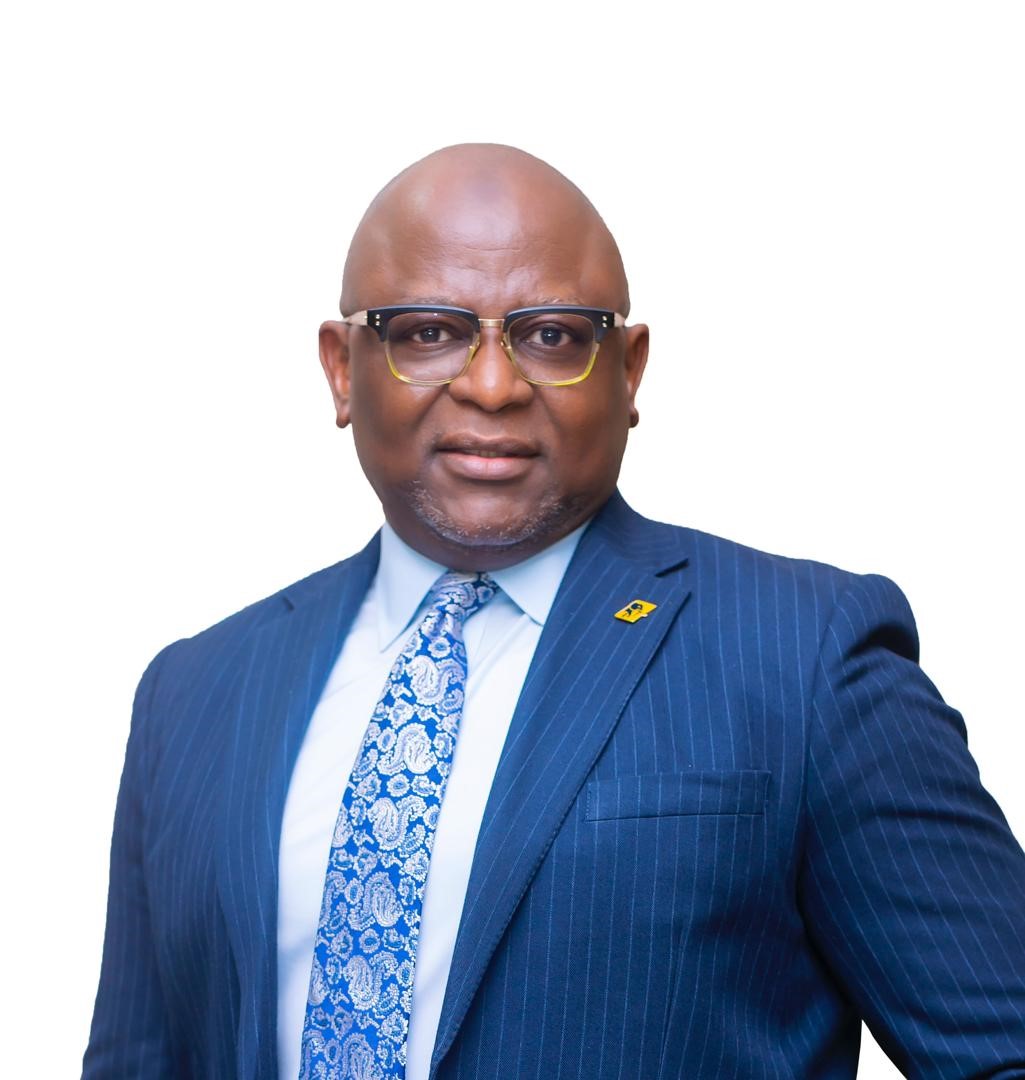
Overall, its digital banking has evolved in both volume and public perception even with artificial intelligence-driven commercials complementing its digital imprints. Ease, convenience and reliability created in recent years have moved the customer base from 0.6 million in 2015 to well over 42 million customer accounts as of 2023. This number, according to the Chief Executive Officer of FirstBank Group, Dr Adesola Adeduntan, during an interview with The Guardian last year, would double in no distant future as the organisation migrates aggressively to transaction-led banking. In September 2023 the bank’s non-interest income hit ₦293.0 billion, up 111.6% in comparison to September 2022 at ₦138.5 billion validating the bank’s commitment to a transaction-based era.
In addition, the number of users on the Bank’s digital channels has grown from about 600,000 users in 2015 to over 23.2 million users in 2023.
On the back of the extensive technology infrastructure overhaul FirstBank embarked on under Adeduntan’s leadership, its digital banking channels have become the most dominant delivery channel with the percentage of customer-induced transactions processed via digital channels increased from about 20% to over 90%. FirstBank has equally been consistent in its profitability. Its Group profit before tax (PBT) has climbed steadily from 10Billion naira in 2015 to 362.24Billion naira in 2023.
For an organisation that has not only created Nigeria’s banking industry but also dynamically shaped it, there is no reason the brand would not attract the best professionals. It attracted a blend of top Nigerian bankers and became the training ground for young professionals who have contributed to its rich history of corporate leadership. Despite this, Adeduntan who assumed office with a touch of dynamism, clearly understood the meeting point between institutional legacy and modern ‘click’ banking. In close to a decade since he first took over the reins at the Bank, he has brought this to bear, rejuvenating the rich corporate culture of the bank, competing actively in the youth space in both employment and business.
Nigerian banks have grown to become international brands, competing for businesses across Africa, (which they have dominated), Europe, Asia, and other Continents. With its United Kingdom subsidiary (which has a representative office in Paris, France) celebrating its 40th anniversary in 2022, FirstBank has led the revolution. Other subsidiaries of Nigeria’s premier financial inclusion services provider include FirstBank in the Democratic Republic of Congo, Guinea, Sierra Leone, and The Gambia; FBNBank in Ghana and Senegal as well as a Representative Office in Beijing, China.
Indeed, local banks have done well in recent years in opening offshore operations except that most of them are cost-centres, hence the promoters are often accused of ego-seeking and extroversion. And it is true because most of the subsidiaries’ operations have created a gaping hole in the bottom lines of the consolidated accounts of many of the institutions. But FirstBank turned the tide. In 2022, its overseas operations contributed a combined 21.3 per cent to the group’s pre-tax profit. Adeduntan has repositioned the financial institution from purely a Nigerian company to a multinational brand with African focus but a Nigerian nucleus.
Beyond its name, it has recorded several firsts in the industry it single-handedly created. Some firsts include – the first to be listed on the stock exchange, the first – amongst the existing banks – to adopt the use of ATM and the first Nigerian bank – and second in Africa – to reach the 10 million ATM cards-issued milestone. In addition, FirstBank is leading in AI and robotics with regards to the deployment of Humanoid Robots, in the financial services space in Nigeria. The robots are equipped with Video Banking and Artificial Intelligence (AI), taking on the role of friendly branch staff. The financial institution is the first to foray into arts, food, music, and other lifestyle sponsorships as part of the brand value proposition for clients of all ages.
Speaking on the resilience of the bank at a recent function Adeduntan disclosed what he called the bank’s secret of success: “At FirstBank, our purpose is to enable success, putting our customers and stakeholders at the heart of our business.
“For the years of our existence, we have focused on providing excellent financial services to meet the needs of our esteemed customers. We continue to improve on our products and create new ones that suit their specific needs. The reason why we have been successful is our ability to invent and reinvent ourselves. You can only be successful like that when you make your customer the centrepoint of all your actions. That is the secret of our success.”
The bank has demonstrated it is a responsible corporate citizen, playing a catalytic role in the economic and social development of the country. FirstBank’s sustainability/ESG focus, and commitments are in three key areas: Responsible Lending, Procurement & Climate Performance; Financial Inclusion & Diversity; as well as Education, Health, and Welfare.
Customers of the financial institution remain a vital element of its business. So, the bank constantly seeks responsible ways to provide lending and investment products and services that meet the customers’ needs, while ensuring that it manages the environmental social and governance (ESG) impacts in the process thus contributing to and promoting overall sustainable growth and development. About N5 Trillion worth of transactions were screened for ESG risks in 2023.
The bank has shown its commitment to playing a key role in the transition to a global net-zero economy by decarbonising its operations and value chains, driving climate finance, and promoting climate thought-leadership. For example, its partnership with Nigeria Conservation Foundation has seen the financial giant begin 50,000 trees planting with this year 2024 set as target year for this audacious goal.
FirstBank’s community development initiatives are anchored on its strategic Education, Health, and Welfare pillars. In 2023 alone, FirstBank executed various projects under the Start Performing Acts of Random Kindness (SPARK) initiative with growing impacts across 8 countries, including 60 beneficiary schools with over 150,000 secondary school students, and 30,000 underprivileged people and widows; over N100,000,000 (one hundred million naira) donations covering books and infrastructure for students, food items and clothing for the underprivileged, provision of capital for small and micro businesses.
Its FutureFirst programme in partnership with Junior Achievers Nigeria (JAN) has impacted over 1,000,000 (one million) people across the regions of the country including Lagos, Port Harcourt, and Abuja with the knowledge of financial literacy and entrepreneurship. It has also strategically driven partnerships with over 100 Charities/NGOs including LEAP Africa; International Women Society; UNGC; UN Women; Junior Achievement Nigeria.
Following the COVID-19 lockdown, FirstBank stepped in to donate cash (over 1 billion naira) and food to support the government in the fight against the pandemic. It also provided an innovative e-Learning initiative enabling the education of one million Nigerian students to drive sustainable efforts towards improving education for all. In partnership with the Lagos State Employment Trust Fund (LSETF), it launched a N5 billion LSETF-First Edu Loan scheme to cushion the impact of the COVID-19 pandemic on low-cost private schools in Lagos State.
For 30 years, FirstBank has remained a sponsor of the annual Nigerian Economic Summit, organised by the Nigerian Economic Summit Group, a think tank group with a mandate to promote and champion the transformation of the Nigerian economy into a private sector-led economy.
It is known for other sponsorships including, the Kaduna Georgian Cup Polo Tournament, now in its 103rd year, which is perhaps the longest-standing sports sponsorship in the world. FirstBank is also a long-standing sponsor of the Lagos Amateur Open Golf Championship at the Ikoyi Club, a property it has faithfully sponsored for 62 years.
The bank has played a crucial role in empowering entrepreneurs, women, students and the rapidly growing creative industries locally, which are gaining global recognition. Its strategic interventions through DecemberIssaVybe, FirstGem, SPARK, FirstBank Women Network and numerous other campaigns have been impactful, especially in addressing some key United Nations Sustainable Development Goals (SDGs).
FirstBank has demonstrated its commitment to Diversity through policies, partnerships, and initiatives, such as its employees’ ratio of female to male (39 per cent :61 percent); and 32 percent women in management, and 11 women on the Board of Directors across the FirstBank Group as well as various initiatives aimed at addressing the gender gap and increasing participation of women at all levels within the organisation.
In addition, the Bank’s membership of the UN Women is an affirmation of a deliberate policy that is consistent with UN Women’s Women Empowerment Principles – Equal Opportunity, Inclusion, and Non-discrimination.
And there have been rewards via awards for its leadership and life-changing initiatives. The recent ones include Best Corporate Bank at the recent Euromoney Awards for Excellence, Nigeria 2023; Best Corporate Bank Western Africa 2023, by Global Banking and Finance; Best Internet Banking in Nigeria 2023, by International Business Awards; Most Innovative Banking Brand in Nigeria, by Global Brands Awards; the Financial Institution of the Year 2023, by Afreximbank Pan-African Business and Development; Best CSR Bank Western Africa 2023 by Global Banking and Finance Magazine; Market Leader Nigeria in ESG – Euromoney Market Leaders 2022. For six consecutive years (2011 – 2016), FirstBank was named ‘Most Valuable Bank Brand in Nigeria’ by The Banker Magazine of the Financial Times Group and ‘the Best Retail Bank in Nigeria’ from 2011 to 2018, an award of the Asian Banker International Excellence in Retail Financial Services Awards.
At the heart of FirstBank’s success story – which includes enabling the success stories of its customers and other stakeholders – lies its ability to continuously reinvent itself. And the reinvention seems to have started in earnest. For instance, its stock soared recently, pushing the Group into the exclusive club of stocks with over one trillion (SWOOT) capitalisation. A few months after the remarkable feat, it went, shoving other lenders aside to reclaim the most capitalised banking stock on the stock exchange.
It has been 13 decades of rising and growing with Nigeria. But FirstBank is obviously not slowing down in its journey with the country its operation pre-dated.
Culled from The Guardian


Ecobank Nigeria has called on young Nigerians, particularly students, innovators, entrepreneurs, and creatives aged 16 to 25, to take advantage of the ongoing registration for InnovateX 2026, the Bank’s flagship youth innovation challenge offering ₦20 million in prizes, mentorship, business development support, and access to industry experts.
Powered by Blaze by Ecobank in partnership with Verve, InnovateX 2026 is designed to identify and support the next generation of innovators and creators developing solutions across inclusive finance, as well as the creative economy.
Beyond the financial support, participants will benefit from an intensive innovation journey featuring hybrid bootcamps, expert-led workshops, mentorship sessions, networking opportunities, and a grand finale pitch competition where finalists will showcase their ideas before a panel of industry leaders and investors.
The competition is open to young Nigerians working on innovative projects in technology, engineering, science, product design, content creation, digital media, entertainment, fashion, and other creative disciplines.
Encouraging young Nigerians to register, Victor Yalokwu, Head, Products & Analytics, Ecobank Nigeria, said: “Nigeria is blessed with an abundance of young talent, creativity, and entrepreneurial energy. Through InnovateX, we are providing a platform for young people to transform bold ideas into impactful solutions and sustainable businesses. We encourage students, innovators, tech enthusiasts, creators, and entrepreneurs across the country to seize this opportunity and take their ambitions to the next level.”
He added: “The future belongs to young people who are willing to innovate, solve problems, and create value. InnovateX is designed to equip participants with the knowledge, mentorship, exposure, and resources they need to succeed in today’s highly competitive and technology-driven world.”
Yalokwu further explained that InnovateX is not just about rewarding great ideas, but also about building confidence, nurturing talent, and connecting young people to opportunities that can help them grow personally and professionally. “Whether you are developing a tech solution, building a creative brand, or working on an innovation that can improve lives, InnovateX provides a valuable platform to showcase your potential and accelerate your journey towards success,” he said.
As part of its commitment to youth empowerment, Ecobank continues to provide innovative banking solutions through the Blaze Account, a youth-focused offering that gives customers access to exclusive opportunities, a uniquely designed debit card, free monthly transfers, and participation in initiatives such as InnovateX.
Young Nigerians interested in participating are encouraged to submit their applications through www.innovatex.africa before the registration deadline.
With ₦20 million up for grabs and a unique opportunity to gain mentorship, skills, exposure, and industry recognition, InnovateX 2026 is poised to become one of Nigeria’s most impactful youth innovation and entrepreneurship programmes.
New data from CFA Society Nigeria is reshaping how the country’s financial sector thinks about talent development, with Access emerging as the single largest source of CFA candidates in Nigeria, a distinction industry watchers say signals a deeper shift in how leading institutions are building investment expertise from within.
In its Where Nigeria’s Finance Professionals Work series, published in a national daily, CFA Society Nigeria placed Access first among employers of CFA candidates nationwide, with 82 candidates enrolled in the programme, more than double the 38 recorded at the next-placed institution and well ahead of every other bank or financial services firm on the list.
Access also ranked second among employers of CFA charterholders, with 11 professionals who have completed all three levels of the Programme and met its experience and ethics requirements.
For an industry that has long measured itself by balance sheet size and branch count, the rankings point to a different kind of competition: one over who is building the deepest bench of certified, globally credentialed talent. CFA Society Nigeria compiled the data from its Salesforce Membership Database as at June 2026, and described the exercise as a way of recognising employers whose people “bring rigour, integrity and global best practices into the workplace every day.”
Analysts following the sector say the outcome is notable less for the ranking itself than for what it suggests about talent strategy across Africa’s financial services industry. A single institution developing more aspiring charterholders than the rest of the market combined raises the floor for professional standards nationally, not just within one balance sheet. Every candidate who advances through the CFA Programme adds to a shared pool of ethics-trained, analytically rigorous professionals that Nigeria’s capital markets, pension funds and asset managers all eventually draw from.
Access Holdings Group Chief Executive Officer, Innocent C. Ike, commenting on the rankings, framed the achievement in terms of institution-building rather than recruitment: “Every candidate on that list represents our commitment to building institutions and professionals that endure.” The remark echoes a broader thesis increasingly voiced by market observers, that talent depth, not scale alone, is what will determine which African financial institutions earn lasting global credibility.
That distinction sits at the centre of Access’s stated ambition to become the World’s Most Respected African Financial Services Group. If the CFA numbers are any indication, the Group’s route to that goal runs less through square metres of branch network and more through the calibre of the people sitting inside it, a bet that Nigeria’s finance professionals, and the institutions that will one day hire them, are already placing alongside Access.

Africa’s Global Bank, United Bank for Africa (UBA) Plc, has partnered Mikano Motors to launch an auto financing scheme, themed: ‘Drive Your Dream Today’, specifically designed to ease the purchase of new vehicles by making them more accessible to Nigerians. The flexible Financing solutions Initiative, requires customers to make an initial payment of just 30 percent while the Bank finances the remaining 70 percent.
Unveiled at the Mikano Motors showroom in Victoria Island, Lagos, the scheme allows eligible customers to repay the financed amount in instalments over a period of 36 months at an interest rate of 23 percent.
The financing is available to a broad range of customers, including individuals who are not on a salaried income, providing entrepreneurs, and other eligible Nigerians with a structured pathway to vehicle ownership.
The process begins with a simple eligibility check. Interested customers can visit their nearest UBA branch or email consumerlending@ubagroup.com to confirm their eligibility. Once approved, customers can proceed to Mikano Motors to obtain a proforma invoice for their preferred vehicle and continue with the financing process.
Speaking at the launch, UBA’s Group Executive Director, designate, Personal and Business Banking, Chidi Okpala, said the partnership reflects the Bank’s commitment to making everyday aspirations more attainable while promoting a stronger credit culture and advancing financial inclusion.
“Owning a car should not be out of reach for hardworking Nigerians, and this partnership makes it far more achievable,” Okpala said. “A customer puts down 30 percent, we finance the rest, and they pay us back comfortably over a three years period. By removing the single biggest barrier to vehicle ownership where a customer just commits with an upfront cost, we are showing what customer-first banking looks like in practice, which is making their lives easier, by meeting our customers where they are and helping them get where they want to be.”
Also speaking, UBA’s Group Head, Consumer Lending, Frank Okoh, said the scheme was designed to make vehicle financing straightforward and accessible to both salaried and self-employed customers.
“We have kept the entry simple and the terms clear, whether you earn a salary or run your own business,” Okoh said. “A short eligibility check at any branch or by email is all it takes to begin, and our team guides the customer through every step to the moment they collect their keys.”
For Mikano Motors, the partnership provides an opportunity to extend its vehicle ownership proposition to a wider pool of Nigerians
The company’s General Manager, Tarek Mostafa, said the collaboration aligns with Mikano Motors’ vision of providing customers with a high-end ownership experience supported by reliable after-sales services.
“Mikano Motors was established to give Nigerians a high-end ownership experience, from the showroom to years down the road,” Mostafa said. “The backbone of any automotive business is not just the sale, but the after-sales service that follows. Every vehicle we sell is backed by genuine spare parts, reliable maintenance and quality service available anywhere in the country. Wherever you are we would come meet you at no extra cost”
“Partnering with UBA lets more customers enjoy that experience, and we are proud to build lasting relationships alongside a bank that shares our commitment to service,” he added.
Established in 2018 under Mikano International, Mikano Motors builds on more than 35 years of the group’s presence in Nigeria. The company offers a diversified portfolio of vehicles supported by nationwide sales and after-sales services.
The partnership further strengthens UBA’s consumer lending proposition, providing customers with structured financing solutions designed around accessibility, affordability and convenience. Through partnerships such as this, the Bank continues to expand access to credit while helping customers meet significant personal and lifestyle needs with ease.
United Bank for Africa is one of the largest employers in the financial sector on the African continent, with 25,000 employees group-wide and serving over 45 million customers globally. Operating in twenty African countries, the United Kingdom, the United States of America, France and the United Arab Emirates, UBA provides retail, commercial and institutional banking services, leading financial inclusion and implementing cutting-edge technology.


