News
Food for Living: Credibility As Essential Element of Greatness

- /home/rhoncare/pointblank.ng/wp-content/plugins/mvp-social-buttons/mvp-social-buttons.php on line 27
https://pointblank.ng/wp-content/uploads/2019/04/download.jpeg&description=Food for Living: Credibility As Essential Element of Greatness', 'pinterestShare', 'width=750,height=350'); return false;" title="Pin This Post">
- Share
- Tweet /home/rhoncare/pointblank.ng/wp-content/plugins/mvp-social-buttons/mvp-social-buttons.php on line 69
https://pointblank.ng/wp-content/uploads/2019/04/download.jpeg&description=Food for Living: Credibility As Essential Element of Greatness', 'pinterestShare', 'width=750,height=350'); return false;" title="Pin This Post">
By Henry Ukazu
Dear Destiny Friends,
One of the most endearing qualities of all great people, companies, businesses, leaders, and friendship is credibility. Credibility is a currency if properly nurtured. It works like character. When you have good character, it will be easy for people to work with you. No matter how smart, intelligent, or hardworking you may be, without good character, it will be difficult for you to be accepted. The same principle is applicable to credibility. Every employer loves to hire a credible employee. Nobody likes to associate with a person who is not credible.
Credibility works out what an employee has on the resume. Credibility in this case refers to attitude, mindset, personality, orientation and understanding of life.
What actually is credibility? Credibility is the quality of gaining legitimacy, trust, integrity and dependability in a person or organization. When you have credibility, people will naturally be attracted to you. According to Aristotle, the three C’s of a credible leader are competence, character and caring. Any leader that possesses these traits will endear himself to the people.
If you really want to succeed, you must be intentional. One of the intentional steps you need to take is being credible. When people perceive you as being credible, it will be easy to associate with you. It truly takes more than credibility to succeed; you need discipline, concentration, consistency, accountability etc.
Credibility works in different ways. It can be ascertained by direct evidence which is basically first-person experience. This works when people meet and interact with you; they’ll be able to determine who you truly are and what you represent. Secondary evidence is ascertained from indirect sources which can be what people read or watch about you or even what people who are experienced about you which they either say or publish for the world to know about you. Then, we have indirect evidence which is derived from effective presentation. You must establish primary or direct evidence first before people can believe you.
Nobody establishes credibility by speaking, people establish credibility by their actions which must be verified. Isn’t it true that circumstances don’t say who you are, rather it establishes who you are? You must establish credibility for people to believe in you. When you have been tested and trusted, then, secondary and indirect evidence will begin to key in.
One of the packages that normally comes with greatness is credibility. This is because greatness always comes with a price. You don’t attain greatness by accident. You must put in the work which will entail denying yourself some hours of sleep. In such cases, you’ll have to sleep late, wake up early. This is necessary because you will have enough time to enjoy your sleep when you are done building your brand. A major mistake people engage in life is trying to reap when they have not sowed. There are cases when lazy people like to eat fruits they haven’t planted.
For instance, while some Bank Chief Operating Officers, corporate titans, Captains of industries and successful entrepreneurs have paid the prices by investing their time and money into their business, are sleeping, a budding entrepreneur or employee will want to enjoy the same amount of sleep without investing their time and money in their craft. It takes diligence to establish credibility.
As Christians, the Book of life made us understand, God rested on the seventh day after creating for six days straight. What does that tell you? You must put in the work first before you can rest. People will have to see your credibility before you can earn their trust. It’s instructive to note that God didn’t rest on the first or second day, but it’s quite unfortunate most people would like to rest on the first and second day without putting in some work. God rested on the seventh day, why are you resting on the first day or second day? You will have to establish trust, diligence, and competence before you can rest which will ultimately give you some credibility when people have seen your work.
At a stage in life, all that is important is loyalty and trust, at this stage, people are not concerned about your money, words, perceived actions and understanding of life, they just want to know if you have their back when the chips are down, it is on this stage that circumstances don’t say who you are, rather it reveals who you are.
In any sphere of life, you must establish credibility for people to take you serious. When you are credible, people will want to do business with you, people will trust your judgment, and people will see you as a reliable resource person.
The question you may want to ask is how do you establish credibility? To establish credibility, you must be consistent in words and actions, you must be honest, you must learn and be knowledgeable, you must spend time to do the needful, you must be accountable, and you must be principled by not comparing yourself with others. You must stand for the values you believe in, even if it means standing alone as opposed to following the bandwagon.
In conclusion, in all you do, endeavor to establish credibility by building good human relationships beginning with your family, close friends, business partners, associates and the public at large. Trust me, when you do, you can be rest assured your name will be announced where you don’t imagine and you’ll be a treasure to behold.
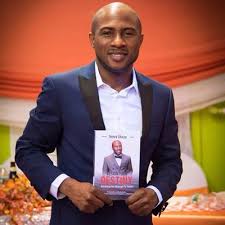
Henry Ukazu writes from New York. He’s a Human Capacity & mindset coach. He’s also a public speaker, youth advocate and creative writer. He works with the New York City Department of Correction as the Legal Coordinator. He’s the author of the acclaimed book Design Your Destiny – Actualizing Your Birthright To Success


The African Democratic Congress Presidential Campaign Council (ADC-PCC) has warned Nigerians against waiting for President Bola Tinubu to fulfil his campaign promise of providing reliable electricity.
The Council challenged the President to explain why millions of Nigerians continue to experience poor power supply despite his pledge that voters should not re-elect him if he fails to deliver electricity.
In a statement by its Director of Media and Publicity, Kola Ologbondiyan, the ADC-PCC accused Tinubu of making fresh promises during his recent campaign outings in Kaduna, Rivers and Jigawa states instead of presenting a clear account of his administration’s achievements.
Recalling the President’s campaign promise, the Council quoted him as saying: “If I don’t give you electricity, don’t vote for me for a second term.”
“Tinubu is only repeating his old electricity promise in Jigawa, while Nigerians are still waiting for answers on why reliable power supply remains out of reach,” the Council said.
The Council also questioned the whereabouts and impact of 2,000 tractors reportedly imported from Brazil under the administration’s mechanised farming programme.
It further accused Tinubu of taking credit for projects started by his predecessor, Muhammadu Buhari, while failing to show enough achievements of his own.
The African Democratic Congress Presidential Campaign Council (ADC-PCC) has declared that President Bola Tinubu will lose the 2027 election, insisting that intimidation, violence and manipulation of democratic institutions cannot prevent his exit from office.
In a statement by its Director of Media and Publicity, Kola Ologbondiyan, the Council accused the ruling All Progressives Congress (APC) of manipulating the judiciary and deploying security agencies against opposition parties.
Ologbondiyan warned that growing attacks on opposition members across the country pose a serious threat to Nigeria’s democracy.
He cited the killing of several members of the Nigeria Democratic Congress (NDC) in Delta State, allegedly following an attack on the party’s campaign venue by suspected APC thugs.
He said the incident is part of a disturbing pattern of violence against opposition parties, particularly members of the ADC, NDC and Allied Peoples Movement (APM), in Kaduna, Kogi, Katsina, Kebbi and Sokoto states.
“This is not politics. This is state-sponsored terror against democracy,” he said.
The Council also raised concerns over the preparedness and neutrality of the Independent National Electoral Commission (INEC), alleging that its voter register database had been compromised and that APC sympathisers had been deployed to sensitive positions.
It further alleged that security agencies were being used to harass, arrest and intimidate opposition members.
Ologbondiyan expressed concern over the alleged involvement of a serving director of a security agency in the APC Presidential Campaign Council as co-Director of National Security and Intelligence, describing it as a violation of the law establishing the agency.
“One thing is now very clear to all Nigerians: Tinubu is not preparing for an election. He is preparing for a coronation,” he said.
The ADC-PCC maintained that alleged manipulation of judicial processes and electoral institutions would not guarantee President Tinubu’s re-election, warning that Nigerians would resist any attempt to impose a president through compromised judicial decisions or electoral fraud.
It called on Nigerians to remain vigilant and defend their votes and democratic rights ahead of 2027.
The Council also urged the international community, civil society organisations, religious and traditional institutions to pay closer attention to what it described as the deteriorating political and security environment, warning that silence could embolden those undermining democracy.
It appealed to security agencies to remain politically neutral, stressing that their allegiance should be to the Constitution and the Nigerian people.
“Those who allow themselves to be used as tools of oppression today will answer for their actions tomorrow,” Ologbondiyan warned.

Governorship candidates of the All Progressives Congress (APC), African Democratic Congress (ADC), Nigeria Democratic Congress (NDC) and Peoples Democratic Party (PDP) in Lagos State have outlined contrasting plans to address housing, transportation, education, healthcare and the rising cost of living ahead of the 2027 elections.
At a governorship debate organised by the Nigeria Debate Consortium, the candidates, Dr. Obafemi Hamzat of the APC, Gbadebo Rhodes-Vivour of the ADC, Funsho Doherty of the NDC and Adedeji Doherty of the PDP, presented their policy blueprints and defended their credentials for seeking to govern the State.
While Hamzat, the incumbent deputy governor, pledged to sustain ongoing projects and expand infrastructure, the opposition candidates criticised the State’s development priorities, arguing that its substantial internally generated revenue had not translated into improved living conditions for ordinary residents.
Rhodes-Vivour accused successive administrations of pursuing policies that favoured the wealthy at the expense of vulnerable residents, particularly in housing and urban development.
He said Lagos needs a government that prioritises the interests of ordinary people, adding that his administration would adopt an integrated approach to urban planning, housing, transportation, education, healthcare and waste management.
The ADC candidate promised to deliver 100,000 housing units within his first four years through a combination of social housing, a proposed luxury tax and development of the state’s eastern foreshore.
He also pledged to connect Lagos’ rail lines within two and a half years through a transparent, private-sector-driven arrangement.
Rhodes-Vivour said the proposed housing programme would include a structured system allowing residents to move from smaller accommodation to larger homes as their families and financial capacities grew.
He said: “We want a cleaner Lagos. We want a safer Lagos. We want a more affordable Lagos. I want a Lagos that works for everybody, not just the privileged few.”
On urban safety, he promised to create employment opportunities for young people, particularly at the ward level, to reduce insecurity and address the activities of political thugs.
He also pledged to tackle flooding through wetland protection, improved urban design and the adoption of technologies that would allow water to flow naturally without threatening communities.
Responding to a question on Lagos’ high revenue and its impact on household welfare, Rhodes-Vivour said the government had failed to make its wealth sufficiently beneficial to ordinary residents.
He cited the demolition of structures in Makoko and the development of housing projects beyond the reach of many residents as examples of what he described as exclusionary policies.
According to him, government should concentrate on providing support for people who cannot meet their basic needs, rather than prioritising those who can afford private solutions.
He said his administration would ensure transparent allocation of housing units and prevent individuals from monopolising multiple units at the expense of other applicants.
The candidate also proposed a housing progression scheme under which young people could initially occupy affordable self-contained apartments and move into larger accommodation as their circumstances improved.
The APC candidate said his experience in government has given him an understanding of the State’s administrative systems, residents’ needs and infrastructure challenges.
He said his proposed Lagos Promise agenda is built around seven pillars, with commitments that would be measurable and open to public scrutiny.
Hamzat added that his administration would prioritise transparency, respect for residents and accountability in the implementation of policies.
He said: “I take tonight as a job interview. The job is the government of Lagos State. And you, Lagosians, will be the interviewers and the people that we actually hire.”
On transportation, Hamzat promised to complete the Blue Line to Okokomaiko and extend the Red Line towards the Trade Fair area, while integrating rail, road and water transportation.
He also pledged to provide 4,000 new compressed natural gas buses to improve mass transit and reduce the pressure on commuters.
The APC candidate said the State’s limited land area and growing population make efficient public transportation essential to its development.
On housing, Hamzat said the government has delivered 24,000 housing units over the past eight years, including 18,000 units for residents, while several projects remain ongoing.
He promised to expand access to mortgages, proposing a system requiring a 10 per cent deposit and repayment over 25 years.
According to him, the arrangement would enable residents to acquire homes without having to pay the full cost upfront.
Hamzat said the government would continue existing housing projects, including developments in Ibeju-Lekki, Badagry and other locations.
He argued that mortgage financing is necessary to make homeownership more attainable, noting that many people struggled to build houses because of the high cost of construction.
Funsho Doherty of the NDC said Lagos is operating below its potential despite its substantial revenue base and economic importance.
He argued that residents continue to face rising taxes and levies without corresponding improvements in public services.
Doherty cited the State’s budget, internally generated revenue and long period of APC administration as reasons the government should be held accountable for its performance.
He said Lagos’ challenges include inadequate healthcare, poor educational outcomes, housing affordability, water supply and electricity.
The candidate said his vision is to move the State in a new direction through policies focused on health, education, opportunity, affordable housing, jobs, small businesses and the environment.
Doherty, who said he has spent 30 years in the private sector, argued that government policies should enable residents to develop their skills, earn incomes and build sustainable livelihoods.
He promised to make public education truly free, including removing examination fees and other charges that prevent children from completing their education.
He also pledged to provide pupils in public schools with an affordable daily meal.
On housing, the NDC candidate proposed 150,000 units, supported by an ecosystem of financing, government guarantees and other measures to improve affordability.
He said the objective was to empower residents economically, adding that the prosperity of individuals would translate into the prosperity of the State.
Adedeji Doherty of the PDP said his background as a technocrat, businessman, entrepreneur and industrialist had prepared him to address Lagos’ economic and infrastructure challenges.
He said his experience in the party, which he joined in 1998, has also informed his decision to contest the governorship.
The PDP candidate identified electricity, housing and education as priority areas, arguing that inadequate power supply is limiting industrial development and economic growth.
He promised to establish a research team to develop cheaper building materials and reduce the cost of constructing homes.
Doherty also said he would focus on underserved communities, particularly the islands, which he said lack adequate primary healthcare and other essential services.
He identified the State’s debt burden, bloated ministries, departments and agencies, and inadequate support for local governments as major challenges affecting service delivery.
The candidate said his administration would reduce the number of MDAs and review government expenditure to free up resources for residents.
He argued that local governments should be adequately empowered to address community needs, while savings from reduced administrative costs could be redirected towards improving living conditions.
Doherty also promised to review electricity costs and introduce measures to put money back into residents’ pockets.