
Metro
Food for Living: Direction is Better than Speed

- /home/rhoncare/pointblank.ng/wp-content/plugins/mvp-social-buttons/mvp-social-buttons.php on line 27
https://pointblank.ng/wp-content/uploads/2019/04/download.jpeg&description=Food for Living: Direction is Better than Speed', 'pinterestShare', 'width=750,height=350'); return false;" title="Pin This Post">
- Share
- Tweet /home/rhoncare/pointblank.ng/wp-content/plugins/mvp-social-buttons/mvp-social-buttons.php on line 69
https://pointblank.ng/wp-content/uploads/2019/04/download.jpeg&description=Food for Living: Direction is Better than Speed', 'pinterestShare', 'width=750,height=350'); return false;" title="Pin This Post">
Greetings Friends,
I strongly believe we have adjusted to or settled well in 2019. We are in the second quarter of the year and gradually approaching the second half of the year. Some of us made resolutions early this year and have achieved some of our plans while working on the rest, while some of us are yet to achieve our goals. Regardless of where you are, just keep striving for success in addition to adjusting to the needs of the world. You can do this by learning, unlearning and relearning. According to Alvin Toffler “The illiterate of the 21st century will not be those who cannot read and write, but those who cannot learn, unlearn, and relearn.” If you are yet to make an impact in 2019 in your business, academic or personal life, a pertinent question you have to ask yourself is am I treading in the right direction or am I just moving in motion?
Today we shall be discussing direction and speed and how it can affect our productivity in life both personal, academic, professional, social, business and life in general. The world is truly a small village where everyone is connected in one way or another. The interesting thing about this 21st century is the effect of digital technology. The world seems to be moving in a fast pace environment. The question you really want to ask yourself is, who am I? What am I passionate about? Where would I like to be or end up? What are my values, mission, and vision towards life? These are some of the questions we would be discussing in order to move ahead in life.
Direction basically means the management or guidance of someone or something, while speed is the rate at which someone or something is able to move or operate. Speed or movement often doesn’t equate or lead to acceleration. What matters is how productive you are. This is because you might be busy doing nothing. In order to appreciate this topic, you need to position your mind towards your vision. In your journey towards life, you need to ask yourself what do I want to achieve as a student, professional, or business owner.
Before we go into the meat of the conversation, I will like to ask you a question, are you happy where you are now? If no, are the action steps you are taking to achieve your goals taking you in the direction of success? If no, I think it will be right to examine the need to go back to the drawing board.
One of the greatest pain that can befall a progressive mind is investing your time and resources into a project only to discover that you had the wrong tools to execute the project. Just imagine if you are farmer planting your seed in a wrong soil or season. The effort can be likened to being a fruitless effort.
Furthermore, imagine yourself driving with a Global Positioning System (GPS), and you miss an exit due to speed or not paying enough attention to the direction. This singular act could lead to extra miles depending on the nature of the road. That’s why it is very important to pay attention to details. If you will agree with me, driving is not an easy task because you need to be focused otherwise you’ll miss the lights. For example, the green signals you to move ahead, the yellow signs signal you to be cautious while the red signs mean you have to stop. If you can comprehend this thought process, you should be in a better position to plan wisely.
We all know that to have a successful creative life, you need passion, perseverance, and grit. You need that drive deep within yourself that literally can’t be without creativity, for without it, you may as well not exist. It’s the same way writers feel about writing, or actors feel about acting. But then, they know the path they want to thread and end up in life all things being equal.
Accomplishing any major feat in life requires passion, energy, and sacrifice to truly succeed. Sometimes, you do what you have to do. For instance, if you are interested in a particular industry, common sense entails you do internships and volunteer in order to gain insight and experience in the industry. I have seen people who took a cut just to learn a particular trade at the expense of high paying jobs waving at them. These are the truly great minds who know what they truly want in life. Let’s take the case of the Former President of USA, Barack Obama, after his law school education, he had juicy appointments from Wall Street, he left those high paying jobs for community work which he’s passionate about. It was during this time that that other great minds and interested persons saw his passion and heart for service. They not only nurtured him, but they gave him opportunities and believed in him. Today, the rest is history.
Every company or organization normally take stock of their products from time to time to examine their books and business to know if they are moving in the right direction as opposed to following the bang wagon. In the same vein, you have to ask yourself the same question(s) to determine if you are in the right path to our dreams, mission and vision in life.
As human beings, we are always in a haste to get things done. Some of us don’t have the patience to go through the right training to get things done. This training involves preparation and examination to access how far we have come in life and where we intend to go. In order to succeed in life, you need to be focused, you need to listen to great minds especially people who have gone through the route you want to embark upon. You also need people with insightful ideas for mentorship.
One of the greatest reasons why most people fail in life is because they fail to listen to advice. Some of them don’t even evaluate their plan. Let’s see the relativity and difference between direction and speed. According to Abraham Lincoln, “Give me six hours to chop down a tree and I will spend the first four sharpening the ax. Abraham Lincoln is merely telling us about the importance of preparation in life. Isn’t it true that failing to prepare is preparing to fail?
The direction you are heading is more important than the speed you are moving to get there, it makes no sense worrying about how long you are taking to achieve your goals. The point is, are you going in the right direction?
It is pertinent to note that there’s no competition in life, we all walk at our pace and time. To truly succeed in any field of life, it’s important to know your needs and when to do the needful. This is because failing to prepare is preparing to fail. You must know your niche, your audience and yourself, otherwise, you may hit the rock. According to Oyindamola Johnson, the Founder, and C.E.O of Elevate Your Game, “Don’t let the “perceived” movement, success, speed, or achievements of others put you under any pressure, let you be in haste, or make you lose sight of your own progress and journey. In the race of life, there’s no collective start or end point. Each one starts their own race at their own time and on their own pace. Someone running on a treadmill and another running a marathon are both “moving”, one is, however, on one spot, while the other is accelerating”.
So how do you stay on track and in the right direction?
§ Slow things down, and don’t rush the process.
§ Don’t compare yourself to others, focus on your goals. Don’t get distracted by what others are churning out.
§ Don’t be afraid to ‘waste time’ trying new things or making mistakes. It’s part of figuring out what works for you and what doesn’t, which defines your direction.
§ Set mini goals and revisit them regularly, but meet them in your own time.
§ If you find yourself stressed and overwhelmed then take a break. It’s that simple. The world is not going to end if you miss a post or if a job is taking longer then you thought.
In summary, celebrate the small wins daily, be inspired by others, but own your race, story, journey and keep moving because at the end of the day, it is not how far, but how well.
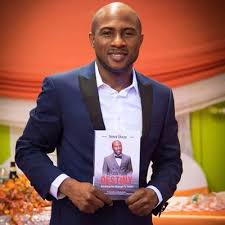
Henry Ukazu writes from New York. He works with New York City Department of Correction as the legal Coordinator. He’s the author of the acclaimed book Design Your Destiny – Actualizing Your Birthright To Success.


The FCT Council of the Nigeria Labour Congress (NLC) has declared an indefinite strike across the Federal Capital Territory, directing workers in the public and private sectors to shut down schools, hospitals, government offices and other establishments.
The strike began on Wednesday, October 7, following the expiration of a seven-day ultimatum issued to the FCT Administration (FCTA) over the promotion of teachers.
The labour council said the FCTA failed to satisfactorily address its demands, particularly its call for the removal of the requirement for vacancies before teachers can be promoted.
The dispute centres on the FCTA’s position that teachers can only advance when vacancies are available. The NLC said the policy has contributed to years of career stagnation among teachers and is not applicable to the teaching profession.
In resolutions signed by its Chairman, Comrade Knabayi Adalo, the council argued that FCT teachers are not core civil servants or pool staff and should therefore not be subjected to a vacancy-based promotion system designed for pool officers.
It said teachers recruited by the FCT Universal Basic Education Board, UBEB, and FCT Secondary Education Board, SEB, were employed specifically to teach and should be promoted “as and when due.”
The NLC is also demanding that teachers who became eligible for promotion in 2025 be allowed to sit for their promotion examination before or alongside the 2026 candidates.
Another demand is the withdrawal of redeployment and demotion letters issued to directors who benefited from the Harmonised Retirement Age for Teachers Act, 2022.
The council is further calling for the immediate reinstatement of the dissolved management teams of FCT SEB and FCT UBEB.
The decision to commence the strike was taken at the council’s State Executive Council, SEC, meeting held on October 6, at the NLC FCT Secretariat.
At the meeting, the labour body rejected the FCTA’s response to its ultimatum, describing it as “neither clear, positive, nor genuine.”
According to the SEC, the response did not address the vacancy requirement, which it described as the “root cause of career stagnation”, and was also silent on what the council called the “illegal redeployment of directors.”
“The response of the FCTA is ambiguous and totally unacceptable,” the SEC said.
The council added that it “will no longer tolerate the continued dehumanisation of FCT teachers through obnoxious policies alien to the teaching profession.”

The 20 prospective National Youth Service Corps (NYSC) members and one other abducted along the Owerri-Onitsha Road in Imo State have regained their freedom.
The victims were rescued from the Amakohia-Ubi forest in Owerri West Local Government Area of the state following a coordinated operation involving security agencies.
They have since been taken to the Department of State Services (DSS) Hospital in Owerri, where they are receiving medical attention and undergoing necessary medical checks.
The Director-General of the National Youth Service Corps Brigadier General Olakunle Oluseye Nafiu visited the DSS Clinic in Owerri, where he addressed the rescued victims.
He was in company of the Imo State Commissioner of Police, Director DSS and Brigade Commander 34 artillery Imo State.
Details of the operation, including whether any arrests were made or ransom was paid, have not yet been made public.
However, in a statement issued by the Force Public Relations Officer, Ani Iniedu, the police said, “Efforts are ongoing to apprehend those responsible for the abduction, as the Police and other security agencies sustain coordinated operations towards bringing all culpable persons to justice.”
The victims were abducted on October 1 while travelling from Ibadan, Oyo State, to NYSC orientation camps in Abia and Akwa Ibom states.
The two buses conveying the prospective corps members came under attack near Umunoha in the Mbaitoli Local Government Area of Imo State.
Following the abduction, security agencies launched a coordinated search-and-rescue operation to locate the victims and their abductors.
The Imo State Police Command later said its operatives had located the kidnappers’ camp through drone surveillance but were unable to immediately enter the location because it was reportedly mined with improvised explosive devices (IEDs).
The police subsequently deployed additional operational assets, including bulldozers and armoured personnel carriers, as efforts intensified to reach the victims.
The development also triggered anxiety among the victims’ families after reports that the abductors were demanding ₦50 million for each victim.
Police had earlier confirmed that 10 victims were rescued following the attack, while efforts continued to locate the remaining abductees.
The latest development brings an end to the ordeal of the 20 corps members and the other abducted victim, who have now been reunited with safety and are receiving medical attention in Owerri.
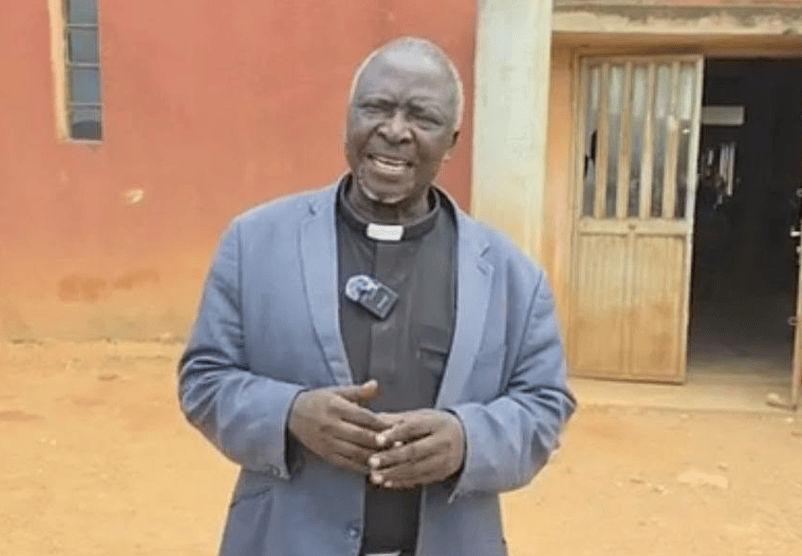
The Regional Chairman of Church of Christ in Nations (COCIN), Barkin Ladi Local Government Area of Plateau State, Rev. Ezekiel Dachomo, has denied reports that he prayed for the re-election of President Bola Tinubu and Vice President Kashim Shettima in the 2027 presidential election.
Dachomo, who is currently in Israel on what he described as his first International Christian Advocacy Tour, said his visit was aimed at drawing the attention of world leaders to the plight of Christians in Plateau.
The cleric made the clarification in a social media post on Monday night following reports that he had prayed for the success of the All Progressives Congress (APC) presidential ticket and expressed support for the Muslim-Muslim ticket.
Dachomo said his earlier post, in which he prayed for Nigeria, had been misconstrued as an endorsement of Tinubu and Shettima ahead of the 2027 election.
According to him, there was nowhere in the post where he prayed for the President and Vice-President to win the election.
“People are trying to frame me, saying I prayed for a Muslim-Muslim ticket. But I did not, and I will never pray for a Muslim-Muslim ticket because Nigeria belongs to both Muslims and Christians,” he said.
Dachomo said his prayers were for the well-being and success of Nigeria and its citizens, irrespective of their religious affiliations.
“I pray for both Muslims and Christians in Nigeria. I pray for Nigeria to succeed. If you truly want to come to God, come with a clean heart,” he added.
The cleric further stated, “I did not pray for President Tinubu and Vice President Shettima to win in 2027. My prayers have always been for Nigeria to succeed.”
Dachomo’s clarification came amid reactions to his ongoing advocacy tour in Israel, where he is seeking international attention to security challenges and what he described as the persecution of Christians in Plateau.



1 Comment