
Metro
Food for Living: Skills for Life

- Share
- Tweet /home/rhoncare/pointblank.ng/wp-content/plugins/mvp-social-buttons/mvp-social-buttons.php on line 69
https://pointblank.ng/wp-content/uploads/2019/04/download.jpeg&description=Food for Living: Skills for Life', 'pinterestShare', 'width=750,height=350'); return false;" title="Pin This Post">
By Henry Ukazu
Greetings my friends,
We are currently living in the 21st century, regarded as the jet age. Progressive minds have admonished us not to compete with other people, rather we should compete with ourselves by distinguishing ourselves. The question we need to ask now is; how do we compete with ourselves? We distinguish ourselves by having the right skills. Just like information, education and our network sets us apart, in the same way, our skills sets us apart from our contemporaries.
Last week, I wrote on The Effect of Digital Age of Innovation and how it has influenced a lot young minds to believe that skills are of more relative importance than formal education in our contemporary society. This article seeks to shed more light on how we can maximize our skills.
This article is for progressive minds.
One of the qualities of a leader is the ability to bring out progressive change to the life of the people and the society in general. According to Quincy Adams. “If your actions inspire others to dream more, learn more, do more and become more, you are a leader”. One of the ways a leader can do this, is by being skillful. During the course of this article we shall shed more light on how we can apply skills to profit our business.
Skill can be defined as an ability and capacity acquired through deliberate, systematic, and sustained effort to smoothly and adaptively carryout complex activities or job functions involving ideas (cognitive skills), things (technical skills), and/or people (interpersonal skills).
There are different types of skills, but we shall focus on hard and soft skills:
Hard skills are skills we learn in classrooms such as Accounting, Law, Medicine, among others. They are measurable unlike soft skills which one learns while at work and through interpersonal relations like leadership, empathy, time management and communication. We shall be focusing more on soft skills.
Communication Skills:
Non Verbal: This skill doesn’t involve speaking. It’s mainly applied via body language. Your ability to read in between the lines is very helpful.
Listening: This is the master skill of all soft skills because it is the foundation of all informal skills. I call it the mother of all learnable and acquired skills. You can only learn in life if you pay attention. You need this skill in order for you to learn and apply all skills.
Clarity and concision: In communication, you need be as concise and clear as possible. Never have you allowed anyone to assume what you are trying to say.
Verbal Communication: Sometimes it is good to speak and write depending on what is needed. Either way, you need to be coherent for people to understand your message, otherwise there will be no communication.

Organizational Skills: This skill is applied in both cooperate and personal life.
Time Management: Failing to prepare is preparing to fail. This skill is in high demand by employers because they need employees to achieve more within the shortest period of time. Your ability to use this skill will set you apart from your contemporaries.
Decision Making: As a leader, you should be able to use your intuitive knowledge to make prompt decision when the needs calls for it. This is an uncommon skill which very few people have.
Delegation: A true leader knows how to delegate duties/authority as the case may be in order to complete a specific task and thereafter give accolades to such staff or team. This skill helps to reduce pressure on the leader.
Planning: In any progressive organization, they have a blue print for whatever they plan to do. They forecast the needs of the clients and the world and work towards meeting their needs.
Leadership Skills:
This is the mother of all skills. I call it the hallmark of all skills. As a leader, you have the responsibility of leading your peers and followers. This task can be hard, but it takes humility, love, and understanding to relate with people.
Feedback: You are required to provide feedback to your leader or peers when you are working on a project. This helps to foster team work. Feedback helps in keeping employees or target people in loop of the actual situation of things so that everyone will be properly guided on the most updated information.
Responsibility: This is the second most important skill any rational and progressive being can have. The world is truly governed by perception. Nobody relates or does business with an irresponsible being. If you are serious about making an impact in life or in business, you need be responsible. For some of us, our name is the only thing we have. This is because your reputation is what people think about you, but your character is reality who you are.
Flexibility: Every rational person must be flexible. As a leader, you must be able to understand the direction the world is moving towards to. You should also learn how to bend as opposed to breaking to fit into the needs of the company or organization especially if you don’t agree with their thoughts. For example, if you are having a Board meeting, most decisions are done by the Board of Directors. Be advised, you have to know when to take a stand from your colleagues and when you have to work with them. You need wisdom in order to decipher when to swing the pendulum.
Commitment: Anywhere you find yourself, always know that your word is your bond. I recently told myself; I will commit to what I can do and supposed to do as opposed to what the society wants me to do. This skill is hard to maintain because as human beings, we may experience many disappointments. The moral about commitments is that, it goes a long way to show how responsible and proactive you are.
Computer Skills:
This is one of the resourceful skill that is in high demand in the world today. Information and Communication technology has truly shaped the world. There’s hardly any company that will employ any individual who doesn’t have basic computer skills such as Word processing, excel, power point, publishing, and outlook. You need to be computer savvy in order to do a good presentation, be a computer analyst, and a good system administrator.
Social Skills:
This is another skill that is in high demand. There’s a saying; knowledge is of two kinds, its either you know the answer or you know where to find it. The same notion is applicable when working with people. According to Robin Sharma, “the business of business is human relation, but the business of life is human connection”. As a social being, your ability to relate with people is very important. This social skills transcends hard skills because it is the connection to all social skills. With the right social skills in place, you can network with the high and mighty.
Empathy: Empathy literally means showing concern and understanding to the feelings of others. As human beings, we go through situations, but how we react to those situations defines us. Sometimes stressed people are not concerned with the materials things that is given to them, they just want to feel the presence and care of anyone around saying “I hear you and I am with you on this”. This is an uncommon skill to have in real life. Most times, it is applied by selfless people who have a humanitarian heart of service.
Team Work: Empathy is a skill that is need in a work environment. As human beings, we are all wired in different ways and as such we learn in different ways. Some of us learn fast while some needs more time and attention. A great way to assist people when working in a group is by working together to get the work done.
Patience: Patience is one of the most priceless virtue. I call it the virtues of all virtues. We all need patience when we are dealing with human beings because human beings are the most difficult specie to deal with. We are naturally complicated. If you are in relationship, you need to accommodate the excess of your partner, if you are working in a professional environment, you need to tolerate in addition to dealing with some unprofessional work ethics of human beings because they will in one way or the other show what they are made of.
Trustworthiness: Trustworthiness is also similar to being responsible, although, it’s narrowed to a specific trait. It should be noted that nobody does business with anyone they don’t trust. As social beings, our customers are our most treasured asset after our name/product. Trustworthiness, does not only relate doing your fair share of the business, it also relates to how you relate with other people who can say a word about you and your product in addition to giving a review about your product.
Life Skills:
Life skills can be simply be regarded as the skills you need to live in the society. Personally, I think all skills originates from life skills because if you have life skills in your pocket, you can simply bring it out to solve any challenge facing you. I liken life skills to common sense. This is because with common sense, you don’t need hard formal knowledge to solve any problem. All you need is to think and reason. Isn’t it true that common sense isn’t common? Let’s see how common sense works with life skills.
Problem Solving: We face challenges daily at work, in our personal life, community etc. Being able to solve this problem entails caution depending on how sensitive it is. Problem solving is one of the most valuable skill employers’ love due to the friction that normally arises at work. This skill is normally used to diffuse problems in amicable and friendly manner to create a conducive work environment.
Handling Criticisms: How you handle criticism speaks volumes about you. Very few people know how to handle criticisms. Great men who think out of the box appreciates criticisms because it helps them to know what they are missing and how they can improve especially as it relates to their business. According to Uche Okorie, a maritime attorney, “When you are criticized objectively, examine it. If it is untrue ignore it. If it is unfair, rest the temptation to be irritated. If it is ignorant, just smile, If is justified, then it is not criticism, LEARN FROM IT”.
Adaptability: The ability to adapt to life is a life skill especially when you are in a new environment. As advance human beings, we have the ability to adapt to almost any condition or situation we find ourselves in. This skill is mainly used by strong minded people who normally turn out to be champions and great achievers. Adaptability is an emotional skill which only strong willed people maximize in order to produce results.
Resilience: The last but not the least of all skills is resilience. This skill is similar to adaptability, but the only difference is that it pushes harder in the sense that when you are not able to adapt, you are faced with either accepting the status quo or strive to try and try again without giving up. Without resilience, we wouldn’t able to achieve more in life. Nothing good in life comes easy. We succeed just because we are disciplined and push ourselves. Personally, churning out articles of this nature every week is not easy, but I have resolved to do it because I love and learn from it.
In conclusion, I do know there other skills life out there, I just thought is nice to share this skills with you. I hope they have been able to inspire and guide you. I wish you well in your endeavors.
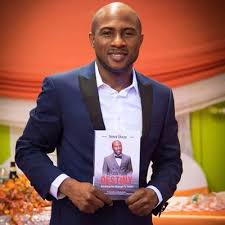
Henry Ukazu writes from New York. He’s the author of the acclaimed book Design Your Destiny- Actualizing Your Birthright to Success. He works with the New York City Department of Correction as the Legal Coordinator. He can be reached via henrous@gmail.com


Metro
International Day of the Girl-Child: Pad Me A Girl Foundation Holds Menstrual Health Outreach in Ogun
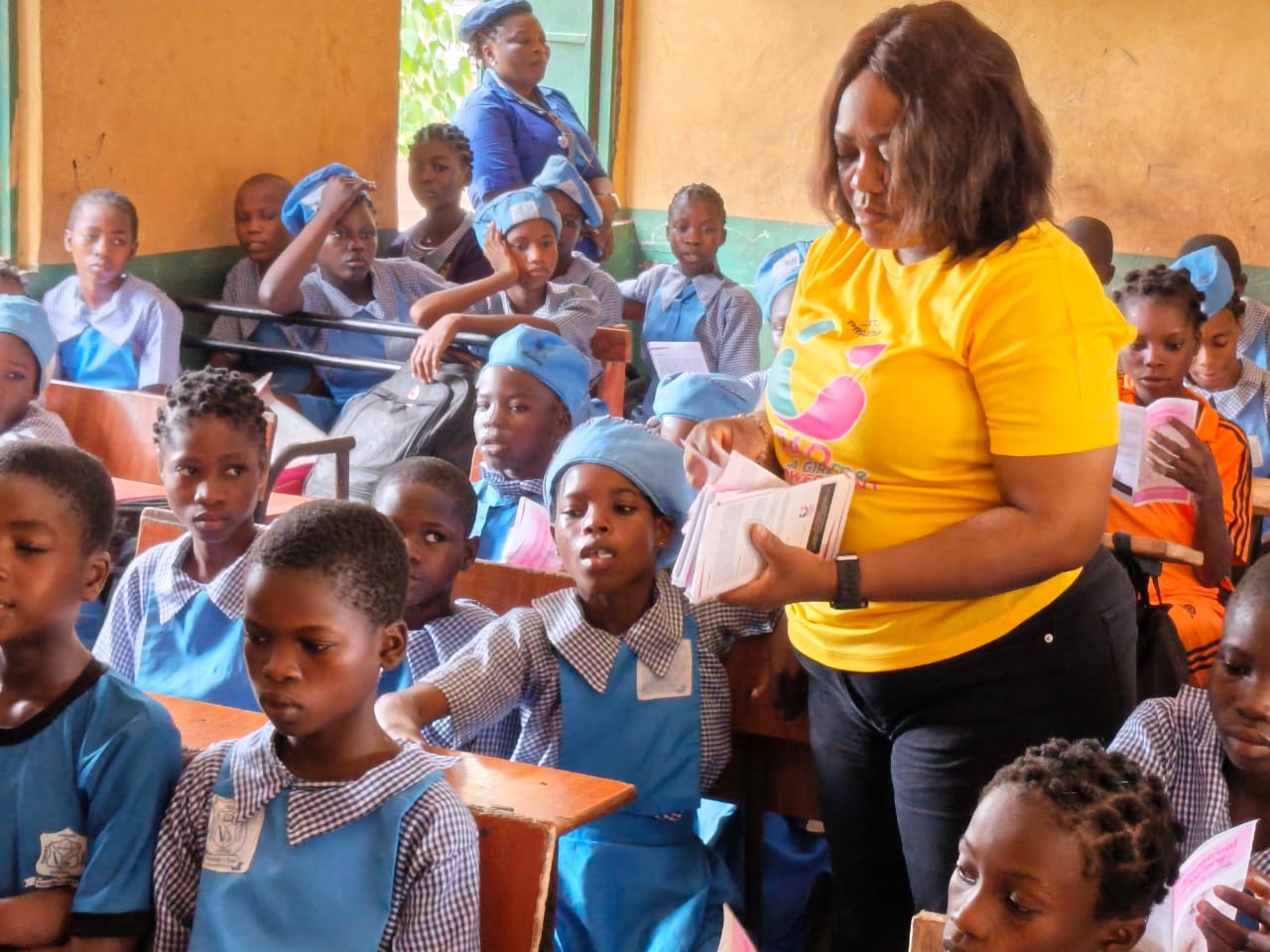
The Pad Me A Girl Empowerment Foundation has taken its menstrual health campaign to Igbesa High School (Junior), in Ado-Odo/Ota Local Government Area of Ogun State, providing free sanitary pads, menstrual hygiene pamphlets, exercise books and pens to over 100 schoolgirls to promote menstrual health, dignity and education.
The outreach, held on Wednesday, October 21, commemorated the 2026 International Day of the Girl Child, whose global theme is “End Child Marriage and Invest in Girls’ Rights!”
The programme brought together girls from Junior Secondary School (JSS) 1 to 3 who participate in the school’s reading clubs for mentorship, reading activities and menstrual health education.
It was convened by Oyelami Yetunde Anuoluwapo and Blessing Kappo, teachers and Teach For Nigeria Fellows at the school, following an appeal for sanitary products, learning materials and health education support. The Foundation’s founder, Theresa Moses, responded by providing the requested items and facilitating an interactive session on menstrual hygiene management.
Speaking at the event, Moses said she was inspired by the girls’ determination and aspirations, stressing the need for sustained investment in their health, education and future.
“Invest in girls and Nigeria will rise. Every girl deserves dignity, education and the right to dream beyond child marriage. That is why we are here; to ensure no girl misses school because of her period,” she said.
She emphasised that access to menstrual hygiene products and accurate information helps girls manage their periods confidently and participate fully in school activities.
In a letter of appreciation, Oyelami and Kappo described the outreach as impactful and inspiring, noting that it enhanced the girls’ understanding of menstrual health, hygiene and self-confidence. They also said the support would help promote the students’ hygiene, school attendance and dignity.
“You did not just give pads; you gave our girls confidence and hope,” the teachers wrote on behalf of the school community, expressing gratitude to the Foundation and hope for future collaboration.
Mrs Amarachi Eze, Assistant Divisional Commissioner of the Nigerian Girl Guides Association, Ado-Odo/Ota, Ogun State Branch, also commended the Foundation for supporting the girls’ hygiene needs and development.
“We sincerely appreciate the Management of Pad Me A Girl Foundation for joining hands with the Association in supporting our girls on hygiene management. May God Almighty continue to uplift your foundation. Thanks for joining hands in the development of girls in our schools. Bravo,” she said.
The Foundation’s Media Coordinator, Mr Oluwatosin Simon Faleye, called on corporate organisations, non-governmental organisations and well-meaning Nigerians to support initiatives that address period poverty and help girls remain in school.
“For over a year, we have been committed to ending period poverty and keeping girls in school. We call on corporate organisations and well-meaning Nigerians to support this cause for the betterment of Nigeria,” Faleye said.
The celebration also featured a student drama presentation highlighting the effects of child marriage, alongside reading and mentorship activities designed to encourage the girls to understand their rights, value their education and pursue their aspirations.
The Foundation also acknowledged the continued support of its sponsors and partners, including Access Bank, Pro Star Sports International, BL Consulting, Vita Baites Foods, Checkers, Senator Ireti Kingibe, representing the Federal Capital Territory (FCT) in the 10th Nigerian National Assembly, the Senate Committee on Women Affairs (SCOWAS), as well as individuals and media organisations whose contributions have supported its broader mission of ending period poverty, promoting menstrual health education and empowering girls and women.
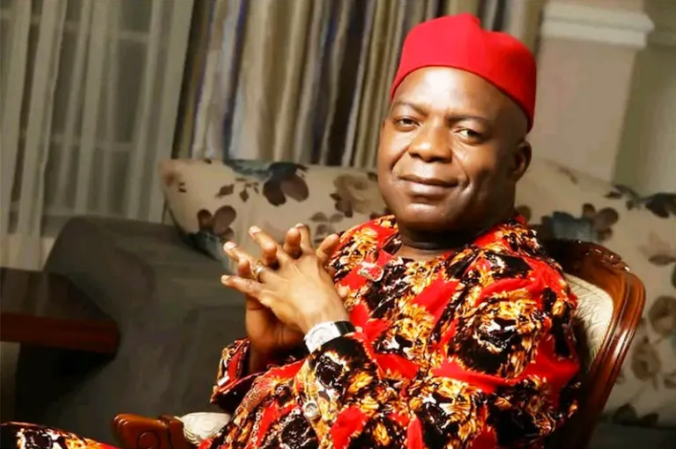
Abia State governor, Alex Otti, is set to flag off the reconstruction of Uratta Road and Old Express Road in Aba, two major routes which poor condition has disrupted transportation, commercial activities and access to residential communities for years.
The governor’s media aide, Ferdinand Ekeoma, in a statement on Wednesday, said that work on the roads has begun ahead of the scheduled official flag-off.
The two roads are considered important to Aba’s commercial and industrial activities, with Uratta Road connecting several adjoining streets to Port Harcourt Road and Old Express Road. At the same time, Old Express Road serves as a key route within the city’s industrial layout.
Ekeoma said the roads had suffered neglect for more than 24 years, leaving some sections impassable and forcing residents and businesses to contend with difficult transportation conditions.
According to the statement, Uratta Road provides access to more than 100 adjoining streets. Its poor condition has affected residents, traders and small-scale manufacturers who depend on the road to transport goods and access their businesses.
The statement said the road had become waterlogged and overgrown with weeds, discouraging commercial motorcycle and tricycle operators from using it.
Similarly, the deterioration of Old Express Road forced heavy-duty truck operators, fabric merchants, spare-parts dealers and small businesses to use longer routes, increasing transportation costs and affecting productivity.
The government said the road reconstruction is part of its broader effort to restore Aba’s infrastructure and strengthen the city’s commercial base.
Aba, one of southeastern Nigeria’s major commercial centres, hosts manufacturing clusters, markets, and small and medium-sized enterprises that depend heavily on functional roads to move raw materials and finished products.
The government said the reconstruction would improve market access, reduce transportation costs, facilitate the movement of goods, and support businesses operating along the affected corridors.
Ekeoma cited the reconstruction of Port Harcourt Road as an example of the administration’s infrastructure programme, noting that improved road access encouraged shops to reopen, attracted manufacturing activities and increased property rents along the corridor.
The government also said the new projects would complement other road interventions in Aba, including works on Ohanku and Obohia roads, as part of efforts to improve connectivity within the commercial city.
Beyond road construction, the administration said its projects include drainage systems, solar-powered streetlights, and pedestrian walkways, which it described as necessary to improve safety, accessibility, and flood resilience.
Ekeoma said Governor Otti views infrastructure development as an economic strategy rather than merely a construction programme, arguing that better roads would help businesses operate more efficiently and create employment opportunities.
He also quoted the governor as saying at an earlier church event that his administration is shifting attention from basic infrastructure improvements to healthcare, education, technology and industrialisation.
The governor, a former bank chief executive, was elected in 2023 on the Labour Party platform, defeating candidates from the major established parties in a state historically dominated by the Peoples’ Democratic Party.
Otti has remained in the Labour Party despite the defection of its 2023 presidential candidate, Peter Obi.
His administration has made rehabilitating Aba roads and public infrastructure central to its governance agenda, presenting the city’s recovery as essential to reviving economic activity across Abia State.

MILO Nigeria, in partnership with former Nigerian national team captain and MILO Brand Ambassador Ahmed Musa, has concluded the inaugural MILO × Ahmed Musa Sports Clinic and Tournament in Kano, providing 2,500 young footballers with professional coaching, mentorship and competitive football experience.
Over two weeks, participants took part in 10 coaching sessions and competed in matches under the guidance of Ahmed Musa and experienced coaches. The programme combined practical football training with lessons in teamwork, discipline, resilience and confidence, equipping participants with skills and values that extend beyond the pitch.
The initiative culminated in a tournament at the Ahmed Musa Sports Complex in Kano, where Khamis Football Academy emerged as champions of the inaugural edition. Participants also received cash prizes, certificates and football equipment.
Speaking on the initiative, Gilbert Tweneboah-Koduah, Category Lead, MILO, said: “At MILO, we believe sport is a powerful platform for young people to discover their abilities, build confidence and develop values that extend beyond the field of play. Our partnership with Ahmed Musa brings together MILO’s longstanding commitment to sports development and the experience of an athlete whose journey from grassroots football to the highest level of the game can inspire the next generation. By combining his experience with structured coaching and competition, this programme has given young footballers in Kano an opportunity to develop their skills, learn from experienced professionals and better understand the commitment required to pursue their aspirations.”
For the participants, the clinic offered an opportunity to learn from an athlete whose football journey began in northern Nigeria and progressed to the highest levels of the sport, making his experience a source of inspiration for aspiring players.
Commenting on the partnership, Ahmed Musa said: “Nigeria has incredible football talent, but talent alone is not enough. Young players need good coaching, regular competition and people who will guide them. I am proud to partner with MILO and share some of what football has taught me. My message to these players is simple: keep training, listen to your coaches and work hard every day to improve.”
Musa also called for greater investment in grassroots football, emphasizing the importance of giving young players access to quality coaching, structured development and regular competitive opportunities.
The MILO × Ahmed Musa Sports Clinic and Tournament builds on MILO’s longstanding commitment to youth development through sports in Nigeria. Through its school-based and grassroots sporting initiatives, MILO continues to create opportunities for young people to participate in sports, develop their abilities and embrace values that can support them both on and off the pitch.


