
Headlines
French Court Orders Seizure of Three Nigerian Jets over Brawl Between Chinese Firm, Ogun Govt

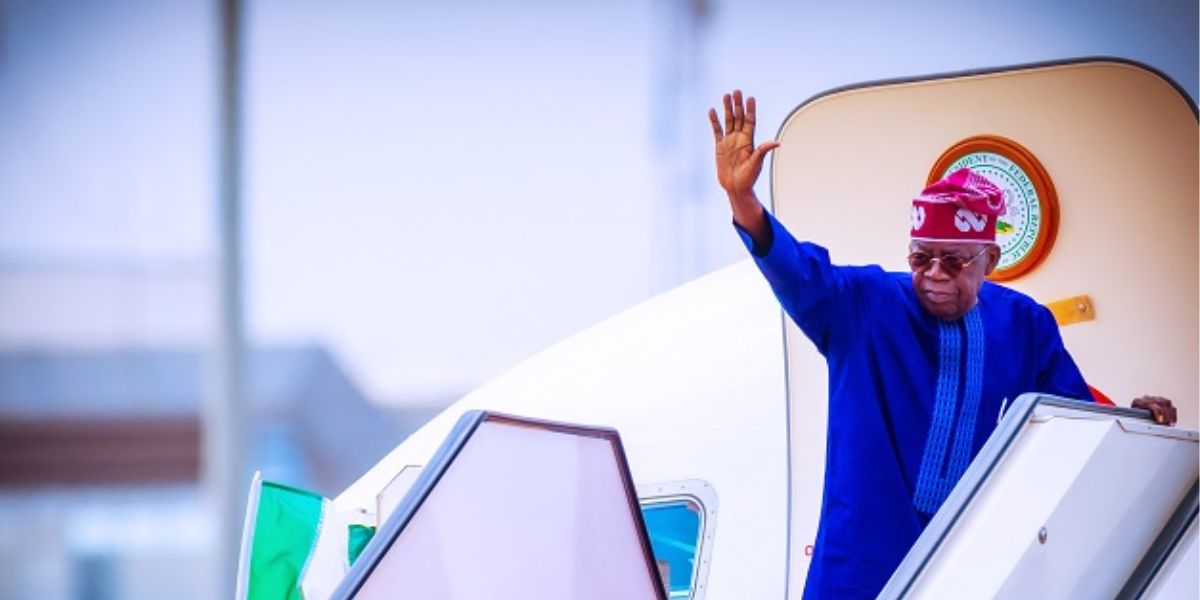
A French court has authorised the seizure of three presidential jets linked to the Federal Government of Nigeria, according to PREMIUM TIMES report.
Two of the jets, part of the Nigerian presidential air fleet, were recently put up for sale, while the third, an Airbus 330, was purchased by Nigeria but not yet delivered.
The seizure of the presidential jets is a result of an application by Zhongshan, a Chinese company whose export processing zone management contract was revoked by the Ogun State government in 2016.
An independent arbitral tribunal chaired by the former President of the UK Supreme Court awarded Zhongshan about $74.5 million in compensation, but the Ogun State government, which has a dispute with Zhongshan, has yet to honour the award.
The Federal Government is facing this backlash over an action taken by one of its subnationals with which Zhongshan has a business dispute.
The seized presidential jets include a Dassault Falcon 7X at Le Bourget airport in Paris, a Boeing 737, and an Airbus 330 at Basel-Mulhouse airport in Switzerland. All are currently undergoing maintenance. The Nigerian government reportedly paid over $100 million for the Airbus.
The court order prohibits the movement, sale, or purchase of the jets until Zhongshan receives the awarded $74.5 million. Bailiffs have served papers for each aircraft.
The Nigerian government is yet to comment on this development.
The confiscation of the planes follows the recent seizure of Nigerian-owned buildings in Liverpool, England, by a UK court in relation to the same dispute with Zhongshan. The properties against which Zhongshan secured charging orders are located at 15 Aigburth Hall Road, Liverpool and Beech Lodge, 49 Calderstones Road, Liverpool, estimated by the company to be worth between £1.3 and £1.7 million.
The Ogun State government and Zhongshan have been locked in a long-drawn battle over the management of an export processing zone in the South-west state.
On 29 June 2010, Zhuhai Zhongfu Industrial Group Co Ltd, the parent company of Zhongshan, and the Ogun Guangdong Free Trade Zone (OGFTZ) entered into a framework agreement on the establishment of Fucheng Industrial Park within the zone. The agreement gave Zhuhan the right to develop and run Fucheng Park within the zone.
The Nigeria Export Processing Zones Authority registered Zhongfu International Investment (NIG) FZE, a subsidiary of Zhongshan, as a free trade zone enterprise within the OGFZ in 2011. The Ogun State government later appointed Zhongfu as the interim manager/administrator of the zone.
But in July 2016, Zhongfu alleged that the Ogun State Government moved to terminate its appointment, and appoint another manager for the free trade zone.
Zhongfu then launched an investment treaty arbitration against Nigeria, citing the bilateral investment treaty between the People’s Republic of China and Nigeria.
On 26 March 2021, an arbitral tribunal issued a final award of $55,675,000 in addition to an interest of $9.4 million and costs of £2,864,445 payable by Nigeria to Zhongshan.
PREMIUM TIMES learned that afterwards, the federal government repeatedly pleaded with the Ogun State Government to amicably resolve its dispute with Zhongshan but still no settlement was reached.
Source: Premium Times


The United States has sent a small team of troops to Nigeria, the general in charge of the U.S. command for Africa (AFRICOM), General Dagvin R.M. Anderson, said on Tuesday.
The development is the first acknowledgment of U.S. forces on the ground since US airstrikes targeting terrorists in Nigeria’s North-West on Christmas Day, 2025.
US President, Donald Trump, who announced that he ordered the airstrikes on what he described as Islamic State targets, had said there could be more U.S. military action in the country.
According to Reuters, the U.S. had been conducting surveillance flights over the country from Ghana since at least late November.
Speaking on the decision to send troops to Nigeria, the top general said both countries agreed that more needed to be done to combat the terrorist threat in West Africa.
“That has led to increased collaboration between our nations to include a small US team that brings some unique capabilities from the United States,” General Dagvin R.M. Anderson, head of the U.S. military’s Africa Command AFRICOM, told journalists during a press briefing on Tuesday.
Anderson did not provide further details about the size and scope of their mission.
According to Reuters, Nigeria’s Defense Minister, Christopher Musa, confirmed that a team was working in Nigeria but did not provide further details.
A former U.S. official told Reuters that the U.S. team appeared to be heavily involved in intelligence gathering and enabling Nigerian forces to strike terrorist-affiliated groups.
Nigeria has come under intense pressure by Washington to act after President Trump accused the West African nation of failing to protect Christians from Islamist militants operating in the northwest.
The Nigerian government denies any systematic persecution of Christians, saying it is targeting Islamist fighters and other armed groups that attack both Christian and Muslim civilians.

President Bola Tinubu has called on the World Bank to support Nigeria’s ongoing economic reforms, with a focus on agriculture, youth employment, and private sector growth, as part of his administration’s strategy to strengthen the economy and expand opportunities for the citizens.
The president made the remarks on Tuesday while receiving a delegation from the World Bank led by Anna Bjerde, Managing Director of Operations, at the State House, Abuja.
“Since we went into this tunnel of reform, we have our hands on the power and we’re never going to look back. Initially, it was painful and difficult, but those who win are not the ones who give up in difficult times,” Tinubu said.
The president highlighted the importance of mechanization and modernization of agriculture to increase productivity and create opportunities for Nigeria’s large young population.
“We have mechanization centers to help farmers with improved seedlings and fertilizers to enhance their programs. The goal is to move farmers from small-scale holders to large cooperatives that can create opportunities for Nigerians,” he explained.
Tinubu also pointed to the petrochemical sector and other domestic industries as areas where the government is working to improve outputs and strengthen local markets. He stressed that reforms are continuous and must be grounded in transparency, accountability, and stability.
“The first reaction to reforms was high inflation, but it has come down dramatically, and the Naira is now stable. We want to help investors operate with ease, reduce bureaucracy, and develop the skills of our people,” he said.
Anna Bjerde commended Tinubu’s administration for its consistent and steady approach to reforms over the past two years. She highlighted that Nigeria has become a global example of reform implementation, giving confidence to investors and policymakers worldwide. “The results achieved in the last two years are commendable. Your steady communication of the importance of reforms has given confidence and clarity, and there is no turning back,” Bjerde said.
She emphasized the importance of job creation, particularly for Nigeria’s youth, noting that Africa’s young population is growing rapidly and that SMEs are central to employment generation.
“Agriculture is a huge part of the economy and a major employer. Innovations in mechanization, cooperatives, value-chain development, and infrastructure can be scaled to create more opportunities,” Bjerde said.
She also highlighted the World Bank’s financial support for Nigeria, including public sector financing of $17 billion, private sector support of $5 billion through the IFC, and investment guarantees exceeding $500 million. These instruments are aligned with Nigeria’s reforms, including trade, digital initiatives, and inflation management, to stimulate private sector growth and human development.
“We want to work with Nigeria to accelerate growth, improve access to finance for SMEs, and support early childhood development as part of a comprehensive human development strategy,” she added.
The meeting underscored Nigeria’s push to attract foreign support for strategic reforms, particularly in sectors that directly affect youth employment, food security, and overall economic growth.

Saif al-Islam Gaddafi, son of former Libyan leader Muammar Gaddafi, has died at the age of 53, his political team announced on Tuesday.
The Head of the political team told Libyan News Agency that the young Gaddafi died near the country’s border with Algeria.
His sister confirmed the development, but did not specify the cause of death.
Born in 1972, the younger Gaddafi was once widely seen as his father’s heir apparent. The International Criminal Court had issued a warrant for his arrest, seeking to prosecute him for crimes against humanity related to his alleged role in crushing opposition demonstrations in 2011.


