
Business
Hackaholics 6.0: 35 Teams Compete for Wema Bank’s ₦120m Grand Prize Pool

Wema Bank, Nigeria’s most innovative bank and pioneer of Africa’s first fully digital bank, ALAT, has announced a ₦120 million prize pool for the Hackaholics 6.0 Grand Finale. This announcement follows the emergence of 35 teams from regional pitch sessions that recorded 1,460 participants across seven cities in Nigeria.
Announcing the prize structure, the MD/CEO, Wema Bank, Mr. Moruf Oseni, disclosed that the ₦120 million will be awarded across several winning categories at the finale. The Ideathon prizes include ₦25 million for first place, ₦20 million for the first runner-up and ₦15 million for the second runner-up. In the Hackathon category, the first to fourth-place teams will receive ₦20 million, ₦15 million, ₦10 million and ₦5 million respectively. In addition, two women-led innovations, one from each vertical, will receive ₦5 million each in recognition of Wema Bank’s commitment to advancing female participation in technology and innovation.
According to Moruf Oseni, “Hackaholics continues to demonstrate the power of young people to shape the future of technology and nation-building. We believe strongly in the ideas, resilience, and ingenuity of the Nigerian youth, and our investment in this initiative is a clear testament of our commitment to giving them the resources, mentorship, and platform they need to transform their ideas into real-world solutions. As these finalists head to Lagos, we are confident that their innovations will create meaningful impact across industries and communities, and we are proud to be a champion for that transformation.”
The 35 finalist teams emerged from a regional pitch cycle that received over a thousand applications across eight pitch centres: Ahmadu Bello University (ABU Zaria), Federal University of Technology Akure (FUTA), Lagos State University (LASU), University of Uyo (UNIUYO), Babcock University, University of Ibadan (UI), Veritas University Abuja and Purple Academy Lagos. Each centre provided students with access to industry-led masterclasses, hands-on mentorship and structured pitch development sessions, culminating in highly competitive presentations before expert judges.
The finalists include 17 Ideathon teams, 12 Hackathon teams and six women-led teams, each tackling challenges across fraud detection, customer experience, onboarding, acquisition, credit management and other social impact areas. All teams will participate in a three-day pre-finale mentorship and shortlisting programme ahead of the Grand Finale in Lagos.
Finalists expressed excitement about advancing to the Lagos finale and the opportunities ahead. The team leader of Veritas’ Hackathon winner, Tensor, Medugu Wali, shared the reason they are participating in the competition. “We built ‘Wallet Padi’ because we believe it can genuinely improve how Nigerians manage their money. Advancing to the pre finale leg of Wema Bank Hackaholics is a big step toward bringing that vision to life, and we appreciate Wema Bank for creating this platform.”
Babcock’s Ideathon winner, Akobundu Gift, a participant who had earlier attempted the Hackaholics challenge in 2023 but didn’t win, expressed great enthusiasm at the prospect of moving on to the next stage. Extending his gratitude to Wema Bank, he reminisced on the journey of his Startup, ‘Chao’. According to him, “Chao started as a small campus food-delivery idea in 2023, and it has grown far beyond what we imagined. Reaching the Hackaholics finals again reflects how much we’ve evolved. We’re grateful to Wema Bank for the opportunity and excited to compete at the next stage.”
Ogunlana Tosin, founder of Eutopia.ai, the women-led project winner at Veritas University, also shared her joy after being announced winner at her Pitch Centre, adding “Not making it at Babcock was honestly painful, but we were determined to win so we took the feedback, refined our solution and returned to try again. Advancing beyond the preliminaries this time showed me what’s possible when we don’t give up. I’m truly grateful to Wema Bank for this opportunity and for continuing to champion women empowerment, helping women-led innovation to thrive, and supporting women through initiatives like SARA,” she said.
Since its inception in 2019, Hackaholics has grown into one of Nigeria’s most influential youth innovation platforms, attracting more than 12,000 applicants across 15 schools and disbursing over $300,000 in funding and support. Between 2023 and 2024 alone, ₦75 million was awarded to women-led teams. With the launch of the Hackaholics Accelerator and Collective Program earlier this year, Wema Bank now provides ongoing support to early-stage founders beyond the competition cycle.
The Hackaholics 6.0 Grand Finale will bring together industry leaders, policymakers, investors and technology experts in Lagos for live pitches, product showcases and the unveiling of Nigeria’s next generation of
transformative founders. For more information, visit hackaholics.wemabank.com or follow Wema Bank’s digital platforms.


Business
Fidelity Bank vs Sagecom: Supreme Court Judgment Validates Bank’s Financial Strength, Commitment to Transparent
A five-man panel of the Supreme Court, led by Justice Lawal Garba, on Friday, ruled in favour of Fidelity Bank in an appeal it filed against Sagecom Concepts Limited.
Given the earlier rulings, this is a major victory for Fidelity Bank in the long-running legal battle.
The ruling has, however, brought definitive closure to a legacy case that has drawn significant attention across the financial sector for more than two decades.
In a motion dated October 8, 2025, Fidelity Bank sought clarification from the Supreme Court, asking for a consequential order that the judgment debt be paid in Naira.
It also prayed for an order that the interest rate payable be 19.5% rather than 19.5% compounded daily.
The bank also prayed for an order that the exchange rate to be used for conversion be the exchange rate on the date of the High Court judgment rather than the exchange rate on the date of payment, in line with the decision of the court in Anibaba v. Dana Airlines.
It also sought an order that the judgment debt payable be N30,197,286,603.13.
The lender also prayed for an order that the interest on this sum of N30,197,286,603.13 be payable at the rate of 19.5% per annum until settlement of the judgment sum.
However, in a ruling delivered by Justice Adamu Jauro, the apex Court granted the Bank’s prayers 1, 2 and 3 while refusing to grant prayers 4 and 5.
With the ruling, the lender shall pay the judgment sum in Naira at an interest rate of 19.5% per annum rather than the daily compounded rate of 19.5% earlier awarded by the High Court.
The Supreme Court also granted the Bank’s prayers for the exchange rate to be the rate applicable on the date of the judgment of the High Court, in line with the Supreme Court’s earlier decision in Anibaba v. Dana Airlines.
The matter between Fidelity Bank and Sagecom Limited originated from a legacy transaction involving the former FSB International Bank, which Fidelity Bank merged with in 2005.
The matter arose from a 2002 credit facility extended to G. Cappa Plc and subsequent legal proceedings tied to the collateral.
The Supreme Court’s clarity brings finality to years of litigation and confirms a significantly lower liability than the N225billion previously speculated in some quarters.
This ruling further aligns with the Bank’s consistent computation and materially contradicts the N225 billion previously speculated.
Meanwhile, throughout the duration of the case, Fidelity Bank’s share price has remained stable, reflecting investor confidence in the lender’s strong governance framework, prudent risk management practices, and robust financial fundamentals.
Industry experts are of the view that this judgment reaffirms the bank’s financial strength and its commitment to transparent and responsible governance.
When approached for comments on the judgment, the lender’s representatives declined to comment on the matter but expressed thanks to the Supreme Court for bringing clarity and closure to the case.
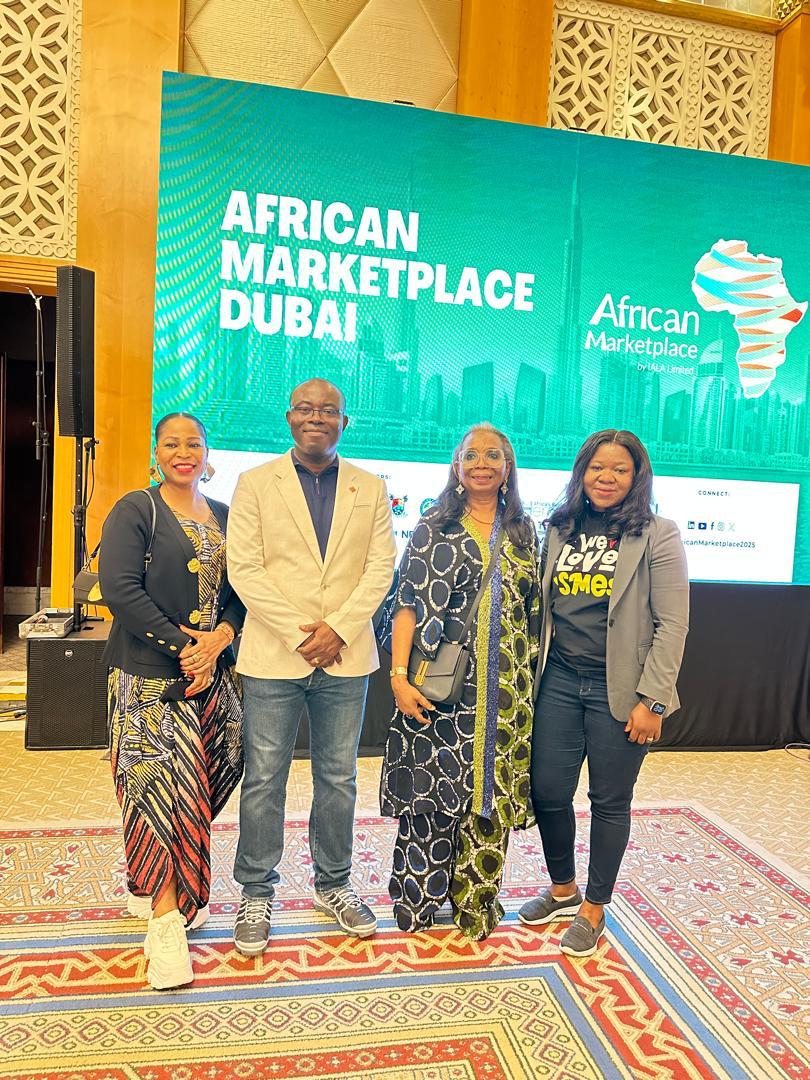
Access Bank, in alignment with its commitment to being Africa’s Gateway to the World, proudly sponsored the inaugural African Marketplace Dubai 2025, an initiative by the Ibukun Awosika Leadership Academy (IALA). The event, held at the prestigious Grand Hyatt Dubai, attracted over 300 curated brands and participants from more than 200 countries, bringing together businesses and investors to foster cross-border trade and enhance Africa’s global economic competitiveness.
African Perspective and Access Bank’s Role
As a key enabler of trade, payments, and SME growth across Africa, Access Bank’s participation highlighted its continuous efforts to promote intra-African trade and support small businesses in the region. The bank’s involvement in this pan-African trade and investment fair emphasized its strategic focus on facilitating B2B and B2C linkages, particularly in key sectors such as fashion, arts and crafts, furniture, food, and technology.
In her remarks at the opening session, Ibukun Awosika, the host of the event and founder of IALA, spoke passionately about the transformative power of African entrepreneurship. “This platform is a testament to the resilience, innovation, and creativity that drives African businesses forward. It’s not just about trade, it’s about building relationships that will open new doors for generations to come. It’s about connecting the world to the incredible potential Africa holds” Said Awosika.
Empowering Small and Medium Enterprises
Access Bank’s participation demonstrated our unwavering commitment to supporting SMEs across the continent. This dedication was further reinforced by the keynote remarks from Kafui Bimpe, Head SME, African Subsidiaries, who emphasized the Bank’s strategic direction: “At Access Bank, our vision and drive is clear – to be Africa’s Gateway to the World. This vision guides our commitment to promoting intra-African trade, enhancing cross-border payments, and empowering Small and Medium-sized Enterprises (SMEs) to grow from local champions to global competitors.”
Throughout the event, Access Bank showcased its innovative SME-focused solutions designed to equip businesses with the tools, resources, and expertise needed to scale sustainably. From improved access to finance and capacity-building programmes to tailored mentorship and strategic partnerships, the Bank continues to position itself as a catalyst for SME growth and resilience across Africa.
This message was echoed in the keynote address delivered by His Excellency Faure Essozimna Gnassingbe, President of the Republic of Togo, who highlighted Africa’s decisive shift from a narrative of untapped potential to one of active value creation. “Africa’s era of potential is over, the continent is now creating, innovating, and claiming its rightful place in global trade,” he stated.
A Future Focused on Cross-Border Commerce and Economic Integration
As part of its ongoing efforts to boost intra-African trade, Access Bank’s sponsorship of the African Marketplace Dubai 2025 aligns with its broader objective of reinforcing economic integration across the continent. The event offered a unique platform for African businesses to engage directly with international investors, creating new opportunities for growth and collaboration. By supporting cross-border trade and fostering B2B connections, Access Bank is playing a key role in elevating African entrepreneurs to the global stage.
Access Bank’s Continued Commitment
Access Bank’s participation in the African Marketplace event is just one of many steps the institution is taking to ensure that Africa’s SMEs are well-positioned to thrive in the global economy. As Africa’s leading financial institution, Access Bank is dedicated to facilitating sustainable growth for small businesses, providing access to markets, and strengthening the continent’s position as a key player in the global trade ecosystem.
Strengthening Africa’s Global Connections at ATC 2026
In line with this ongoing commitment, Access Bank will host the second edition of the Access Trade Conference (ATC) in Cape Town in 2026. Building on the insights, partnerships, and SME engagement showcased in Dubai, next year’s ATC will further deepen conversations around trade facilitation, innovation, and cross-border collaboration across Africa. This upcoming edition will serve as a strategic platform to continue empowering SMEs, connecting markets, and reinforcing Access Bank’s role as Africa’s Gateway to the World.
About Access Bank
Access Bank, a wholly owned subsidiary of Access Holdings Plc, is a leading full-service commercial bank operating through a network of more than 700 branches and service outlets spanning 3 continents, 24 countries and over 60 million customers. The Bank employs over 28,000 people in its operations in Africa, Asia and Europe, with representative offices in China, Lebanon, India, and the United Arab Emirates.
Access Bank is a diversified financial institution which combines a strong retail customer franchise and digital platform with deep corporate banking expertise, proven risk management, and capital management capabilities.
The Bank services its various markets through three key business segments: Corporate and Investment Banking, Commercial Banking, and Retail Banking. The Bank has enjoyed what is Africa’s most successful banking growth trajectory in the last 23 years, becoming one of the continent’s largest retail banks. As part of its continued growth strategy,
Access Bank is focused on mainstreaming sustainable business practices into its operations. The Bank strives to deliver sustainable economic growth that is profitable, environmentally responsible, and socially relevant, helping customers to access more and achieve their dreams.

Access Bank showcased leadership in advancing cross-border payments at the inaugural Pan-African Payment and Settlement System (PAPSS) COWRY 2025 Participants Forum, held on December 2-3, 2025, in Lagos, Nigeria.
The event brought together policymakers, regulators, financial institutions, and payment experts to explore pathways toward “Building an interoperable and sovereign African payment ecosystem for trade and economic growth.”
In alignment with the theme, discussions emphasized the importance of resilient, interoperable, and sovereign African payment infrastructure that empowers businesses, supports SMEs, and strengthens intra-African trade under the AfCFTA.
Designed to facilitate instant, secure, and efficient cross-border transactions in local African currencies, PAPSS reduces dependency on third-party currencies, enhances settlement efficiency, and promotes regional economic integration.
Access Bank, through its AccessAfrica initiative, plays a leading role in this evolution. AccessAfrica enables fast, secure, and affordable payments across more than 20 African corridors. During the forum, Access Bank representatives Naco Bolote, Head of International Remittance & Payments for African Subsidiaries and Aminat Olatunji, Unit Head of Remittances actively contributed to conversations on the emerging settlement landscape and the future of continental financial integration.
“The progress made with PAPPS reinforces Access Bank’s commitment to real-time settlement and financial integration across Africa, and we remain dedicated to collaboration and innovation, ensuring Africans can move money quickly, reliably, and at scale.” said Bolote.
Bolote also highlighted that PAPPS unlocks instant, local-currency settlement, reducing FX reliance and transaction times; combined with AccessAfrica, allows faster, predictable, and cost-efficient transfers across 20+ African countries; is live in eight Access Bank markets, with further rollouts planned for 2026.
Access Bank commended PAPSS, Afreximbank, and the AfCFTA Secretariat for their leadership in advancing the infrastructure required for a more connected, sovereign, and prosperous African economy.
About Access Bank
Access Bank, a wholly owned subsidiary of Access Holdings Plc, is a leading full-service commercial bank operating through a network of more than 700 branches and service outlets spanning 3 continents, 24 countries and over 60 million customers. The Bank employs over 28,000 people in its operations in Africa, Asia and Europe, with representative offices in China, Lebanon, India, and the United Arab Emirates.
Access Bank is a diversified financial institution which combines a strong retail customer franchise and digital platform with deep corporate banking expertise, proven risk management, and capital management capabilities.
The Bank services its various markets through three key business segments: Corporate and Investment Banking, Commercial Banking, and Retail Banking. The Bank has enjoyed what is Africa’s most successful banking growth trajectory in the last 23 years, becoming one of the continent’s largest retail banks. As part of its continued growth strategy,
Access Bank is focused on mainstreaming sustainable business practices into its operations. The Bank strives to deliver sustainable economic growth that is profitable, environmentally responsible, and socially relevant, helping customers to access more and achieve their dreams.


