
Headlines
Jubilant Edo Residents, Melaye Mock Oshiomhole As Obaseki Wins

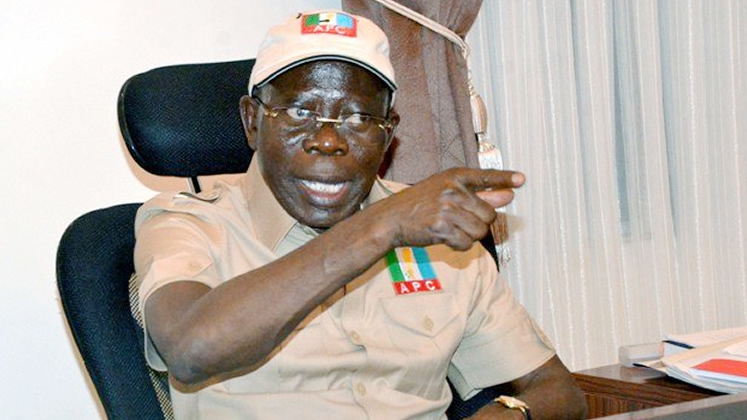
Jubilant residents of Benin City on Sunday trooped out to celebrate the victory of Governor Godwin Obaseki of the Peoples Democratic Party over the governorship candidate of the All Progressives Congress, Pastor Osagie Ize-Iyamu, in the Saturday poll.
Some of the residents mocked a former governor of the state, Adams Oshiomhole, who was the major promoter of Ize-Iyamu.
This was as a former member of the National Assembly from Kogi State, Senator Dino Melaye, also mocked Oshiomhole and the national leader of the APC, Asiwaju Bola Tinubu.
Obaseki polled a total number of 307,955 votes to emerge winner of the poll while Ize-Iyamu scored 223,619 votes.
Obaseki had contested on the platform of the APC in 2016 governorship election against Ize-Iyamu who was then the candidate of the PDP and Obaseki won.
However, Obaseki and Oshiomhole, who is also a former National Chairman of the APC, fell apart and the crisis cost Obaseki the APC governorship ticket. Ize-Iyamu, who had defected to the APC ahead of the APC governorship primary election, was given the ticket.
While celebrating Obaseki’s victory on Sunday, Melaye said Oshiomhole had been reduced.
“Fellow countrymen and women, I salute you once again. I am reaching you directly from Edo. What we used to have as Osho Baba has now been reduced, downgraded and degraded to Osho pikin. Nobody should call Osho Baba again, never! The only thing you now have is Osho pikin…..
“How can you expect that a man with the umbrella will not win during the rainy season? Definitely, the PDP won. APC, how market? Oshiomhole, how market?” Melaye said before bursting into a song to mock Oshiomhole and Tinubu, who had released a video ahead of the election, urging the people of Edo to reject Obaseki.
“The dollars brought in a bullion van to Edo have gone down the drain,” Melaye added.
Also, some of Obaseki’s supporters said Oshiomhole should relocate to Lagos to join Tinubu to help him cope with the shame of the defeat.
Obaseki’s supporters called Oshiomhole many unprintable names, saying he became too arrogant after the people of Edo State compensated him to win the 2007 governorship in the state.
While dancing and singing, some of the youths said, “He (Oshiomhole) should relocate to be living with his godfather in Lagos.”
A driver, who identified himself as Lucky Godwin, said, “Edo no be Lagos; we told Oshio and his father that they will be humiliated and that has happened.”
A Lady among the supporters, who identified herself simply as Rose, said “This victory is sweet; e dey pepper Oshioo.”
The Punch


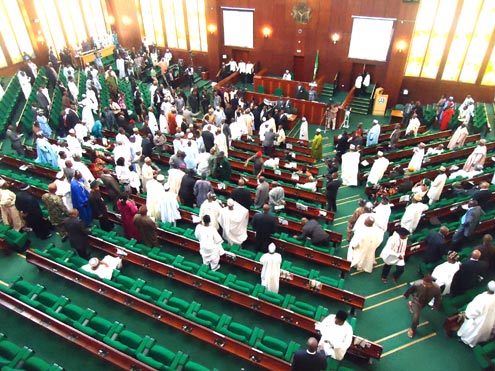
The House of Representatives has released the certified copies of the four tax reform Acts recently signed into law by President Bola Tinubu, following public concerns over alleged discrepancies and the circulation of unauthorised versions of the laws.
This was disclosed in a statement signed by the spokesperson of the House, Akin Rotimi, on Saturday.
According to the statement, the House, under the leadership of the Speaker, Tajudeen Abbas, directed the immediate release of the Certified True Copies (CTCs) of the Acts, including the endorsement and assent pages signed by the president, to Nigerians for public record, verification and reference.
The decision, taken in concert with the Senate President, Godswill Akpabio, followed allegations that versions of the tax laws in circulation differed from those passed by the National Assembly and assented to by the president.
The controversy was first raised on the floor of the House by Abdulsamad Dasuki (PDP, Sokoto), who drew the attention of lawmakers to alleged discrepancies between the tax Bills passed by the National Assembly and the versions subsequently gazetted and made public by the executive arm.
Mr Dasuki warned that the inconsistencies, if left unchecked, could undermine legislative integrity and public confidence in the law-making process. His intervention triggered debates within and outside the National Assembly, with legal practitioners, tax experts and civil society organisations demanding clarification and suspension of the implementation of the Acts.
In response, Mr Tajudeen constituted a seven-member ad hoc committee chaired by Aliyu Betara, whose members included Idris Wase, Sada Soli, Adedeji Faleke, Igariwey Iduma, Fred Agbedi and Babajimi Benson.
The committee was directed to investigate the circumstances surrounding the alleged alterations, how unauthorised versions came into circulation and measures to prevent a recurrence.
Mr Tajudeen also ordered an immediate internal verification of the Acts and approved the public release of the certified versions to eliminate doubts, restore clarity and protect the sanctity of the legislative record.
The four tax reform laws released are the Nigeria Tax Act, 2025; the Nigeria Tax Administration Act, 2025; the National Revenue Service (Establishment) Act, 2025; and the Joint Revenue Board (Establishment) Act, 2025.
The House described the laws as the backbone of Nigeria’s contemporary tax reform framework, aimed at modernising revenue administration, improving compliance, reducing inefficiencies, eliminating duplication and strengthening fiscal coordination across the federation.
It said Mr Tajudeen provided firm leadership throughout the tax reform process, from stakeholder consultations and committee scrutiny to clause-by-clause consideration and robust plenary debates, to ensure the reforms were inclusive, evidence-based and aligned with Nigeria’s fiscal realities.
Reassuring Nigerians, Mr Rotimi said, “The National Assembly is an institution built on records, procedure, and institutional memory. Every Bill, every amendment, and every Act follows a traceable constitutional and parliamentary pathway.”
He stressed that once a law is passed and assented to, its integrity is preserved through certification and custody by the legislature, adding that there is no ambiguity about what constitutes the law.
He further emphasised that the only authentic and authoritative versions of the four tax Acts are the certified copies released by the National Assembly, urging the public to disregard any other documents or versions in circulation.
“Members of the public, institutions, professionals, and stakeholders are therefore advised to disregard and discountenance any other documents or versions in circulation that are not certified by the National Assembly, as such materials do not form part of the official legislative record,” the statement read.
The House also disclosed that the Clerk to the National Assembly has concluded the process of aligning the Acts with the Federal Government Printing Press to ensure accuracy, conformity and uniformity, adding that hard copies have been produced, circulated to lawmakers and made available to the public.
“The Clerk to the National Assembly has concluded the process of aligning the Acts – duly passed, assented to, and certified – with the Federal Government Printing Press to ensure accuracy, conformity, and uniformity. Hard copies of the certified tax Acts have also been produced and are being circulated to all Honourable Members and Distinguished Senators, and made available to the public, to ensure institutional clarity, uniform reference, and legislative certainty.”
It added that the ad hoc committee chaired by Mr Betara continues its work in line with its mandate to determine the circumstances surrounding the circulation of unauthorised versions of the tax Acts and recommend safeguards to preserve the integrity and reliability of parliamentary records.
The House reaffirmed its commitment to constitutionalism, the rule of law, transparency and accountable governance, pledging to strengthen internal controls, uphold institutional discipline and protect the integrity of Nigeria’s legislative process.
“The House will continue to strengthen internal controls, uphold institutional discipline, and protect the integrity of Nigeria’s legislative process in the collective interest of the Nigerian people,” it concluded.
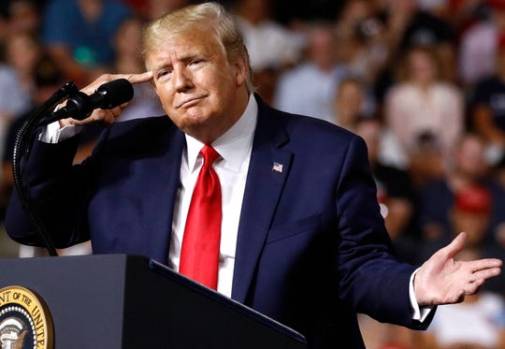
President Trump said in a Truth Social post early Saturday morning that Venezuelan President Nicolas Maduro and his wife were “captured and flown out of the Country,” as he confirmed U.S. military strikes in Venezuela.
The capture, according to the post, followed a barage of attacks by United States.
“The United States of America has successfully carried out a large scale strike against Venezuela and its leader,” Mr. Trump wrote. He said U.S. law enforcement was involved, but he didn’t specify how or which agencies.
Maduro was indicted in an American court for alleged narcoterrorism in 2020.
Mr. Trump said more details will be offered in a press conference at 11 a.m. ET at Mar-a-Lago.
The full post reads:
“The United States of America has successfully carried out a large scale strike against Venezuela and its leader, President Nicolas Maduro, who has been, along with his wife, captured and flown out of the Country.
“This operation was done in conjunction with U.S. Law Enforcement. Details to follow. There will be a News Conference today at 11 A.M., at Mar-a-Lago. Thank you for your attention to this matter!”

Political economist, Prof. Pat Utomi, has stated that if the former Governor of Anambra State, Peter Obi, decides to run as someone’s vice-presidential candidate, he will immediately stop supporting him.
Speaking on Channels Television’s Politics Today on Thursday, Prof. Utomi assured that the 2023 presidential candidate of the Labour Party will contest for the presidency in 2027, following his formal defection to the African Democratic Congress (ADC) on Wednesday.
“I can tell you that Peter Obi will contest for the presidency. The day he becomes somebody’s vice president, I walk away from his corner. I can tell you that for a fact,” Prof. Utomi said on the programme.
In the same interview, Prof. Utomi also made a case for limiting presidential and gubernatorial candidates to Nigerians aged 70 and below.
He lamented that the Nigerian presidency has increasingly become a “retirement home,” criticising both former President Muhammadu Buhari’s and President Bola Tinubu’s administrations as “government in absentia.”
“Something important about this election to bear in mind is that the Nigerian presidency has become a retirement home where people go for the Nigerian state to pay their medical bills. It is not acceptable. They don’t have the fitness to run the country. The last one, and the current one, have essentially been government-in-absentia leaders.”
“I, Pat Utomi, am insisting that I will canvass to the Nigerian people that nobody over the age of 70 should run for an executive position, whether it be governor or president,” he concluded.
Rescue mission
Obi, who came third in the 2023 presidential election with over 6 million votes, officially announced his defection to the African Democratic Congress (ADC) in Enugu on Wednesday.
In his speech at the event, Obi said his move to the ADC marks the beginning of a journey to rescue the country from the ruling All Progressives Congress (APC).
“Today is an important day; today is the last day of 2025, so we are ending this year with the hope that, in 2026, we will begin a journey to rescue our country and set it on the path of proper socio-economic development that will be unifying and inclusive,” Obi stated.
He added: “We have all watched as those who benefited from our democracy have, over time, become accessories to destroying it—either through coercion or gangsterism against the opposition. We cannot allow this to happen; we will resist it.”


