
Headlines
Leaders, Associates Celebrate Herbert Wigwe at First Year Memorial

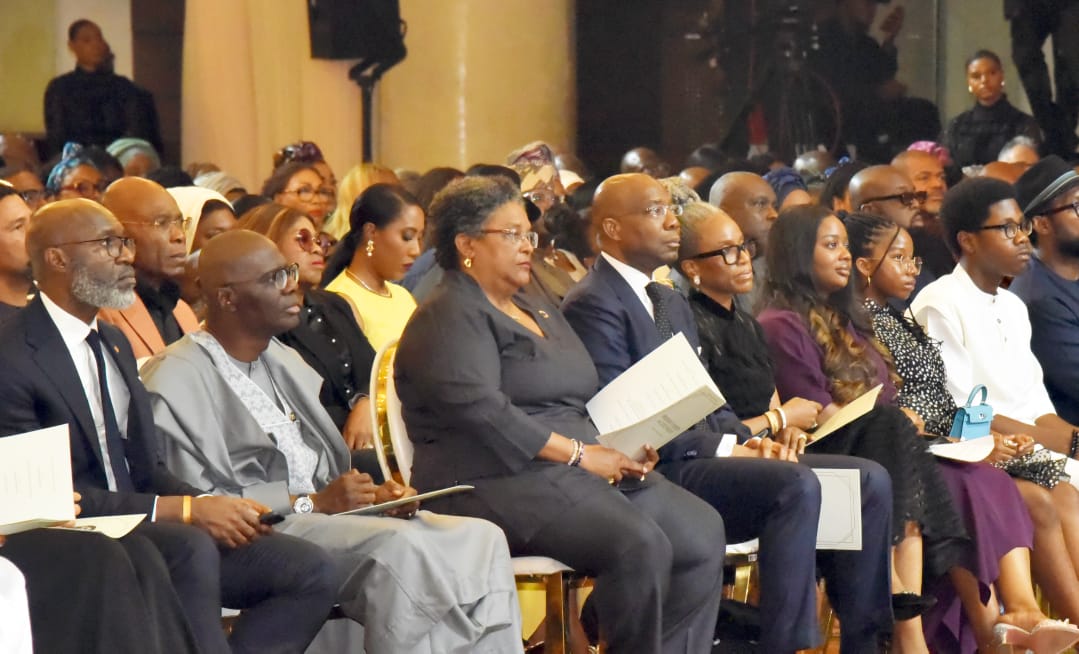
Eminent Nigerians and Global Leaders on sunday evening, remembered banking icon Herbert Wigwe in an evening of tributes and celebration of his life and legacy. It was the first anniversary of his passing in a helicopter accident in Southern California on February 9, 2024. He died along with his wife, Doreen, son Chizi and friend, Abimbola Ogunbanjo.
The four-hour memorial service, held at the ballroom of the Eko Hotel, Victoria Island, Lagos, also featured prayers, musical performances and ministration by Lagos preacher, Pastor Itua Ighodalo. There was also a keynote lecture by the Prime Minister of Barbados, Ms Mia Mottley. Former President Olusegun Obasanjo, in a tribute, described Wigwe as a quintessential banker and business leader who made immense contributions to the growth of Nigeria’s banking industry.
Recalling his numerous engagements, travels and works with Wigwe, Chief Obasanjo noted that the late banker had taken Access Bank as a small lender in 2002 to a global business empire. Obasanjo’s tributes were read by Bolaji Agbede, the acting Group Chief Executive of Access Holdings, the parent company of the bank and other subsidiaries.
President Bola Tinubu said Wigwe’s pioneering legacy in business and finance is a testament to the uncanny ability of Nigerians to overcome obstacles and excel in their chosen fields.
The President, who was represented by Finance Minister Olawale Edun, commended Wigwe for founding a university which is poised to make enormous contributions to higher education in Africa. President Emmanuel Macron of France described the late Wigwe as a master of the art of business diplomacy – a relatively new field that seeks to adapt the skills and mindset of the government diplomat to the needs of the firm he leads.
Macron noted that as President of French-Nigeria Business Council (FNBC), Wigwe had used the platform to promote bilateral relations between the two countries. President Macrons’s statement was read by a senior diplomat at the French Embassy in Abuja. In a keynote lecture delivered extempore, Prime Minister Mottley of Barbados regretted the loss of important correspondent banking relationships (CBRs) during the 2009 financial crisis by banks across the Caribbean and noted that her country has risen to the challenge.
A correspondent banking relationship (CBR) is a bilateral arrangement between banks, often involving a reciprocal cross-border relationship in multiple countries. The arrangement involves one bank (the correspondent – for example a major international bank) providing a deposit account or other liability accounts, and related services, to another bank (the respondent – for example a bank located and doing business in the Caribbean, or Nigeria or any other country).
The Prime Minister announced that Access Bank would soon commence banking business in Barbados once the necessary regulatory approvals have been concluded.
The Prime Minister recalled her fond memories of Herbert Wigwe as a consummate international business icon and recollected that King Jaja of Opobo was exiled to her country by the British colonialists in the 17th century for refusing to implement a nefarious British tax policy and obstructing the colonialists’ commercial and political expansion. Ms Mottley was particularly excited that Opobo is a community in the present day Rivers State, Wigwe’s home state; and she tagged on that to create a pun. ‘’Tochi’’, she called out to Wige’s daughter, now the eldest child, who was also seated in the front row with the rest of the family, “you will soon come to Barbados; but not as an exile’’.
The audience laughed. Lagos State Governor, Babajide Sanwon-Olu gave an impassioned and heartfelt tribute, describing Wigwe as ‘’larger than life person, who was a builder of people; ideas and fortune’’.
Sanwon-Olu described Wigwe as brave and courageous.
His words: “Where others hesitated, Herbert moved. Lagos has felt his absence. Across the state, his legacies abound’’.
He mentioned a few of such legacies as the renovated National Arts Theatre; Access Bank Lagos Marathon and the triumph over Covid-19.
One of the high points of the evening was Aigboje Aig-Imoukhuede’s emotional tributes in which he said that his partnership and friendship with Wigwe endured for so long due to the trust they had in each other. ‘’I was never, for once, afraid that Herbert was in the room, closing deals, when I was not there; and vice versa’’, he said, eliciting a prolonged applause. He announced that despite malicious publications in the social media, he would never abandon Herbert Wigwe’s children.
“Tochi; Hannah; David; Okachi, you are mine; just as my children were your dad’s children when he was here with us’’, Aig-Imoukhuede said, to the applause of the audience, some of whom were already tearing up.
“They’re irreplaceable’’, he said, referring to the departed.
“Herbert is irreplaceable as a friend; he is irreplaceable as a partner’’.
Two of Chizi’s friends, Rasheed Sarumi and Tunde Ogundare, also gave emotional tributes to him; while Linda Petinrin and Queenette Allagoa remembered the late Chizoba Wigwe in emotional tributes. Ambassador Idaere Gogo-Ogan (Herbert’s longstanding friend); Roosevelt Ogbonna (CEO of Access bank Plc); Uche Wigwe (Herbert’s cousin and trustee of Wigwe University) and David Wigwe (Herbert’s son) also gave stirring homage in what was clearly an evening of mixed emotions and celebrations of beautiful lives lost.
Other dignitaries at the event were Chairman of THISDAY Arise Media Group, Prince Nduka Obaigbena; Mr. Paul Usoro, SAN and chairman of Access Bank Plc; Emir Kano, Mohammed Sanusi II; Prof Benedict Oramah, President of Afrexim Bank; Former CEO of GTBank, Fola Adeola; Ben Akabueze, former DG of Budget Office of the Federation; executives and staff of Access Bank Group.
During a dinner after the memorial service, Prince Ogbaigbena formally presented THISDAY Lifetime Achievement Award for Herbert Wigwe to Tochi Wigwe.


United States Representative Riley Moors has said further military strikes against Islamic State-linked militants in Nigeria could follow recent operations ordered by President Donald Trump, describing the actions as aimed at improving security and protecting Christian communities facing violence.
Moore made the remarks during a televised interview in which he addressed U.S. military strikes carried out on Christmas Day against militant targets in North-west Nigeria.
The strikes were conducted in coordination with the Nigerian government, according to U.S. and Nigerian officials.
“President Trump is not trying to bring war to Nigeria, he’s bringing peace and security to Nigeria and to the thousands of Christians who face horrific violence and death,” Moore said.
He said the Christmas Day strikes against Islamic State affiliates had provided hope to Christians in Nigeria, particularly in areas affected by repeated attacks during past festive periods.
According to U.S. authorities, the strikes targeted camps used by Islamic State-linked groups operating in parts of north-west Nigeria.
Nigerian officials confirmed that the operation was carried out with intelligence support from Nigerian security agencies as part of ongoing counter-terrorism cooperation between both countries.
The United States Africa Command said the operation was intended to degrade the operational capacity of extremist groups responsible for attacks on civilians and security forces.
Nigerian authorities have described the targeted groups as a threat to national security, noting their involvement in killings, kidnappings and raids on rural communities.
Moore said the strikes marked a shift from previous years in which attacks were carried out against civilians during the Christmas period. He said the U.S. administration was focused on preventing further violence by targeting militant groups before they could launch attacks.
U.S. officials have said the military action was carried out with the consent of the Nigerian government and formed part of broader security cooperation between the two countries. Nigeria has received intelligence, training and logistical support from international partners as it seeks to contain militant activity.
Moore had previously called for stronger international attention to attacks on Christian communities in Nigeria and has urged continued U.S. engagement in addressing extremist violence. He said further action would depend on developments on the ground and continued coordination with Nigerian authorities.
Nigerian officials have maintained that counter-terrorism operations are directed at armed groups threatening civilians, regardless of religion, and have reiterated their commitment to restoring security across affected regions.

World-renowned boxer Anthony Joshua on Monday survived a ghastly road accident in Makun, Ogun State.
Eyewitnesses report that the incident occurred along a busy highway of the Lagos-Ibadan expressway.
The vehicle carrying Joshua, a Lexus Jeep with the number plate, KRD 850 HN, reportedly collided with a stationary truck under circumstances that are still being investigated.
Joshua reportedly sustained minor injuries, while two persons were said to have died on the spot.
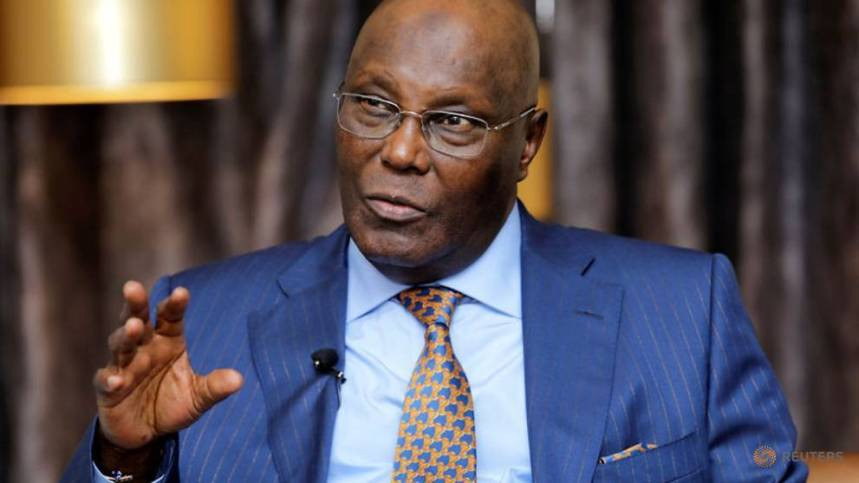
Former Vice President Atiku Abubakar has cautioned that any attempt to hurriedly re‑gazette Nigeria’s new tax laws could undermine parliamentary oversight and set a dangerous constitutional precedent.
Atiku’s warning follows public scrutiny over reports that the Tax Reform Acts signed by President Bola Tinubu differ from the versions passed by the National Assembly. Lawmakers, including Abdussamad Dasuki, raised concerns that the alterations could pose serious legal and constitutional risks, noting that they were not backed by any constitutional framework.
In a statement on X, Atiku said the directive to re-gazette the Acts effectively confirms “that the gazetted version of the Tinubu Tax Act does not reflect what was duly passed by the National Assembly,” calling it “a grave constitutional issue.”
He emphasized that under Section 58 of the 1999 Constitution, a bill only becomes law after passage by both chambers, presidential assent, and gazetting.
“Gazetting is merely an administrative act of publication. It does not create, amend, or validate a law,” Atiku said, adding that any post-passage insertion, deletion, or modification without legislative approval constitutes forgery rather than a clerical error.
Atiku further warned that rushing a re-gazetting while legislative investigations are ongoing “undermines parliamentary oversight and sets a dangerous precedent,” stressing that the only lawful approach is “fresh legislative consideration, re-passage by both chambers, fresh presidential assent, and proper gazetting.”
The former vice president clarified that his position is not opposition to tax reform but a defence of constitutional order.
“This is a defence of the integrity of the legislative process and a rejection of any attempt to normalise constitutional breaches through procedural shortcuts,” he said.
The Federal government has denied wrongdoing, insisting the laws will take effect as scheduled on January 1, 2026, while the National Assembly has directed the issuance of Certified True Copies of the Acts to ensure clarity and accuracy.


