
Headlines
Ministers, Govs, Villa Guests in Panic As Kyari, Aides Test Positive for Coronavirus

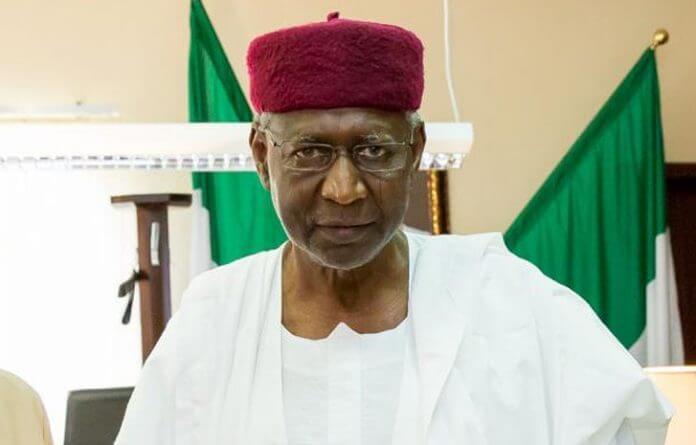
Panic on Tuesday gripped some governors and ministers as the Chief of Staff to the President, Abba Kyari, and the Bauchi State Governor, Bala Mohammed, tested positive for COVID-19.
The panic among the governors and the ministers stemmed from the fact that Kyari after his return from foreign trips a few days ago attended the Federal Executive Council meeting on Wednesday, while Mohammed was at the National Executive Council meeting on Thursday.
Kyari, after Nigeria recorded the first coronavirus case on February 27 visited Germany and Egypt. In Germany, he and the Minister of Power, Saleh Mamman, on March 9, met Siemens officials over the power deal signed with the company.
A top government official, who confided in The PUNCH, said there was concern that Kyari and Mohammed could have infected some ministers and governors.
The source stated, “Panic has gripped governors. Kyari went into isolation on Monday, but before that, he had attended the FEC meeting and also travelled to Kogi State to sympathise with the state Governor, Yahaya Bello over the death of his mother.
“Also Bauchi governors attended the NEC meeting on Thursday. There are fears that both of them could have infected their colleagues with the disease.”
Also gripped with fear were those who had visited the Villa in the last one week and met Kyari.
As panic gripped governors and ministers, the Nigeria Centre for Disease Control said on Tuesday COVID-19 cases had increased to 44 from 40 on Monday.
The NCDC, on its Twitter handle, said eight confirmed cases had been recorded in Abuja, one in Bauchi State, one in Edo State, one in Ekiti State, 29 in Lagos State and three in Ogun State.
“As at 06:25pm on 24th March, there are 44 confirmed cases of #COVID-19 in Nigeria. Two have been discharged with one death,” the NCDC stated.
A top source at the Federal Ministry of Health confirmed to The PUNCH that Kyari, who recently returned from Germany, was among those who tested positive on Tuesday.
He, however, said the President, Major-General Muhammadu Buhari (retd.), had tested negative but the President would be tested again in a few days.
At 65, Kyari is one of the oldest persons in Nigeria with a confirmed case of the novel coronavirus. SaharaReportershad reported on Tuesday that the President’s chief of staff was coughing.
The diagnosis of Kyari with COVID-19 created fears at the Presidential Villa and among governors, who attended the National Executive Council meeting with him on Thursday last week.
The PUNCH learnt that some very top officials at the Presidential Villa had gone on self-isolation to play safe over coronavirus.
Among them are Vice-President Yemi Osinbajo and the Senior Special Assistant to the President on Media and Publicity, Mr Garba Shehu.
Also on self-isolation are senior directors and close aides to the Chief of Staff to the President.
Findings indicated that Osinbajo did not report to the office on Tuesday. On Monday, he was billed to inaugurate a digital radio system owned by the Federal Road Safety Commission, but the event was put off abruptly.
The Vice-President reported late to work past noon on Monday, unlike before when he came very early in the morning.
The developments came after reports indicated on Tuesday that Kyari tested positive for coronavirus earlier on Monday.
The Chief of Staff had attended last Wednesday’s Federal Executive Council meeting and had contact with many top officials of government, including the President Muhammadu Buhari, Osinbajo, the Secretary to the Government of the Federation, Mr Boss Mustapha; and the Head of Service of the Federation, Mrs. Folasade Yemi-Esan.
Many ministers also attended the FEC meeting, including those of finance/budget/national planning, Mrs Zainab Ahmed; health, Dr Osagie Ehanire; Aviation, Hadi Sirika; information and culture, Mr Lai Mohammed; and state, transportation, Gbemisola Saraki.
Following Kyari’s positive test result, Buhari was reportedly tested and his result turned negative.
But, presidential spokesman, Mr Garba Shehu, failed to respond to enquiries on the matter.
He also failed to respond to a specific question on whether he had self-isolated himself, as a result of his regular contact with Kyari.
But he informed reporters of other newspapers, who also reached out to him, that he could not talk to them “right now.”
Osinbajo’s media aide, Mr Laolu Akande, also did not respond to enquiries on his boss’ alleged self-isolation, though he was in his (Laolu) office on Tuesday.
The Punch


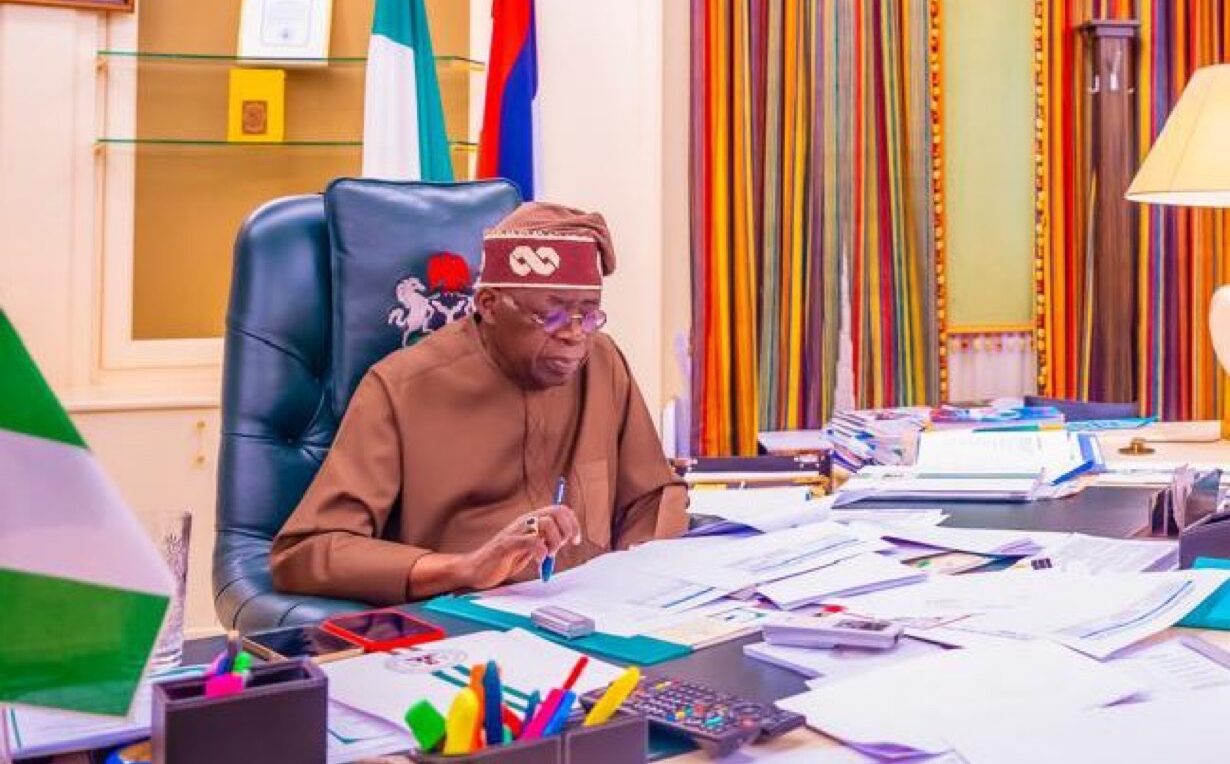
President Bola Tinubu has approved the posting of four ambassador-designates out of the 68 confirmed by the Senate last December.
The approvals were conveyed in a statement signed by Bayo Onanuga, Special Adviser to the President on Information and Strategy, dated January 22, 2024.
According to the statement, Ambassador Ayodele Oke has been posted as ambassador-designate to France, while Colonel Lateef Are has been posted as ambassador-designate to the United States of America.
Also confirmed by the President is the posting of Ambassador Amin Dalhatu, former ambassador to South Korea, as the high commissioner-designate to the United Kingdom.
Usman Isa Dakingari Suleiman, former governor of Kebbi, is the ambassador-designate to Turkey, where the President is scheduled to begin a state visit next week.
In a memo to the Ministry of Foreign Affairs, President Tinubu urged the ministry to notify the governments of the four countries about the ambassador-designates, in accordance with diplomatic procedures.
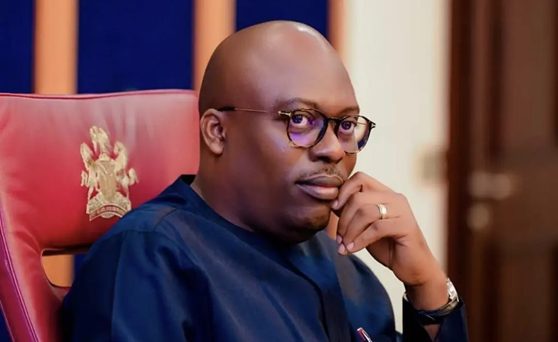
The Chief Judge of Rivers State, Justice Simeon Amadi, has declined to set up a judicial panel to investigate Governor Siminalayi Fubara, citing a court order.
The Rivers State House of Assembly had requested that Amadi set up a seven-member panel to probe Fubara and his deputy, Ngozi Odu, over allegations of gross misconduct.
However, in a letter dated January 20 and addressed to the Speaker of the House, Martins Amaewhule, the chief judge cited two court orders barring him from receiving, forwarding, or considering any requests to form such a panel.
The judge stated that the orders were served on his office on January 16, 2026 and remain in force.
The chief judge emphasised that constitutionalism and the rule of law require all authorities to obey subsisting court orders, irrespective of their perception of the orders’ validity.
He referenced legal precedents, noting that in a similar case in 2007, the Chief Judge of Kwara State was condemned for ignoring a restraining court order when setting up an investigative panel, a decision later voided by the Court of Appeal.
Justice Amadi further observed that the Speaker has already filed an appeal against the court orders at the Court of Appeal, adding another layer to the ongoing legal proceedings surrounding the allegations.
“By the doctrine of ‘lis pendens’, parties and the court have to await the outcome of the appeal,” he said.
Justice Amadi further stated that the existence of the injunctions and the pending appeal had effectively tied his hands.
“In view of the foregoing, my hand is fettered, as there are subsisting interim orders of injunction and appeal against the said orders. I am therefore legally disabled at this point from exercising my duties under Section 188(5) of the Constitution in the instant,” he said.
The chief judge appealed to the lawmakers to recognise the legal constraints surrounding the matter.
Justice Amadi, therefore, urged the state assembly to be “magnanimous enough to appreciate the legal position of the matter.”

The Federal High Court sitting in Abuja has reportedly affirmed the removal of Julius Abure as the national chairman of the Labour Party, LP.
The Court also ordered the Independent National Electoral Commission, INEC, to recognize the Senator Nenadi Usman-led National Caretaker Committee as the party’s lawful leadership.
The development was disclosed by human rights lawyer, Inibehe Effiong, in a post on X, where he said he was present at the Federal High Court when the judgment was delivered in a related case.
Effiong stated that Justice Lifu delivering judgment on Wednesday, upheld the Nenadi Usman-led committee as the only valid and lawful leadership of the Labour Party, reaffirming that Abure’s tenure had elapsed in line with an earlier Supreme Court judgment.
The court consequently directed INEC to immediately recognize Nenadi Usman as the party’s leader.
He wrote: “I am currently before the Federal High Court in Abuja for a case. I listened to judgement delivered in an another case.
“Honourable Justice Lifu has just upheld Senator Nnadi Esther Usman-led National Caretaker Committee as the only valid and lawful leadership of the Labour Party.
“The Judge reaffirmed that by the Supreme Court’s judgement, Julius Abure’s tenure had since elapsed.


