
Headlines
N110bn Fraud: Yahaya Bello Remains in Custody As Court Denies Ex-Gov Bail


Justice Maryam Anenih of the Federal Capital Territory High Court has refused to grant a bail application filed by the former governor of Kogi State, Yahaya Bello, saying it was filed prematurely.
Delivering the ruling on Tuesday morning, Justice Anenih, said having been filed when he was neither in custody nor before the court, the instant application is incompetent.
The former governor is standing trial, along with two others, in an alleged N110bn money laundering charge brought against him by the Economic and Financial Crimes Commission (EFCC).
In the arguments before the court on the bail application, the judge had said, “Before the court is a motion on notice, dated and filed on 22nd November. The 1st defendant seeks an order of this honourable court admitting him to bail pending the hearing and determination of the charge.
“That he became aware of the instant charge through the public summons. That he is a two-term governor of Kogi State. That if released on bail, he would not interfere with the witnesses and not jump bail.”
She said the defendant’s counsel JB Daudu (SAN) earlier told the court that he had submitted sufficient facts to grant the bail.
He urged the court to exercise its discretion judicially and judiciously to grant the bail.
In opposing, the prosecution counsel Kemi Pinheiro had argued that the instant application was grossly incompetent, having been filed before arraignment.
He said it ought to be filed after arraignment but the 1st defendant’s counsel disagreed, saying there was no authority.
While delivering her ruling, Justice Maryam Anenih said: “The instant application for bail showed that it was filed on the 22nd of November. This shows that it was filed several days after the 1st defendant was taken into custody.”
Reading from the ACJa section, the judge said the provision provided that a bail application could be made when a defendant had been arrested, detained, arraigned, or brought before the court.
Bello had filed an application for his bail on November 22, but was taken into custody on November 26, and arraigned on November 27.
The second defendant, Umar Oricha, was granted bail in the sum of N300million with two sureties in the same amount.
The sureties must be a holder of a property in Maitama valued at not less than the bond sum, they must also deposit their original title document before the court.
The sureties must depose to an affidavit of means and copies of passport of sureties be deposited.
The court also ruled that Oricha shall deposit travel documents and be remanded in prison custody pending fulfillment of the bail conditions.



Burkina Faso has released Nigerian soldiers who were detained after their aircraft made a forced landing in the Sahelian country earlier this month, Nigerian officials said.
In a statement, Alkasim Abdulkadir, Tuggar’s spokesperson, said both sides resolved the matter amicably and secured the release of the Nigerian Air Force pilots and crew.
The soldiers had been held for nearly two weeks after the Confederation of Sahel States (AES) described the aircraft’s landing as an “unfriendly act” carried out in defiance of international law.
The Nigerian Air Force, however, said the crew encountered a technical issue that required a precautionary landing in Bobo-Dioulasso, the nearest available airfield. It said the landing complied with standard safety procedures and international aviation protocols.
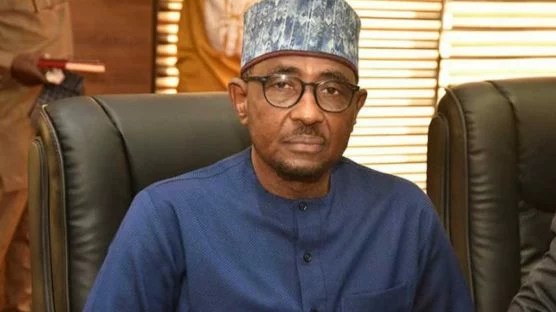
The Chief Executive Officer (CEO) of the Nigerian Midstream and Downstream Petroleum Regulatory Authority (NMDPRA), Farouk Ahmed, has resigned following a meeting with President Bola Tinubu amid corruption allegations.
Tinubu, on Wednesday, summoned Ahmed to the Presidential Villa in Abuja, following allegations of economic sabotage and corruption.
Also caught in the web of resignation was the CEO of the Nigeria Upstream Petroleum Regulatory Commission (NUPRC), Gbenga Komolafe, according to a statement on Wednesday by Bayo Onanuga, special adviser to the president on information and strategy.
Tinubu was said to have nominated successors to the senate for approval.
“Tinubu has asked the Senate to approve the nominations of two new chief executives for the Nigerian Midstream and Downstream Petroleum Regulatory Authority (NMDPRA) and the Nigerian Upstream Petroleum Regulatory Commission (NUPRC),” the statement reads.
“The requests followed the resignation of Engineer Farouk Ahmed of the NMDPRA and Gbenga Komolafe of the NUPRC.
“Both officials were appointed in 2021 by former President Buhari to lead the two regulatory agencies created by the Petroleum Industry Act (PIA).
“To fill these positions, President Tinubu has written to the Senate, requesting expedited confirmation of Oritsemeyiwa Amanorisewo Eyesan as CEO of NUPRC and Engineer Saidu Aliyu Mohammed as CEO of NMDPRA.”
Onanuga said the two nominees are seasoned professionals in the oil and gas industry.

The Chief Executive Officer of the Nigerian Midstream and Downstream Petroleum Regulatory Authority (NMDPRA), Engr. Farouk Ahmed, has responded to recent claims regarding the financing of his children’s education and his integrity in office, insisting that the allegations are misleading and ill-timed.
Ahmed said the allegations “necessitated this response, not because I fear scrutiny of my finances, which I welcome, but because the timing and nature of these claims demand context that only three decades of public service can provide.”
Ahmed highlighted his career in Nigeria’s petroleum sector, which began in 1991, noting that he rose through merit rather than political patronage.
He recalled his experience across technical divisions, crude oil marketing, gas supply monitoring, and downstream operations, stressing that his decisions have always been guided by Nigeria’s national interest.
“I spent my formative years in the technical divisions, where decisions are measured not by political expediency but by engineering precision and market realities,” he said.
He further outlined his rise to General Manager of the Crude Oil Marketing Division in 2012 and later Deputy Director in 2015, before being appointed NMDPRA Chief Executive in 2021.
On assuming the role, Ahmed said, he understood the challenges of implementing reforms under the Petroleum Industry Act, acknowledging that enforcing transparency in a sector long characterised by opacity would inevitably meet resistance.
Addressing the allegations about his children’s education, Ahmed said the claim that he spent $5 million on their Swiss schooling was misleading. “Three of my four children received substantial merit-based scholarships ranging from 40% to 65% of tuition costs, verifiable information are available to any authorised investigation,” he said, adding that contributions from his late father, a Northern Nigerian businessman, further supported the education costs.
He added: “When scholarships, family contributions, and my own savings accumulated over three decades are properly accounted for, my personal financial obligation was entirely consistent with someone of my professional standing and length of service.”
Ahmed confirmed that his annual compensation of approximately N48 million, including allowances, is publicly documented, and that he has submitted detailed asset declarations to the Code of Conduct Bureau throughout his career.
The CEO also linked the timing of the allegations to recent regulatory actions taken by NMDPRA.
“These allegations resurface precisely when NMDPRA has enforced quality standards revealing substandard petroleum products in the market, implemented stricter licensing requirements, and insisted on transparent pricing mechanisms that eliminate opacity benefiting certain market players. This timing is not coincidental,” Ahmed said.
He defended the authority’s import licensing decisions, emphasizing that they comply with Section 7 of the Petroleum Industry Act, which mandates supply security and prevention of scarcity.
“Granting import licenses when domestic supply proves insufficient is not sabotage, it is our legal duty,” he said.
Ahmed invited formal investigations into his finances and tenure, stating: “I formally and publicly request the Code of Conduct Bureau to conduct comprehensive review of all my asset declarations since 1991, the Economic and Financial Crimes Commission to examine all my financial transactions and sources of income, and the National Assembly to exercise its oversight function regarding any allegations of regulatory compromise during my tenure. I will cooperate fully, provide all documentation, and answer all questions under oath if required.”
Concluding, Ahmed reaffirmed his commitment to regulatory independence and transparency.
“Three decades of service to Nigeria’s petroleum sector have taught me that integrity is tested not in comfortable moments but when powerful interests demand compromise. My response is simple: investigate thoroughly, examine every claim, scrutinize every transaction. My record both financial and professional will withstand any legitimate inquiry.”


