
Headlines
Nationwide Protest May Lead to Anarchy, FG Warns

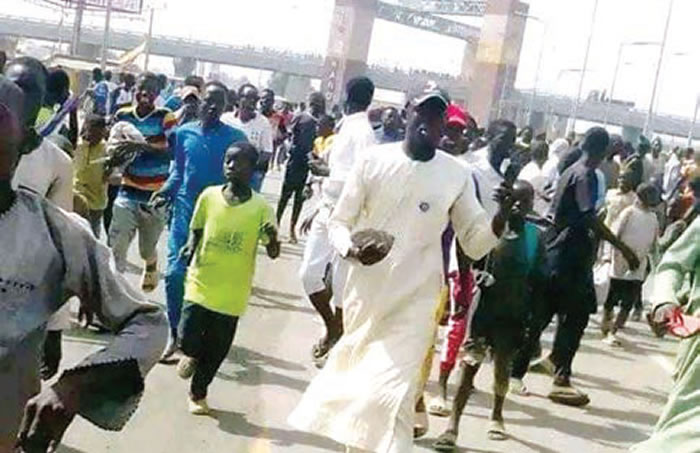
The Federal Government has warned that there would be dire consequences for the stability of the country if a nationwide protest being planned by some Nigerians goes ahead from the beginning of next month.
Secretary to the Government of the Federation (SGF), Senator George Akume, met with ministers in his office behind closed doors to try to avert the protest.
But Nigeria Labour Congress (NLC), yesterday, dismissed reports that it was withdrawing from the proposed national protest by some citizens over the harsh economic situation in the country, saying it cannot be part of an idea that did not emanate from it.
South-east Governors’ Forum also distanced itself from the planned nationwide protests, citing concerns about the fragile political environment and potential hijack by criminal elements.
At the same time, some stakeholders, including some northern groups, opposed the idea of protest in the wake of harsh economic conditions. Instead, they recommended an engagement with the federal government.
But the leadership of Peoples Democratic Party (PDP), which supported the protest, said it was a constitutional right of the people.
In a similar vein, Minority Caucus of the House of Representatives urged the federal government to dialogue with planned protesters with a view to addressing their concerns.
Minister of Information and National Orientation, Mohammad Idris, issued the warning against the protest yesterday, when he received members of the Charismatic Bishops Conference, led by Archbishop (Professor) Leonard Kawas, who were on a courtesy visit to him, at his office in Abuja.
Idris said government was cautious and bothered about the protest against economic hardship, having seen the debilitating consequences of similar protests in other parts of the world, particularly in Kenya and Bangladesh.
The minister voiced concern that arsonists and criminals might be waiting to hijack the planned protest and unleash violence on innocent Nigerians.
Idris stated, “Why everybody is very cautious and very weary of this national protest is because we have seen what has happened around the world.
“We know that it’s almost impossible to hold this protest and then have peace at the end of the day. We cannot do that because some people are waiting to take the laws into their own hands.”
He said while the government of President Bola Tinubu acknowledged the right of every Nigerian to engage in protests, it was equally committed to ensuring that the activities did not disrupt public order or violate the rights of others.
According to him, “You see, the government of President Bola Ahmed Tinubu believes in the freedom of everyone within the confirms of the law to do what he thinks is right for him.
“Therefore, the president is not an opponent of protest of any kind. But the president is an opponent of violence and anything that will hamper the wellbeing of Nigerians.
“He believes and he has always been saying that within the tenets of democracy, you have every right to do whatever you want to do provided that right does not infringe on another person’s right.”
Idris asserted that Tinubu was fully aware of the feelings of Nigerians across the country and he was actively working to implement effective policies aimed at alleviating the challenges faced by the citizenry and bringing relief to all Nigerians.
The minister said one of the policies being fine-tuned by government was to begin to pay stipends to all young university and polytechnics graduates after the National Youth Service Corps (NYSC) scheme, pending their formal employment.
He stated, “But beyond that, there is also another new policy that the president has formulated, which will begin to be seen very soon, and that is that all young men and women who have finished universities and polytechnics and have certificates and have done their mandatory NYSC, and have not been able to get jobs, will have something from the government to keep them afloat until the time they get jobs.”
He described the introduction of the Compressed National Gas (CNG) policy by the president as a game changer in the country’s economy because of its ability to bring down the cost of transportation by about 60 per cent, thereby providing a viable alternative to petrol and diesel.
Idris said, henceforth, any government procurement of vehicles or machinery must have a component of CNG embedded in the contracts.
Earlier, President General of the Charismatic Bishops Conference, dissociated the conference from the planned national protest, saying they have been inundated with calls by some groups to join the protest.
Kawas said, “Recently we received some calls from some other religious organisations and other organisations asking us to join in preparation for a nationwide protest, which would start from 1st August 2024.
“We are here to let you know that we do not think the same. That we have rather decided to go all out and call for a truce. We have decided to sue for peace and humbly request that our brothers and sisters, who are aggrieved in one way or the other, that they should give us some time while we continue to communicate and negotiate with this government on areas that are pertinent to them.”
He appealed to aggrieved Nigerians in all parts of the country to give peace a chance and toe the path of dialogue and negotiation because no reasonable government will fold its hands and allow violence to break down the country.


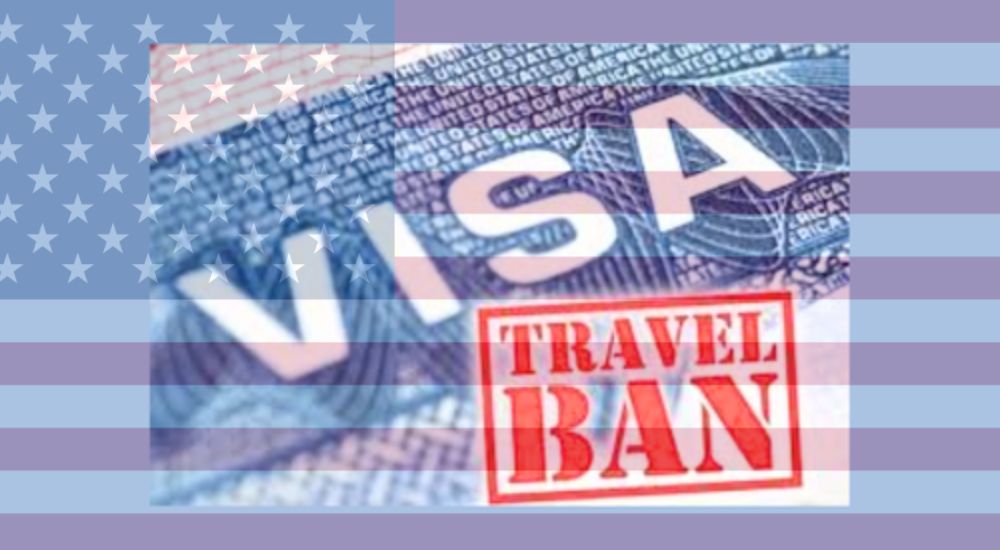
The United States has introduced new travel restrictions that may require Nigerians applying for B1/B2 business and tourism visas to post financial bonds of up to $15,000, as Washington tightens entry conditions for nationals of countries it classifies as high risk.
Under the new policy announced by the U.S. State Department on Tuesday, applicants from 38 countries, 24 of them in Africa, including Nigeria, may be required to provide visa bonds of $5,000, $10,000, or $15,000, depending on the assessment made during their visa interview. The measures will take effect on different dates, with Nigeria’s implementation scheduled to begin on January 21.
According to the State Department notice, “any citizen or national traveling on a passport issued by one of these countries, who is found otherwise eligible for a B1/B2 visa, must post a bond for $5,000, $10,000, or $15,000.” Applicants will also be required to submit a Department of Homeland Security Form I-352 and agree to the bond terms through the U.S. Treasury Department’s Pay.gov platform, regardless of where the visa application is submitted.
The department stressed that payment of a bond does not guarantee the issuance of a visa, warning that fees paid without the direction of a consular officer will not be refunded.
Nigerians who post the required bonds and obtain visas will also be restricted to entering the United States through designated airports, including Boston Logan International Airport, John F. Kennedy International Airport in New York, and Washington Dulles International Airport in Virginia.
Refunds of the bonds will only be made if the Department of Homeland Security confirms that the visa holder departed the United States on or before the authorised date of stay, if the applicant does not travel before the visa expires, or if the traveller applies for entry and is denied admission at a U.S. port of entry.
The development comes barely a week after partial U.S. travel restrictions on Nigeria took effect. On December 16, Nigeria was listed among 15 mostly African countries placed under partial travel suspensions, alongside Angola, Antigua and Barbuda, Benin, Côte d’Ivoire, Dominica, Gabon, and The Gambia.
Explaining Nigeria’s inclusion, U.S. authorities cited the continued activity of extremist groups such as Boko Haram and the Islamic State in parts of the country, which they said created “substantial screening and vetting difficulties.” The U.S. also referenced visa overstay rates of 5.56 percent for B1/B2 visas and 11.90 percent for F, M, and J visas.
As a result of the designation, the suspension covers both immigrant visas and several non-immigrant categories, including B1, B2, B1/B2, F, M, and J visas.
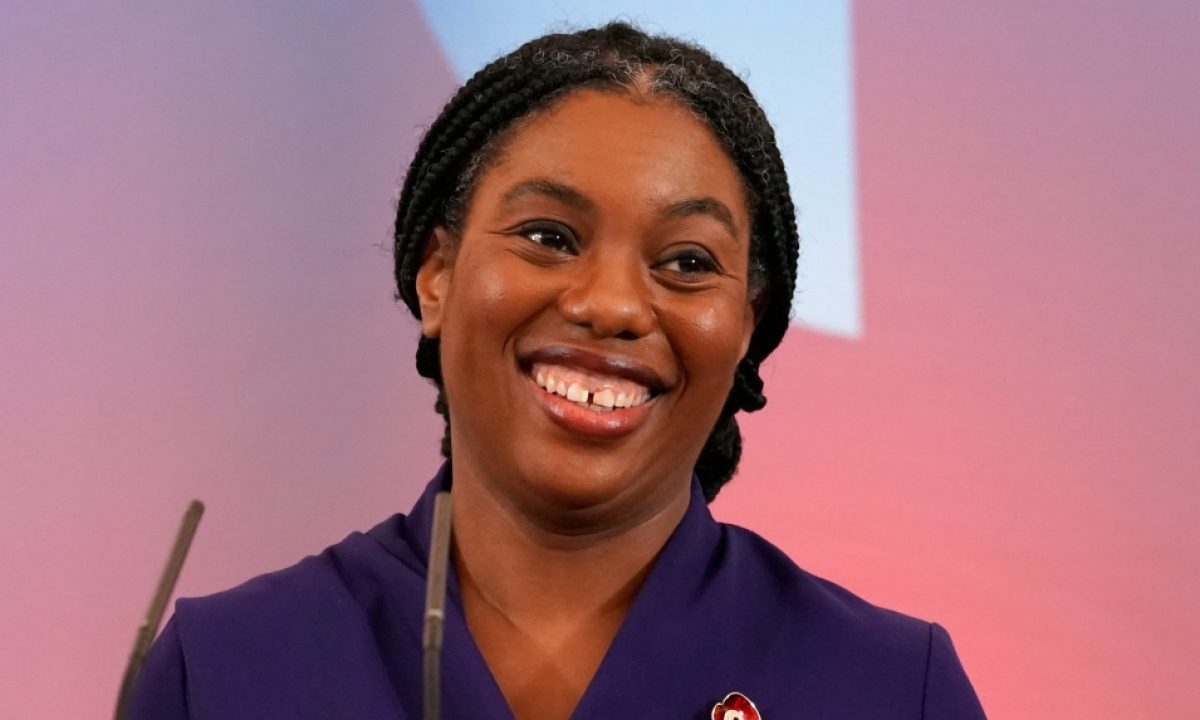
United Kingdom’s Conservative Party leader, Kemi Badenoch, has said that the United States’ military action to remove Venezuela’s President Nicolás Maduro was the right decision on moral grounds, even though the legal basis for the operation remains unclear.
Speaking to the BBC, Badenoch said she does not understand the legal justification for United States President Donald Trump’s decision to remove Maduro but described the Venezuelan leader as presiding over a “brutal regime,” adding that she is “glad he’s gone.”
She, however, warned that the operation raised serious concerns about the rules-based international order.
The UK government has so far avoided directly criticising the US action or stating whether it breached international law, instead maintaining that Maduro was an “illegitimate president.”
However, several Labour MPs and opposition parties, including the Liberal Democrats, the Green Party and the SNP, have called on the government to condemn the operation and describe it as illegal.
Badenoch, speaking on BBC Radio 4’s Today programme, described the US intervention as “extraordinary” but said she understood why it was carried out.
“Where the legal certainty is not yet clear, morally, I do think it was the right thing to do,” she said.
The Conservative leader, who spent part of her childhood in Nigeria before returning to the UK at the age of 16, said her upbringing under military rule shaped her views on authoritarian leadership.
“I grew up under a military dictatorship, so I know what it’s like to have someone like Maduro in charge.”
She also distinguished the situation in Venezuela from President Trump’s comments on Greenland, saying it was right to oppose any US intervention there.
“There is a big difference between democratic states” and the “gangster state in Venezuela”.
“What happens in Greenland is up to Denmark and the people of Greenland,” she added.
Trump has in recent days renewed his threats to annex Greenland, a semi-autonomous Danish territory with a strategic location and rich mineral resources, arguing that the move is necessary for US national security. The UK has issued a joint statement alongside France, Germany, Italy, Poland, Spain and Denmark, insisting that decisions concerning Greenland’s future rest solely with Denmark and the people of Greenland.
Health Secretary Wes Streeting said the government’s stance on Greenland differed from Venezuela because Denmark is a member of NATO and questioning Greenland’s future was not in the UK’s national security interests. He also defended the prime minister’s response to developments in Venezuela, saying it was guided by national interest and concern for the Venezuelan people.
“I appreciate there are others who have been more strident and have been more critical of the United States,” he said.
“The prime minister has a different responsibility, and he is choosing his words carefully and wisely to try and influence how events unfold from here on.”
Critics of the government’s approach, including Labour MP Emily Thornberry, chair of the Commons Foreign Affairs Committee, have argued that the US action risks emboldening Russia and China and that the UK should clearly state that the operation breached international law.
In a statement to the House of Commons on Monday evening, Foreign Secretary Yvette Cooper said she had reminded US Secretary of State Marco Rubio of his obligations under international law, while reiterating that it was for the US to set out the legal basis for its actions.
Maduro and his wife were seized in Caracas on Saturday during a US military operation that also included strikes on military bases across the country. They were taken to New York, where they have been charged with weapons and drug-related offences over allegations that they enriched themselves through a violent crime ring smuggling cocaine into the US.
Maduro has long rejected the allegations as a pretext to force him from power, and both he and his wife have pleaded not guilty to the charges. Trump has vowed to “run the country” until a “proper” transition of power takes place, with Vice-President Delcy Rodríguez sworn in as interim president
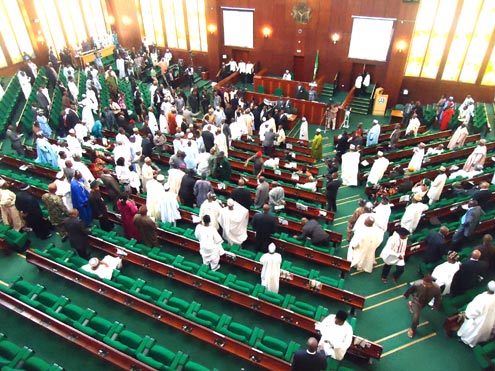
The House of Representatives has released the certified copies of the four tax reform Acts recently signed into law by President Bola Tinubu, following public concerns over alleged discrepancies and the circulation of unauthorised versions of the laws.
This was disclosed in a statement signed by the spokesperson of the House, Akin Rotimi, on Saturday.
According to the statement, the House, under the leadership of the Speaker, Tajudeen Abbas, directed the immediate release of the Certified True Copies (CTCs) of the Acts, including the endorsement and assent pages signed by the president, to Nigerians for public record, verification and reference.
The decision, taken in concert with the Senate President, Godswill Akpabio, followed allegations that versions of the tax laws in circulation differed from those passed by the National Assembly and assented to by the president.
The controversy was first raised on the floor of the House by Abdulsamad Dasuki (PDP, Sokoto), who drew the attention of lawmakers to alleged discrepancies between the tax Bills passed by the National Assembly and the versions subsequently gazetted and made public by the executive arm.
Mr Dasuki warned that the inconsistencies, if left unchecked, could undermine legislative integrity and public confidence in the law-making process. His intervention triggered debates within and outside the National Assembly, with legal practitioners, tax experts and civil society organisations demanding clarification and suspension of the implementation of the Acts.
In response, Mr Tajudeen constituted a seven-member ad hoc committee chaired by Aliyu Betara, whose members included Idris Wase, Sada Soli, Adedeji Faleke, Igariwey Iduma, Fred Agbedi and Babajimi Benson.
The committee was directed to investigate the circumstances surrounding the alleged alterations, how unauthorised versions came into circulation and measures to prevent a recurrence.
Mr Tajudeen also ordered an immediate internal verification of the Acts and approved the public release of the certified versions to eliminate doubts, restore clarity and protect the sanctity of the legislative record.
The four tax reform laws released are the Nigeria Tax Act, 2025; the Nigeria Tax Administration Act, 2025; the National Revenue Service (Establishment) Act, 2025; and the Joint Revenue Board (Establishment) Act, 2025.
The House described the laws as the backbone of Nigeria’s contemporary tax reform framework, aimed at modernising revenue administration, improving compliance, reducing inefficiencies, eliminating duplication and strengthening fiscal coordination across the federation.
It said Mr Tajudeen provided firm leadership throughout the tax reform process, from stakeholder consultations and committee scrutiny to clause-by-clause consideration and robust plenary debates, to ensure the reforms were inclusive, evidence-based and aligned with Nigeria’s fiscal realities.
Reassuring Nigerians, Mr Rotimi said, “The National Assembly is an institution built on records, procedure, and institutional memory. Every Bill, every amendment, and every Act follows a traceable constitutional and parliamentary pathway.”
He stressed that once a law is passed and assented to, its integrity is preserved through certification and custody by the legislature, adding that there is no ambiguity about what constitutes the law.
He further emphasised that the only authentic and authoritative versions of the four tax Acts are the certified copies released by the National Assembly, urging the public to disregard any other documents or versions in circulation.
“Members of the public, institutions, professionals, and stakeholders are therefore advised to disregard and discountenance any other documents or versions in circulation that are not certified by the National Assembly, as such materials do not form part of the official legislative record,” the statement read.
The House also disclosed that the Clerk to the National Assembly has concluded the process of aligning the Acts with the Federal Government Printing Press to ensure accuracy, conformity and uniformity, adding that hard copies have been produced, circulated to lawmakers and made available to the public.
“The Clerk to the National Assembly has concluded the process of aligning the Acts – duly passed, assented to, and certified – with the Federal Government Printing Press to ensure accuracy, conformity, and uniformity. Hard copies of the certified tax Acts have also been produced and are being circulated to all Honourable Members and Distinguished Senators, and made available to the public, to ensure institutional clarity, uniform reference, and legislative certainty.”
It added that the ad hoc committee chaired by Mr Betara continues its work in line with its mandate to determine the circumstances surrounding the circulation of unauthorised versions of the tax Acts and recommend safeguards to preserve the integrity and reliability of parliamentary records.
The House reaffirmed its commitment to constitutionalism, the rule of law, transparency and accountable governance, pledging to strengthen internal controls, uphold institutional discipline and protect the integrity of Nigeria’s legislative process.
“The House will continue to strengthen internal controls, uphold institutional discipline, and protect the integrity of Nigeria’s legislative process in the collective interest of the Nigerian people,” it concluded.


