
News
Nigeria Must Beware of “Backdoor Colonialism”

By Joel Popoola
More than 60 years after our independence, Nigeria once again, must be wary of colonialism – this time in a very different shape.
At the end of August, Nigeria and Russia signed a military cooperation deal involving the supply of equipment, the training of troops and “technology transfer”.
Given our need to tackle the simultaneously insurgencies of both Islamists and Separatists, there is no doubting that Nigeria needs this sort of support, not least with historic allies such as the United States currently unwilling to sell military supplies to our nation due to concerns over human rights abuses.
But there is also no doubt that this also increases our dependency on a foreign power, whose interests are not always going to be aligned with our own. The phrase “technology transfer” could mean anything – from the sale of hardware to allowing another country access to our national security infrastructure.
Then there’s the growing influence of China on our growing technology sector.
Again, the need for their involvement is unquestionable. But their motivations are not.
The Chinese telecommunications giant Huawei already operates more than 70% of Africa’s telecommunications network – even though concerns about its links with the Chinese government have led to countries like Britain and the United States banning it from their mobile and internet networks.
Their concern is that Huawei’s dominance could allow the Chinese government to use state-sponsored hackers to spy on Nigeria or disrupt communications – something only likely to become more important as we move towards the era of self-driving cars and virtual domestic technology assistants such as Alexa and Siri.
The Wall Street Journal has already alleged that Huawei has helped Ugandan and Zambian authorities spy on political opponents.
A report by the Centre for Strategic and International Studies even claimed that Huawei’s activities could “provide Chinese authorities with intelligence and even coercive leverage.”
This may not be the traditional form of colonialism, which arrived on our shores baring weapons but a new sort of colonialism baring investment in vital infrastructure, but at it is heart it remains remarkably similar – an overseas power with undue influence on our way of life.
This form of international interconnectivity is inevitable in the twenty-first century, and I am no nativist or economic nationalist – and it is of course unrealistic at the present time for Nigeria to develop an independent cloud infrastructure, for example, not least when it is exactly what we need to maximise the potential of our booming fintech sector.
We can also not allow foreign dominion over our emerging digital sector. According to one report, no less than 14 of the 20 most exciting tech start up are Nigerian – and the entire top 10! We must ensure that the benefit of this ingenuity and innovation is felt at home.
Huawei has also announced plans to train up to 3 million young Africans in digital skills, including artificial intelligence. Make no mistake; we need this – not least because as a nation we have failed to provide this for ourselves.
But we also need to be cautious of becoming over-reliant on overseas powers.
The first step towards achieving this is to built a more united Nigeria, and in particular we must bridge the divide between our people and our political class. And ironically, it is technology that can deliver that.
At the digital democracy campaign I lead, we are also working to bring electors and elected closer together.
We’ve created a free smartphone app – Rate Your Leader – to use mobile technology to let elected officials to interact directly with confirmed voters in the divisions they serve – in a way where insults are impossible and dishonesty is undesirable.
This way politicians and people can use Rate Your Leader to connect person-to-person, understanding each other’s needs and positions. This way, leaders immediately ascertain what matters most to the people who vote for them, and join forces to tackle those topics. And voters can even rate local leaders for transparency and accessibility.
And that in turn fosters trust, sadly lacking in so much of our political process. .
Opening up our economy to the rest of the globe is unavoidable, and opens up Nigeria to a world of potential. But we must face the inevitable risks and challenges as a united nation.
To create that united nation we need greater co-operation and communication between people and the political class, both of which can be delivered at the touch of a button.
Joel Popoola is a Nigerian tech entrepreneur, digital democracy campaigner and creator of the Rate Your Leader app. He can be reached via @JOPopoola


The Federal High Court In Abuja on Tuesday ordered the remand of the Former Attorney-General of the Federation and Minister of Justice, Abubakar Malami (SAN), at the Kuje Correctional Centre pending the hearing and determination of their bail application.
The trial judge, Justice Emeka Nwite, also ordered the remand of his co-dedendants, his son, Abubakar Malami, and one of his wives Bashir Asabe.
Justice Nwite made the order after taking arguments from the defence team led by Joseph Daudu (SAN) and the prosecution counsel Ekele Iheneacho (SAN).
Malami and his co-defendants are facing a 16-count money laundering charge preferred against them by the Economic and Financial Crimes Commission.
The EFCC alleges that the defendants conspired at various times to conceal, retain and disguise the proceeds of unlawful activities running into several billions of naira.
According to the charge, the alleged offences span several years and include the use of companies and bank accounts to launder funds, the retention of cash as collateral for loans, and the acquisition of high-value properties in Abuja, Kano and other locations.
The commission further alleges that some of the offences were committed while Malami was serving as Attorney-General of the Federation, in breach of the Money Laundering (Prohibition) Act 2011, as amended, and the Money Laundering (Prevention and Prohibition) Act 2022.
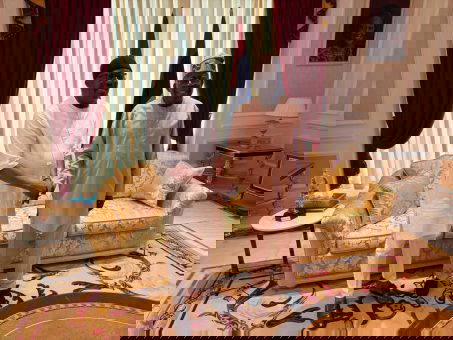
Minister of the Federal Capital Territory (FCT), Nyesom Wike, has sent a veiled message to Rivers State governor, Siminalayi Fubara, saying support for President Bola Tinubu alone will not guarantee any election ticket.
Wike made the statement on Sunday during a public outing in Emohua Local Government Area of Rivers State.
His remarks were widely seen as directed at Governor Fubara, amid lingering political crisis in the State.
The former Governor of Rivers State said political loyalty must be tested during difficult times, not after power has been secured.
He mocked those he described as late supporters of President Tinubu, insisting that sudden alignment would not earn political rewards.
He said: “So the issue is not whether you are supporting Tinubu. That one, we have taken too long, long… Yes, oh. So Tinubu’s issue is not an issue again. Yes. Do you understand me? Yes. Tinubu’s issue is that nobody should be coming here to tell a day. We are for Tinubu; I am against you. Who is for Tinubu University? (laughs) That cannot give you any ticket oh! (laughs again) Direct, direct. It will not. Direction. Direction.”
Wike stressed that his political camp stood with Tinubu when the decision was unpopular. He said that support given under pressure carries more weight than alignment after victory.
He also recalled how the Rivers State House of Assembly openly backed Tinubu early, long before the election outcome was certain.
According to him, some of those now making public declarations were absent during the critical period.
“The same people now who came to declare, put them to God… But they should declare they are saying it for a candidate. Yes. Don’t you see characters? (laughs) So I send the sword far ahead of them.”
Wike further spoke on governance and continuity. He defended projects and agreements initiated during his tenure as governor. He said it is often difficult for successors to acknowledge past efforts, even though government is a continuous process.
His comments come weeks after Governor Fubara formally aligned with the All Progressives Congress (APC), the party of President Tinubu.
The move followed months of political crisis in Rivers State, which led to federal intervention and a declaration of emergency rule.
Political watchers believe Wike’s remarks constitute a direct response to Fubara’s recent positioning as a key Tinubu ally in Rivers politics. Critics argue that Fubara’s support surfaced only after the political storm had settled.
Wike, who remains a dominant force in Rivers State politics despite serving in Abuja, appears to have drawn a clear line ahead of the 2027 elections.
He suggested that political tickets would be decided by proven loyalty, not convenience.
Videos from the event in Rumuche, Emohua, spread rapidly on social media. Many users described the speech as a coded warning to the governor.
As of press time, neither the Rivers State Government nor Wike’s media team had issued an official clarification.
The comments, however, suggest that the political rift between both camps is still active, despite earlier peace moves brokered at the national level.
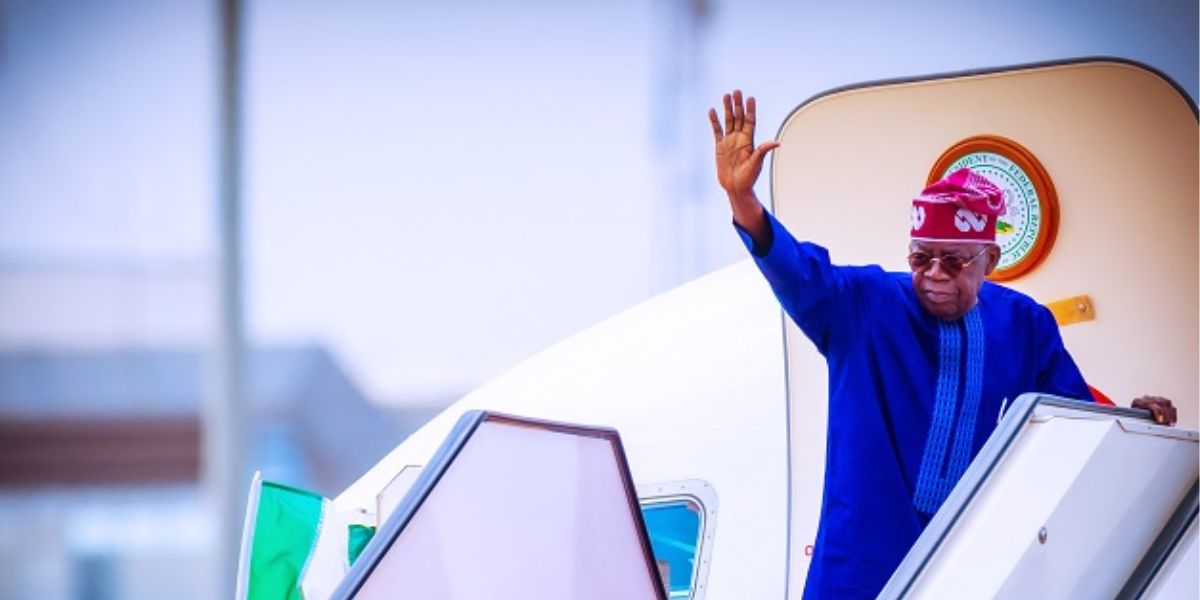
The opposition African Democratic Congress and the Labour Party on Sunday criticized President Bola Tinubu for departing Nigeria for Europe on holiday at a time the country is grappling with rising insecurity, including foreign military interventions in the North.
The Presidency announced on Sunday that Tinubu left Lagos for Europe for his end-of-year holiday ahead of an official visit to Abu Dhabi, United Arab Emirates, where he is scheduled to attend the 2026 edition of the Abu Dhabi Sustainability Week Summit.
President Tinubu’s Special Adviser on Information and Strategy, Bayo Onanuga, explained that the trip was by invitation from His Highness Sheikh Mohamed bin Zayed Al Nahyan, President of the UAE, to participate in the summit, which gathers global leaders from government, business, and civil society to advance sustainable development strategies.
“His Highness Sheikh Mohamed bin Zayed Al Nahyan, President of the United Arab Emirates, has invited President Tinubu to participate in the 2026 edition of Abu Dhabi Sustainability Week Summit, which will take place in the emirate early in January,” the statement read.
Reacting to Tinubu’s departure, the ADC, in a statement by its National Publicity Secretary, Bola Abdullahi, faulted the timing as inappropriate given the security challenges facing the country.
The ADC noted the deadly terrorist bomb blast in Zamfara and the ongoing foreign military involvement, calling the President’s move insensitive.
“President Bola Ahmed Tinubu’s lack of care is alarming. In the wake of another deadly bomb blast in Zamfara, and following an unprecedented foreign military attack on Nigerian soil, the nation is waiting for reassurance from its leader. Instead, we learn the President has gone on holiday. What a President!” Abdullahi said.
Similarly, LP’s acting National Chairman, Senator Nenadi Usman, described the trip as “insensitive and devoid of empathy” for Nigerians facing violent attacks and humanitarian crises.
Speaking through her Senior Special Adviser on Media, Ken Asogwa, she stressed that the President should have remained in the country to coordinate security responses.
“This is the most inauspicious time for the President to leave the country. Even the Christmas holiday in Lagos seems ill-timed, given that a bomb exploded in Zamfara today, killing nine people,” Usman said.
She further alleged that Nigeria was under external attack and accused the government of downplaying the severity of the situation.
“Nigeria is under attack by a foreign nation. No matter how the government tries to frame this, it is a violation of our sovereignty. This is the time for the commander-in-chief to coordinate the response, not embark on a holiday,” Usman said.
She added that the President had not convened critical security meetings since the U.S.-led bombardment of terrorist camps in Kwara and Sokoto States and condemned the perceived lack of engagement with military leadership.
The President’s trip comes amid heightened security concerns. On Thursday, U.S. President Donald Trump authorised AFRICOM to conduct airstrikes on terrorist camps in Sokoto State, hours before Nigeria’s Ministry of Foreign Affairs acknowledged the operation. A deadly bomb blast in Zamfara on Friday claimed several lives.
The 17th edition of Abu Dhabi Sustainability Week will run from January 11 to 15 at the Abu Dhabi National Exhibition Centre under the theme “The Nexus of Next: All Systems Go.”
The event aims to connect innovation, finance, and people to advance sustainable development.
Onanuga confirmed that Tinubu would return to Nigeria after the summit.
Hosted by Masdar, the UAE’s clean energy company, the summit will feature the invitation-only ADSW Summit, the World Future Energy Summit, the Zayed Sustainability Prize Awards Ceremony, and specialised sessions on hydrogen, climate finance, water security, and utilities in the Global South. Organisers expect more than 50,000 participants from over 170 countries, featuring over 700 global brands and exhibitions of emerging clean technologies.
The UAE Minister of Industry and Advanced Technology, Dr Sultan Al Jaber, noted that ADSW 2026 builds on two decades of the UAE’s leadership in renewable energy.
Tinubu previously attended the Abu Dhabi Sustainability Week in January 2025, where he held meetings with Gulf investors and officials on trade, energy cooperation, and climate finance.
Since assuming office on May 29, 2023, Tinubu has undertaken at least 46 foreign trips, spending an estimated 192 days abroad as of October 2025. In 2025 alone, he travelled internationally no fewer than 15 times to countries including Ghana, the UAE, Tanzania, France, Italy, Saint Lucia, Japan, and Brazil for summits, bilateral engagements, and holidays.


