
Headlines
Nigeria Ranks 2nd Poorest in Food Affordability -Report


A new report by the Institute of Development Studies, a UK-based think tank, has placed Nigeria as the second poorest country in the world in terms of food affordability.
The report, which was compiled through a publicly available global cost-of-living database, Numbeo, was used in creating a ‘cost of food basics’ analysis that compares the monthly minimum recommended spend on food per adult and monthly average wage in 107 countries across the world.
The minimum recommended amount of food is based on 12-14 basic items that together would account for 2,100 calories per adult per day which is the level recommended by the World Health Organisation for energy needs.
The Cost of Food Basics found that, more than one year since the outbreak of COVID-19, there is vast disparity between countries in terms of the proportion of average wages needed to afford enough food.
The top 10 countries where basic food is least affordable in are Syria, Nigeria, Ethiopia, Philippines, Sri Lanka, Ghana, Indonesia, Algeria, Iran and Uzbekistan.
Basic food is least affordable in Syria, where the minimum recommended monthly spend would account for 177 per cent of average wage income per adult, followed by Nigeria where 101 per cent of the average wage is spent on food.
Last month, a survey carried out by The Punch in markets across Lagos, Ogun and the Federal Capital Territory showed that the cost of basic food items such as beans, tomatoes and rice had recorded worrying hikes of 253 per cent, 123 per cent and 51 per cent respectively within a year period.
A report last year by data firm Statista, pegged the average living wage in Nigeria at N43,200 which is 30.60 per cent higher than the minimum wage set at N30,000; a figure which several states are yet to meet up with.
The Punch



The Supreme Court has reserved its judgment in the appeal filed by the Taminu Turaki-led group of the Peoples’ Democratic Party (PDP) seeking to overturn the judgment of the Court of Appeal, which nullified the conduct of the party’s national convention, held last year in Ibadan, Oyo State.
A five-member panel of the apex court announced on Wednesday that its judgment would be delivered on a date to be communicated to all parties in the appeal.
Justice Garba Mohammed, who led the five-member panel, made the announcement shortly after lawyers representing parties in the appeal adopted their processes as briefs of their arguments for and against the appeal.
The appeal was filed by the Turaki-led group’s national executives of the party who emerged from the convention.
They had approached the apex court to challenge the judgment of the Court of Appeal, which had nullified the convention for being held in disobedience of a valid order of the court.
While adopting their brief of argument filed on April 2, the appellants, through their team of lawyers led by Paul Erokoro (SAN), urged the Supreme Court not only to allow their appeal but also to dismiss a cross-appeal lodged against them by a leadership group in the party aligned with the Minister of the Federal Capital Territory (FCT), Nyesom Wike.
Meanwhile, Lamido, who was represented by J. C. Njikonye (SAN), as well as the Wike-backed group represented by Joseph Daudu (SAN), filed preliminary objections seeking dismissal of the appeal.
The respondents insisted that, contrary to the contention by the Turaki-led group, the appeal did not fall within the sphere of the PDP’s internal affairs.
It was the respondents’ position that both the high court and the appellate court had rightly exercised jurisdiction over the matter.
Justice Peter Lifu of the Federal High Court in Abuja, in a judgment last year, restrained the then-Ambassador Iliya Damagum-led National Executive Committee of the PDP from proceeding with the convention slated for November 15 and 16, 2026, in Ibadan, Oyo State.
Justice Lifu had ordered that the convention should not hold until an aspirant to the office of national chairman, former Jigawa State Governor Sule Lamido, is allowed to purchase interest and nomination forms to enable him to participate in the convention for the election of national officers.
The party, however, went ahead to conduct the convention in disregard of the orders of the court.
The PDP had predicated its action to conduct the convention on the grounds that the court lacked the jurisdiction to stop the convention, as the issue brought before it was an internal matter of the PDP, which no court has jurisdiction to delve into.
However, the appellate court in its judgment last month disagreed that the issue at the trial court was an internal affair of a political party, which courts cannot entertain.
The three-member panel of the appellate court subsequently nullified the outcome of the convention for being held in disobedience to the orders of the Federal High Court, Abuja.
Dissatisfied, the PDP approached the apex court, praying it to accept the appeal against the lower court judgment, set the judgment aside, and hold that the issue was an internal matter of the PDP, which both the Court of Appeal and the Federal High Court lacked jurisdiction to entertain.
However, the respondents in the appeal urged the court to dismiss the appeal for lack of merit and hold otherwise.
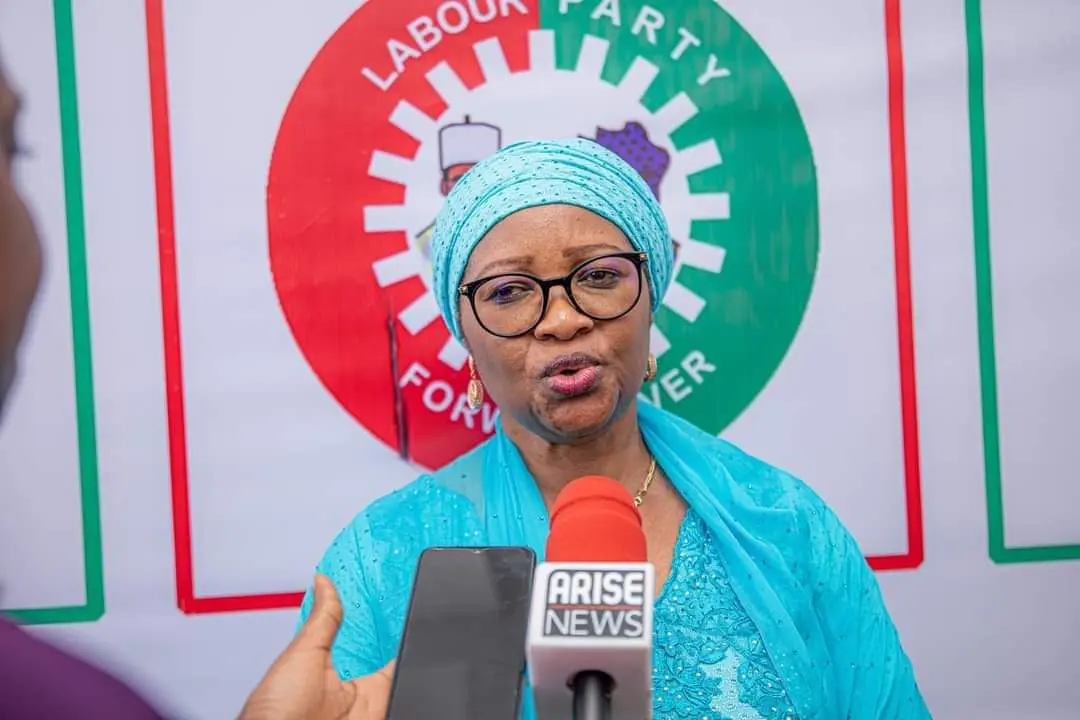
The Court of Appeal in Abuja has dismissed the appeal filed by Julius Abure challenging the legitimacy of the Nenadi Usman-led leadership of the Labour Party (LP).
A three-member panel of the appellate court, in a Tuesday judgment, unanimously affirmed the January 21 judgment by Justice Peter Lifu of the Federal High Court in Abuja, which upheld the legitimacy of the 29-member caretaker committee of the LP, led by Senator Usman.
In the lead judgment delivered by Justice Oyejoju Oyewumi, which Justices Abba Mohammed and Eberechi Nyesom-Wike agreed with, the appellate court held that the earlier Supreme Court judgment conclusively settled the leadership dispute within the LP by nullifying the convention that purportedly returned Abure as National Chairman.
Justice Lifu had, in the January 21 judgment, relied on an April 4, 2025, decision of the Supreme Court, which held that Abure’s tenure as the party’s National Chairman had expired. The judgment directed the Independent National Electoral Commission (INEC) to recognize Senator Usman and other members of her committee as the legitimate leaders of the party, to the exclusion of all others.
The court further held that the lower court had the power under Section 251 of the Constitution to compel a statutory Federal government agency to perform its functions when it ordered INEC to recognize Senator Nenadi Usman as the National Chairman of the Labour Party.
It was equally agreed with the trial court that constituting the LP’s caretaker committee, headed by Usman, was a doctrine of necessity required to provide leadership in the party when a vacuum appeared to exist.
The court faulted Abure’s claim that the trial court denied him a fair hearing and accused him of abusing the court process.
The court also accused Abure of forum shopping by appearing before the Nasarawa State High Court in a case already decided by the Supreme Court, and of persisting in the claim the party’s leadership despite the apex court’s clear and unambiguous pronouncement.
It held that the appeal, marked: CA/ABJ/CV/255/2026, was devoid of merit and constituted an abuse of court process.
“On the whole, I agree with the decision and conclusion of the trial court as the same, being in accordance with the Constitution,” Justice Oyewumi held, adding that the lower court reached a reasonable conclusion that the Court of Appeal cannot fault.
While dismissing the appeal, the court awarded him costs of N10 million for wasting the court’s time on an issue that had already been conclusively determined.
Earlier, the court held that Nenadi Usman, as a juristic person, had the right to file the case before the trial court, and that the trial court had jurisdiction to hear and determine the case.
The court also rejected Abure’s allegation that the lower court denied him a fair hearing, noting that the claim lacked any basis.

President Bola Tinubu has approved a minor cabinet reshuffle in the membership of the Federal Executive Council (FEC).
According to a memo signed by the Secretary to the Government of the Federation, Senator George Akume, two cabinet members, Mr. Wale Edun and Arc. Ahmed Musa Dangiwa are to leave the cabinet while their replacements have been named.
A statement signed by the Special Adviser, Media and Publicity to the Secretary to the Government of the Federation, Yomi Odunuga, on Tuesday evening, said Edun, until the latest development, was the Minister of Finance and Coordinating Minister for the Economy.
“He has been directed to hand over to Mr. Taiwo Oyedele, who is now to take over as Minister of Finance and Coordinating Minister of the Economy. Oyedele was formerly a Minister of State in the ministry.
“Also Mr. Muttaqha Rabe Darma (PhD.) has been named as the ministerial nominee and minister-designate for the Housing and Urban Development Ministry,” Odunuga stated.
The memo also directed Dangiwa to hand over to the Minister of State in the ministry pending Darma’s confirmation.
The memo stated that “all handing over and taking over processes should be completed on or before close of business on Thursday 23rd April, 2026.”
Explaining the President’s decision, Odunuga quoted Akume as saying: “These changes are aimed at strengthening cohesion, synergy in governance as well as achieving more impactful delivery on the economy to Nigerians, through the Renewed Hope Agenda.”
He said the President, in approving the cabinet reshuffle, has fully exercised his powers as conferred on him by Sections 147 and 148 of the Constitution of the Federal Republic of Nigeria (1999, as amended).
The President thanked the outgoing ministers for their services to the nation while wishing them the best in all their future endeavours.
The President, Akume noted, equally assured all cabinet members that “the process of reinvigoration shall be continuous.”


