
Opinion
Opinion: In Defence of the DSS


By Johnson Okorogu
This intervention won’t have been necessary if a couple of those who should know had not joined in the cheap criticism of the most decent Security Agency in Nigeria.
In the past one month or so, the Department of State Services, DSS, has been on the negative side of the news for nothing other than doing the job for which it was established.
The negative reports are a product of misinformation, deliberate misinformation, aimed at calling a dog a bad name in order to hang it.
It began, gradually, with the lies and misinformation to the members of the public by Ifeanyi Ejiofor, one of the Counsels to the Federal Government-proscribed Indigenous Peoples of Biafra, IPoB, and its detained Leader Mazi Nnamdi Kanu. From the first day Kanu was arrested in Nairobi, Kenya till date, Ejiofor has fed the public with false news, false information, mischief-filled, and has succeeded in misleading the people, especially, unsuspecting youths in the South-east.
While Ejiofor is in his house and/or office, enjoying life with the money he has made from IPoB and its leader, he is inciting hundreds of Igbo youths to violence, and leading them to their untimely deaths. I will get back to this shortly.
In the instant case, the DSS is being pillioried for warning the Country of the dangers ahead stemming from the antics of politicians who are angling for an Interim National Government, the evil which was first foisted on us by General Ibrahim Babangida
Following the conduct of the General Elections on 25th February and 18th March, 2023, every Nigerian knows that the Country is on edge. Every Nigerian knows that Politicians are doing everything to precipitate violence and push Nigeria into avoidable crisis. Tension has been unnecessarily high. Fake stories reign, and Politicians are busy planning evil and pushing the Country to the precipice. They are fanning the embers of hatred and fire. They are fanning internal insurrection in the name of protesting the outcome of the General Elections, especially, the Presidential election.
To keep the Country safe, to avoid unnecessary bloodshed, all the DSS did was to warn Nigerians against such behaviors that could destroy the Country. All it did was to tell Nigerians not to spark off violence which could push the Country into abyss, and destroy the it. This, the DSS did by way of a statement issued by its Spokesperson, Dr Peter Afunanya.
By warning Nigerians against the dangers ahead if Politicians continue to heat up the system, the DSS was only keeping to its schedule of duties which is to sniff out internal troubles, through intelligence gathering, and nip them in the bud. That was all the DSS did – warn and alert that we know what you are planning, so stop, keep off, stay off.
In the statement, Afunanya warned that the Service is aware of the activities of some Politicians aimed at causing trouble and, therefore, abort our hard-earned democracy. It warned against activities which could abort a smooth hand-over of power from one Government to the other on May 29, 2023. It warned against protests and frivolous Court Cases aimed at aborting a new Government, and foisting an Interim National Government on the Country.
The statement did not mention any particular persons or Political Party.
The statement did not ask aggrieved parties not to seek legal interventions in Court, afterall it was the Federal Government that set up the Presidential Election Petition Tribunals.
The DSS knew what it was talking about. There are examples to back it. The crisis in all the frontline Political Parties where the Courts are being used to sack the Executive Members of the Parties, particularly, the removal of Chairmen and other high profile members of the Parties prove there is a grand plan to destabilize the Government, and abort 29th May. When all the main political parties are destabilized, using the Courts, then, there will be no 29th May. Before we know it, we will have a a June 12, 1993 situation where the late Arthur Nzeribe used one Abimbola Davies to plunge the Country into unnecessary turmoil.
It follows the same pattern, and, if not checked, will gradually explode.
In the past three weeks, the Peoples Democratic Party, PDP, has removed its National Chairman, Dr. Iyorchia Ayu. Before that, a number of people were asking for the sack of the National Chairman of the All Progressives Congress, APC, Senator Abdullahi Adamu. The push has not been dropped. A few days ago, it infected the Labour Party. A move was made, through the Courts, to throw out its National Chairman, Barrister Julius Abure. A Court granted the removal bid. It took the self-will of the Party to save him. The end has still not been seen. Since then, the APC has either been suspending or expelling its high profile members – Deputy Senate President, Senator Ovie Omo-Agege, Minister of Foreign Affairs, Geoffrey Onyema, Chairman of the Njger Delta Development Commission, NDDC, Lauretta Onochie, former Senate President, Ken Nnamani, Governor of Enugu State, Sullivan Chime, etc. The PDP did the same, but was quick to recall about four of them including former Senate President, Pius Anyim, and two former Governors. Another former Governor, Chimaroke Nnamani remains expelled from the Party. There are more from other Political Parties. If these are not signs of destabilization, and a bid to precipitate crisis and abort 29th May, 2023, then I don’t know what is.
Add those to the hate speeches by Politicians and their supporters, not to forget the incitement by Ejiofor in the South-east.
It is surprising that the Igbo Leadership and the elite cannot see through the misinformation Ejiofor dishes out all the time on Kanu, especially, each time he visits the IPoB leader at the DSS facility where he is kept. Nobody is interrogating the false information Ejiofor dishes out on Kanu in order to keep himself in business. For Ejiofor, Kanu and IPoB are his meal ticket, his ATM. He deliberately paints a dreary picture of Kanu’s situation to keep himself in business. Kanu and IPoB oil his business. Otherwise, has anybody heard Ejiofor’s name in any other case except that of Kanu and IPoB where his mischief knows no end.
Ejiofor continuously gives the impression that it is the DSS which arrested and kept Kanu in its custody. Or that it is the DSS which requested that Kanu be kept in its custody. The true picture is that it is a Federal High Court that remanded Kanu in the DSS custody for safety. To be in the DSS custody happens to be one of the safest and most decent facilities where anybody could keep him. The leadership of the DSS is polished and professionally carries out its duties.
When the pressure was on, through Ejiofor, to relocate Kanu from the DSS facility and keep him in Prison custody, it was a mischievous ploy. It was a plan to put Kanu in harm’s way and blame the Government so Ejiofor can make more money with his propaganda.
A number of people who Kanu misled, and thus got in trouble, are in prison custody in Abuja over one atrocity or the other they committed, including murder, especially, of security agents. Having realized their folly, and knowing that they were incited into embarking on a murderous journey they knew nothing about, they are filled with anger and regrets. Detain Kanu with them in prison custody, and they would lynch him. The Government is conscious of this. For one moment, think of what could have happened if Kanu was in Kuje prisons when the facility was invaded by terrorists.
Everybody that had gone to visit Kanu at the DSS facility, except Ejiofor, confirms that Kanu is in good hands, good environment, and doing well. He is healthy, well taken care of, provided with everything he asks for, including special meals, provided with good medical care, and exercise facilities. The only minus is that, like any other detention facility, his movements are restricted.
But this is not the impression Ejiofor gives to the public. He gives the impression of a starving Kanu whose health is failing, whose heart is very diseased, and who is going blind. None of these is true. It is based on such stories, on such lies, that the youths in the South-east are dangerously incited. They foolishly embark on a killing spree of their own people and Security Agents, and torch public facilities. Is Kanu being held or being tried by his own people who have now become victims of his unending and fruitless suicidal journey?
The South-east needs to be honest to itself. People like Ejiofor are not allowing it to be honest to itself because of the lies they put out. Ejiofor is not allowing them to interrogate the lies he tells them. Ejiofor knows very well the unprecedented violence Kanu has wrought on his people and Security Agents. Is there anybody who has not listened to Kanu speak. Is there anybody who has not, or did not listen to Kanu order his followers to kill Security Agents? In which other Country is such allowed? Is there anybody who has not, or did not hear Kanu insult the elders of the South-east and call all its Leaders useless (Efulefu)? Is there anybody who has not, or did not hear Kanu call for the outright beheading of people. All the atrocities in the South-east emanated from Kanu. There are evidences. The violence which has taken over the South-east all emanated from Kanu. Neither he nor his followers can control what he started.
Kanu single-handedly brought the economy of the South-east to ground zero. He introduced the sit-at-home order every Monday and had many people killed over it, and their businesses destroyed.
Simon Ekpa is a product of Nnamdi Kanu. When Kanu and IPoB realized their folly in introducing the sit-at-home order, and cancelled it, Ekpa continued from where his comrades and their master stopped. Sit-at-home has become a weapon and a meal ticket. They raid people’s shops and loot on such days. They extort some people of their money and hold others to ransome. Kidnapping booms in the South-east because of their unwholesome activities. Every criminal takes refuge in being an IPOB member. The Region has been taken over by criminal gangs because of what Kanu and IPoB started.
One of the reasons many people came to the conclusion that Ejiofor is not anxious for Kanu to be released is that instead of Ejiofor to sound conciliatory, or, at least, present the correct situation of Kanu, and plead for his Client who wrought poverty, violence and death upon his people, killed Security Agents and destroyed and razed both private and public buildings and facilities, Ejiofor is busy lying against the DSS. He is busy lying about Kanu’s welfare and health. By doing so, deliberately, he hardens the heart of the Service which has been kind to his Client, and the heart of the Government, all because he wants Kanu and IPoB to remain his ATM. Those lies have neither helped Kanu’s case, nor the South-east.
It was because of the threat by Ekpa, Kanu’s disciple, that Obi lost out on the number of votes he could have garnered in the South-east. None of the five States in the South-east registered less than one million voters. But because of the fear of the violence and death threatened by Ekpa on Voters, they stayed away on the Presidential election day. Yes, Peter Obi of the Labour Party won in the South-east, but with how many votes? But for Kanu/Ekpa, nobody would have been talking about Tinubu’s number of Votes with which he defeated Obi. Obi lost over three million votes because of Ekpa’s threats.
The elders and leaders of the South-east should be ashamed. Out of cowardice, they have allowed IPoB, Ekpa and Ejiofor to destroy the Region.
The DSS is not going to succumb to their blackmail, just as it is not going to succumb to the blackmail of those who think the Service is crying wolf over the warning against the plans for Interim Government.
The DSS raised the alarm because something was cooking. It raised the alarm because it knows the dangers of an Interim National Government.
Military President, Ibrahim Babangida, introduced an Interim National Government in 1993 and installed the now late Chief Ernest Shonekan as the Head of the ill-fated Government. It lasted from 26th August 1993 to 17th November 1993 when it was flushed out by the Military. That misadventure ushered in the regime of General Sani Abacha from which Nigeria has not fully recovered till date.
The DSS did well to raise the alarm in order to stop those planning for an ING on their tracks. Knowing that their plans have been exposed, they would abort it. The DSS didn’t need to mention the names of the culprits, or raise more tension in the Country by arresting them. They know themselves, they know that eyes are on them, and have taken note.


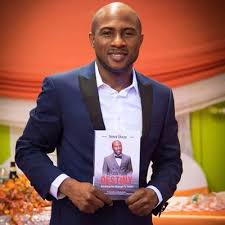
By Henry Ukazu
Dear Destiny Friends,
Ever wondered how one sleeps and wakes up? Ever wondered where the spirit goes while we sleep? The answer is hidden in mysteries because life, and by extension, existence, is full of mysteries.
On a personal note, I do believe that whenever we sleep, we are basically practicing how to die because no one knows the whereabouts of the spirit and souls. All we know is that we wake at the break of dawn, or when there’s a stirring, either naturally or artificial. That is a mystery!
Have you also ever imagined how a man will have sexual intercourse with a lady and a child is born? Have you also ever wondered about the mystery surrounding death? Have you also imagined how human beings fall in love with the opposite sex despite various variables. Again, each time I fly in the air, I begin to wonder about the invention surrounding the aeroplane. So many questions begging for answers. The mysteries surrounding life is inexhaustible.
For the benefit of hindsight, life is indeed a mystery. Sometimes, we think we understand it, and other times, it humbles us with its complexities. Life can be likened to a woman; the more you try to understand them, the more confused you become.
I had to give this introductory analysis to buttress the significance surrounding the mysteries of life. Why do I say this? Nothing is permanent in life, and as such anyone can be great and successful tomorrow. In my native Igbo (Nigerian) language, we have a saying that “nobody knows the stomach that will birth a king tomorrow”, and “tomorrow is pregnant”. These are evidence of the mysterious nature of life.
In my journey through life, I have met angels and devils in human form, who have played different roles in shaping my thoughts and outlook towards life. While I thought certain people will bring smiles to my life, they turned around to make me question their intentions and mindset. But the people I had some reservations with turned out to be some of the best things that have happened to me. For instance, I have a dear friend turned brother, whom I hold in high esteem. His name is Sodeeq Sulyman. He is the Chief Operating Officer of my company.
As a matter of fact, today is his birthday. He met me on X and reached out to me to be his mentor. I was literally humbled because that was the first time someone was making a firm request of me. I gladly accepted the request, and today our friendship, brotherhood and relationship has truly blossomed. This young man is literally one of the best things that has happened to my life. If I was told he will change the outlook of my life, business and life generally, I wouldn’t have believed it.
But as my late mother would always say, when you meet people just take the good part and leave the bad part. In all sincerity, I strongly believe our meeting was predestined, and mysterious if the circumstance of our meeting is x-rayed.
Here is the message, never look down on anyone except you are helping them to do something or pick something. Another message is don’t give up on anyone because you don’t know what tomorrow will unfold. Even the Bible book of life states in Proverbs 118:22, “the stone which the people rejected has become the cornerstone”. So, it’s instructive for one to be kind, courteous and humble in relationship with human beings because nobody knows what life will unfold tomorrow.
Imagine, if I had not treated this young man very well or even accepted him, I would probably have met other minds, who would have given me an experience of a lifetime I wouldn’t forget in a hurry.
The mystery of life can be seen in wealth creation. A man of means today can become a beggar tomorrow if the wealth is not properly managed, and the child of a certified pauper can become a man of means tomorrow. There have been stories of wealthy men whose children mismanaged their parents’ and became hungry, while slaves of wealthy men became stupendously wealthy. What does that tell you? Nothing is guaranteed in life. I often wonder how people take life very seriously thinking everything is about them. They don’t even know they can sleep and not wake up the next morning, nor are they aware of the fact that pride and ego are the two greatest enemies that can fast track the downfall of a man, while humility can jump-start their elevation.
As human beings sometimes, we wonder where our next meal will come from. Where would our next business, money, spouse, opportunity come from are some of the questions that bug our minds? One might have a business that has little or no hope of succeeding, but with determination and favour from God, the business will turn around for good.
On a personal note, I have been in a scenario where I lost hope of succeeding or moving to the next round, but I was surprised when the universe came through in ways and manners I couldn’t comprehend. I believe we all have one story or another to share as it relates to the mysteries of life. I can vividly recall when my late dad was very sick in the hospital. As a matter of fact, he was adjudged to be the sickest patient in the hospital. The doctor who was treating him said, he lost his mother to the exact sickness my late dad was facing. But with prayer, my late dad was able to survive to the amazement of everyone. He was later adjudged to be a miracle patient because he was given a slim opportunity to survive.
I don’t know what your storyline might be nor do I know what you are experiencing in your academic, business, health, career, or family life. One message I have for you is that nothing lasts forever. If you give it time, one day you’ll laugh and thank God for the experience and lessons life has offered you because life is a mystery one may not understand. It unfolds as it chooses.
Henry Ukazu writes from New York. He works with the New York City Department of Correction as the Legal Coordinator. He’s the founder of Gloemi. He’s a Transformative Human Capacity and Mindset coach. He is also a public speaker, youth advocate, creative writer and author of Design Your Destiny Design and Unleash Your Destiny . He can be reached via info@gloemi.com

By Tolulope A. Adegoke PhD
“In an age of ceaseless disruption, the wisest pause is to acknowledge the Unchanging Hand—the divine grace that guides our progress, steadies our systems, and writes our story of possibilities with a wisdom no trend can outpace.” – Tolulope A. Adegoke, PhD
We are living through an age of acceleration. Technological advancements, from generative artificial intelligence to biotechnology, are not just evolving; they are fundamentally rewriting the rules of human enterprise on a near-daily basis. Concurrently, the global community faces layered, systemic challenges—climate volatility, geopolitical fragmentation, economic precarity, and a pervasive sense of institutional distrust. This relentless churn of innovation and crisis can foster a worldview dominated by pure mechanistic cause and effect, where outcomes are seen solely as the result of data-driven strategy, relentless hustle, or fortunate access to capital.
Yet, within the complex tapestry of human progress—across personal biographies, corporate histories, and the annals of nations—there persists a recurring, almost whispered, narrative. It speaks of moments that defy straightforward analysis: the serendipitous encounter that alters a career trajectory, the breakthrough insight that arrives after all logical solutions are exhausted, the organizational resilience that emerges from a crisis in ways no risk-management model predicted, or the diplomatic breakthrough that occurs against all odds when conflict seemed inevitable. For millennia, across diverse faiths and philosophies, this dimension of experience has been attributed to a higher guiding force—often termed the Hand of God. It represents the divine interaction where diligent human effort intersects with transcendent grace, producing outcomes that feel orchestrated, purposeful, and imbued with a meaning beyond mere happenstance.
In our contemporary context, recognizing this force is not an act of intellectual retreat. On the contrary, it is an exercise in profound clarity and emotional intelligence. It provides the essential counterbalance to the hubris of absolute human control and the anxiety bred by uncertainty. It compels us to a vital, transformative pause—a sacred interval for introspection on our core values, retrospection on the journey thus far, and a heartfelt posture of gratitude for the grace that navigates our collective voyage through these uncharted waters. This pause is not an empty space; it is the fertile ground from which wiser action, more sustainable leadership, and deeper hope can grow.
For the Individual: Cultivating Purpose in an Age of Digital Determinism
The modern professional landscape is increasingly mediated by algorithms that curate opportunities, assess productivity, and even suggest career paths. Personal worth is often unconsciously tied to metrics of digital engagement and visible output, leading to a quiet epidemic of burnout and existential doubt. In this environment, the most meaningful developments frequently occur outside these digital parameters.
Consider the pattern: a sudden redundancy, initially a devastating blow, becomes the forced catalyst for launching a purpose-driven venture that aligns with a long-held passion. A chance conversation during a delayed flight leads to a mentorship that shapes a leader’s ethical compass for decades. A period of enforced stillness, perhaps due to illness or family need, creates the mental space for a creative or spiritual insight that reorganizes one’s entire life priorities. These are not merely random events; to the perceptive heart, they bear the hallmark of intentional guidance.
The ancient wisdom of Proverbs 19:21 observes, “Many are the plans in a person’s heart, but it is the Lord’s purpose that prevails.” This is not a dismissal of ambition or strategic planning. Rather, it is an invitation to hold our plans with open hands. It suggests that our detailed life maps are subject to benevolent divine cartography that can see beyond our immediate horizon. The practice of pausing to acknowledge this reality does several things: it replaces anxiety with a sense of guided adventure, it converts envy of others’ paths into contentment with one’s own unique journey, and it fosters a humility that makes us lifelong learners. Gratitude, in this personal realm, is the conscious acknowledgment that our skills, opportunities, and even our recoveries from failure are gifts to be stewarded, not just assets we have self-manufactured.
For the Organization: Building Legacy in an Era of Stakeholder Capitalism
The 21st-century corporation operates under a blinding spotlight. Stakeholders—including employees, customers, investors, and communities—now demand authentic purpose, ethical transparency, and demonstrable social and environmental stewardship alongside financial performance. This shift from shareholder primacy to stakeholder capitalism represents a profound change in the rules of engagement.
In this new paradigm, principles often relegated to “corporate social responsibility” documents are now central to long-term viability. Organizations that operate with integrity—prioritizing fair wages, sustainable sourcing, and genuine community partnership—often experience a form of capital that cannot be listed on a balance sheet: the capital of trust. This trust manifests as customer loyalty during a misstep, employee advocacy in competitive talent markets, and investor patience during necessary transitions. While these outcomes can be analyzed through the lens of sociology or economics, many faith-informed leaders perceive the outworking of a timeless principle.
The Psalmist notes, “The Lord’s blessing brings wealth, without painful toil for it” (Proverbs 10:22). This is not a promise of effortless profit, but a profound observation that sustainable abundance is often tied to alignment with divine principles of justice, honesty, and generosity. When a company avoids a lucrative but unethical deal, it may be protected from future scandal. When it invests in employee well-being, it cultivates innovation and dedication that drives organic growth. The guiding hand here is seen in the provision of wisdom for complex decisions, the fostering of a cohesive culture amid diversity, and the unexpected market opportunities that align with a company’s core values. The necessary corporate pause involves leadership teams reflecting not only on key performance indicators but on their foundational ethos. Gratitude is expressed by acknowledging that success is a collaborative endeavor with a moral dimension and by reinvesting prosperity into the common good.
For the Nation and the Global Community: Steering the Ship of State with Moral Navigation
The arena of geopolitics and national governance is perhaps where the illusion of pure human control is most dangerous and most easily dispelled. Leaders wield immense power, yet they are constantly confronted by the limits of that power—facing natural disasters, global economic tides, and the unpredictable currents of human history. The rise and fall of empires, the sudden emergence of peace movements, and the avoidance of global catastrophes often contain elements that baffle historians and political scientists.
Instances where conflict is de-escalated through a last-minute change of heart, where scientific collaboration across rival nations yields a solution to a shared threat like a pandemic, or where a society makes a collective turn toward justice and reconciliation after generations of oppression—these moments carry a weight of significance that suggests more than shrewd political calculus. They hint at a moral fabric to history itself.
The prophet Jeremiah, addressing a nation in turmoil, conveyed this divine perspective: “For I know the plans I have for you… plans to give you hope and a future” (Jeremiah 29:11). This promise, made in a context of exile and despair, underscores a foundational belief: that the ultimate trajectory of a people is held within a providential narrative of hope and redemption. National pauses for thanksgiving, days of reflection, or calls for collective prayer are not merely ceremonial. They are acts of humility that can reorient a society’s focus from fear and division to shared destiny and mutual responsibility. Gratitude on this scale is a powerful antidote to nationalistic arrogance. It reminds a citizenry of its blessings, fosters a spirit of stewardship over its resources, and cultivates a posture of compassion toward other nations and future generations.
Synthesis: Gratitude as the Foundational Posture for a Future of Meaning
Ultimately, to perceive and acknowledge the guiding hand of God is to choose a narrative of profound hope and partnership. It liberates us from the exhausting burden of believing we are the sole authors of our fate. It protects our souls from the corrosive effects of pride in success and despair in failure. This awareness transforms gratitude from a fleeting emotion into a disciplined posture—a foundational lens through which we view our past, engage our present, and anticipate our future.
This posture of gratitude is eminently practical. It makes individuals more resilient and adaptable leaders. It fosters corporate cultures of ethical innovation and long-term thinking. It encourages nations to pursue policies of justice, peace, and environmental care. In a world intoxicated by speed and disruption, the deliberate, heartfelt pause to say “thank you” may be the most strategic and humanizing act available to us. It grounds our frenetic activity in meaning, connects our personal struggles to a larger story of grace, and equips us to build a future that is not only smarter or richer, but wiser and more deeply human. We pause, we recognize, we give thanks—and from that place of humble acknowledgment, we find the clarity and courage to move forward.
When the world moves faster than our understanding, true wisdom is found in the sacred pause: to recognize the Guiding Hand that has written our story of progress, to give thanks for the grace in our journey, and to find courage for the path ahead.
Dr. Tolulope Adeseye Adegoke is by God’s grace a distinguished scholar-practitioner specializing in the intersection of African security, governance, strategic leadership and effective management. His expertise is built on a robust academic foundation—with a PhD, MA, and BA in History and International Studies focused on West African conflicts, terrorism, and regional diplomacy—complemented by high-level professional credentials as a Distinguished Fellow Certified Management Consultant and a Fellow Certified Human Resource Management Professional. He can be reached via: tolulopeadegoke01@gmail.com
Metro
The Synergy Imperative: Integrating Transformative Leadership and Strategic Management for Africa’s Ascent
By Tolulope A. Adegoke, PhD
“The bridge from Africa’s potential to its preeminence is built with the twin pillars of visionary leadership, which dares to imagine the impossible, and disciplined management, which masters the possible” – Tolulope A. Adegoke, PhD
Africa’s journey from a continent brimming with untapped potential to a unified global powerhouse is arguably the defining narrative of our century. This transformation, however, hinges on a critical catalyst: a new paradigm of leadership. To dismantle the persistent architecture of poverty and transcend the historical cycle of mediocrity, African nations require more than administrators; they need visionary architects and master builders. This necessitates a powerful fusion of transformative leadership—which sets the daring direction—and strategic, execution-focused management—which paves the road to get there. The synergy between these two forces is non-negotiable for unlocking the innovative capacity needed to deliver tangible possibilities for Africa’s people, its dynamic corporations, and its sovereign nations.
I. The Essence of Transformative Leadership: Architecting a New Continental Consciousness
True transformative leadership moves beyond maintaining the status quo. It is an audacious practice of reimagining futures, challenging deeply embedded narratives, and mobilizing collective will toward a shared, audacious horizon.
1. Crafting a Unifying and Aspirational Narrative: The transformative leader’s first task is to be a master storyteller for the future. This involves articulating a vision that moves past diagnoses of poverty to paint a vivid, compelling picture of continental success—a Africa renowned for its innovation, quality, and strategic influence. This narrative must replace a mindset of scarcity with one of boundless opportunity, fostering a new identity where “Made in Africa” signifies excellence, reliability, and cutting-edge solutions. It is about making the idea of a continental giant not a distant dream, but an inevitable destination in the public imagination.
2. Demonstrating Unshakeable Ethical Fortitude: The battle against mediocrity is fundamentally a battle for integrity. Transformative leaders must embody and enforce an ironclad commitment to governance that is transparent, accountable, and institutionally robust. This requires the political courage to depersonalize state institutions, empowering independent judiciary, audit authorities, and anti-corruption commissions not just on paper but in practice. By becoming the chief guardian of institutional integrity, a leader builds the essential currency of trust—without which long-term investment and social cohesion are impossible.
3. Championing Radical Inclusivity: No single entity holds a monopoly on innovative ideas. Transformative leaders actively dismantle top-down governance silos to create participatory ecosystems. They facilitate sustained dialogues that bring together the pragmatic insights of the private sector, the grassroots realities understood by civil society, the foresight of academia, and the voices of marginalized communities. This inclusive approach does more than improve policy; it fosters a profound sense of collective ownership over the continent’s destiny, building a resilient coalition for sustained change.
II. The Discipline of Strategic Management: Building the Engine of Execution
A vision without a rigorous mechanism for implementation remains a mere hallucination. Transformative leadership must be operationalized through management systems characterized by precision, adaptability, and results.
1. Engineering a Performance-Obsessed Public Sector: The public administration must be fundamentally redesigned into a lean, data-driven delivery machine. This demands:
o Integrated Outcome Frameworks: Adopting systems like the Balanced Scorecard to cascade the national vision into clear departmental objectives, measurable Key Performance Indicators (KPIs), and individual accountability metrics for civil servants.
o Evidence-Based Policy Orchestration: Investing in robust data analytics units and real-time monitoring dashboards. Resource allocation and program adjustments must be driven by hard evidence of what works, moving policymaking from political intuition to strategic science.
o Relentless Process Innovation: Launching comprehensive digital governance initiatives to automate and streamline bureaucratic processes—from business licensing to customs clearance. This eliminates friction, reduces opportunities for graft, and dramatically improves the user experience for citizens and investors alike.
2. Cultivating Dynamic Innovation Ecosystems: Management’s role is to create the fertile ground where creativity and enterprise can flourish. This is a deliberate, managerial function:
o Establishing Agile Policy Laboratories: Creating regulatory sandboxes in key sectors like fintech, renewable energy, and logistics allows startups to test breakthrough ideas in a controlled environment with temporary regulatory relief, fostering innovation without compromising systemic stability.
o Orchestrating Strategic Alliances: Building structured platforms for public-private-research collaboration. Government can de-risk pioneering R&D in areas like vaccine manufacturing or artificial intelligence for agriculture, with clear pathways for commercialization led by the private sector and fueled by academic research.
o Safeguarding Intellectual Creation: Modernizing and rigorously enforcing intellectual property regimes managed by efficient, trustworthy institutions. This protects African innovators, attracts R&D investment, and ensures that breakthroughs conceived on the continent yield prosperity for its people.
3. Mastering Capital: Human and Financial:
o Strategic Human Capital Development: Aligning national education and vocational training curricula with the future skills demanded by the continental transformation agenda requires active management through a permanent skills council, ensuring a seamless pipeline of talent for the industries of tomorrow.
o Pioneering Financial Architecture: Beyond domestic revenue mobilization, management excellence is key to structuring and accessing innovative finance. This includes developing bankable project pipelines for green bonds, diaspora investment instruments, and blended finance models to fund the massive infrastructure required for integration, all while maintaining impeccable sovereign debt management.
III. The Tangible Dividend: Delivering Expanded Possibilities for All
The ultimate metric for this leadership-management model is the tangible impact on the ground.
· For Africa’s Citizens: The outcome is expanded human agency and dignity. This manifests as access to meaningful, future-oriented employment; quality, affordable healthcare and education delivered efficiently; and social protections that empower rather than create dependency. Citizens experience a state that is a capable partner in their aspirations.
· For Africa’s Enterprises: The outcome is a predictable, enabling, and competitive operating environment. Corporations and entrepreneurs benefit from reliable infrastructure, seamless administrative processes, access to capital, and a fair, transparent market. This enables them to scale, innovate, and compete confidently on regional and global stages.
· For Africa’s Nations and Continental Body: The outcome is sovereign capability and collective strategic influence. Individually, nations evolve into resilient, adaptive economies. Collectively, a strategically managed and integrated Africa transforms into a formidable negotiating bloc, capable of shaping global rules on trade, climate, and digital governance, and moving from being a subject of global dynamics to a definitive shaper of the world order.
Conclusion: The Imperative of Synergy
The path from poverty to preeminence is paved by the dual forces of transformative leadership and strategic management. Leaders must provide the spark of vision, the moral compass, and the political will to embark on an audacious journey. The management apparatus must provide the meticulous map, the engine, and the metrics to navigate it successfully. When these elements align in harmony—when the architect’s dream is matched by the engineer’s precision—Africa will ignite a self-sustaining cycle of innovation, inclusive growth, and shared prosperity. This is the pathway that turns the latent potential within its people, the ambition of its corporations, and the sovereignty of its nations into a manifested reality. It is how the continent will cease to be perpetually “rising” and will firmly stand, a realized giant, shaping the century ahead.
Dr. Tolulope Adeseye Adegoke is a distinguished scholar-practitioner specializing in the intersection of African security, governance, strategic leadership and effective management. His expertise is built on a robust academic foundation—with a PhD, MA, and BA in History and International Studies focused on West African conflicts, terrorism, and regional diplomacy—complemented by high-level professional credentials as a Distinguished Fellow Certified Management Consultant and a Fellow Certified Human Resource Management Professional.


