
Headlines
Presidential Candidates Sign Peace Accord, Pledge to Accept Election Outcome

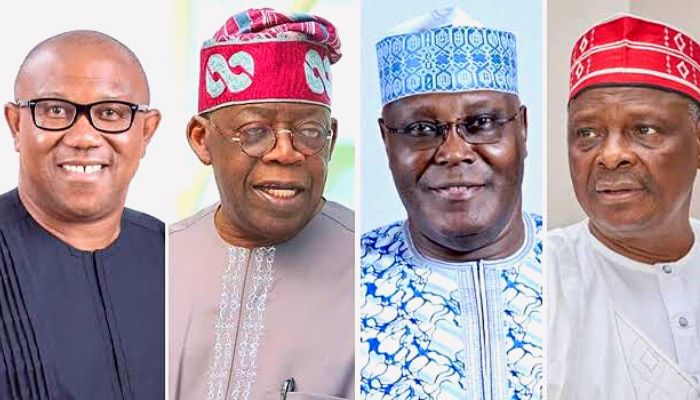
Candidates from 18 political parties participating in the presidential election scheduled for February 25 have signed a peace accord in Abuja.
Present at the signing of the peace accord were members of the National Peace Committee, as well as President Muhammadu Buhari.
Omoyele Sowore of the African Action Congress (AAC), Bola Tinubu of the All Progressives Congress (APC), Peter Obi of the Labour Party (LP), Rabiu Kwankwaso of the New Nigeria Peoples Party (NNPP), and Atiku Abubakar of the Peoples Democratic Party (PDP) were among the presidential candidates present.
By the text of the peace accord, presidential candidates make a commitment to “accept and abide by the outcome of the 2023 presidential election and if issues should arise”, to “deploy constitutional means and appeal to the courts rather than other unconstitutional means”.
In his remarks, Goodluck Jonathan, former president, said the peace accord is needed to deter candidates and their allies from using instruments of misinformation to influence the election.
The former president, whose speech was read by Matthew Kukah, Catholic bishop of Sokoto, charged the Independent National Electoral Commission (INEC) and security agencies to ensure that the election is credible.
“This is aimed at mitigating disinformation, and misinformation during the election and in the time of the social media era,” Jonathan said.
“There is no other time than now given the considerable tension in the country as a result of the election. The election is not war. The country needs a stable democracy. The world looks up to us to get our leadership right and leadership recruitment right.”
Yakubu Gowon, former military head of state, advised the candidates to be “civil in their engagements”, adding that Nigeria is in need of a leader who is capable of “bringing and ensuring dividends of democracy to the doorsteps of the people”.
“I appeal to those who are bent on disrupting the election to reconsider their actions, to give an opportunity for just and fair resolution to the problems at hand. I wish all Nigerians a peaceful election and smooth transition of government as we had last time,” he added.


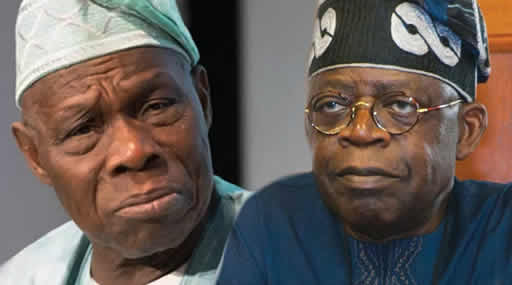
Former President Olusegun Obasanjo has lambasted the administration of President Bola Tinubu over insecurity bedeviling the country.
In an interview with News Central, Obasanjo said any government that cannot protect lives and property of its citizens has no basis to exist.
The former leader was reacting to the recent wave of insecurity, which has confronted Nigeria, resulting in the killing of several citizens and abduction of others.
“Let me tell you, the government that cannot give security of life and property of its citizen has no right of existence.
“The elected members of our National Assembly have no right to fix their own salary and their own emolument.
“It’s not in our constitution for them to do that. It’s the revenue mobilization and allocation commission that should do it,” he said.
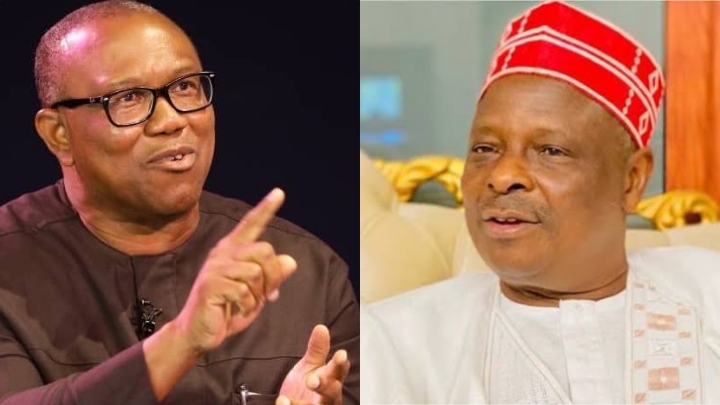
The Nigeria Democratic Congress (NDC) has offered its presidential ticket to Peter Obi and Rabiu Kwankwaso ahead of the 2027 elections, signaling intensifying efforts to forge a united opposition as key political deadlines approach.
In a post on X on Sunday, the party indicated a two-week window for both politicians, currently linked to the African Democratic Congress (ADC), to defect and secure its platform’s presidential ticket.
“All we need right now. Just all we need. Two weeks to deadline,” the NDC said, accompanying the message with an image of Obi and Kwankwaso and the caption: “Nigeria will be OK.”
The development comes amid renewed calls for opposition consolidation ahead of the next general elections. Supporters of both men recently launched the “OK Movement”, aimed at mobilising support for a possible joint ticket.
Organisers of the movement have begun setting up national, zonal and State structures, suggesting early groundwork for a broader political alliance.
However, the ADC is currently grappling with internal divisions that could affect its participation in the elections. The party is facing a leadership crisis, with competing factions contesting control of its structure.
The dispute is now before the Supreme Court of Nigeria, which has reserved judgment in an appeal arising from the leadership tussle.
The uncertainty comes as the Independent National Electoral Commission (INEC) maintains its timetable for the 2027 polls, setting May 30, 2026, as the deadline for political parties to submit membership registers and nominate candidates.
Opposition parties, including factions of the Peoples’ Democratic Party (PDP) and the New Nigeria Peoples Party (NNPP), have called for an extension of the timeline, arguing that the schedule is too tight given ongoing internal restructuring and legal disputes.
The NDC’s offer highlights the shifting dynamics within Nigeria’s opposition landscape, where alliances remain fluid and negotiations are ongoing.
Both Obi and Kwankwaso are influential political figures with significant regional support bases, and any alignment between them could reshape the balance of power ahead of the elections.
INEC has yet to indicate whether it will adjust its timetable, as preparations for the 2027 general elections continue to gather momentum.
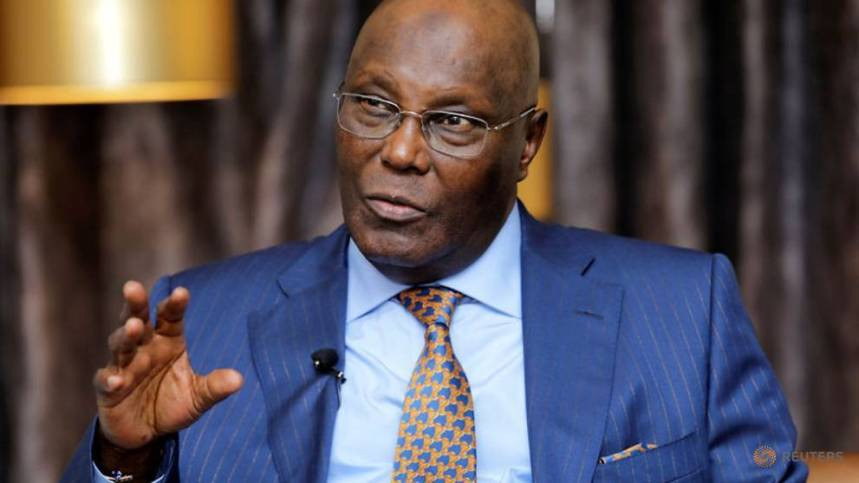
Former Vice President Atiku Abubakar has expressed concern over reports that the Senate is considering the suspension of political campaigns in eight Northern states under the pretext of rising insecurity.
Atiku, in a statement issued by his Senior Special Assistant on Public Communication, Phrank Shaibu, described the development as deeply troubling and fraught with dangerous implications for Nigeria’s democracy.
He noted that while insecurity remains a serious national challenge that must be confronted decisively, it must never become a convenient justification for undermining constitutional rights or selectively restricting democratic participation.
“Let it be clearly stated: the right to vote and participate in the electoral process is fundamental and cannot be abridged under any guise. Any attempt—whether deliberate or disguised—to suppress political activities in parts of Northern Nigeria raises legitimate concerns about disenfranchisement,” Atiku said.
The Waziri Adamawa recalled that credible intelligence had earlier pointed to possible plans to weaken electoral participation in key Northern states, warning that recent developments appear to be lending credence to those fears.
“This is not merely about campaigns; it is about representation, inclusion, and the integrity of our democratic process. You cannot cure insecurity by silencing the voices of the people. Democracy must not become a casualty of government failure,” he added.
The former Vice President stressed that the people of Northern Nigeria, like all Nigerians, deserve both security and full participation in the democratic process — not one at the expense of the other.
He added that it is the responsibility of government to provide security for its citizens, while it remains the duty of citizens to freely exercise their civic rights without fear, intimidation, or unlawful restriction.
“At a time when citizens are already battling hardship and insecurity, the least the government can do is to guarantee their right to be heard — not to restrict it. Any policy that creates the impression of targeted exclusion will only deepen distrust and national division,” he warned.
He called on the Independent National Electoral Commission, security agencies, and the administration of Bola Ahmed Tinubu to immediately clarify their position and reassure Nigerians that no region will be denied its constitutional rights.
“Nigeria must never descend into a situation where elections are shaped by exclusion, fear, or administrative manipulation. The consequences of such actions are far-reaching and better imagined than experienced,” Atiku cautioned.
He urged all stakeholders to uphold the principles of fairness, equity, and national unity, emphasising that democracy must remain inclusive, transparent, and credible across every part of the country.


