Connect with us

Headlines

Ramaphosa Becomes AU Chairman, Pledges to End Era of Colonialism, Imperialism in Africa

Published

on

South African President Cyril Ramaphosa has promised to lead a revolution into infrastructure development across Africa, a challenge he said if realised would see an end to all manifestations of colonialism and imperialism on the continent.

Mr Ramaphosa took over on Sunday as the new chairperson of the African Union in Addis Ababa, using his acceptance speech to rail against decades of neglect that had rendered Africa a minor player in world trade and notorious dumping ground for substandard goods.

“The era of colonialism and imperialism under which Africa is a pit stop in the global assembly line has passed,” Mr Ramaphosa declared as he took over from Egypt’s Abdel Fatah El-Sisi for the one-year tenure on Sunday afternoon.

The South African leader expressed high expectations of the recently-adopted African Continental Free Trade Area (AfCFTA). He said its implementation would mark the beginning of prosperity in a continent that has had its potential suppressed for too long.

“We are a continent that is rich in natural resources but also in history, intellectual output, culture in its sense of humanity,” he said, adding that he would use his leadership to kickstart a process that would guarantee an “Africa connected through a vast network of roads and railways, enabling the free movement of goods, people and services.”

Driving force

The 33rd Summit of the African Union that got underway earlier this week has been packed with discussions around urgent implementation of AfCFTA, a continent-wide trade treaty adopted in 2018. Fifty-two out of 54 countries and territories that make up the African Union have endorsed the treaty. Legislative bodies of all the countries have already commenced ratification processes.

African leaders believe the agreement would spur intra-continental trade amongst the member states, which is currently very low, notwithstanding their common borders and shared cultural heritage.

“The success of the AfCTA depends on infrastructure development,” Mr Ramaphosa said, adding that a road would be constructed between Cape Town and Cairo as part of the agenda. A slew of “outstanding issues” around AfCFTA, especially on the definition of what constitutes an ‘African good or service’ would be finalised before the official commencement of the policy, he added.

Women and youth would also play a major role in driving AfCFTA implementation due to their indispensable potentials for economic mobility, Mr Ramaphosa said.

He promised to reduce gender-based violence that has become a key impediment to social development and technological breakthrough on the continent.

“We have heard the calls of the women and the girls of Africa for liberation from the shackles of patriarchy, violence and economic exclusion,” Mr Ramaphosa said. “Africa must drive a skills revolution and an Africa intelligence forum must be established to include those in the diaspora.”

This year’s AU summit, which has non-African leaders like Antonio Guterres and Canada’s Justin Trudeau in attendance, focused on silencing the guns to foster economic development on the continent. It would wrap up on Monday after consideration of all pending policy initiatives that were presented to the leaders of the 54 member states.

Premium Times

Continue Reading
Advertisement


Click to comment

Leave a Reply

Your email address will not be published. Required fields are marked *

Headlines

Atiku Counters Alake on Tinubu’s Steady Power Supply Claim

Published

on

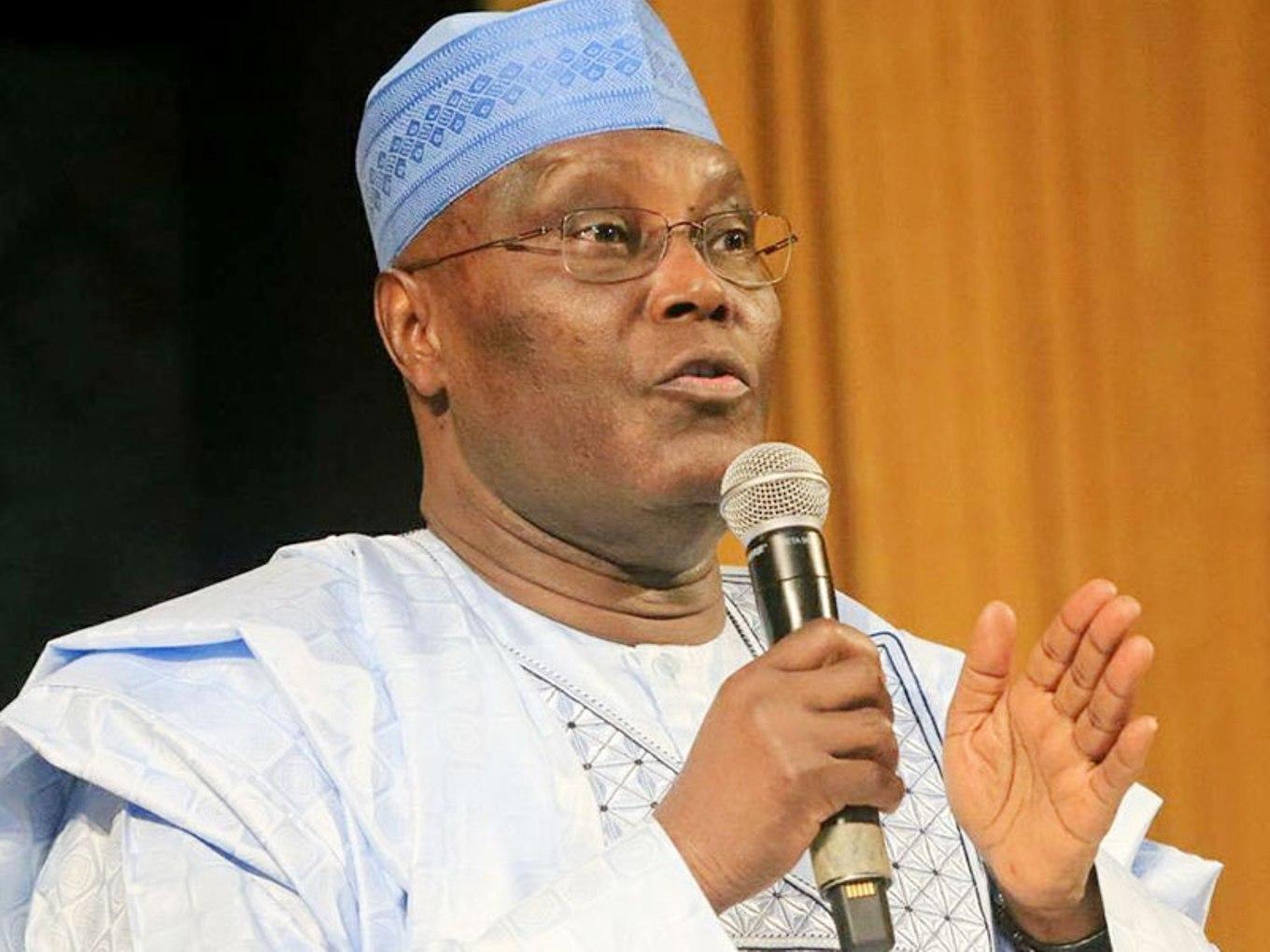
Former Vice President and African Democratic Congress (ADC) presidential candidate, Atiku Abubakar, has accused President Bola Tinubu’s administration of failing to fulfil its promise of providing Nigerians with steady electricity supply.

Atiku said the All Progressives Congress (APC) campaign council was attempting to divert attention from the administration’s unfulfilled electricity pledge by highlighting legislation, committees, bonds and power projects.

He stated this on Sunday through Phrank Shaibu, Director of Strategic Communications of the ADC Presidential Campaign Council, in a response to comments by the Minister of Solid Minerals Development, Dele Alake, on the government’s electricity sector reforms.

Atiku said Nigerians continued to grapple with unreliable electricity, forcing households and businesses to spend scarce resources on alternative sources of power while still paying electricity bills.

“APC should spare Nigerians spectacle of celebrating paperwork while homes and businesses remain in darkness. After three and a half years, families still struggle to keep their homes lit. Traders and small business owners spend scarce resources on alternative power, yet struggle to keep their businesses alive. Nigerians are billed for electricity they cannot rely on. President Tinubu promised steady power and an end to estimated billing. That promise has not been kept,” he said.

The former vice-president also faulted the existing electricity band system, arguing that consumers across the different categories continued to experience power failures despite paying varying tariffs.

“Across Nigeria, consumers are placed in Bands A, B, C, D and E and charged different rates. In many areas, Band A customers pay about N209.50 per unit before VAT. Rates for other bands vary by state and electricity provider. Yet across every band, same hardship endures: power fails, but bill arrives,” he said.

He argued that households should not have to choose between paying electricity bills and meeting their basic needs, while businesses should not be charged more for electricity they do not receive.

On the planned removal of electricity subsidies from 2027, Atiku demanded clarification from the Federal government on the implications for consumers, despite assurances that there would be no immediate increase in electricity tariffs.

“Nigerians are entitled to clear answer: what will happen to their bills when subsidy ends?” he asked.

Atiku said he would work with state governments and regulators, within the provisions of the law, to replace the existing band system with what he described as a fair, transparent and affordable electricity pricing framework that would hold distribution companies accountable for the power supplied.

He also recalled Tinubu’s campaign promise during the 2022 presidential election, when the President reportedly pledged to provide constant electricity within four years.

“When President Tinubu campaigned in 2022, he made unmistakable commitment. He said: ‘If I don’t give you constant electricity for four years, when I come back for second term, don’t vote for me.’ Nigerians have lived through those four years. They do not need his campaign council to interpret his words for them. They need him to answer for them,” he said.

The ADC chieftain further questioned the administration’s investment in new electricity generation infrastructure, alleging that it had failed to build a new generation facility to increase the country’s power capacity despite introducing a multitrillion-naira bond programme to settle outstanding debts owed to generation companies.

“Paying old debts is not same as building new power infrastructure. Bonds cannot be presented as substitute for power in people’s homes,” he added.

Atiku also expressed concerns over the application of Value Added Tax (VAT) on electricity and a provision in the Nigeria Tax Act for a five per cent surcharge on certain fossil fuels, including petrol and diesel.

He noted that although the government had said the surcharge had not been activated and would require a ministerial order, Nigerians deserved clarity on the possibility of additional energy-related charges.

“Dele Alake’s statement cannot light a home. Signing a law is not electricity. Raising a bond is not electricity. Approving a project is not power delivered. Nigerians cannot cook, study, work or sustain a business on announcements,” Atiku said.

He maintained that Nigerians expected reliable and affordable electricity, urging the Tinubu administration to account for its campaign promises and the performance of the power sector.

Continue Reading

Headlines

2027: It’s South’s Turn to Produce President, Kwankwaso Tells ADC

Published

on

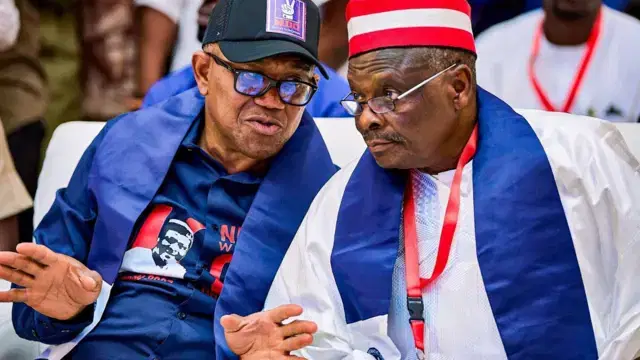
The Nigeria Democratic Congress (NDC) vice presidential candidate, Rabiu Kwankwaso, has faulted the African Democratic Congress (ADC) giving its presidential ticket to a Northern candidate ahead of the 2027 general elections.

Kwankwaso made the remark during an interactive session with journalists at his residence in Kano on Sunday.

Throwing his weight behind the NDC presidential candidate, Peter Obi, the former Governor of Kano State emphatically said it is the turn of the South to produce the next President in 2027, adding that the North should wait till 2031.

He added that it is unfair for the ADC to give its ticket to a Northern candidate when the South has not completed its eight years.

“ADC will lose if it gives ticket to North. It’s the turn of the South in 2027. ADC should not give its presidential ticket to the North. North should wait till 2031,” Kwankwaso said.

He advised the ADC to zone its presidential ticket to the South if it wants to win the 2027 election, saying Nigerians want fairness and equity.

Kwankwaso, who is from the North, is the running mate of Peter Obi, who is from the South, on the platform of the NDC.

Continue Reading

Headlines

U-17 World Cup: Nigeria Pip Venezuela 1-0, Set Up Brazil S’Final Clash

Published

on

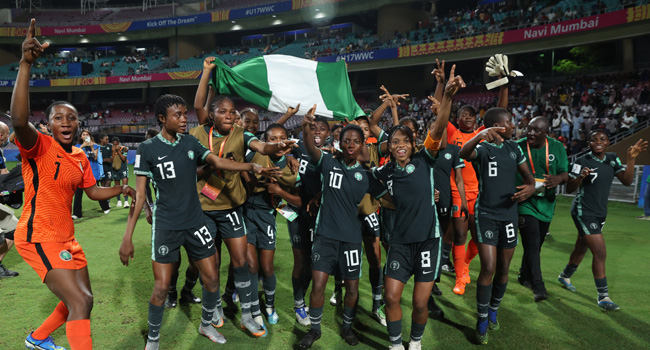
Nigeria’s Flamingos have continued their impressive run at the 2026 FIFA U-17 Women’s World Cup after edging Venezuela 1-0 in their quarter-final encounter on Sunday.

Azeezat Oduntan scored the decisive goal from the penalty spot in the 89th minute to secure victory for the Nigerian side and send the West Africans into the semi-finals.

The Flamingos had pushed for a breakthrough throughout the match, with Kanyinsola Yusuf, Mary Dunstan, Tosin Rafiu and Oluebube Umejiaku among those who attempted to find the net.

Venezuela also created opportunities, particularly in the closing stages, but Nigeria held on despite late efforts from Astrid Granadillo and Abril Alejo.

The match ended after eight minutes of added time, with the Flamingos protecting their narrow lead to book a place in the last four.

The victory extends Nigeria’s recovery from a 2-1 opening defeat to Poland. The team subsequently beat Puerto Rico 2-0, defending champions North Korea 3-1 and Mexico 2-1 to reach the quarter-finals.

The Flamingos will face Brazil in the semi-finals on Wednesday, November 4, at the Moulay El Hassan Stadium in Rabat. Brazil booked their place in the last four with a 2-1 comeback victory over China in their quarter-final encounter.

Continue Reading