
Personality in Focus
Rumble, Turbulence in The Anglican Church: The Nigerian Factor of Conspiracy in Evangelism

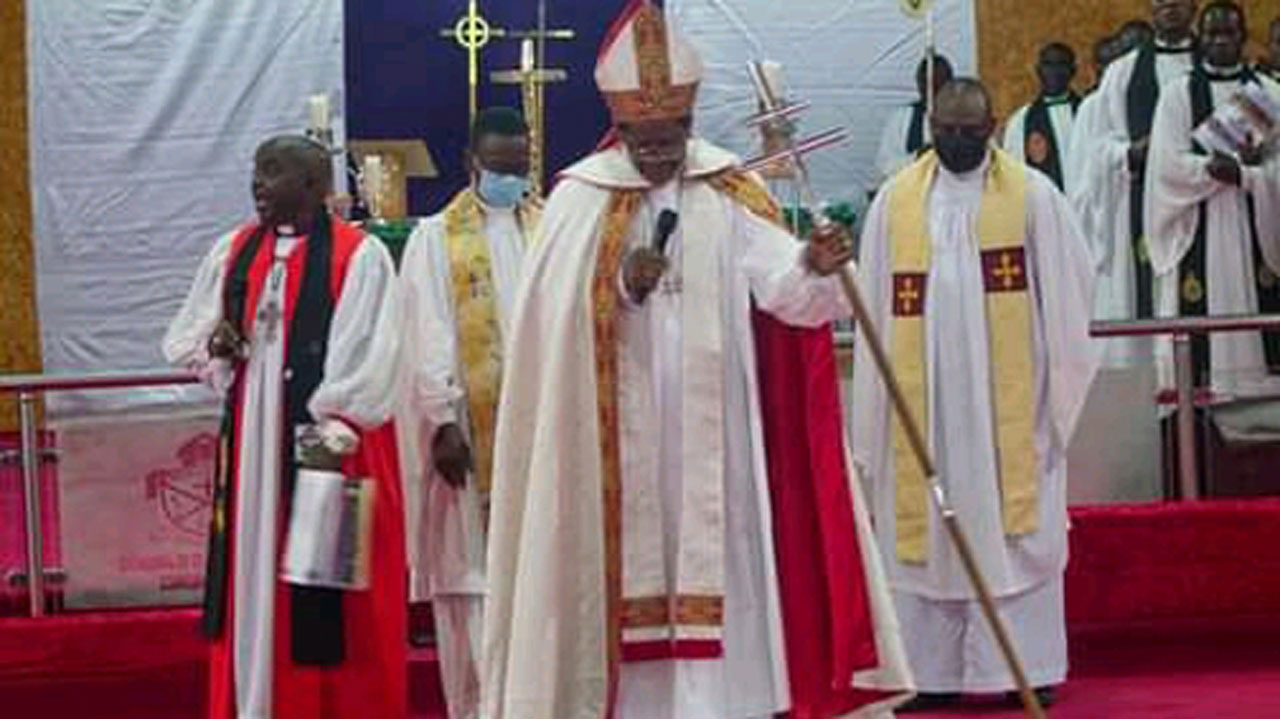
- /home/rhoncare/pointblank.ng/wp-content/plugins/mvp-social-buttons/mvp-social-buttons.php on line 27
https://pointblank.ng/wp-content/uploads/2024/01/Dedication-of-Cathedral-ibru-pix-1000x600.jpg&description=Rumble, Turbulence in The Anglican Church: The Nigerian Factor of Conspiracy in Evangelism', 'pinterestShare', 'width=750,height=350'); return false;" title="Pin This Post">
- Share
- Tweet /home/rhoncare/pointblank.ng/wp-content/plugins/mvp-social-buttons/mvp-social-buttons.php on line 69
https://pointblank.ng/wp-content/uploads/2024/01/Dedication-of-Cathedral-ibru-pix-1000x600.jpg&description=Rumble, Turbulence in The Anglican Church: The Nigerian Factor of Conspiracy in Evangelism', 'pinterestShare', 'width=750,height=350'); return false;" title="Pin This Post">
By Hon Femi Kehinde
Anglicanism is a church rooted in protest. It was founded in 1534 by king Henry VIII’s Act of supremacy, which pronounced the church of England independent of the Catholic Church in Rome.
The first phase of the Anglican Reformation (1531-1547) began over a personal dispute when King Henry VIII of England was denied Papal support for the annulling of his marriage to Catherine of Aragon.
Today, the Anglican Church consists of more than 86 million members worldwide in over 165 countries. Collectively, these national churches are known as the Anglican Communion, meaning all are in communion with and recognize the leadership of the Archbishop of Canterbury. In the United States, the American church of the Anglican Communion is called the Protestant Episcopal Church, or simply the Episcopal Church. In most of the rest of the world, it is called Anglican.
Samuel Ajayi Crowther (1809 – 31st December 1891) was a clergyman, and the first African Anglican Bishop of West Africa, he also translated the English bible to Yoruba Language in 1843. He was also, a pathfinder that brought in the Anglican church and place it on a firm ground in Nigeria. He was born with the name Ajayi in Osogun, near Oyo in present day Oyo state, Nigeria. On a certain morning, his native town of Osogun was surprised and overwhelmed by slave captors. Crowther and his compatriots fled but “were seized by the enemies with a noose of rope thrown over the neck of every individual to be led in the manner of goats tied together.” In Crowther’s gripping narration, “a family was violently divided between three or four enemies who each led his preys away to see one another no more.”
On that tragic morning, the last view Crowther had of his “unhappy, comfortless father” was when he came to give his family the signal to flee.
Samuel Ajayi Crowther, the slave boy who became the first African bishop of the Anglican Church, was guided by the hand of God which turned the tragedy of violent enslavement into immeasurable blessing. In those harsh days of mindless savagery, men were displayed as merchandise in slave markets, tied and manacled, and exported to distant lands.
Crowther was an embodiment of a true Christian, a servant of God and His gospel, for even as bishop, he was constantly marked out for detraction; but he took it all in his stride.
In 1864, Crowther was ordained as the first African bishop of the Anglican Church; he was consecrated a Bishop on St. Peter’s Day in 1864, by Charles Longley, Archbishop of Canterbury, at Canterbury Cathedral, England. By 1857 the CMS was fully engaged in Nigeria and a diocese in 1864 with the consecration of Samuel Ajayi Crowther as the first diocesan Bishop.
Anglican faithful resident in North America took the Anglican faiths and models of practice and worship to America with the usual Nigeria rumbles and tumbles. The Church of Nigeria Anglican communion, is the second-largest province in the Anglican Communion worldwide, as measured by baptized memberships, after the Church of England. As of 2016, its membership has “over 18 million”, out of a total Nigerian population of almost 200 million.
Since 2002, the Church of Nigeria has been organized into 14 Ecclesiastical Provinces. It has rapidly increased the number of its dioceses and bishops from 91 in 2002 to 161 as at January 2013; and has certainly increased exponentially from that number. The administrative headquarters is located in Abuja, Capital of Nigeria. Archbishop Henry Ndukuba became its Primate in 2020 succeeding Archbishop Nicholas Okoh.
However, the acquit rumbles and tumbles in Anglican church in America has brought in despair, disdain, anguish and bewilderment to the entire members of a fully incorporated diocese – Anglican Diocese of the Trinity (ADOTT) in North America.
Anglican diocese of the Trinity (ADOTT) that had existed for well over 10 years was dissolved by fiat and reduced to the status of a Mission by His Grace, Archbishop Henry C. Ndukuba, Archbishop, Metropolitan and primate of the church of Nigeria. The announcement of the dissolution of the Anglican Diocese of the Trinity (ADOTT) by fiat at the Church of Nigeria (CON) general Synod held in Nnewi in September 2023 after eleven years of the ADOTT diocese existence cut the entire members of Anglican Diocese of the Trinity (ADOTT) in America completely off guard and flustered.
According to the elders, Laity, Diocesan members of Anglican Diocese of the Trinity (ADOTT) in their letter of protest dated 23rd October 2023 said, “As a diocese that was duly incorporated in America, we should have been consulted by the Primate before the General Synod, even if that decision was to be taken to the general house. The General Synod of the Church of Nigeria and discussion of the issue should have been after our own deliberations, which was not what happened. Perhaps the most egregious and disturbing part of this saga was that just before the General Synod a few highly placed clerics here in North America, who were privy to this premeditated conversation, boasted openly that once the Nnewi meeting was concluded, there would be no ADOTT Diocese! True to it, the Primate announced the dissolution of ADOTT without due consultation with members of this Diocese, particularly the House of laity. These remarks before the meeting suggest that deliberation was not a part of the proceedings; a final decision had already been made unilaterally, and the announcement reflected a process that is unfair to rank and file of our membership. It is also noticeable that while the General Synod in its wisdom gave a period until February 2024 in their recommendation for this dissolution, the Primate, in a hurry, dissolved the Diocesan Board, which has paralyzed its functions, while people here in North America were still pondering what the proposed dissolution would mean for them, their faith community, and their families. It is indeed a sharp sword because the Primate waited for the commencement of the three-day women’s conference to make his announcement, a conference for which they had prepared for months but was brought to an abrupt end. This of course expectedly was followed by heart-felt sorrow of women and mothers at the conference who did not understand this shocking pronouncement, and chaos ensued.”
The elders of ADOTT further said, “As a result of the dissolution, the Primate now began to give orders from the secretariat in Abuja to individual Clergy and Rectors and instructed them to act without the consent of their Diocesan Bishop. It was very disturbing to see the wife of the bishop and convenor of the Women’s Conference was almost forbidden from entering the Cathedral because of the order from above. While we recognize that politics and faith have been inextricably linked in our society, this action is antithetical to the governance of the Anglican Church. It is an unprecedented move.”
According to the elders, “We were thriving as a Diocese and the joyous celebration of our tenth-year anniversary showed our strength and success. Our book titled Anglican Diocese of the Trinity: – Formation and Building of a Church of Nigeria Mission’ clearly illustrated our history and God’s benevolence and grace in the mission of the church.
“The last Primate, His Grace Archbishop Nicholas Okoh, who paid several visits to us, was very understanding and supportive of our status, presence, and our growth in North America so much that on his retirement, he was recognized at a big reception by all of us hosted in Harvard where he was accorded the respect and honor that are normally given to a Head of state.
“The question then is why this letter to the House of Bishops and the Nigerian Anglican faithful? First, there is no record in the history of the Anglican Church in Nigeria or any part of the world where a well instituted and thriving Diocese would be suddenly disbanded and reduced to mission stations. As if with a military fiat without recalls to all democratic norms and practices and global best practices. The motive of the white-controlled Anglican Church that has always sworn to see us kicked out of America except we come under their authority and control, is the key to this crisis. As American/Canadian citizens, this runs contrary to the law of the land that fully guarantees freedom of worship to all. Second, by our faith, we believe in the word of God that says that God himself will not allow his community to meet in error. Therefore, we know that our diocese was not created in error, as we know that God does not make mistakes. On the contrary, we believe as true Anglicans that our Diocese was created in response to genuine cry for justice and freedom.
On May 31, 2020, Prof. Jacob Olupona penned a letter to His Grace outlining the serious concerns our community has had with Archbishop Foley Beach, the prejudicial way he has treated and spoken about our community, and how he and ACNA (Anglican Church of North America) have no right under US law to influence how our internal church affairs are run. The letter further stressed the importance of our status as a diocese, so it is important that all should know we have been deeply involved in this issue for many years and have attempted as much as possible to be active participants in the process.
Since we have made it clear that our status as a diocese particularly independent of the ACNA (Anglican Church of North America) is of the utmost importance to us and that we have well-organized thoughts and experience on the matter, we are hurt and troubled by the fact that we were never consulted about this decision.
To our surprise, our clergy have been ordered to provide a statement of their Assets; assets which through our commitment, hard work and faithfulness, we contributed to the coffers of the Church without receiving or asking for any financial support from the Church of Nigeria. We give glory to God for the passion of the Late Rt. Revd. Dr. Peter Adebiyi of blessed memory, pioneer Diocesan of Lagos West (DLW), regarded as a renegade, who was determined to see the survival of our mission. Through him, DLW rendered considerable help to the pioneering Diocesan Bishop of ADOTT in the early years and partly to All Saints Anglican Church, Hyattsville during their building project in 2010.
The elders of ADOTT further noted that “It is worth mentioning that the appointment of Bishop Felix Orji as Supervising Bishop of ADOTT was a deep trauma to the diocese. This caused unimaginable divide among the suffragan bishops and clergy! We are not aware of any other diocese where a diocese is left so shattered before the election of another diocesan, in the history of our Church. Of course, the Primate’s relationship with Bishop Orji was very tight until recently when things fell apart. Bishop Orji left the Church of Nigeria completely and joined ACNA (Anglican Church of North America), where he had always wanted to drag the rest of us to.
On July 24, 2021, the Primate came to Indianapolis, which is the headquarters here, to address the Church and he made a promise and said publicly that no diocese would be dissolved. He also said publicly and stated in clear terms that our diocese would not be joined with another diocese. What has now transpired runs contrary to his promise.”
The elders of ADOTT, further bewildered by the primate action said, “As we try to call the attention of a few Anglican Church leaders in Nigeria to this crisis, one thing that was clear from our conversations was that the Primate has not listened to anyone, but we hope he listens to God’s still, small voice and counsel to allow us to continue the good work He has begun in us.”
We are hoping that the House of Bishops and those who matter in the Anglican Church will put a stop to these happenings to prevent further escalation. We, as elders in the Anglican Church, are men and women of peace who believes in the integrity and freedom to practice in our sacred faith tradition. No number of abusive notes we have been receiving from the agents of the Church of Nigeria in North America, will dissuade us from the path of truth and justice, as outlined by our faith. We also believe it is important for us to consider the issue of precedence. If the Church of Nigeria were to bow to external pressure regarding how our ecclesiastical structure is established, it does not hold well for our global missions and operations. We do not believe the House of Bishops of the Church of Nigeria would want to send the message that parishioners and congregants may, at any time, be subjected to ecclesiastical authority that they do not appreciate or of which they do not approve, although this is certainly the message that we have received.
We are troubled by the precedent set of a complete lack of consideration or dialogue of any kind before sweeping measures with massive implications for the clergy and laity alike are taken. If we are not careful, such precedent may undermine our ability to function as an effective mission and draw people away from our churches. Instead, we humbly request, that a precedent be set of clear, respectful, and honest communication in which the perspectives, experiences, and concerns of all in our diocese are taken seriously to inform a decision taken in everyone’s best interest, as we have previously come to expect from a venerable institution such as the Church of Nigeria.
This letter was signed on behalf of the Anglican Diocese of the Trinity (ADOTT) North America by some of His elders – Sir Festus Obafemi – Ajayi, Dame Dorcas Imasuen, Prof. J.K. Olupona, Folashade Awoola and David Oladele.
It is apparent that the bedrock of this crisis is rooted in financial evangelism and the church of Nigeria having not been financially responsible to the operation of Anglican diocese of the Trinity (ADOTT) North America, should allow ADOTT to stand, flourish and nourish in preaching the gospel of Christ through Anglicanism and continue to play a supportive role for its mother church – The Anglican church of Nigeria without fear of undue pressure, unjustifiable crisis and intimidation.
In fondest memories of the valiant and gallant effort of Anglican Bishops, Clergymen and Pathfinders of Anglicanism in Nigeria – Bishop Samuel Ajayi Crowther and the 4 subsequent Bishops after him; Bishop James Johnson, Bishop Phillips, Bishop Oluwole, Bishop Tugwell (who made peace with the Delta Pastorate and reconciled them with the CMS in 1898), Archdeacon Dandeson Crowther (son of Samuel Ajayi Crowther), Rev. David Hinderer, Rev. James Johnson, Rev. Henry Townsend, Rev. Thomas Davey, Rev. T. B. Macaulay, Archbishop Vining, Archbishop Akinola, Archdeacon H. Johnson, Bishop Alexander Babatunde Akinyele, Rev. J. J. Ransome Kuti, Bishop Timothy Omotayo Olufosoye, Bishop Scot, Bishop Odutola, Archdeacon Emmanuel Alayande, Bishop Seth Runshewe Kale, Archbishop Abiodun Adetiloye, Archdeacon Micheal Olupona, Bishop Awosan, Rev J. M. S. Adejumo, Canon Ogunbanjo, Canon Olunloyo and so many others would applaud in their graves, if the general synod of the Anglican Communion coming up on the 24th of February 2024 would revisit its Nnewi decision of September 2023 synod by allowing the Anglican Diocese of the Trinity (ADOTT) North America to stand with its full diocesan status in the spirit of Christ, Anglicanism and Evangelism. The general synod will certainly lose nothing by so doing.
Hon. (Barr.) Femi Kehinde is a former member, House of Representatives (1999-2003), representing Ayedire/Iwo/Olaoluwa Federal Constituency of Osun State.


The former Director-General of the Nigeria Tourism Development Authority (NTDA), Mr. Folarin Coker, and other tourism stakeholders have called for improved Artificial Intelligence regulations and its transformation for sustainable growth in Nigeria’s tourism and travel sector.
The call was in sequel to the recent technical network glitch involving the Nigeria Centre for Disease Control (NCDC) and the Nigeria International Travel Portal (NITP), which disrupted travel operations and left thousands of inbound and outbound passengers stranded at airports worldwide.
The incident, which reportedly prevented passengers from boarding flights bound for Nigeria, has renewed concerns over the country’s reliance on digital systems and highlighted the need for stronger technological infrastructure, effective regulation and improved AI integration to ensure seamless travel operations and enhance the tourism experience.
Speaking on Villa Square, a special segment of Cre8tive 9Ja, a weekly tourism and culture magazine programme hosted by veteran tourism journalist Frank Meke and Bunmi Bade-Adeniji on Mainland 98.3 FM, Lagos, former Director-General of the Nigeria Tourism Development Authority (NTDA), Folarin Coker, said Nigeria should not confuse digitisation with transformation.
“We should not confuse digitisation with transformation. Putting a broken process online is not reform,” Coker said.
He noted that the country’s ambition should be to make travel easier, improve the productivity of tourism businesses and ensure better management of destinations.
Coker said there was a need to deconstruct the existing system and create an ecosystem in which the necessary structures work effectively before AI is deployed to deepen the passenger experience.
According to him, AI can improve various aspects of travel, including the embassy and visa processes, flight bookings, pricing, arrival experiences, transportation and cultural engagement.
“Artificial Intelligence and technology are being mistaken for true development. It is not about another app or website, but about fixing the things that need to be fixed and setting the standards,” he said.
Also speaking, the Managing Director of Global Links Service, Pastor Chinyere Umeasiegbu, said airline operators were often responsible for flight disruptions.
She urged airline operators to address the recurring issue of flight cancellations, stressing the need for sustainable reforms that do not rely solely on Artificial Intelligence.
Umeasiegbu also called for improved communication between airlines and passengers, advising travellers to take screenshots of messages relating to flight delays and submit them to the appropriate authorities when necessary.
Coker further stated that the government must address fundamental infrastructure challenges, including roads and security, while establishing standards for globally competitive hotel services rather than relying on AI as a substitute for broader development.
“A digitally driven tourism agenda is what most people are using. However, we have a gifted cultural expression that can help amplify our tourism agenda, from music, fashion and food to medical tourism,” he said.
He stressed the need for government to make Nigeria’s tourism experience more accessible by providing the necessary infrastructure and ensuring that tourism products and destinations are easily bookable without technological disruptions.
The Director-General of the National Council for Arts and Culture (NCAC), Obi Asika, disclosed that the council had established a Council for Creative Technology and would soon publish a digital roadmap outlining how Artificial Intelligence could be incorporated into the arts and culture sector.
“We need to enrich Artificial Intelligence with the elements of our culture, our history and our content. We need to do this and put the necessary systems in place because, if we don’t, Artificial Intelligence might not be able to see us,” Asika said.
He explained that the concern was partly linked to the data and content used to train AI systems, noting that African and Black tourism and cultural knowledge needed greater representation.
On the role of AI in food tourism and promoting Nigerian cuisine globally, Chef Shine said the technology could be used to properly document and promote the country’s culinary heritage.
“It is important for us to use AI to document our food properly. AI will not take over our food, nor will AI cook the food,” he said.
“This is the best time to discuss the digital agenda and Artificial Intelligence. We need to use AI to document our food and monetise our cuisine,” he added.
Speaking on the use of AI in promoting Nigeria as a tourism destination, travel and tourism journalist Okorie Uhuru said the technology was already transforming the way destinations and tourism products were marketed.
“The old order of doing things, like packaging a destination tour and marketing tourism, has faded because of Artificial Intelligence. AI has helped us market our tourism to a global audience,” he said.
Uhuru urged tourism stakeholders and individuals to adapt to the technology in order to remain competitive.
“As individuals, you have to make an effort to align with AI to sell your tourism product; otherwise, you will be left behind,” he said.
Professor Wasui Babalola called on the government to develop policies that would help translate technological advancement into economic value.
He said the digital transformation process must retain a human element if it is to contribute meaningfully to the development of Nigeria’s tourism sector.
“The knowledge of the digital process should be given with a human element, and that is when our tourism would improve,” Babalola said.
This piece is contributed by Onyeka Ezike
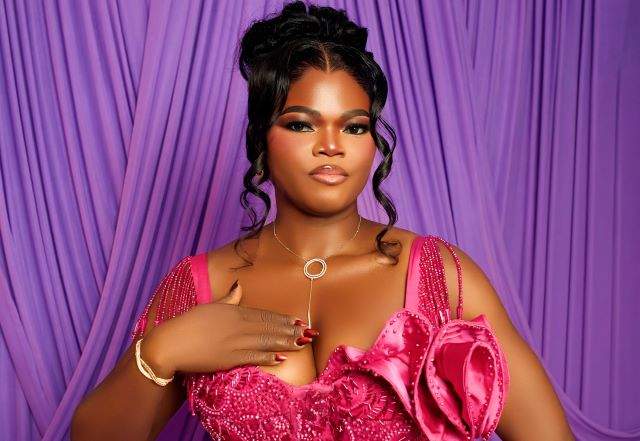
At 40, Jumoke Azeez has reached a milestone that offers her an opportunity to reflect on a journey defined by creativity, resilience, enterprise and an enduring passion for fashion.
The Ibadan-based fashion entrepreneur and Founder/Creative Director of Zeezdesigns clocks 40 on Friday, marking four decades of life and celebrating a growing entrepreneurial journey in Nigeria’s dynamic fashion industry.
For Jumoke, fashion is more than clothing. It is a means of expressing creativity, individuality, confidence and identity.
Through Zeezdesigns, she has steadily built a contemporary fashion brand offering bespoke tailoring, ready-to-wear fashion, fabrics, accessories and fashion training for both men and women.
The journey:
Building a fashion business requires considerably more than the ability to create beautiful clothes. It requires vision, discipline, consistency, customer understanding and the resilience to navigate the challenges of entrepreneurship.
These qualities have shaped Jumoke’s journey.
From her base in Ibadan, Oyo State, she has continued to develop Zeezdesigns as an expression of her creative vision and entrepreneurial ambition.
Her approach has been to combine contemporary style with quality craftsmanship, creating pieces that enable her customers to express their individual personalities while remaining connected to the evolving Nigerian fashion landscape.
Over time, Zeezdesigns has grown beyond the idea of simply making clothes. It has become a brand through which Jumoke continues to explore creativity, fashion and enterprise.
Building from Ibadan:
One defining feature of Jumoke’s story is the decision to build her fashion enterprise from Ibadan.
Nigeria’s fashion industry is increasingly attracting global attention, with Lagos, Abuja and other major cities serving as important centres of fashion and creative enterprise. Yet entrepreneurs such as Jumoke demonstrate that creativity and commercially viable fashion brands can also emerge from other parts of the country.
For her, Ibadan provides both a home and a market from which to develop her vision.
The city has a long history of entrepreneurship, commerce and culture, and Jumoke’s journey adds another dimension to that story: the emergence of contemporary creative businesses driven by individuals who are combining talent with enterprise.
More than a fashion label:
Zeezdesigns has evolved into more than a clothing label. Its offering spans bespoke clothing, ready-to-wear pieces, fabrics and accessories, while Jumoke has also incorporated fashion training into the brand’s activities.
This reflects an entrepreneurial philosophy that looks beyond the creation of individual garments towards building a sustainable fashion enterprise.
For Jumoke, every design represents an opportunity to translate an idea into something tangible — and every customer interaction provides an opportunity to strengthen the brand.
Her entrepreneurial journey has also received recognition, including the Excellence Enterprise Award, while her work and the Zeezdesigns story have attracted media and public attention.
A milestone, not a destination:
Turning 40 represents an important personal milestone, but for Jumoke it is also a moment to look ahead.
The fashion industry continues to change rapidly. Consumer preferences are evolving, social media is transforming how fashion brands reach customers, and Nigerian designers are increasingly looking beyond traditional markets.
These changes present both opportunities and challenges for entrepreneurs.
Jumoke’s ambition is to continue building Zeezdesigns into a distinctive Nigerian fashion brand while remaining faithful to the creativity, quality and individuality that have shaped its journey.
Her story also reflects a broader reality about entrepreneurship in Nigeria: many successful businesses begin with an individual’s talent and determination and gradually evolve into brands with the potential to create value, inspire others and contribute to the creative economy.
Looking ahead:
As she celebrates her 40th birthday, Jumoke Azeez can look back on the journey with gratitude while keeping her attention firmly on what lies ahead.
Her next chapter will be about deepening the Zeezdesigns brand, expanding its reach, developing new creative possibilities and continuing to build a business that reflects her vision.
At 40, the story of Jumoke Azeez is therefore not simply about reaching a birthday milestone.
It is the story of a woman who has chosen to turn creativity into enterprise, passion into a brand, and a personal vision into a growing fashion business.
And from her base in Ibadan, the journey continues.
ABOUT JUMOKE AZEEZ
Jumoke Azeez is a Nigerian fashion entrepreneur and the Founder and Creative Director of Zeezdesigns, a contemporary fashion brand based in Ibadan, Oyo State.
Born on 25th of September, 1986, Jumoke is a graduate of English at Lead City University, Ibadan, Oyo State
Zeezdesigns specialises in bespoke tailoring, ready-to-wear fashion, fabrics, accessories and fashion training for men and women.
Driven by creativity, elegance and exceptional craftsmanship, Jumoke has built Zeezdesigns around a vision of fashion that celebrates individuality, confidence and contemporary Nigerian style.
Instagram/TikTok: @zeezdesigns23
Location: 1, Irepodun Close, Opposite No 1 Hotel by Ososami Junction, Ring Road, Ibadan, Oyo State, Nigeria
Recognition: Excellence Enterprise Award
Or
JUMOKE AZEEZ AT 40: CELEBRATING FOUR DECADES OF CREATIVITY, STYLE AND ENTREPRENEURSHIP
Ibadan-based fashion entrepreneur and Founder/Creative Director of Zeezdesigns, Jumoke Azeez, clocks 40 on Friday, celebrating a milestone defined by creativity, resilience, enterprise and a passion for fashion.
For Jumoke Azeez, turning 40 is more than a birthday milestone. It is a celebration of a journey shaped by creativity, determination, consistency and an enduring commitment to excellence.
The Ibadan-based fashion entrepreneur is the Founder and Creative Director of Zeezdesigns, a contemporary Nigerian fashion brand offering bespoke tailoring, ready-to-wear fashion, fabrics and accessories for both men and women.
Over the years, Jumoke has steadily developed Zeezdesigns into a platform through which she expresses her creative vision and passion for fashion. Her work reflects a commitment to individuality, elegance and contemporary Nigerian style, with each creation designed to combine aesthetics with quality craftsmanship.
Her entrepreneurial journey has also been characterised by resilience. Building a fashion enterprise requires more than creativity; it demands discipline, customer understanding, business management and the ability to continually evolve with changing tastes and trends.
Through Zeezdesigns, Jumoke has continued to transform creative ideas into distinctive fashion pieces while building a brand that reflects her personality and values.
Her work has earned recognition, including the Excellence Enterprise Award, while her entrepreneurial and creative journey has attracted media and public attention.
At 40, Jumoke is also looking beyond the celebration of an individual milestone. Her journey represents the growing contribution of Nigerian entrepreneurs and creative professionals who are building businesses and brands outside the traditional commercial centres.
Based in Ibadan, Oyo State, Zeezdesigns demonstrates the possibilities that exist for creative entrepreneurs to build distinctive brands from Nigeria’s cities and connect with an increasingly sophisticated fashion market.
For Jumoke, fashion is not simply about clothing. It is a means of expressing personality, confidence and individuality.
As she marks her 40th birthday, she looks forward to the next chapter of her journey with the same creativity, determination and commitment to excellence that have defined the Zeezdesigns story.
Jumoke Azeez at 40 is therefore a celebration not only of a birthday, but of creativity, enterprise, resilience and the continuing evolution of a Nigerian fashion brand.
ABOUT ZEEZDESIGNS:
Zeezdesigns is a contemporary fashion brand based in Ibadan, Oyo State, Nigeria, founded and creatively directed by Jumoke Azeez.
The brand specialises in:
• Bespoke tailoring
• Ready-to-wear fashion
• Fabrics
• Fashion accessories
• Fashion training
Location: 1, Irepodun Close, Opposite No 1 Hotel by Ososami Junction, Ring Road, Ibadan, Oyo State, Nigeria
Instagram/TikTok: @zeezdesigns23
Award: Excellence Enterprise Award
Personality in Focus
Aigboje Aig-Imoukhuede @60: Reflecting on a Life of Building Institutions, People and Possibilities
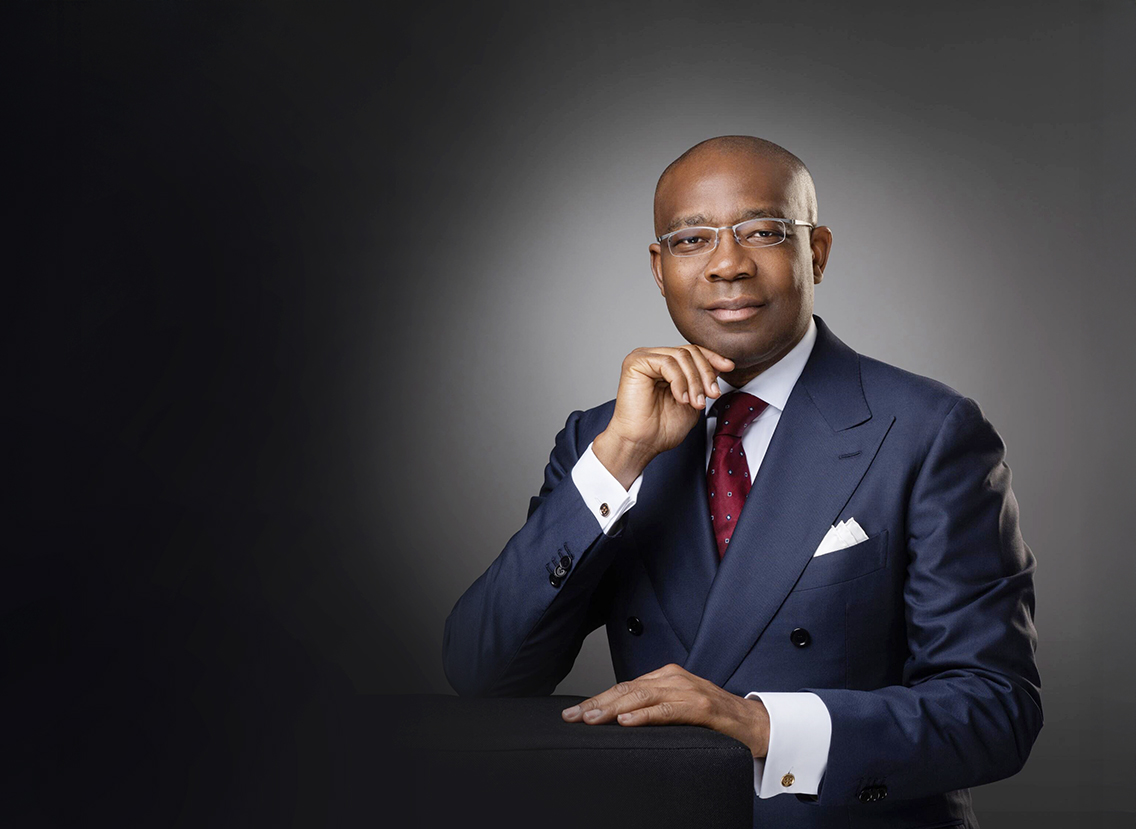
Aigboje Aig-Imoukhuede, today, marks his 60th birthday with a deeply personal reflection on a life shaped by faith, family, service and an enduring commitment to building institutions, people and opportunities.
In a message shared on LinkedIn, Aig-Imoukhuede received the milestone with gratitude to God for life, grace, family, friendship and the privilege of living with purpose.
“Today, I turn 60,” he wrote. “I receive this milestone with profound gratitude to God, for life, for grace, for family, for friendship, and for the privilege of purpose.”
Looking back on the different chapters of his life, Aig-Imoukhuede identified one defining idea that has connected much of his journey: a calling to build.
“To build institutions. To build people. To build opportunities. To help build a stronger Africa,” he stated.
Beyond institutions and opportunities, he said the journey has also been about building a life anchored in faith, family, service and values that will endure beyond any one individual.
Aig-Imoukhuede acknowledged that whatever he has accomplished was made possible by the extraordinary people who accompanied him on the journey. He expressed appreciation to his wife, Ofovwe, their children, family members, friends, colleagues, partners and mentors who challenged, supported and shared in the work.
“Whatever has been accomplished has never been mine alone,” he said. “I have been blessed with extraordinary people who have challenged me, supported me and shared in the work.”
He also paid special tribute to his mother, Pastor Emily, and his close partner, Herbert, whose memories remain an important part of his journey.
Reflecting on his 50th birthday, Aig-Imoukhuede recalled describing himself at the time as “God’s Work in Progress”. A decade later, he said that description remained true.
“The building continues,” he declared.
Rather than regard his 60th birthday as the culmination of his journey, Aig-Imoukhuede sees it as the beginning of another decade of purposeful work and service.
As he looks to the future, his prayer is for God to grant him the grace, wisdom and strength to continue building more intentionally and generously, with an even greater commitment to leaving behind stronger institutions, wider opportunities and transformed lives.
The reflection presents his birthday not simply as a celebration of longevity or accomplishment, but as an opportunity to renew his commitment to service, purpose and impact.
For Aig-Imoukhuede, the work of building is therefore far from complete. His focus remains on creating institutions and opportunities that endure, empowering people and contributing to the emergence of a stronger Africa.
“Sixty years. Deeply thankful. Still building,” he concluded. “To God be all the glory.”
At 60, Aig-Imoukhuede is not looking back with a sense of completion. He is entering a new decade with gratitude for the journey so far and a renewed determination to keep building lives, opportunities and institutions that will outlast him.


