
News
Sanwo-Olu Promises to Make Panel’s Report on Lekki Shooting Public


- /home/rhoncare/pointblank.ng/wp-content/plugins/mvp-social-buttons/mvp-social-buttons.php on line 27
https://pointblank.ng/wp-content/uploads/2019/05/Sanwo.jpg&description=Sanwo-Olu Promises to Make Panel’s Report on Lekki Shooting Public', 'pinterestShare', 'width=750,height=350'); return false;" title="Pin This Post">
- Share
- Tweet /home/rhoncare/pointblank.ng/wp-content/plugins/mvp-social-buttons/mvp-social-buttons.php on line 69
https://pointblank.ng/wp-content/uploads/2019/05/Sanwo.jpg&description=Sanwo-Olu Promises to Make Panel’s Report on Lekki Shooting Public', 'pinterestShare', 'width=750,height=350'); return false;" title="Pin This Post">
Governor Babajide Sanwo-Olu of Lagos has said the state government, under his leadership, would not make an attempt to cover up the findings and recommendations of the state’s Judicial Panel of Inquiry on the investigation of the Lekki toll gate incident and abuse of powers by the police.
Mr Sanwo-Olu said this on Thursday while speaking on the experience of the state during the #EndSARS protest.
The governor said the state will make a full disclosure of the final report of the panel to the public.
While concluding the judicial panel’s during on Monday, Doris Okuwobi, a retired judge heading the panel, earlier said the panel would submit its findings on Lekki shooting, which include individual petitions on the incident to the state government and recommend compensation to the petitioners.
She said the report and recommendation would be made public by the state government.
Mr Sanwo-Olu, however, said whether the report is in favour of the state or not, the government would not make an attempt to cover it up, as the report would be helpful in strengthening true reconciliation and preventing re-occurrence of violence in the state.
“We will make full disclosure of whatever recommendations that the panel will come up with. I assure citizens of Lagos that we will not leave anything to chance,” he said.
Speaking on the procession held by youths at the Lekki tollgate in memory of the #EndSARS protests and those that died, Mr Sanwo-Olu said he ordered an unconditional release of those detained by the police, except one person who was caught with dangerous weapons at the scene.
He commended the police for being alive with their responsibility to identify and isolate troublemakers from among law-abiding people who conduct themselves in line with the laws.
Mr Sanwo-Olu also urged the youth to be stakeholders in the rebuilding and development of the state, reiterating his commitment to reconciliation.
“It is exactly a year ago today when Lagos was hit by violence in the aftermath of the EndSARS protests. Lagos witnessed massive destruction of infrastructure, iconic buildings, transport infrastructure, police station and others.
“Today being a year after the event, there is no better time to say how difficult it has been for us as a state and how committed it has been for us. As tough as it is, the government will certainly not shy away from its responsibility. We see the incident as a challenge and we will fix it with everything that we have.”
He said although the destruction had slowed down operational activities of the affected public institutions, the government needs the cooperation of the youths towards a greater Lagos.
Premium Times


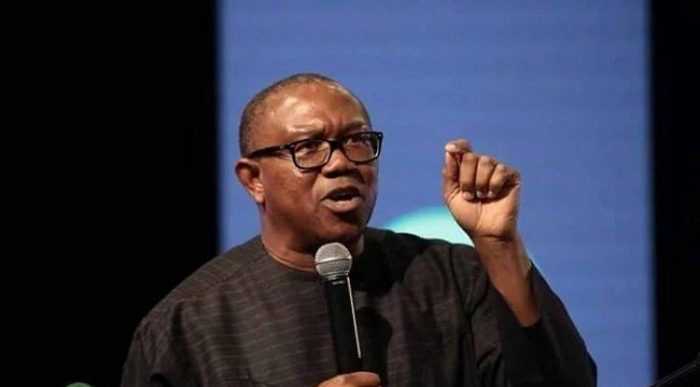
The Cross River State Police Command has arrested a 27-year-old man, identified as Victor Edet Yellow Duke, over the alleged attack on the convoy of the Nigeria Democratic Congress (NDC) presidential candidate, Peter Obi, in Calabar.
The incident occurred on Wednesday, November 4, 2026, around Watt Market Roundabout, along the Calabar Road axis of the capital capital, while Obi’s convoy was returning from the palace of the Obong of Calabar to Metropolitan Hotel, venue of the party’s presidential town hall meeting.
According to a statement issued by the Police Public Relations Officer, ASP Eitokpah Sunday Akata, the attack occurred at about 2:20pm when suspected hoodlums, reportedly armed with machetes and sticks, emerged from the Calabar Road and Clerks Alley axis and attacked vehicles in the convoy.
The statement disclosed that the attackers smashed the windshields of some vehicles, adding that the exact number of vehicles affected was yet to be established.
Following the intervention of security operatives, one of the suspected attackers, Victor Edet Yellow Duke, was arrested, while others reportedly fled the scene.
According to the police, “the suspect has subsequently been transferred to the State Police Headquarters by operatives of the Violent Crime Response Unit, VCRU, for discreet investigation and to prevent possible reprisals or further breakdown of law and order.”
The Command confirmed that “normalcy has since returned to the affected area.”
Meanwhile, the Commissioner of Police, Cross River State Command, CP Ajo Geoffrey Ordue, has ordered a thorough investigation into the incident, directing officers to identify and apprehend other individuals allegedly involved in the attack.
The police, however, cautioned against drawing conclusions from the arrest, emphasising that “the arrest does not establish the suspect’s guilt.”
It added that the suspect remains entitled to the presumption of innocence pending the conclusion of investigations and any subsequent judicial proceedings.
The Command also reassured residents, political stakeholders and visitors of adequate security across the state, stressing that “all political parties, candidates and their supporters would receive equal protection irrespective of their political affiliations.”
Obi’s media aide, Ester Umoh, had earlier raised the alarm on social media that the NDC flagbearer had been attacked.
“Thugs are trying to attack our convoy,” she said while raising the alarm over the incident.
News
Nigeria-EU Investment Partnership: Boost Africa Highlights Mouthwatering Opportunities for Entrepreneurs
What happens after investment reaches an African business?
Beyond the financing figures and commitments, how does capital translate into business growth, innovation, jobs and economic opportunity?
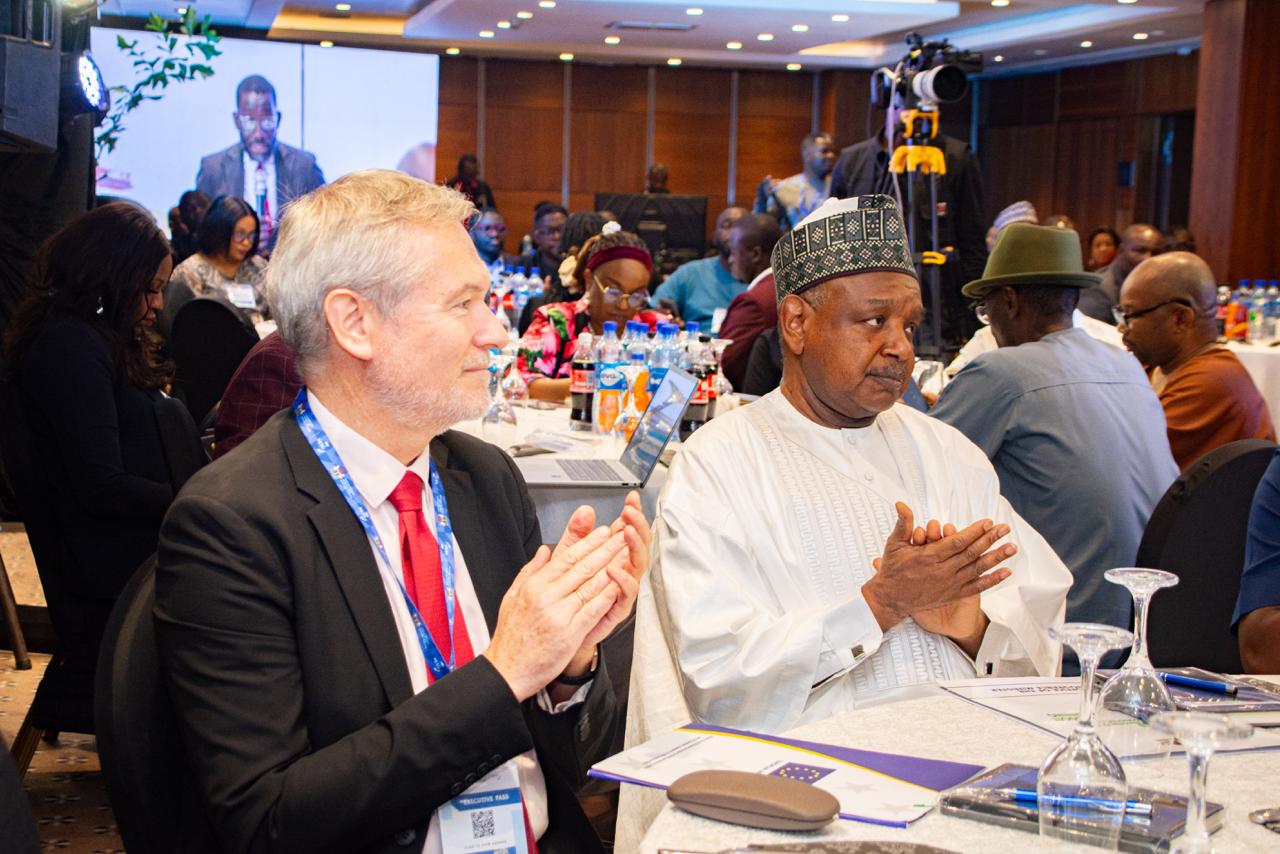
These questions took centre stage as the European Investment Bank (EIB) showcased the achievements of Boost Africa at the Nigeria–EU Global Gateway Investment Partnership Lab, held on the sidelines of the 32nd Nigerian Economic Summit in Abuja.
The event, convened by Nigeria’s Federal Ministry of Budget and Economic Planning in collaboration with the EIB’s Boost Africa team, brought together government officials, European development institutions, investors and private-sector leaders to explore how strategic partnerships and innovative financing can accelerate Nigeria’s economic
development.
In his remarks, Senator Abubakar Atiku Bagudu, Nigeria’s Minister of Budget and Economic Planning, emphasised the importance of mobilising private investment to support Nigeria’s economic transformation.
H.E. Gautier Mignot, European Union Ambassador to Nigeria and ECOWAS, highlighted the importance of translating investment partnerships into concrete opportunities, including stronger support for Nigeria’s entrepreneurial ecosystem.
Bringing the Boost Africa story to life
A major highlight of the event was the session “Boost Africa: From Capital to Impact,” which brought together representatives of development finance institutions, venture capital funds and Nigerian businesses to examine what investment has made possible.
The session opened with a short video introducing Boost Africa and its contribution to supporting innovative African enterprises.
Moussa Nakoulima, EIB Regional Head for West and Central Africa, provided an
overview of the initiative, highlighting its achievements and the role of development finance in mobilising investment for African entrepreneurs.
Launched as a joint initiative of the EIB and the African Development Bank, with support from the European Union, Boost Africa combines investment through venture capital funds with technical assistance to strengthen Africa’s entrepreneurial ecosystem.
The initiative has attracted more than €100 million in EIB investment commitments to
venture capital funds, supporting enterprise development across sectors including
technology, financial services, agribusiness and renewable energy.
From investment funds to growing businesses
Moving from the institutional perspective to the investment ecosystem, Daisy Leich, Director of Strategy at TLcom, shared insights into the role of venture capital in supporting African businesses.
Her contribution highlighted why financing alone is not enough. For growing enterprises, access to strategic guidance, expertise and networks can be just as important as access to capital. The discussion then turned to two Nigerian businesses whose experiences illustrated the opportunities that investment can help unlock.
Michael Babalola, Director of Operations at Beacon Power Services, shared the
company’s experience of developing technology-driven solutions for the energy sector, demonstrating how innovation can help address operational challenges in electricity distribution.
Representing ChipMango, Hamilton discussed the company’s work in developing Nigeria’s semiconductor engineering capabilities and creating opportunities for local talent to participate in the global technology industry.
Together, these perspectives illustrated the journey from development finance to venture capital investment and, ultimately, to businesses delivering practical solutions.
They also reinforced an important distinction: Boost Africa supports enterprises through its investments in venture capital funds, helping create the conditions for innovative businesses
to access financing and grow.
Looking ahead: Building on Boost Africa’s experience
Beyond reflecting on achievements, the session also provided an opportunity to discuss the future of financing for African innovation.
Participants were introduced to Boost Ventures, a successor initiative intended to build on Boost Africa’s experience and expand financing opportunities for innovative African businesses.
Backed by a €129 million European Commission guarantee, the initiative represents a further commitment to strengthening Africa’s venture capital ecosystem and supporting the next generation of entrepreneurs.
For Nigeria, where innovative businesses continue to develop solutions across critical sectors, sustained access to investment, expertise and strategic partnerships will remain essential.
Investment as a catalyst for lasting impact
The Boost Africa session reinforced a central message of the Nigeria–EU investment
partnership: development finance can play a catalytic role in mobilising private investment and helping businesses realise their potential.
By bringing together the institutions providing finance, the funds investing in enterprises and the businesses translating investment into solutions, the discussion offered a practical picture of how development partnerships can contribute to economic growth. The story of Boost Africa is ultimately not only about how much capital has been invested, but about what that investment has made possible: stronger businesses, new capabilities, innovative solutions and opportunities for Africa’s future.
Learn more at
https://www.eib.org/en/products/mandates-partnerships/boost-africa/index
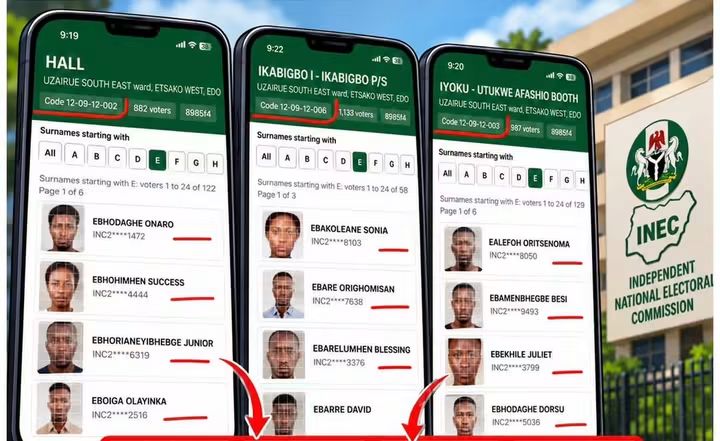
The Independent National Electoral Commission (INEC) has attributed the appearance of suspected artificial intelligence-generated photographs and other questionable entries in its preliminary voter register to irregularities allegedly introduced by some registration officers.
The commission’s Director of Information and Communication Technology, Dr. Lawrence Bayode, disclosed this during an interview on Arise Television on Friday.
Bayode explained that some registration officers across the country allegedly used their login credentials to introduce irregular records into the voter database.
He said INEC uncovered the questionable entries through its Automated Biometric Identification System (ABIS), which was deployed to examine the registration records.
“We have registration officers on the field. And these registration officers, they have login details to log into the system.
“So what we have found is that some of these registration officers, not all of them now, some of them across the states nationwide, they’ve done different things to bring these irregularities onto the register,” he said.
The ICT director explained that while some of the suspicious photographs were generated using AI, others were products of poor registration procedures.
“Some of these pictures are AI-generated. Some of them not AI-generated, but very bad registration. And this thing got into the register by the registration officers and because they have access to register people,” Bayode said.
“When the ABIS was run on the system, we saw these people. We know what they did. We know how they did it. But honestly, I don’t know why,” he added.
Bayode said INEC has begun cleaning up the voter register before making the preliminary version available to the public, noting that the exercise is being carried out within the statutory 90-day period.
His disclosure follows concerns raised over suspicious photographs and other discrepancies after the commission uploaded its preliminary register of voters to its website on October 26.
Screenshots circulated on social media had shown photographs suspected to be AI-generated attached to voter records in parts of Edo State.
Other complaints involved alleged duplicate entries and reports by some registered voters that their details were missing from the online register.
INEC had earlier explained that the online version was the same preliminary register displayed physically at Registration Areas across the country from October 9 to 15 for the Display, Claims and Objections exercise.
In a statement issued on October 27, the commission said it had identified and flagged some questionable records during the physical display and had commenced a review to correct the irregularities.
It also clarified that the published document was not the final certified register, adding that the online release did not capture all the data-cleanup activities still underway.


