
Headlines
Senate Demands Immediate Reversal of Power Privatisation

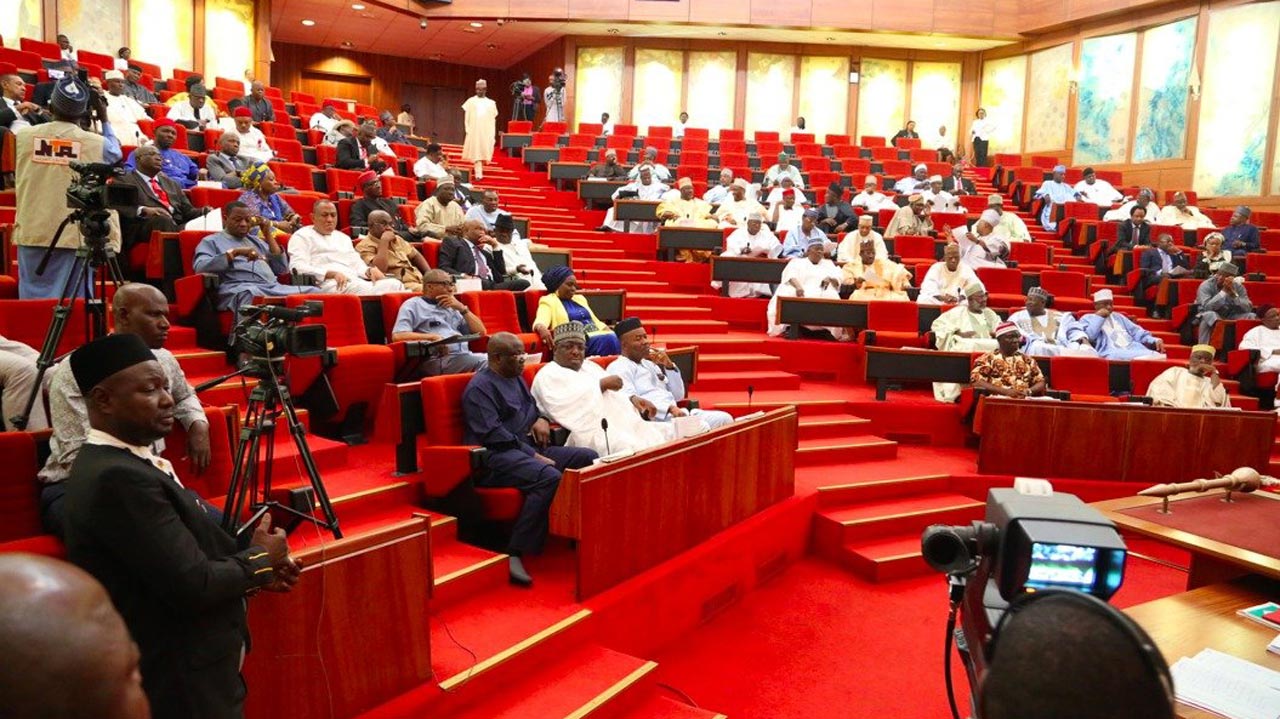
The Senate on Tuesday asked the Federal Government to consider a comprehensive review of the power privatisation policy with a view to reversing the current arrangement.
The red chamber said Nigerians would not enjoy stable power supply in the next 10 years if the activities of the distribution companies were not reviewed and restructured.
The Senate President, Ahmad Lawan, stated this on Tuesday after the Senate had considered and approved a motion by Senator Gabriel Suswan on the power sector recovery plan.
He said, “We gave power to them (power generation and distribution companies) and they still come to the public to ask for funds.
“I think it’s time for Nigeria to consider reversing the privatisation of the power sector or they should just cancel the entire privatisation process completely.
“If we leave it, we may not have power for another 10 years.”
Lawan said, “The privatisation of the power sector has, so far, not been successful. We expected efficiency and effectiveness in the power supply.
“The Discos have no capacity to supply us power. The Gencos have challenges too.
“It is not a good commentary that we should continue to give them money. They’re private businesses. We need to review this privatisation.
“Our committee needs to investigate trillions spent. That’s a lot of money.
“Try to find out what has happened so far. Government needs to look at this whole thing.
“Maybe, government is not doing its own part. We need to find out.
“There is lack of capital, lack of investment. We feel very bad because we have no electricity and the country is suffering.”
The Senate also urged the Federal Government to suspend the planned electricity tariff increase due to take effect from July given the increased hardship occasioned by the coronavirus pandemic.
The upper chamber also commended the Federal Government for the proactive initiative to establish the N1.7tn Covid-19 crisis intervention fund to cater for critical issues on effective management of the pandemic.
Suswam, had while leading debate on the general principles of the bill, said stable and uninterrupted power supply was also a critical factor in management of COVID-19 pandemic patients at the designated isolation and treatment centres across the country.
The Punch


Headlines
‘Beer Parlour Fiction’: Fayose Gives Atiku 48Hrs to Disown Statement or He ‘Spills More Beans’
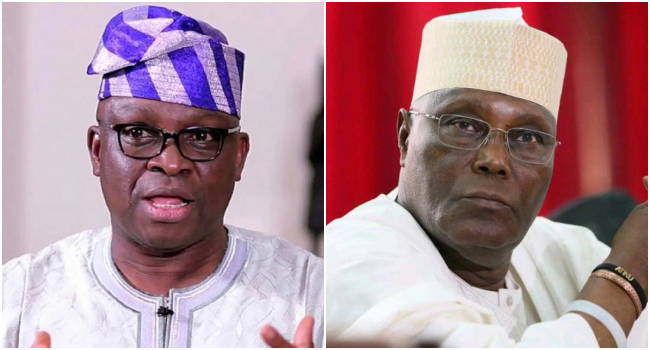
Former Ekiti State Governor Ayodele Fayose has given former Vice President Atiku Abubakar a 48-hour ultimatum to publicly disown a statement he claimed and thought was issued by his media aide, Paul Ibe, regarding a recent meeting in Minna, Niger State.
In a statement posted on his X account, Fayose expressed amusement at Ibe’s response to his earlier claims about the closed-door meeting involving Atiku, Oyo State Governor Seyi Makinde, and former military president General Ibrahim Babangida (IBB).
Fayose had previously alleged that the gathering involved discussions on political alignments, including Makinde’s interest in a vice-presidential slot on the African Democratic Congress (ADC) platform for the 2027 elections, reportedly tied to financial commitments.
Fayose stated that he assumes Atiku did not authorize Ibe’s rebuttal, which dismissed his account as fabricated. “However, because of my respect for Atiku, I will want to assume that he did not authorise the press statement and I will expect that after seeing it, he will within 48 hours, cause a rebuttal to be issued on it,” Fayose wrote.
He warned that failure to disown the statement would leave him no choice but to disclose additional details from the Minna meeting.
“Should Atiku not publicly disown the statement within the next 48 hours, I will have no option but to spill more beans, the facilitators and executioners of the Minna meeting, particularly what was said about Wike, and by then, I will be doing so without any atom of respect for him,” Fayose added.
The development follows Fayose’s initial post detailing what he described as the “untold story” of the Minna encounter, which Atiku’s camp has rejected as “beer parlour fiction,” “reckless fabrication,” and baseless gossip. Atiku’s team, including aides like Phrank Shaibu and Paul Ibe, has denied any negotiations over vice-presidential tickets, financial contributions, or related deals, insisting no such discussions occurred.
Paul Ibe has since fired back at Fayose, mocking the ultimatum and questioning its basis, with reports indicating he described the 48-hour demand as excessively long and implying Fayose’s claims lack substance.
The exchange highlights ongoing tensions within Nigeria’s opposition political circles ahead of the 2027 general elections, as figures like Atiku, Makinde, and others navigate potential alliances and party switches. Fayose’s threat to reveal more, including alleged comments about former Rivers State Governor Nyesom Wike has intensified speculation about behind-the-scenes maneuvers.
Meanwhile, the said article by Amb Phrank Shauibu, and Paul Iba as Fayose erroneously assumed.
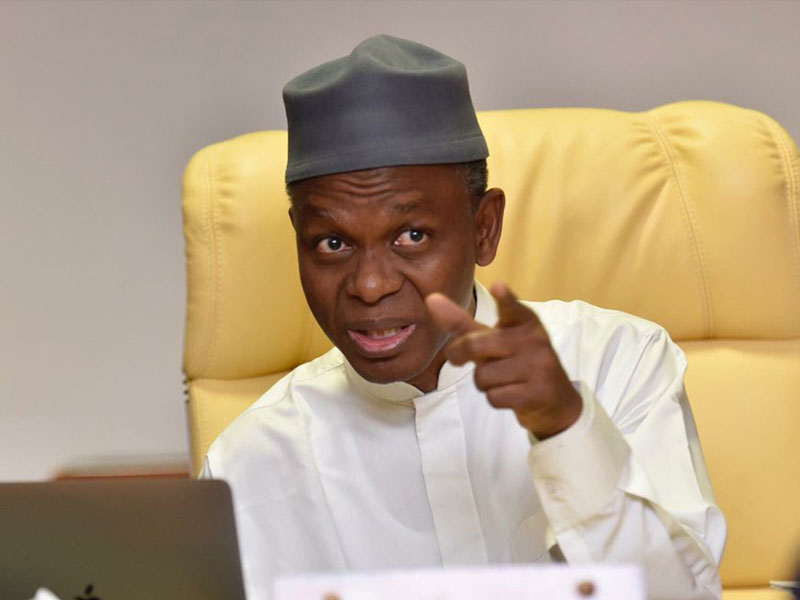
Former Kaduna State Governor, Nasir El-Rufai, has accused the National Security Adviser (NSA), Nuhu Ribadu, of masterminding an attempt by security agencies to whisk him away at the Nnamdi Azikiwe International Airport in Abuja on Thursday.
He made this known on Thursday night when former Vice President Atiku Abubakar paid him a solidarity visit at his residence.
While recounting his ordeal, he said that shortly after he returned from a trip to Cairo, Egypt, operatives of the Department of State Services (DSS), working with the Independent Corrupt Practices and Other Related Offences Commission (ICPC), confronted him at the airport and tried to take him into custody.
He added that he initially thought the DSS officers were working with the Economic and Financial Crimes Commission (EFCC), only to later realise it was the ICPC.
“It turned out that it’s the ICPC that procured the DSS to abduct me and hand me over to them. The ICPC has never invited me.
“We now understand that it’s the ICPC, not the EFCC, that’s responsible for what happened today, and the ICPC chairman is acting on the direct orders of Nuhu Ribadu,” El-Rufai said.
Responding, Atiku expressed sympathy for the former governor and stressed the need for political unity ahead of the next general election.
He noted that opposition forces must organise themselves to challenge President Bola Tinubu in 2027.
“We must come together and form a very viable opposition because Tinubu is determined to turn Nigeria into a one-party state,” Atiku said.

Turkish Super Lig club, Galatasaray, have slapped an €80 million release clause on Victor Osimhen amid interest from Spanish giants Barcelona, Soccernet.ng reports.
Osimhen has been one of the most prolific strikers in the world over the last four years. In fact, he only recently scored his 200th career goal.
Since his permanent move to Galatasaray, he has been the club’s poster boy due to his impressive performances. This season, he has contributed 15 goals and one assist in 21 appearances across all competitions for the Cimbom.
The Nigerian international has been particularly vital in the UEFA Champions League, where he has already netted six goals.
His performances have not gone unnoticed, however, as several top clubs continue to keep tabs on him.
The 27-year-old only joined Galatasaray last summer for a Turkish transfer record fee of €75 million, but many clubs in Europe’s top five leagues would fancy having him as their leading man.
Now, according to a report by Turkish outlet Haberlisin, Spanish giants Barcelona are plotting a move for Osimhen.
Why Barcelona want Osimhen
Barcelona’s current top striker is Robert Lewandowski, and the club is looking to move on from the veteran, who will turn 38 in August.
With second-choice striker Ferran Torres not considered a reliable long-term option, the Catalans are searching for a proper talisman to lead their line.
According to Haberlisin, Barcelona have made Osimhen a major target and are willing to go all out for him in the summer.
However, Galatasaray won’t let him leave for cheap. Having paid €75 million for his services just seven months ago, they will want to maximize their return on the transfer. Consequently, they have slapped a hefty €80 million price tag on the Super Eagles star.
Although they are one of the biggest clubs in the world, Barcelona might struggle to meet this valuation due to their ongoing financial troubles. However, over the last three years, they have managed to pull off several big-money deals.
For Osimhen, even though he loves life at Galatasaray and earns a Turkish-record salary, he likely still has eyes on playing in one of Europe’s top five leagues.
It remains to be seen how hard the Spanish giants will push to get this transfer over the line and whether Osimhen will be willing to go.


