
Headlines
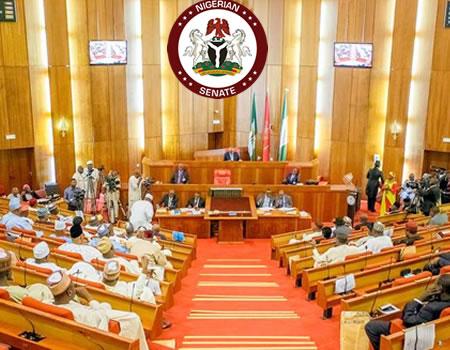
Senate Invites IGP over Kidnappings Across Nigeria

- /home/rhoncare/pointblank.ng/wp-content/plugins/mvp-social-buttons/mvp-social-buttons.php on line 27
https://pointblank.ng/wp-content/uploads/2019/04/nigerian-senate.jpg&description=Senate Invites IGP over Kidnappings Across Nigeria', 'pinterestShare', 'width=750,height=350'); return false;" title="Pin This Post">
- Share
- Tweet /home/rhoncare/pointblank.ng/wp-content/plugins/mvp-social-buttons/mvp-social-buttons.php on line 69
https://pointblank.ng/wp-content/uploads/2019/04/nigerian-senate.jpg&description=Senate Invites IGP over Kidnappings Across Nigeria', 'pinterestShare', 'width=750,height=350'); return false;" title="Pin This Post">
The Senate has invited the Inspector-General of Police (IGP), Mohammed Adamu, for a briefing over the spate of kidnappings across Nigeria.
The lawmakers said the invitation is to help profer lasting solution to the menace.
The IGP’s invitation is one of the many resolutions made after a deliberation on a motion on the “senseless killing of a Briton and the abduction of three others in a Holiday Resort in Kaduna State by armed bandits.”
The motion was sponsored by Shehu Sani (PRP, Kaduna Central).
The Briton, Faye Mooney, an aid worker, was killed in Kajuru Castle, a recreational location in Kaduna State last week.
The armed bandits killed Ms Mooney, Matthew Oguche, a Nigerian training assistant with the International NGO Safety Organisation (INSO), and kidnapped three others.
Leading the debate, Mr Sani said attacks on individuals, houses, and villages have become too many and not one suspect has been prosecuted for the crime.
He expressed worry that the bandits tend to be gaining more courage to perpetuate their acts “due to their acclaimed superior firepower.”
While stating that Kajuru and Kaduna State are under siege, he said the northern part of Nigeria has become a theatre of killings and kidnappings.
In his remark, the Deputy Senate President, Ike Ekweremadu, said the recent happenings were not the first time a non-Nigerian (especially construction/aid workers) was kidnapped in the country.
He said if nothing is done, Nigeria will continue to be profiled as a terrorist state abroad.
“This nation’s security has been breached. Tourists who have plans of coming to Nigeria will now think twice before coming. And this is affecting our economy.
“It is important to take this issue seriously in order to protect our national image. Even if it means declaring a state of emergency in affected states, so be it,” Mr Ekweremadu said.
Andrew Uchendu, who condemned the act, blamed it on the idleness of the Nigerian youth.
“The truth is these things keep happening because the youth are idle and have a lot of energy.”
According to him, if the youth are engaged, the rate of such crimes will drastically reduce.
It was during the resolutions that Mr Ekweremadu suggested that the IGP be invited as he hoped he (Mr Adamu) will honour the invitation.
“Mr President, since we now have a new IGP – as the other one was uninterested in talking to us, let us invite him to give a holistic view of the state of kidnapping across the country with a view to finding a lasting solution,” he said.
This prayer was seconded and unanimously adopted.
The Senate also resolved to urge security agencies to immediately deploy the use of drones and interceptors in tracking kidnappers asking for ransom.
The Senate also resolved to fast-track the concurrence of the Police Reform and the Police Trust Fund Bills with the House of Representatives for transmission to the president for assent.
Other resolutions are to “urge telecommunications companies to provide security agencies with information in areas where there are kidnappings”, and “urge community leaders, traditional rulers and all stakeholders to co-operate with security agencies.”
The Senate also urged security agencies to give special security cover to foreign workers and tourists. It resolved to send a delegation to the British embassy to console with the British government.
The Senate, however, rejected a prayer to urge the executive to sign the Peace Corps Bill to engage the youth.
The Senate President, Bukola Saraki, said he hoped that there would be cooperation from the IGP as he prayed for a strong relationship between the Senate and the security agencies.
According to him, the passage of the Police Reform and the Police Trust Fund Bills is proof that the Senate “is ready to work with them.
Premium Times


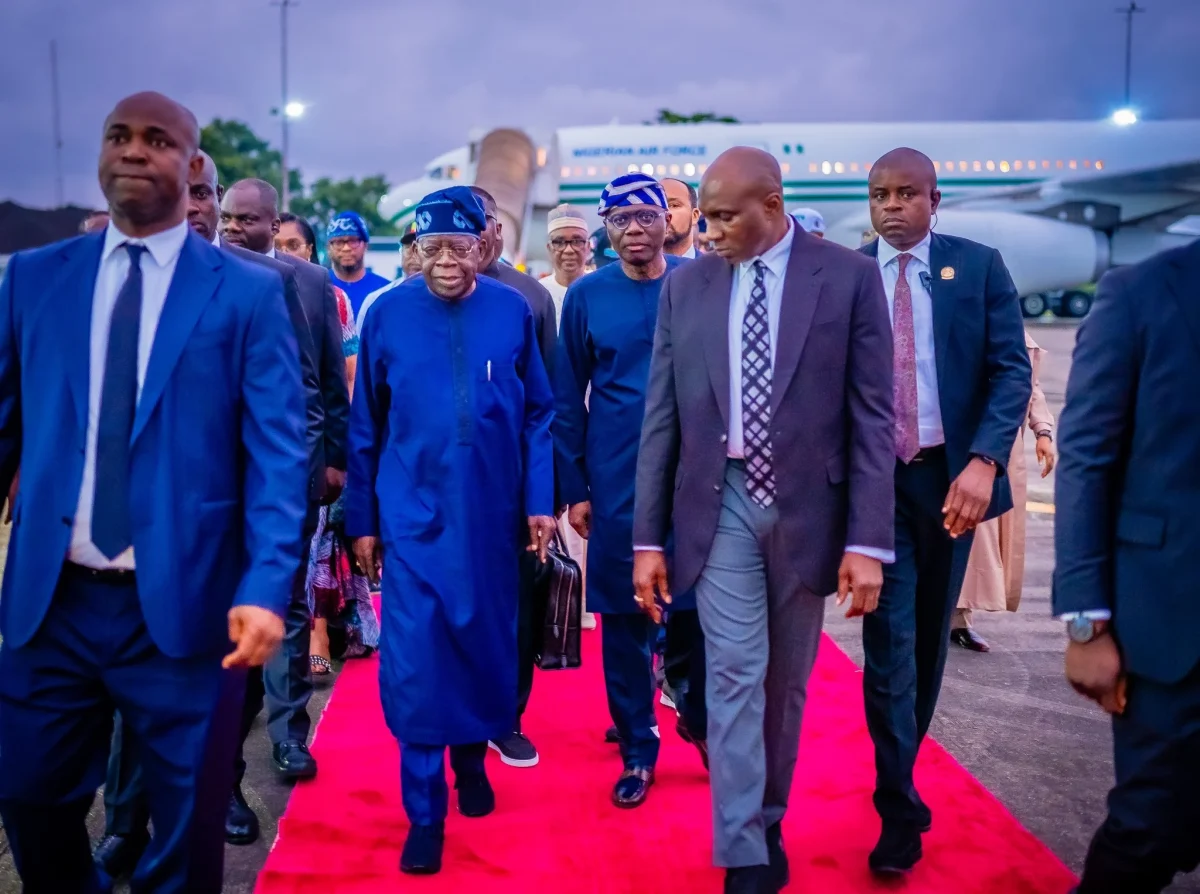
President Bola Tinubu has dismissed concerns over rumoured ill-health following his return to Nigeria from an extended working vacation in Europe, declaring that he is “healthy, sound, and ready to go.”
Tinubu spoke with journalists on Tuesday shortly after arriving in Lagos from Paris, where he spent the latter part of his stay abroad.
The President was responding to questions about concerns raised by some Nigerians and his supporters towards the end of his vacation regarding his health.
Tinubu rejected the concerns, saying there was nothing wrong with him.
“Ready to kick, ready to walk. There’s nothing wrong,” the President said.
He added: “Rumour will always be emanating from politics, but the facts remain I’m here. Healthy, sound, and ready to go.”
Tinubu left Nigeria on August 30 for a three-week working vacation in Europe. He initially travelled to London before proceeding to Paris, France.
The Presidency subsequently announced an extension of his stay, saying the President remained in touch with developments at home and continued to direct the affairs of the country while abroad.
His prolonged absence generated public discussion, particularly over the length of his stay outside Nigeria and its implications for his official responsibilities.
The African Action Congress also instituted legal action against Tinubu and the National Assembly over the trip, alleging that the President failed to notify the National Assembly before leaving the country.
With his return, Tinubu is expected to resume official engagements in Nigeria as the country prepares to mark its Independence anniversary on October 1.
The President’s comments in Lagos therefore sought to put to rest speculation surrounding his health, while signalling his readiness to resume his activities at home after several weeks in Europe.
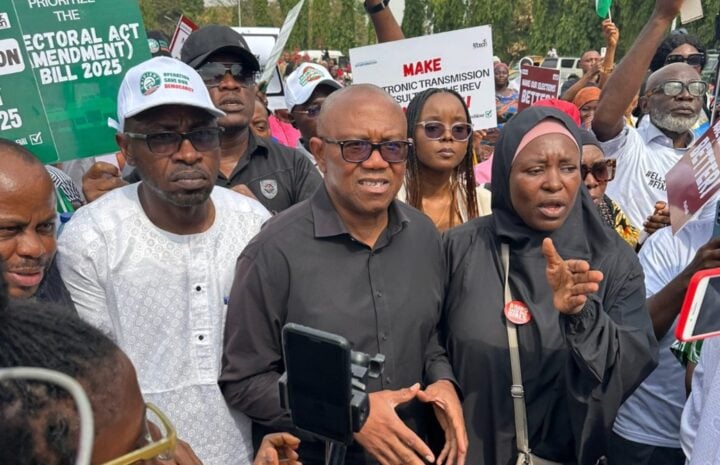
The Nigeria Democratic Congress (NDC) presidential candidate, Peter Obi, has blamed the ruling All Progressives Congress (APC) for worsening poverty and insecurity in Nigeria, promising to restore citizens’ confidence in governance if elected in 2027.
Obi spoke on Monday in Sokoto during a town hall meeting with members and supporters of the party, where he outlined his plans for security, education, agriculture, transportation and economic development.
He alleged that the APC-led administration had failed to adequately provide basic infrastructure and social interventions for Nigerians.
According to him, the situation had contributed to the worsening economic hardship confronting citizens across the country.
“The current administration and some political leaders in the country have abandoned the citizenry without basic infrastructure and intervention. That is why the country is the highest poverty-stricken in the world,” Obi alleged.
He said an NDC administration would prioritise security, education and agriculture in its efforts to rebuild the economy and restore hope among Nigerians.
“We are committed to transforming the country under a united, secure and prosperous leadership of the NDC.
“It is only the NDC that has the capacity and visionary policies that would reverse the system rot. No fake promises will come from us. You will see our commitment by keeping to our promises,” he said.
On transportation, the former Governor of Anambra State described an efficient railway system as critical to economic growth, saying his administration would expand rail connectivity across the country.
He specifically promised to pursue rail links connecting Sokoto, Kebbi and Zamfara states with other parts of the North-West and the country.
“I will effectively ensure rail transport connects Sokoto, Kebbi and Zamfara states, the entire North-West and other regions,” Obi said.
The NDC candidate also promised greater coordination between the president and vice-president, saying his proposed partnership with Rabiu Musa Kwankwaso would ensure that both leaders worked towards the same objectives.
“You will see how leadership works in the same direction. Myself and the Vice Presidential candidate will be working together the way you see us together in Sokoto today,” he said.
On fuel subsidy, Obi said his administration would introduce a transparent system that would ensure Nigerians benefit from government interventions while eliminating opportunities for corruption.
He described the previous subsidy regime as having been undermined by corruption, promising to establish greater transparency in the management of the country’s oil and gas resources.
“Kwankwaso and I will initiate a work plan that would transparently arrive at the quantum of crude, nature of transactions, import and export, and revenue accruing from every single oil and gas transaction and activity for the benefit of Nigerians,” he said.
He further pledged to work with state governors, particularly in the North, to address insecurity and its impact on local economies.
According to him, banditry, kidnapping and terrorism have disrupted economic activities and development in many communities across the region.
Obi also promised to support farmers through fertiliser subsidies and other agricultural interventions aimed at increasing food production and strengthening food security.
He urged voters in Sokoto State to support the NDC, describing the state as strategically important to the party’s plans for the 2027 election.
Also speaking, the NDC vice-presidential candidate, Rabiu Musa Kwankwaso, accused the APC administration of failing to adequately address the challenges confronting Nigerians, particularly insecurity in the North-West.
Kwankwaso urged residents of Sokoto, Zamfara, Kebbi, Kano, Kaduna, Katsina and Jigawa states to demand improved security and better economic opportunities.
He said the Obi-Kwankwaso ticket represented an attempt to provide a different approach to governance, particularly in tackling insecurity, poverty and underdevelopment.
The former Kano State governor said the North was still facing challenges in education, industrialisation and security, promising that an NDC administration would prioritise the sectors.
He cited previous political partnerships involving leaders from different regions and faiths, including the relationships between Sir Ahmadu Bello and Nnamdi Azikiwe, Shehu Shagari and Alex Ekwueme, Olusegun Obasanjo and Atiku Abubakar, and Goodluck Jonathan and Namadi Sambo.
Earlier, the NDC governorship candidate in Sokoto State, Shamsuddeen Haido, urged party members and supporters to intensify mobilisation ahead of the 2027 elections.
The State chairman of the party, Bello Sani Yabo, described the town hall meeting as an opportunity for members to engage with the party’s proposed agenda for the country.
He assured that the party remained committed to working for victory in Sokoto State.
Meanwhile, Obi and Kwankwaso paid a courtesy visit to the Sultan of Sokoto, Muhammadu Sa’ad Abubakar III, where they sought his blessings ahead of the 2027 general elections.
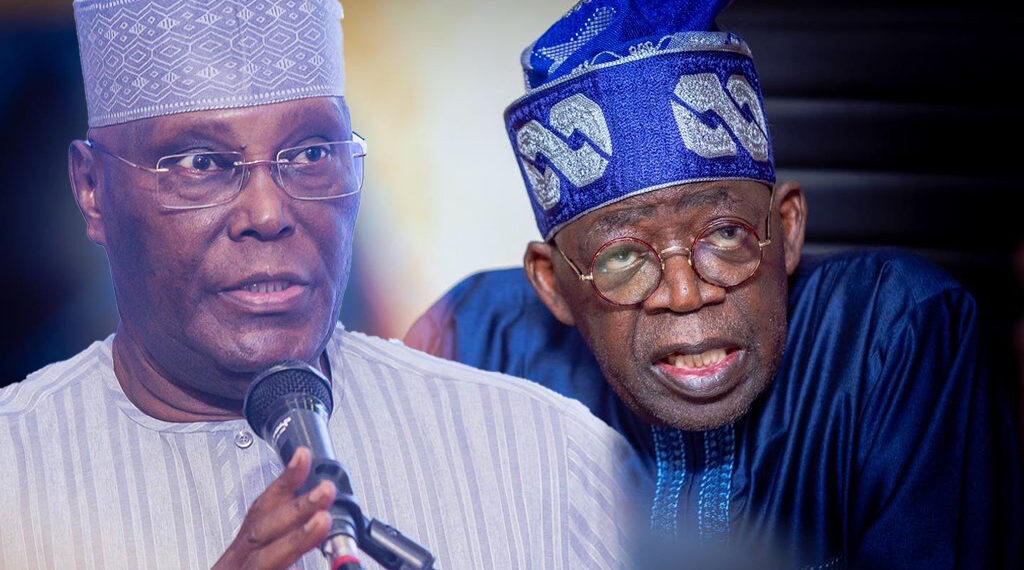
Former Vice President Abubakar has asked President Bola Tinubu to give a full account of Nigeria’s borrowing and debt profile and address the hardship faced by Nigerians following the removal of the fuel subsidy.
Atiku said this in a statement issued by Phrank Shaibu, Director of Strategic Communications of the African Democratic Congress (ADC) Presidential Campaign Council.
He said after more than three years of reforms, Nigerians are facing higher food, transport and energy bills, with public debt recorded at N166.79 trillion as at June 30, 2026, according to the Debt Management Office (DMO, compared to N49.85 trillion in March 2023.
“A government that says more money is coming in must explain why it keeps borrowing and why the people paying for its policies cannot see the promised gains,” Atiku said.
The ADC presidential candidate asked the President to identify old debt newly recorded, foreign debt whose naira value rose with the exchange rate, and every new loan contracted since assumption of office, as well as what has been repaid and outstanding.
Atiku said the debt question cannot be separated from the lived reality of ordinary Nigerians, noting that while government reports improving macroeconomic outcomes, many citizens struggle with the cost of living.
He said the true test of economic policy is whether Nigerians can afford food, transportation, housing, education, healthcare and electricity.
He cited an IMF assessment in June 2026, which said reforms improved macroeconomic outcomes but acknowledged conditions remained difficult, estimating poverty at 63 per cent under the national poverty line and saying 27 million Nigerians faced food insecurity in the latter part of 2025, with a warning that higher fuel, food and transport costs could worsen poverty.
He also cited recent fuel price pressures, with petrol selling around N1,400 per litre in Lagos and Abuja and as high as N1,500 in parts of northern Nigeria in September, while diesel exceeded N2,000 per litre.
Atiku said the cost of servicing debt has become a major concern, citing BudgIT report that quarter of 2025, debt service reached N12.52 trillion against N18.63 trillion revenue — 67.2 per cent.
He noted the 2026 fiscal framework provides for about N68.32 trillion expenditure against projected revenue of N36.87 trillion, leaving deficit of roughly N31.45 trillion.
He recalled President Tinubu’s remarks at Africa Forward Summit in Nairobi in May that Nigeria expected to spend about $11.6 billion on debt service in 2026, describing the amount as nearly half of projected revenue.
Atiku also demanded disclosure concerning DMO’s external debt-service schedule for second quarter of 2026, where $39.25 million was recorded as ‘other charges’ between April and June 2026, including $22.5 million against First Abu Dhabi Bank Total Return Swap and about $8.97 million against Deutsche Bank AG.
He asked for clarification on what the $22.5 million charge was for, which agreement authorised it, original facility, how much was drawn and obligations outstanding.
He also asked for reconciliation of Treasury Bill borrowing, noting DMO reported N19.48 trillion outstanding Nigerian Treasury Bills at 30 June 2026, and urged the government to publish what subsequently matured, redeemed, rolled over and what constituted new borrowing.
Atiku said the administration should apologise to families facing hardship and account for revenues and borrowing.
“An apology is not too much to ask from a government under whose watch many Nigerians have been pushed into deeper economic distress,” he said.
“Good economics must ultimately improve human life. If government revenue rises while families become poorer, Nigerians have right to demand full account.”
- He urged the Federal government to reconcile borrowing, explain charges, show what sacrifice has produced and focus on making life affordable.


