
News
Sermon: Osoba’s Metamophorsis

By Babatunde Jose
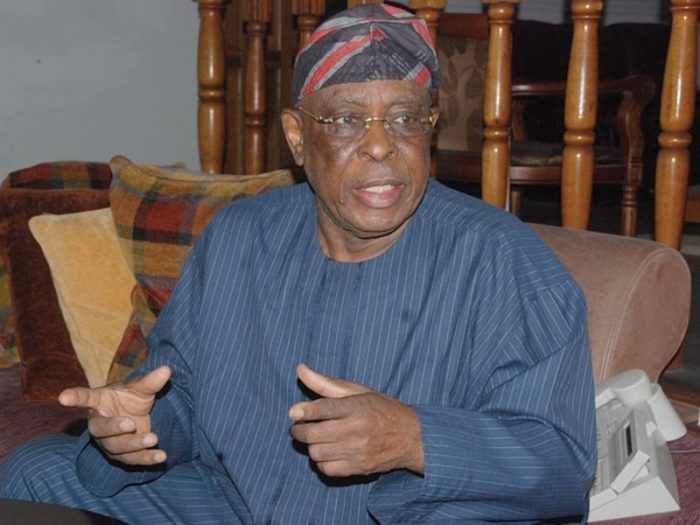
Having read Chief Olusegun Osoba’s book; Battlelines: Adventures in Journalism and Politics, and my personal life journey with the author, my take away from the book is that it is a story of an unending adventure with fate. A man whose resilience, hard work, perseverance and belief in himself and service to God and man has paved the path for a successful life in what we could describe as the cauldron called the Nigerian post-colonial state. Born during the colonial era of the early constitutional development in Nigeria; precisely 1939, during the governor generalship of Sir Bernard Bourdillon 1935-1943 who laid the groundwork for the constitutional proposals which his successor Sir Arthur Richards (Lord Milverton) later submitted in 1944 and which became the Richard’s Constitution. He succeeded in convincing the Northern Emirs of the advisability of coming to join with the southerners in the Legislative Council of the country.
It is one of the mysteries of life that 80 years after, Osoba would be in the vanguard of progressive politicians who are bent on returning Nigeria back to its roots of ‘true federalism’. It has not been an easy task and it is still a work in progress. Whether it would succeed or fail is to be seen as the political climate of the country is in a state of ebullition.
Today, the gulf between the political elite widens by the day in terms of ethnicity, religion and a glaring lack of ideological persuasion. The Awolowo school of Hegelian philosophy and welfarism which Osoba belong to, has become divided and the unity of opposites which is the bedrock of Hegel’s dialectics has failed to produce a synthesis from the union of thesis and antithesis of Nigerian politics. Even within the political parties there is no unity of opposites. Hegelianism is the philosophy of G. W. F. Hegel which can be summed up by the dictum that “the rational alone is real”, which means that all reality is capable of being expressed in rational categories. His goal was to reduce reality to a more synthetic unity within the system of absolute idealism .True to form; Hegel was criticized as being’ not a logical thinker but a master in the use of trenchant aphorisms’.
What we are witnessing today is a schism in the political class; a crack in the political pot and a return to primitivism, parochial and primordial tendencies. In all these however, Olusegun Osoba stands out as one political animal who has cut a distinct persona for himself and a different breed from the hubris of ‘come and chop’ political class; a collective of brigands and ruthless socio-economic barracudas, hell bent on robbing the national coffers of all that it contain.
His sojourn in journalism started during the time of his adopted uncle and godfather, late Alhaji Babatunde Jose. Being a good student of human philosophy, Osoba would imbibe the salient qualities of his mentor to rise and shine above his peers. Despite his apogee in journalism, he was not only cool headed but worked hard to maintain his comportment. This is attested to in the wide network of his associates, particularly in his youthful, clubbing and rascally days. He never lost focus and at the back of his mind was always the dictum: Remember the son of whom you are.
As it was in journalism, so had it been in politics. Having worked closely with the late sage, Chief Obafemi Awolowo, the man with a mission, Osoba had no choice but to pitch his tent with the progressive elements of Nigerian politics. It worked and has continued to work for him.
In all these however, one trait that has been discernible in Osoba’s personality is his contentment in life. This is the takeaway from his book. Contentment is a sign of a true believer. The virtue of contentment is closely connected with the quality of putting trust in God. With contentment one feels inner peace and increase in spirituality. He does not compare himself with those who are in better conditions, but rather he remembers those who are in worse conditions. For example, if someone is one-handed, he should be content and remember those who do not have hands at all. It is said that a man complained about his old shoes until he saw a man who had no feet. “Contentment is not the fulfilment of what you want, but the realization of how much you already have.” Contentment and patience earn one Paradise in the Hereafter. Prophet Muhammad (peace be upon him) is reported to have said: “Allah will not accept other than Paradise for a believing person who is afflicted with the death of his beloved one from among the inhabitants of the world and shows patience.” (Al-Nasa’i) Allah said: The (material) things which ye are given are but the conveniences of this life and the glitter thereof; but that which is with Allah is better and more enduring: Will ye not then be wise? (Quran 28:60) The greatest cause for the lack of contentment is greed and avariciousness, covetousness and ‘long throat’. And I can attest to it that Osoba is none of these. These are very objectionable traits in any human being and they are the root cause of corruption; I can also posit that to all intents and purposes, Aremo Olusegun Osoba, Akinrogun Egba is an epitome of contentment. May his days be long!
Barka Juma’at and happy weekend


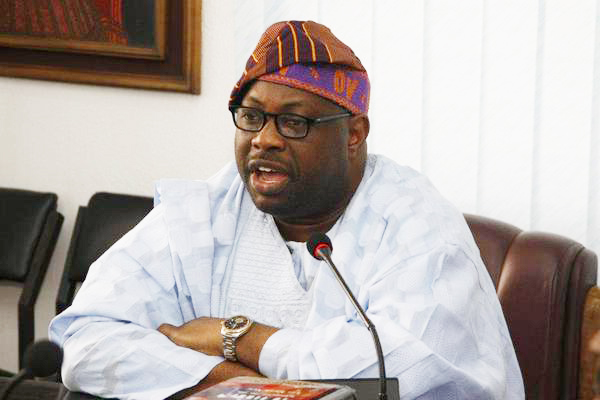
Accomplished media entrepreneur and chieftain of the African Democratic Congress (ADC), Chief Dele Momodu, has said that nobody trusts President Bola Tinubu to conduct a free and fair election, including the President’s own supporters.
Momodu also noted that there is a belief that if the President does not win in 2027, he will not want to relinquish power.
He added that if Tinubu refuses to step down, he would be chased out of the Presidential Villa.
Momodu made the revelations while speaking on Arise News Prime Time belt.
“If you ask an average Nigerian today about Tinubu, ‘Do you trust Tinubu to conduct a free and fair election?’ I can tell you, 90 per cent of them will say no.
“Look, nobody trusts Tinubu to run a free and fair election, including his own supporters. They will tell you, ‘Oh, we are going to win. There is no way we won’t win.’ Ask them why, and they will say, ‘Oh, you know our oga now.’
“In fact, some people are even suggesting that if Tinubu loses the election, he will not agree to step down. I say, why won’t he agree? We will chase him away.
“Look, you do not know the determination of Nigerians. And now, I’m not resting my confidence on just my party. I’m talking about the ordinary man on the street who cannot imagine Tinubu coming back again. They just can’t.
“I can’t tell you our strategy in public. What we know is that, once upon a time, Tinubu fought for himself to secure a second term as governor of Lagos State.
“So, others are also working very hard behind the scenes. We are not going to come out in public and say this, but we know what to do to make sure that he does not get that second term. We also know that some of the people pretending to support him today—and I’m not trying to trivialise this thing.
“I know some of them. They are praying fervently that they will not have to go through this situation where governors become like houseboys. Governors are scared. Judges are scared. Legislators are scared.
“So, Tinubu has become a god whom nobody is ready to confront and say, ‘Oga, you’ve done your best. Please, go home.’”
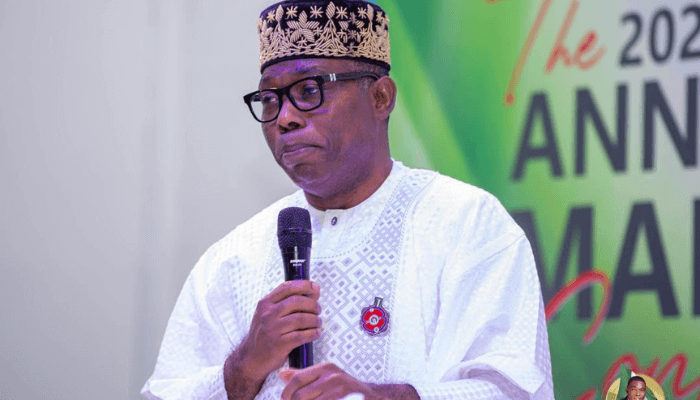
The Social Democratic Party (SDP) presidential candidate, Prince Adewole Adebayo, has urged President Bola Tinubu to go home and let Nigeria breathe.
Adebayo said this in a statement in Abuja on Wednesday.
He was responding to the President’s plan to excuse himself from the rigors of physical campaigns in some states ahead of the presidential polls.
Tinubu spoke at the inauguration of the APC Presidential Campaign Council in Abuja, urging members to take the party’s message to Nigerians across the states and local government areas while he continues to attend to matters of governance.
In response, Adebayo argued that, if Tinubu is too tired to campaign, he is too weak to govern.
In a statement signed by his Presidential Campaign’s Chief Communications Adviser, Comrade Mark Adebayo, the SDP standard bearer described Tinubu as a “president in absentia” at a time Nigeria needs hands-on leadership.
Adebayo said: “Nigeria is too complex, too dynamic, and currently too distressed to be governed by remote control.”
He cited what he called repeated instances of the President governing from a distance, including prolonged medical vacations disguised as working visits, absence during national emergencies and reliance on proxies to announce State policies.
Adebayo further said: “We have seen repeated instances when the President was visibly missing when the country needed reassurance.
“From unannounced foreign trips during critical economic decisions to his complete silence during widespread regional protests, he has consistently acted like a president in absentia. If you are too tired to campaign, you are too weak to govern.”
Adebayo alleged that the decision to stay off the campaign trail was not about strategy but fear.
“The excuse of bowing out of the 2027 campaign is a cowardly smokescreen. The truth is that the President is terrified of the Nigerian people,” he argued.
According to him, the administration’s economic policies – fuel subsidy removal fallout, skyrocketing inflation and currency instability -have made the President unpopular.
“He knows the pain his bad policies have inflicted on families. He is hiding because he cannot face public anger, and he knows any appearance on a campaign trail will be met with collective booing of a betrayed populace.”
Adebayo also said: “It is time to face reality: step aside, go home, and let this country breathe.”
He called on the administration to prioritise national interest over political survival and be transparent about the President’s capacity to lead for the remainder of his term.
Arsenal Fans Club Nigeria is set to be officially unveiled in Abuja this weekend, as the organisation prepares to strengthen the club’s fan base and promote community development through football.
Amongst the high profile personalities lined up for the unveiling ceremony include, business leaders, celebrities and notable Arsenal supporters like former Gunner, Kanu Nwankwo, former Senate President Bukola Saraki, Emir Sanusi Lamido Sanusi, Senator Dino Melaye amongst others.
The unveiling will form part of a two-day programme beginning on Friday, October 16, with delegates from state and city chapters expected to converge on the nation’s capital for the club’s second Annual General Meeting (AGM).
According to a press release issued on Monday by the organisation, the celebrations will feature sporting activities, a community sanitation initiative and a formal launch event attended by prominent personalities and Arsenal supporters.
National President of Arsenal Fans Club Nigeria, Charles Ojugbana, said the organisation draws inspiration from the achievements of Nigerian-descent footballers, including former Super Eagles striker Kanu Nwankwo and current stars Bukayo Saka, Noni Madueke and Eberechi Eze.
The former General Secretary of the Nigeria Football Association (NFA) said the club aims to improve the football fan experience while expanding support for Arsenal across Nigeria.
Activities scheduled for Saturday include aerobic sessions and a novelty football match before members proceed to Wuse Market for a clean-up campaign.
As part of the outreach, the club plans to donate refuse bins and other sanitation materials to the market’s leadership, in line with its commitment to philanthropy and community development.
Arsenal Fans Club Nigeria operates through a governance structure comprising a Board of Trustees, a National Executive Committee and a General Assembly, which serves as the organisation’s highest decision-making body.
The club also disclosed plans to promote awareness of Down syndrome among children in March 2027, as part of activities to commemorate World Down Syndrome Day.
The programme expresses the organisation’s ambition to extend its activities beyond football fandom to charitable causes and support for vulnerable members of the society.


