
Metro
Sermon: Religion: A Maligned Concept


- /home/rhoncare/pointblank.ng/wp-content/plugins/mvp-social-buttons/mvp-social-buttons.php on line 27
https://pointblank.ng/wp-content/uploads/2019/04/Religion-1000x600.jpg&description=Sermon: Religion: A Maligned Concept', 'pinterestShare', 'width=750,height=350'); return false;" title="Pin This Post">
- Share
- Tweet /home/rhoncare/pointblank.ng/wp-content/plugins/mvp-social-buttons/mvp-social-buttons.php on line 69
https://pointblank.ng/wp-content/uploads/2019/04/Religion-1000x600.jpg&description=Sermon: Religion: A Maligned Concept', 'pinterestShare', 'width=750,height=350'); return false;" title="Pin This Post">
By Babatunde Jose
Religion is an omnipresent and seamless part of daily life, taking an infinite variety of forms that are part of the distinctive quality of each community. Religion could thus not be seen as something apart and personal. It is, rather, a dimension of life that suffuses whatever people do. Religion has an effect on many people’s attitudes to everything, including such matters as savings, investment and a host of economic decisions. It influences area we had come to see as vital for successful development, like schooling, gender quality, and approaches to health care. In short, religion could be an important driver of change, even as it could be a break to progress…
James D. Wolfensohn former President of the World Bank
Religion provides the unifying power that grounds the socio-political, economic, technological, cultural and moral dynamics of a culture. This is particularly true of Africans for whom life is an intricate web of the sacred and the secular.
Our daily lives revolves around work, play, eat, recreation, spiritual fulfillment and obeying the calls of nature. It is when one aspect of our life dominates our lives to the exclusion and detriment of others that we become slaves to that aspect of our life. As Easter celebrations ended last Monday, we are looking forward to the holy month of Ramadan next week and people are beginning to question the role of religion in our lives. They claim that we are too religious; a state of affairs that has been termed the unprogressive effect of religion and a hindrance to development.
True enough, political leaders are known to exploit the religiosity of the people in their intra-elite competitions; however, the role of religion in society goes deeper than that. In fact, this might not be the whole truth as research in the developmental sciences are increasingly beginning to recognize the positive role religion could have in development.
Throughout its long history, the Church and Islam have been major sources of social services like schooling and medical care; inspiration for art, culture and philosophy; and influential player in politics. From the 11th to 13th centuries, medieval Europe absorbed information and ideas from Islamic civilization, which was then at its peak: Such as in astronomy, mathematics, medicine and science. The Islamic world also influenced other aspects of medieval European culture, including the arts, agriculture, music, technology, and textiles.
However, this is also true for the negative effects of religion, such as the conflicts that result in war and bloodshed, the separation of social classes, and the corruption throughout God’s kingdom, especially the unending sex scandal in the Catholic Church; or the radicalization of faith as witnessed by today’s Islamic insurgence. There is also the horrible events of the slave trade and colonization and the decimation of the cultures of non-European peoples, particularly Africa. It is these perceived negative effects of religion that has prompted many social scientists to condemn religion as irrelevant to socio economic development. However, Despite the general hostility among social science and professionals, the empirical evidence shows religion to be a very powerful and positive part of everyday life – Patrick McNamara, professor of sociology at the University of New Mexico.
Christianity, Traditional Religion and Islam, promotes integral development that goes beyond mere economic globalization, one could posit the thesis that religion if properly harnessed, could play a very important role in sustainable development despite conflicts, (at times violent), arising from religious intolerance.
No doubt, religion particularly in this clime commands the followership of millions. In social change theory, one of the most effective medium of change is diffusion of ideas and innovations; and religious bodies are most suited for this role. How great would it be, if our churches and mosques were to channel their weekly homilies (52 sermons a year from each church, mosque and other religious gatherings) to that great effort at bringing about social change in their followers; with a view to bringing about attitudinal dispositions that are amenable to socio economic betterment of the people? There is no doubt religion, if well channeled, could be made a veritable instrument of change and development.
“The paradox of growth in the face of poverty and inequality is a result of the inequity and injustice in Nigeria’s socio-politico-economic distribution, with 1% of the population, (politicians and bureaucrats) cornering the national resources to themselves while the rest of the populace wallow in abject poverty.
The role of religion for the sustainable development of Nigeria has been both positive and negative. Positively, religion stands as a reliable institution providing stepping stones to sustainable development; “from the days of the missionaries to the present, the church in Africa has focused its development strategy in two areas: education and healthcare.” And they have done remarkably well: Ditto for Islamic organizations, which have a proliferation of mission schools all over the country. They provide health and educational services through their hospitals, clinics and maternities, schools and colleges, vocational training centers, seminaries and universities. Some even, promote small scale businesses by granting loans to individuals and cooperative societies.
However, in spite of their laudable involvement in promoting progress and sustainable development, religions in Nigeria have in some ways been inhibiting sustainable development. Christianity and Islam are often antagonists, leading to religious conflicts resulting in loss of lives and destruction of properties. This has been intensified by the Jama’atu Ahlis Sunna Lidda’awati Wal-Jihad, better known as Boko Haram; which, since 2009, has caused the loss of thousands of lives and valuable government and business properties. Its terrorist activities in Nigeria have crippled the economy of North-Eastern Nigeria, creating insecurity in the country, driving away investors, foreign and local, and resulting in much government spending on security instead of on infrastructures.
It should be noted, however, that as the Council on Foreign Relations in a symposium,
“Religious Conflict in Nigeria,” (2007) discovered, most religious conflicts in Nigeria also have ethnic and political nuances. Yes!!! Politicians have hijacked religion to fight their wars.
Another reason for the upsurge of religious intolerance and violence is economic. The concomitant decline of investment in the education and economic well-being of people, especially the young, makes the latter a veritable reservoir and recruiting ground for religious fanatics or lunatics.
Religion also impedes sustainable development by tacit collaboration in corruption and mismanagement of the economy; mainly because religious leaders have failed to challenge the unjust structures that give rise to bad governance, corruption and social malaise: They have not spoken with one voice against the cycles of injustice; greed and self-aggrandizement of the political class that confiscates the state resources for personal use, thus dehumanizing ordinary Nigerians.
On the contrary, various religious groups have sought to benefit from the corruption and nepotism of the Nigerian system. As we enter another phase of religious activity with the coming Ramadan, religious leaders in Nigeria must figure out a way to honestly embrace peace and promote mutual coexistence by understanding one another’s religious beliefs. They must become the conscience of the people and speak up against the excesses of our corrupt and thieving leaders: And stop receiving the proceeds of corruption in the form of offerings, tithe and Zakat. Only then would religion become a veritable change agent.
Barka Juma’at and a happy weekend


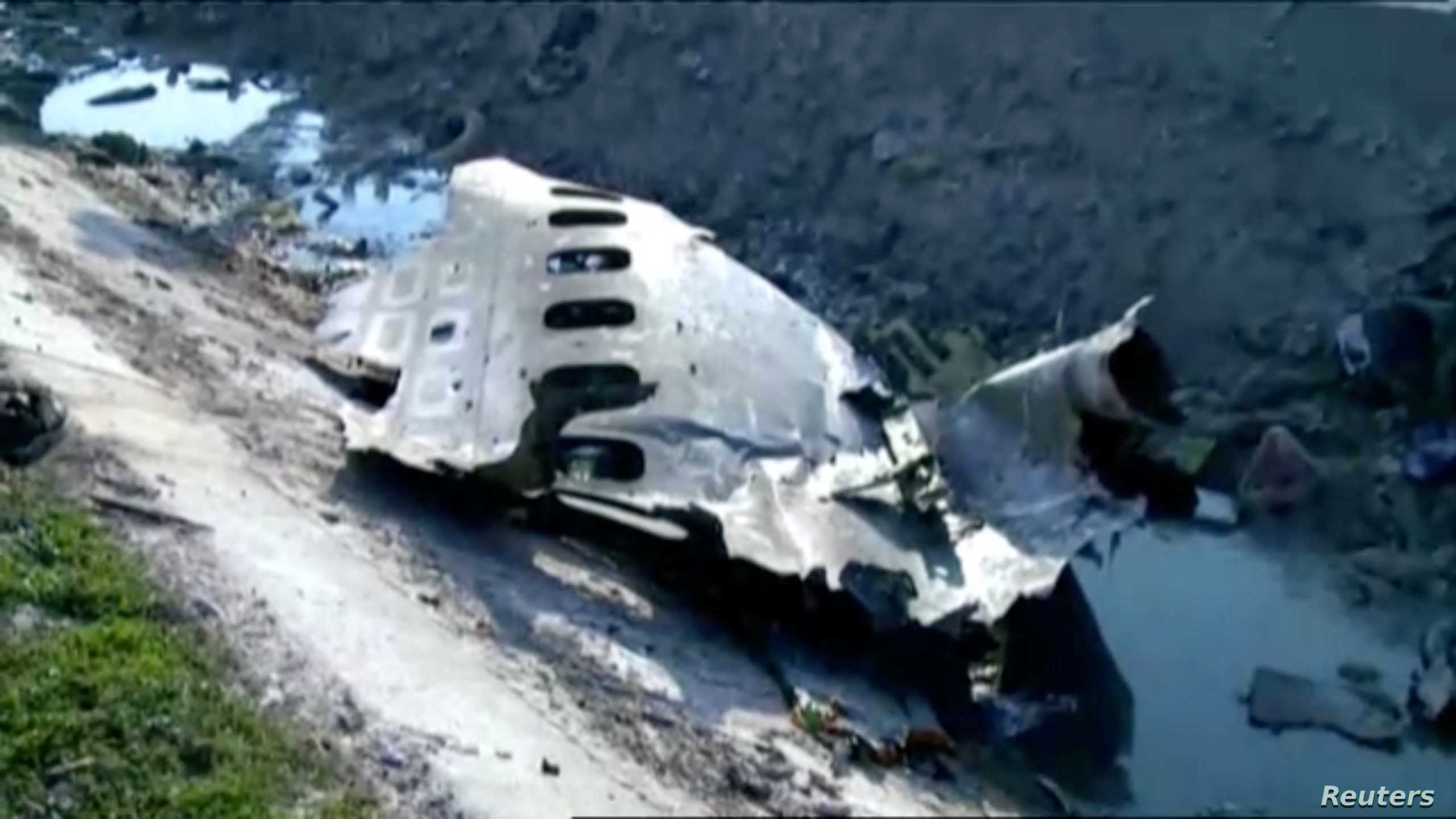
An helicopter crashed into a swamp near Naval Base in Igbokoda, the headquarters of Ilaje Local Government Area of Ondo State, on Monday.
The incident occurred at about 11.00a.m during heavy down pour, throwing the coastal community into panic.
The number of people on board of the helicopter was yet to be officially confirmed, while the condition of possible survivors cannot be confirmed.
Confirming the incident, Maurice Oripenaiye, the Chairman of the local government, told the News Agency of Nigeria (NAN) in a telephone interview that he could not ascertain the number of the victims.
Oripenaye also said he was yet to ascertain the identity of the crashed helicopter and the passengers.
“It happened during the heavy rainfall at about 11.00a.m. I cannot confirm the number of the people on board. I have deployed some youths to the area for rescue purpose,” he told NAN.
Similarly, the Police Command in Ondo State while confirming the crash, said details surrounding the incident were still emerging.
The command in a statement by its spokesperson, Abayomi Jimoh, a deputy superintendent of police, in Akure, said efforts were ongoing to establish the full circumstances surrounding the crash.
“The command urges members of the public, particularly residents of Igbokoda and adjoining communities, to remain calm and refrain from circulating unverified information.
“The public will be duly informed as soon as further credible information becomes available,” it stated.
(NAN)
By Eric Elezuo
All Lagos State-owned universities through their Joint Action Committee (JAC) of staff unions have embarked on an immediate and indefinite strike in fulfilment of their threat to do same last Friday.
The institutions are downing tools over the non-Implementation of the renogotiated ASSU/FGN agreement of 2026 as involves the Lago State government.
The affected universities include Lagos State University, Ojo, the Lagos State University of Education, the Lagos State University of Science and Technology and the Lagos State University College of Medicine.
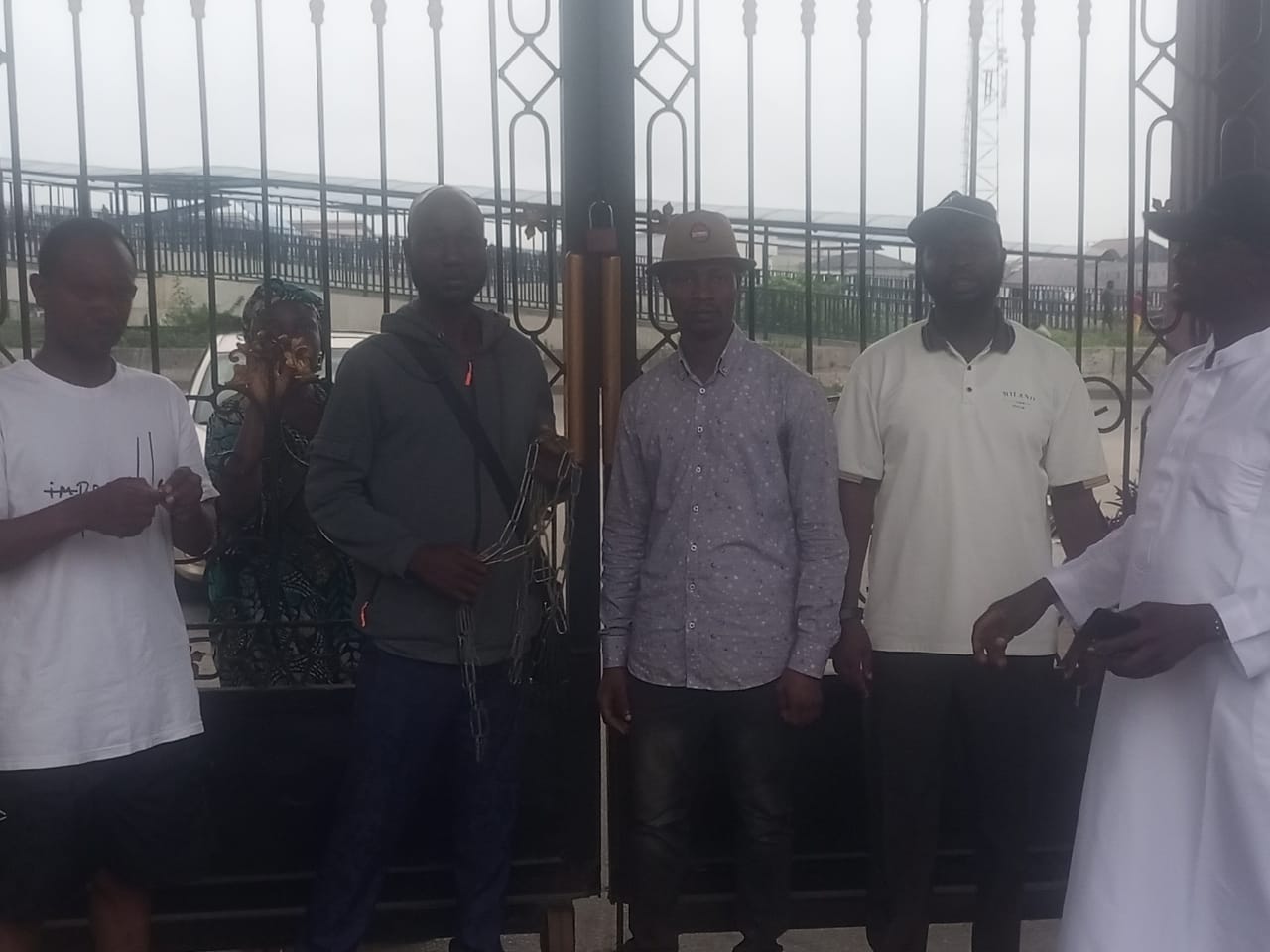
Our correspondent reports that major entrances of the institutions have been put unde lock and key with restrictions to entry into the campuses.
At LASU, members of the JAC were seen in their numbers locking up gates, and enforcing the strike action.
Recall that the unions issued a threat on Friday during a press conference held at the Lagos State University (LASU), Ojo Campus.
The conference was addressed by the Chairman of JAC and Academic Staff Union of University (ASUU-LASU), Prof. Ibrahim Bakare.
JAC comprises the Academic Staff Union of Universities (ASUU), the Senior Staff Association of Nigerian Universities (SSANU), the National Association of Academic Technologists and the Non-Academic Staff Union of Educational and Allied Institutions (NASU).
In his address during the briefing, Bakare said the unions’ final seven-day ultimatum to the Lagos State Government expired at midnight of Friday.
He said the unions had exhausted all avenues of dialogue over the implementation of the 2026 Federal Government and staff unions’ agreements.
“We have exhausted every possible means to avert declaration of industrial action across state-owned universities in Lagos State,” Bakare said.
He said the crisis resulted from bureaucratic delays, shifting goalposts and a lack of executive action on the agreements.
According to him, JAC had engaged relevant government ministries since July 30 to resolve the issues through dialogue.
He said a technical committee comprising government and JAC representatives reached consensus on the implementation of various allowances on Aug. 18.
Bakare said the agreed terms included 40 per cent Consolidated Academic Tools Allowance for ASUU and 35 per cent allowances for SSANU and NASU.
He said the parties subsequently signed a communiqué on Aug. 31, committing to implementation from September 2026 and payment of eight months’ arrears.
“September salaries were paid without the implementation of the agreed rates and the outstanding arrears,” he said.
Bakare said the non-implementation had increased the outstanding arrears to nine months, covering January to September 2026.
He said JAC was demanding immediate executive approval and implementation of the signed 2026 agreements without further alteration or delay.
Bakare said the unions also demanded payment of nine months’ arrears, non-taxation of applicable allowances and implementation of the 15 per cent Lagos factor.
He added that the unions demanded fulfilment of outstanding commitments, including a 20 per cent salary increment and release of five Marcopolo buses promised to state-owned universities.
Bakare said the unions had demonstrated restraint and repeatedly chosen dialogue in spite of the challenges, instead of disrupting academic activities.
“However, our patience has been pushed to the absolute limit,” he said.
He had warned that failure of the state government to act before midnight of Friday would trigger “an immediate, total and indefinite strike” across Lagos State-owned universities.
Bakare had also appealed to traditional rulers, religious leaders, parents and students to urge the government to resolve the matter before the deadline.
Much as the unions maintained open channel for further negotiations and interventions, the Lagos State government nor any other body was not forthcoming before the final shutdown of the universities on Monday.
The Lagos State government is yet to issue a statement in response as at press time.
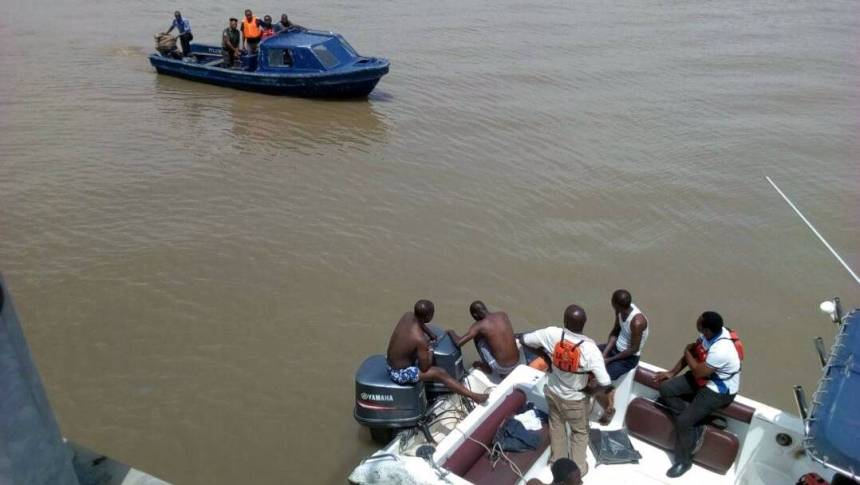
Several persons have so far been missing after a wooden boat carrying more than 70 mourners and over 30 motorcycles overturned while crossing the River Katsina-Ala in Buruku Local Government Area of Benue State.
The incident reportedly occurred around 11am on Saturday, October 3, 2026, at the Buruku River crossing point.
The passengers, most of whom were said to be from Mbayon in Gboko Local Government Area, were returning after attending the burial of a relative on the opposite side of the river when the boat capsized.
Several occupants were reportedly rescued from the water, while search and rescue personnel continued efforts to locate those who remained unaccounted for as of Saturday afternoon.
Reports said the wooden boat was severely overloaded with passengers and motorcycles before its engine reportedly developed a fault during the journey.
“The boat was overloaded with many people and over 30 motorcycles, and they were coming from the Logo LGA side of the River at about 11am when the incident happened.
“Many persons have been rescued, but as we speak, I cannot tell you the actual number of persons that have not been seen or rescued from the river because the search is still ongoing. But many persons have not been seen as we speak,” an eyewitness said.
The Chairman of Buruku Local Government Area, Raymond Zege, confirmed the mishap, explaining that the passengers were mourners from Gboko who had travelled across the river for a burial ceremony.
Zege said the boat was carrying more than 70 people when its engine stopped working in the middle of the return trip, causing panic among those on board.
“The victims were mourners from Gboko who went for a burial on the other side of the river.
“They boarded a boat which was overloaded with over 70 persons. In the middle of the journey the engine of the boat failed, and they became panicky.
“And they also ran into a heavy wave, and the boat capsized before the boat that was sent to rescue them got to them,” he said.
The council chairman said authorities had yet to determine the precise number of missing persons, although more than 60 passengers had reportedly been rescued.
“At the time we speak, we do not know the number of persons missing. So far we have not seen about six persons, but we have rescued over 60. Search and rescue operations are ongoing,” he said.
Zege urged passengers using the waterway to observe maritime safety guidelines, particularly by wearing life jackets during crossings.
He disclosed that the local government had supplied life jackets for people using the route, but said enforcement had sometimes been difficult because some commuters declined to use the safety equipment.
“People can be very difficult. There is a law, and we have provided life jackets for every commuter crossing that route. When they come and the maritime workers try to enforce the law, some commuters complain that they have health issues or that they do not want to share life jackets used by other people.
“We have provided the jackets, and the state government is also supporting efforts to ensure that maritime safety regulations are enforced,” he said.
The chairman further said maritime officials regularly conduct enforcement operations and urged commuters to cooperate with them.
“Sometimes the maritime officials come for enforcement, including at night. People should cooperate with them because the safety measures are meant to protect lives,” he said.
Meanwhile, the Benue State Commissioner for Marine and Blue Economy, Denis Iyaghigba, also confirmed the incident in a statement issued on Saturday.
Iyaghigba said his ministry had received preliminary information about the accident and appealed to relatives of the passengers and members of the public to remain calm while rescue teams worked to establish the number of people involved.
“I have received preliminary reports of an unfortunate boat mishap at the Buruku crossing point this morning, Saturday, 3rd October, 2026,” Iyaghigba said.
“I wish to assure members of the public, particularly families of those who may have been aboard the boat, to remain calm and await verified information from the appropriate authorities. No effort will be spared to ensure their safety.”
The commissioner said he had instructed boat operators and their union downstream to join the ongoing rescue operation.
“I have directed the boat operators and their union downstream to mobilise and assist in the ongoing search and rescue operation,” he said.
He assured that “further details will be communicated as the rescue operation progresses.”
As of the time of filing this report, rescue operations were still underway, with authorities yet to provide a final account of the total number of people aboard the boat or the confirmed number of those still missing.


