
Metro
Shi’ites Invade NASS Complex, Force Reps to Adjourn Plenary

- /home/rhoncare/pointblank.ng/wp-content/plugins/mvp-social-buttons/mvp-social-buttons.php on line 27
https://pointblank.ng/wp-content/uploads/2019/04/Reps-Shiites.jpg&description=Shi’ites Invade NASS Complex, Force Reps to Adjourn Plenary', 'pinterestShare', 'width=750,height=350'); return false;" title="Pin This Post">
- Share
- Tweet /home/rhoncare/pointblank.ng/wp-content/plugins/mvp-social-buttons/mvp-social-buttons.php on line 69
https://pointblank.ng/wp-content/uploads/2019/04/Reps-Shiites.jpg&description=Shi’ites Invade NASS Complex, Force Reps to Adjourn Plenary', 'pinterestShare', 'width=750,height=350'); return false;" title="Pin This Post">
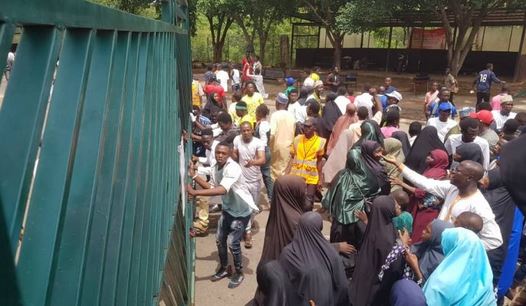
Protesting members of the Islamic Movement of Nigeria on Wednesday stormed the National Assembly, Abuja, forcing the House of Representatives to end its plenary abruptly.
Chanting solidarity songs and demanding the release of their leader, Ibrahim El-Zakyzaky, the Shi’ite members forcibly entered the NASS complex after overwhelming the security operatives at the gate.
Following the incident, the Deputy Speaker of the House of Representatives, Yusuf Lasun, announced that the Shi’ite protesters had gained entry into the NASS premises and adjourned the sitting. The lawmakers subsequently left the chambers.
Lasun, who was presiding over the consideration of committee reports, said he had the information that the sect members had crashed the first gate and were gaining entry into the premises.
The Deputy Speaker asked the sergeant-at-arms to go out and confirm the report. The security official, who returned to the chambers, reported that it was safe to continue the sitting. He said the protesters had been prevented from entering the complex.
The lawmakers shortly after, stepped down the remaining items on the Order Paper to Thursday. It could not be confirmed if the adjournment was as a result of the protests.
Punch correspondent, who visited the gate shortly after to confirm the invasion, observed that though the protesters made attempts to gain entry into the premises, they were prevented by the combined team of security operatives who manned the gate.
It was gathered that the IMN members were initially peaceful but tension heightened when the policemen locked the first gate and attempted to prevent them from accessing the complex.
Some of the protesters reportedly massed at the gate, shaking it vigorously while the outnumbered policemen withdrew from the scene.
After shaking the gate for some minutes, the protesters succeeded in forcing it open.
The massive crowd of men, youths and women dressed in black surged into the NASS complex causing panic among visitors and lawmakers as they chanted Allahu Akbar.
However, the crowd did not advance into the chambers following appeals from their leaders.
Members of the IMN have held regular protests to demand the release of their leader and his wife who had been in custody since December 2015 following a bloody confrontation with soldiers in Kaduna during which hundreds of IMN members were killed.
The leader of the sect is currently facing trial for alleged “culpable homicide, unlawful assembly, and disruption of public peace.”
The acting spokesman for the FCT Police Command, Danjuma Gajere, said the police were able to control the protest which he said involved over 2,000 Shi’ite members, adding that no arrest was made.
He said, “We were able to manage the protest which involved over 2,000 people, but there was no arrest.”
The Punch


The FCT Council of the Nigeria Labour Congress (NLC) has declared an indefinite strike across the Federal Capital Territory, directing workers in the public and private sectors to shut down schools, hospitals, government offices and other establishments.
The strike began on Wednesday, October 7, following the expiration of a seven-day ultimatum issued to the FCT Administration (FCTA) over the promotion of teachers.
The labour council said the FCTA failed to satisfactorily address its demands, particularly its call for the removal of the requirement for vacancies before teachers can be promoted.
The dispute centres on the FCTA’s position that teachers can only advance when vacancies are available. The NLC said the policy has contributed to years of career stagnation among teachers and is not applicable to the teaching profession.
In resolutions signed by its Chairman, Comrade Knabayi Adalo, the council argued that FCT teachers are not core civil servants or pool staff and should therefore not be subjected to a vacancy-based promotion system designed for pool officers.
It said teachers recruited by the FCT Universal Basic Education Board, UBEB, and FCT Secondary Education Board, SEB, were employed specifically to teach and should be promoted “as and when due.”
The NLC is also demanding that teachers who became eligible for promotion in 2025 be allowed to sit for their promotion examination before or alongside the 2026 candidates.
Another demand is the withdrawal of redeployment and demotion letters issued to directors who benefited from the Harmonised Retirement Age for Teachers Act, 2022.
The council is further calling for the immediate reinstatement of the dissolved management teams of FCT SEB and FCT UBEB.
The decision to commence the strike was taken at the council’s State Executive Council, SEC, meeting held on October 6, at the NLC FCT Secretariat.
At the meeting, the labour body rejected the FCTA’s response to its ultimatum, describing it as “neither clear, positive, nor genuine.”
According to the SEC, the response did not address the vacancy requirement, which it described as the “root cause of career stagnation”, and was also silent on what the council called the “illegal redeployment of directors.”
“The response of the FCTA is ambiguous and totally unacceptable,” the SEC said.
The council added that it “will no longer tolerate the continued dehumanisation of FCT teachers through obnoxious policies alien to the teaching profession.”
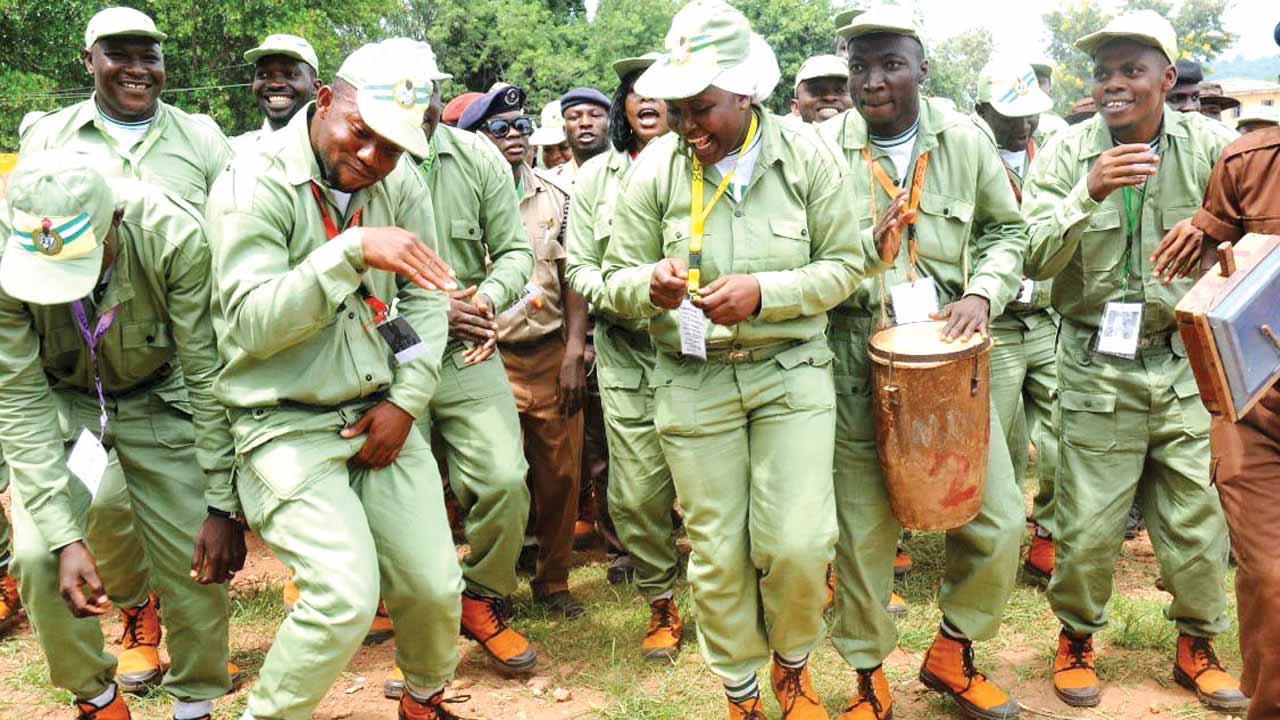
The 20 prospective National Youth Service Corps (NYSC) members and one other abducted along the Owerri-Onitsha Road in Imo State have regained their freedom.
The victims were rescued from the Amakohia-Ubi forest in Owerri West Local Government Area of the state following a coordinated operation involving security agencies.
They have since been taken to the Department of State Services (DSS) Hospital in Owerri, where they are receiving medical attention and undergoing necessary medical checks.
The Director-General of the National Youth Service Corps Brigadier General Olakunle Oluseye Nafiu visited the DSS Clinic in Owerri, where he addressed the rescued victims.
He was in company of the Imo State Commissioner of Police, Director DSS and Brigade Commander 34 artillery Imo State.
Details of the operation, including whether any arrests were made or ransom was paid, have not yet been made public.
However, in a statement issued by the Force Public Relations Officer, Ani Iniedu, the police said, “Efforts are ongoing to apprehend those responsible for the abduction, as the Police and other security agencies sustain coordinated operations towards bringing all culpable persons to justice.”
The victims were abducted on October 1 while travelling from Ibadan, Oyo State, to NYSC orientation camps in Abia and Akwa Ibom states.
The two buses conveying the prospective corps members came under attack near Umunoha in the Mbaitoli Local Government Area of Imo State.
Following the abduction, security agencies launched a coordinated search-and-rescue operation to locate the victims and their abductors.
The Imo State Police Command later said its operatives had located the kidnappers’ camp through drone surveillance but were unable to immediately enter the location because it was reportedly mined with improvised explosive devices (IEDs).
The police subsequently deployed additional operational assets, including bulldozers and armoured personnel carriers, as efforts intensified to reach the victims.
The development also triggered anxiety among the victims’ families after reports that the abductors were demanding ₦50 million for each victim.
Police had earlier confirmed that 10 victims were rescued following the attack, while efforts continued to locate the remaining abductees.
The latest development brings an end to the ordeal of the 20 corps members and the other abducted victim, who have now been reunited with safety and are receiving medical attention in Owerri.
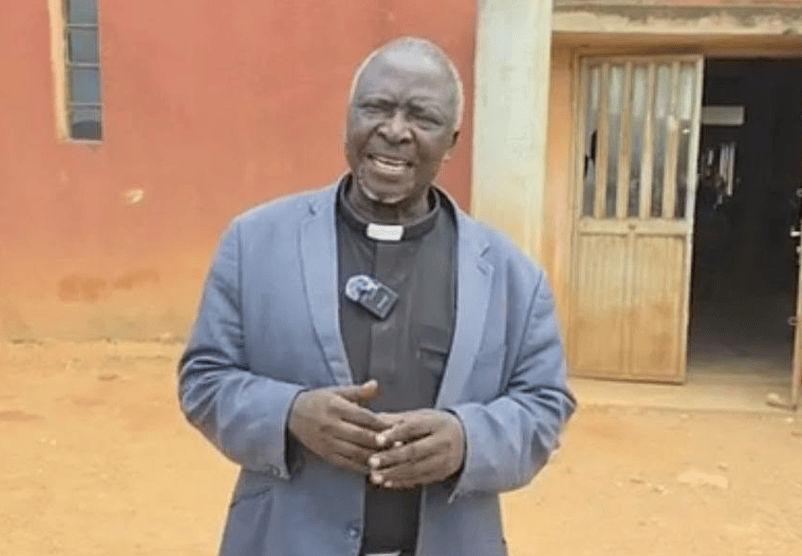
The Regional Chairman of Church of Christ in Nations (COCIN), Barkin Ladi Local Government Area of Plateau State, Rev. Ezekiel Dachomo, has denied reports that he prayed for the re-election of President Bola Tinubu and Vice President Kashim Shettima in the 2027 presidential election.
Dachomo, who is currently in Israel on what he described as his first International Christian Advocacy Tour, said his visit was aimed at drawing the attention of world leaders to the plight of Christians in Plateau.
The cleric made the clarification in a social media post on Monday night following reports that he had prayed for the success of the All Progressives Congress (APC) presidential ticket and expressed support for the Muslim-Muslim ticket.
Dachomo said his earlier post, in which he prayed for Nigeria, had been misconstrued as an endorsement of Tinubu and Shettima ahead of the 2027 election.
According to him, there was nowhere in the post where he prayed for the President and Vice-President to win the election.
“People are trying to frame me, saying I prayed for a Muslim-Muslim ticket. But I did not, and I will never pray for a Muslim-Muslim ticket because Nigeria belongs to both Muslims and Christians,” he said.
Dachomo said his prayers were for the well-being and success of Nigeria and its citizens, irrespective of their religious affiliations.
“I pray for both Muslims and Christians in Nigeria. I pray for Nigeria to succeed. If you truly want to come to God, come with a clean heart,” he added.
The cleric further stated, “I did not pray for President Tinubu and Vice President Shettima to win in 2027. My prayers have always been for Nigeria to succeed.”
Dachomo’s clarification came amid reactions to his ongoing advocacy tour in Israel, where he is seeking international attention to security challenges and what he described as the persecution of Christians in Plateau.


