
Business
States Order Police to Arrest Traders Rejecting Old Naira Notes


- /home/rhoncare/pointblank.ng/wp-content/plugins/mvp-social-buttons/mvp-social-buttons.php on line 27
https://pointblank.ng/wp-content/uploads/2022/11/Naira-1000x600.jpg&description=States Order Police to Arrest Traders Rejecting Old Naira Notes', 'pinterestShare', 'width=750,height=350'); return false;" title="Pin This Post">
- Share
- Tweet /home/rhoncare/pointblank.ng/wp-content/plugins/mvp-social-buttons/mvp-social-buttons.php on line 69
https://pointblank.ng/wp-content/uploads/2022/11/Naira-1000x600.jpg&description=States Order Police to Arrest Traders Rejecting Old Naira Notes', 'pinterestShare', 'width=750,height=350'); return false;" title="Pin This Post">
State governments have directed police commands to begin clamping down on traders and supermarkets accused of rejecting the old naira notes.
Findings by The PUNCH on Sunday indicated that the authorities in Kano, Sokoto, Katsina, Bayelsa, Zamfara and Kwara states had issued directives to security agencies to deal with anyone who turned down the old N1000, N500 and N200 notes.
The development was sequel to the confusion caused by the failure of the Central Bank of Nigeria to issue directives to commercial banks on the extension or otherwise of the February 10 deadline for the currency swap following last Wednesday’s Supreme Court ruling restraining the FG from enforcing the time limit earlier fixed by the apex bank.
This is as the Catholic Bishops declared the CBN policy as disastrous, stressing that it hasd turned Nigerians to beggars
On Sunday, the Kano State Governor, Dr Abdullahi Ganduje directed the acting Chairman of Kano State Consumer Protection Council, Dr Baffa Dan’agundi to shut down Wellcare supermarket for rejecting the old naira notes in violation of the directive of the state government that the currency remains legal tender.
The chairman of the council made the disclosure shortly after shutting down the supermarket, stating that legal action will also be taken against Wellcare Alliance Limited, the owners of WellCare supermarket.
He warned other businesses in Kano that the state government had not banned the use of old naira notes.
He threatened that any shop owner caught rejecting the old notes would be dealt with decisively, according to the dictates of the law.
Meanwhile, the management of Wellcare Alliance Limited has written an apology letter to Ganduje, seeking his immediate intervention to re-open the supermarket.
The letter was titled, ‘A plea for an immediate intervention to re-open Wellcare Alliance Limited and an apology letter.’
It read in part, “Sir, Wellcare has always had an outstanding reputation in the market within the state and beyond, equally has abided by every rule and regulation which directly affects the company or a regulator without hesitation.
“Due to the Federal Government policy on the new naira notes, we gave wrong instructions to our staff that from the 10th day of February 2023 that only the new approved naira notes are to be in circulation.
“On an expansive investigation with our bankers, they declined to receive old naira notes on our behalf, unknown to all parties that the state has a policy that the old notes are to be in circulation. On this basis, we sincerely apologize for our actions and deeply regret any inconvenience this may have caused the state.
“We humbly plead that our business should be re-opened for deserving members of the public as we undertake to receive old notes as valid tender till when the state issues an otherwise directive. Please, do accept our regards and sincere apologies.”
In the same vein, the Katsina state government has warned banks and traders in the state not to reject the old naira notes until the Supreme Court gives a final verdict on the issue.
The state government gave the warning in a statement on Sunday issued by the Commissioner for Information, Culture and Home Affairs, Abdulkarim Sirika.
The government said it had come to its notice that banks and traders in the state were rejecting the old notes from residents, a development it said had led to severe hardships for the people.
The statement read: ‘’It has come to the notice of the state government under the able leadership of the Governor of Katsina State, Rtd Hon. Aminu Bello Masari that banks and marketers are no longer accepting the old naira notes.
“In view of this, His Excellency, the governor has directed that marketers and banks should continue accepting the old naira notes from now to the 15th February 2023 pending the final verdict of the Supreme Court on the matter.”
Meanwhile, Katsina residents have continued to bear the hardship imposed by the non-availability of the new naira notes.
Many ATM points in the state were not dispensing the new notes over the weekend while the few PoS operators still operating charged higher commissions ranging from N150 to N300 per every N1,000 withdrawal.
In Sokoto, the state police command has vowed to deal with anyone rejecting the old notes.
The command’s Public Relations Officer, Sanusi Abubakar, who stated that the force has not received any complaint, however, called on residents to report anyone rejecting the old naira notes to the law enforcement agents in the state.
Abubakar said, ‘’I’m sure you know we can only react if there is a complaint against anyone rejecting the notes but so far, we have not gotten any report of such in the state. I can assure you that we are on top of the situation and we will do the needful if such a report is made.’’
Also speaking on the issue, the Kwara State Police Public Relations Officer, Ajayi Okasanmi, asserted that the police had been given a directive to arrest any individual who sells or buys naira notes in the state.
Responding to an inquiry from The PUNCH, Okasanmi said, “There is a government directive to arrest anyone who messes up the naira notes, buy or sell the notes, but we have not been able to catch anyone in Kwara state. I want to advise people to abide by the government directive on both old and new naira notes so that they would not run foul of the law.’’
To mitigate the difficulties facing the residents, the state government disclosed that it has arranged palliatives to cushion the effects of the fuel scarcity and the currency scarcity in the state.
The Chief Press Secretary to the governor, Mallam Rafiu Ajakaye, explained in a statement on Sunday that the palliatives would include cash transfer to widows, pensioners, transporters, marketers, smallholder farmers, and other vulnerable people.
He added that the programme would be carried out by the Kwara State Social Investment Programme for proper coordination and accountability.
He added that the governor had directed KWASSIP to work out the details and deploy the modest support as soon as possible.
The CPS also said that the government would soon deploy free buses along specific students’ routes in the state.
“The governor has also directed the deployment of free buses along specific routes used by students and staff of tertiary institutions in the capital city where the effects of the fuel scarcity have been most pronounced. Further details of this palliative will be released by relevant government departments/committees”, the statement said.
To curb the rising tension over the scarcity of new naira notes, the Bayelsa State Police Command said it had beefed up security around banks and ATM points.
The command warned miscreants against unlawful assembly and violence due to the new naira notes’ crisis.
This was contained in a statement issued by the spokesman for the command, Asinim Butswat.
The Punch


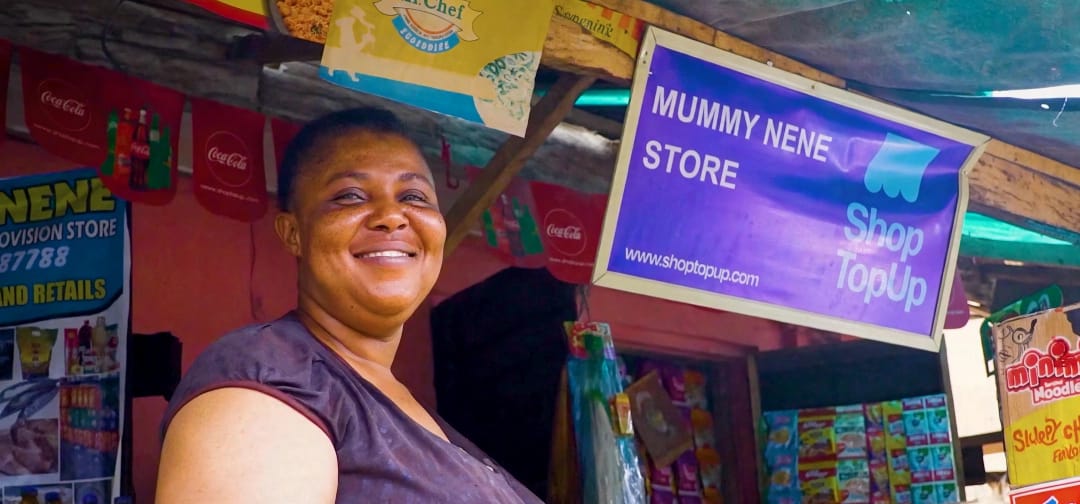
While conversations about the future of retail increasingly focus on supermarkets, shopping malls and online shopping platforms, millions of African consumers continue to rely on a more familiar and accessible business: the neighbourhood shop.
From small provision stores and corner shops to kiosks and informal retailers, these businesses remain an important part of everyday commerce, connecting communities to essential household products. However, behind their convenience lies a supply chain challenge that often limits their growth.
For many small retailers, sourcing products, managing inventory and securing enough working capital to keep their shelves stocked can be difficult. Fragmented distribution networks, multiple intermediaries and limited access to financing often make it harder for them to compete and expand.
Technology is beginning to offer a different possibility.
Digital platforms can simplify the way neighbourhood retailers purchase goods by connecting them more directly with manufacturers and distributors. They can streamline ordering, improve product availability and make inventory management more efficient.
Access to financial technology can further strengthen these businesses by helping eligible retailers secure the working capital required to replenish stock, respond to customer demand and grow sustainably.
One Nigerian technology company working to address these challenges is TradeDepot, which is using digital innovation to connect small retailers with manufacturers and distributors.
By making product sourcing and distribution more efficient, the company is helping to address some of the longstanding barriers facing small businesses in Africa’s retail sector.
However, scaling technology-driven solutions across a fragmented retail market requires more than innovation. It also demands significant investment.
This is where development finance and venture capital become important.
Through Boost Africa, the European Investment Bank (EIB) invested in Partech Africa Fund, a venture capital fund that subsequently backed TradeDepot. The investment illustrates how development finance can reach innovative African businesses through investment funds, providing capital to companies working to solve real economic challenges.
Boost Africa is a joint initiative of the European Investment Bank and the African Development Bank, with support from the European Union. The initiative supports African businesses and strengthens the continent’s entrepreneurial ecosystem by improving access to finance and opportunities for growth.
The wider significance of this investment goes beyond the technology platform itself. Strengthening neighbourhood retailers can contribute to more efficient supply chains, support small business growth and improve access to everyday consumer goods across communities.
For Africa, where small retailers remain central to local economies, the opportunity is substantial.
The future of retail may not necessarily involve replacing traditional neighbourhood shops with large supermarkets or online marketplaces. Instead, it could depend on equipping these existing businesses with better technology, stronger distribution networks and improved access to finance.
Ultimately, transforming retail may begin with something as familiar as the shop around the corner.
Boost Africa: From Capital to Impact.
Watch how TradeDepot is bringing commerce closer to communities through technology and investment
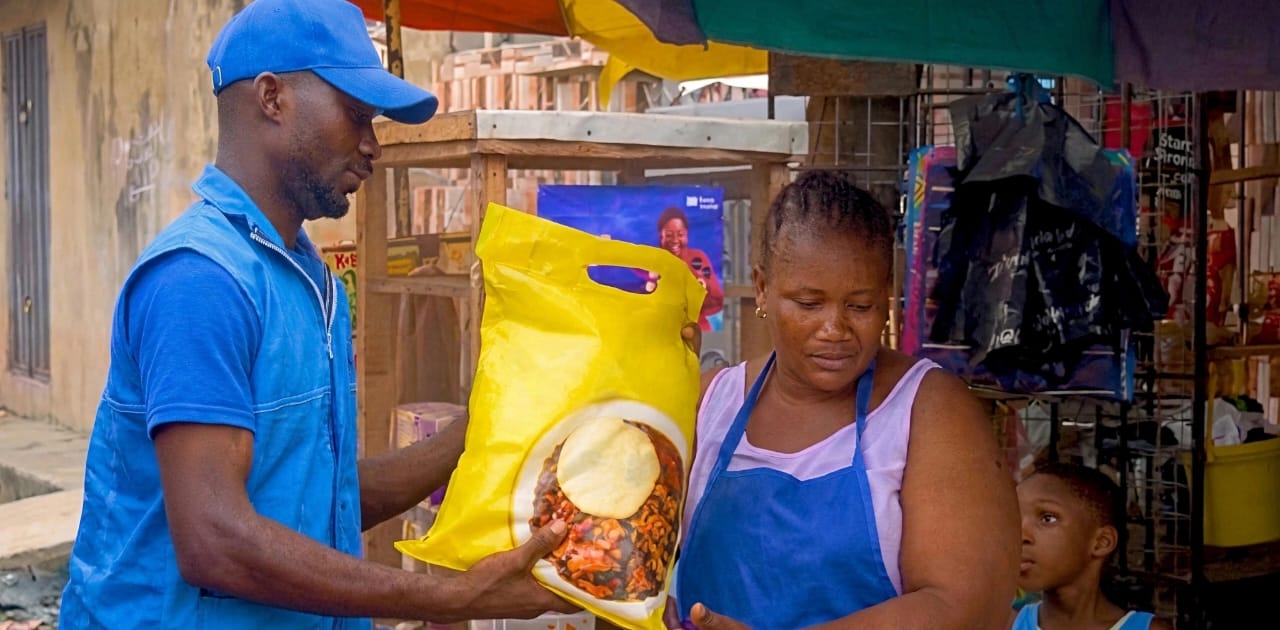
Ever wondered how the products on your neighbourhood shop shelves get there? Behind everyday purchases is a supply chain that can be costly, complex and inefficient, particularly for small retailers.
Nigerian technology company TradeDepot is changing this process by using technology to connect small retailers with manufacturers and distributors, making it easier for shop owners to order and receive the goods they need.
But transforming retail distribution takes more than an innovative idea. It requires investment to build, expand and scale.
Through Boost Africa, the European Investment Bank (EIB), alongside the African Development Bank and with support from the European Union, is helping strengthen the financing ecosystem for innovative African businesses.
One example is the EIB’s investment in Partech Africa Fund, which subsequently backed TradeDepot, helping channel capital into a Nigerian business working to improve how goods move from suppliers to neighbourhood shops.
The impact goes beyond technology. More efficient distribution can help small retailers access inventory, strengthen connections between manufacturers and suppliers, and bring commerce closer to the communities they serve.
Ultimately, TradeDepot’s story demonstrates how investment can go beyond funding to support stronger businesses, more efficient markets and opportunities for small retailers.
Boost Africa: From Capital to Impact.
Watch how TradeDepot is bringing commerce closer to communities.
▶ https://www.youtube.com/watch?v=zw9t2asF9Pc
Business
Beyond University Degrees: How ChipMango is Preparing African Engineers for Global Tech Industry

A university degree is a starting point, but practical industry experience can make all the difference.
Nigerian technology company ChipMango is bridging the gap through specialised semiconductor training and real-world chip design and verification projects, preparing African engineers for opportunities in the global technology industry.
Through Boost Africa, the EIB, AfDB and EU are strengthening the investment ecosystem supporting innovative African businesses.
Watch the video to discover how ChipMango is connecting engineering talent to real industry opportunities.
Watch the video:



