
Headlines
Terms for Procuring Chinese Loans Dangerous, Reps Warn

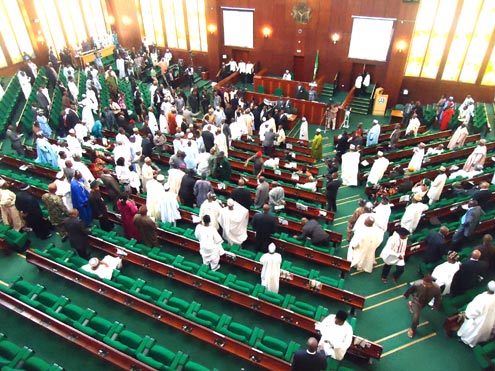
The House of Representatives on Monday faulted the sovereignty clause in Nigeria’s loan agreement with China, saying it was dangerous.
The Chairman of the House Committee on Treaties, Protocols and Agreements, Nicholas Ossai, who stated this in Abuja at the investigative hearing on external loans and commercial agreements, said Nigeria’s loan agreement with the Asian country was being governed by Chinese laws.
He said despite the fact that the Federal Government in 2014 signed an Executive Order providing guidelines on waiver of sovereign immunity during loan and commercial agreement negotiations, Nigerian officials had been violating the order.
Members of the executive, who appeared before the committee were the Minister of Transportation, Rotimi Amaechi; Minister of Works and Housing, Babatunde Fashola; Minister of Communications and Digital Economy, Ali Pantami; Minister of Police Affairs, Muhammad Maigari; and Minister of the Federal Capital Territory, Mohammed Bello.
Others included the Director-General, Debt Management Office, Patience Oniha; Permanent Secretary (Special Duties in the Ministry of Finance), Aliyu Ahmed and Director, Legal Services, Gabriel Christopher, both representing the Ministry of Finance, Budget and National Planning.
Ossai, in his opening address, stated that the controversial clauses and agreements had been existing before the Muhammadu Buhari-led regime. He also stated that the probe was not about the ruling All Progressives Congress or the Peoples Democratic Party.
He also said the lawmakers’ probe was not limited to Chinese loans and commercial contracts. Ossai stated, “We will like Nigerians to know that we are not focusing on only Chinese loans. From what we know, Nigeria has over 500 bilateral loan/commercial contract agreements and investment treaties with different countries and institutions. There is no way the committee will do a thorough job without segmenting the issues based on countries, institutions or MDAs.
“The loan agreements we have seen so far show that government officials charged with the responsibility of representing Nigeria in these issues are more desperate to just take the loans at any condition, possibly using non-negotiated loan agreement templates rather than go through the rigour of diligent technical review of negotiating specific clauses with clarity and for national interest.”
The committee chairman said it was a common practice that most international loan agreements would adopt ‘sovereign guarantee’ and a neutral international arbitration centre.
He said, “Even in situations where countries, out of desperation and weak economic position, waive their national sovereignty in bilateral or contractual agreements, the immunity of sovereignty waiver clause will usually be clear and categorically state specific assets associated with the loans for takeover in the event of default.
“However, the immunity clauses in most of these agreements before us are not only ambiguous, but also very obscure and without recourse to the fact that the Nigerian government had issued a circular on the subject matter with Reference Number SGF/OP/1/S.3/X/1739, dated 11th August, 2014, which is an Executive Order, that provides guidelines on issues of waiver of sovereign immunity clause during loan and commercial agreement negotiations.”
According to Ossai, arbitration centres for bilateral loan agreements are known to be generally in neutral places, “unlike what we have in most of the Nigeria/China agreements where Hong Kong that is also governed by China laws was designated as the arbitration centre.”
He explained that government agencies sign commercial agreements in billions of dollars before going to the Federal Executive Council for approval to execute them.
Ossai stated that they proceeded to negotiate the terms of the loans before coming back to the President, who would be asking the National Assembly for approval for billions of dollars to do projects without attaching the negotiated loan and commercial contract agreements details.
The Punch


United States Representative Riley Moors has said further military strikes against Islamic State-linked militants in Nigeria could follow recent operations ordered by President Donald Trump, describing the actions as aimed at improving security and protecting Christian communities facing violence.
Moore made the remarks during a televised interview in which he addressed U.S. military strikes carried out on Christmas Day against militant targets in North-west Nigeria.
The strikes were conducted in coordination with the Nigerian government, according to U.S. and Nigerian officials.
“President Trump is not trying to bring war to Nigeria, he’s bringing peace and security to Nigeria and to the thousands of Christians who face horrific violence and death,” Moore said.
He said the Christmas Day strikes against Islamic State affiliates had provided hope to Christians in Nigeria, particularly in areas affected by repeated attacks during past festive periods.
According to U.S. authorities, the strikes targeted camps used by Islamic State-linked groups operating in parts of north-west Nigeria.
Nigerian officials confirmed that the operation was carried out with intelligence support from Nigerian security agencies as part of ongoing counter-terrorism cooperation between both countries.
The United States Africa Command said the operation was intended to degrade the operational capacity of extremist groups responsible for attacks on civilians and security forces.
Nigerian authorities have described the targeted groups as a threat to national security, noting their involvement in killings, kidnappings and raids on rural communities.
Moore said the strikes marked a shift from previous years in which attacks were carried out against civilians during the Christmas period. He said the U.S. administration was focused on preventing further violence by targeting militant groups before they could launch attacks.
U.S. officials have said the military action was carried out with the consent of the Nigerian government and formed part of broader security cooperation between the two countries. Nigeria has received intelligence, training and logistical support from international partners as it seeks to contain militant activity.
Moore had previously called for stronger international attention to attacks on Christian communities in Nigeria and has urged continued U.S. engagement in addressing extremist violence. He said further action would depend on developments on the ground and continued coordination with Nigerian authorities.
Nigerian officials have maintained that counter-terrorism operations are directed at armed groups threatening civilians, regardless of religion, and have reiterated their commitment to restoring security across affected regions.

World-renowned boxer Anthony Joshua on Monday survived a ghastly road accident in Makun, Ogun State.
Eyewitnesses report that the incident occurred along a busy highway of the Lagos-Ibadan expressway.
The vehicle carrying Joshua, a Lexus Jeep with the number plate, KRD 850 HN, reportedly collided with a stationary truck under circumstances that are still being investigated.
Joshua reportedly sustained minor injuries, while two persons were said to have died on the spot.
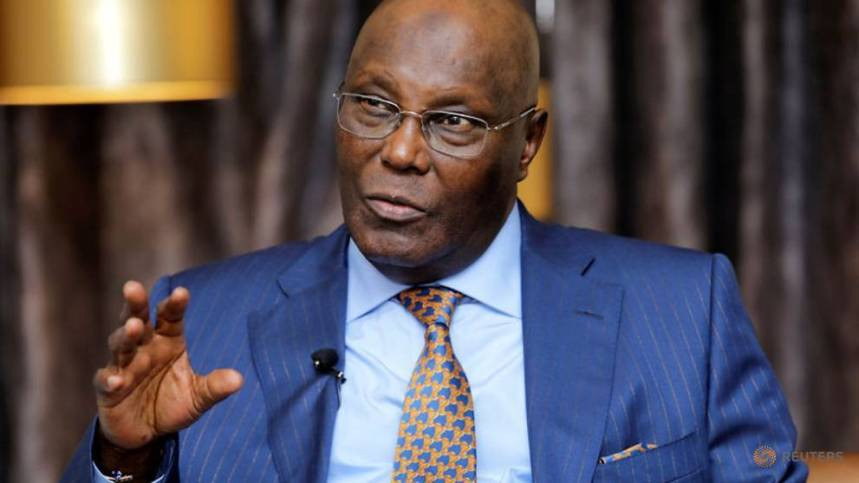
Former Vice President Atiku Abubakar has cautioned that any attempt to hurriedly re‑gazette Nigeria’s new tax laws could undermine parliamentary oversight and set a dangerous constitutional precedent.
Atiku’s warning follows public scrutiny over reports that the Tax Reform Acts signed by President Bola Tinubu differ from the versions passed by the National Assembly. Lawmakers, including Abdussamad Dasuki, raised concerns that the alterations could pose serious legal and constitutional risks, noting that they were not backed by any constitutional framework.
In a statement on X, Atiku said the directive to re-gazette the Acts effectively confirms “that the gazetted version of the Tinubu Tax Act does not reflect what was duly passed by the National Assembly,” calling it “a grave constitutional issue.”
He emphasized that under Section 58 of the 1999 Constitution, a bill only becomes law after passage by both chambers, presidential assent, and gazetting.
“Gazetting is merely an administrative act of publication. It does not create, amend, or validate a law,” Atiku said, adding that any post-passage insertion, deletion, or modification without legislative approval constitutes forgery rather than a clerical error.
Atiku further warned that rushing a re-gazetting while legislative investigations are ongoing “undermines parliamentary oversight and sets a dangerous precedent,” stressing that the only lawful approach is “fresh legislative consideration, re-passage by both chambers, fresh presidential assent, and proper gazetting.”
The former vice president clarified that his position is not opposition to tax reform but a defence of constitutional order.
“This is a defence of the integrity of the legislative process and a rejection of any attempt to normalise constitutional breaches through procedural shortcuts,” he said.
The Federal government has denied wrongdoing, insisting the laws will take effect as scheduled on January 1, 2026, while the National Assembly has directed the issuance of Certified True Copies of the Acts to ensure clarity and accuracy.


