
Metro
The Fault Lines of Power: A Global Leadership Crisis and the Path to Restoration


By Tolulope A. Adegoke, PhD
“Across the world, we are navigating the fault lines of outdated leadership. The future belongs to those who can mend these cracks with the mortar of integrity, the vision of long-term purpose, and the resilience of empowered people” Tolulope A. Adegoke, PhD
Leadership serves as the foundational pillar for any thriving organization, corporation, or nation. It is the critical framework meant to ensure stability, inspire direction, and foster resilience against challenges. Yet, a pervasive and unsettling phenomenon is emerging worldwide: the development of deep fault lines within these very structures of authority. This crisis of confidence spans sectors and continents, from established Western democracies to burgeoning economies in the Global South.
This examination explores these global leadership fissures, with a specific focus on Nigeria’s complex landscape. We will diagnose the universal symptoms, analyze their acute manifestation in the Nigerian context, and ultimately, propose a constructive framework for renewal aimed at individuals, businesses, and governments.
Diagnosing the Global Leadership Decay
The erosion of effective leadership rarely happens overnight. It typically begins with subtle, often ignored fractures that gradually weaken the entire system. These fractures commonly appear as:
- The Credibility Chasm: A growing disconnect between a leader’s promises and their tangible actions. When rhetoric of transparency clashes with a reality of opacity, the essential bond of trust is severed.
- The Tyranny of the Immediate: An overwhelming focus on short-term gains—be it quarterly earnings or political popularity—that sacrifices long-term strategy and sustainable health. This is the equivalent of building on unstable ground.
- Strategic Inertia: In a world defined by rapid change, leaders who cling to outdated, rigid hierarchies render their organizations incapable of adapting, innovating, or surviving future shocks.
- The Empathy Void: Leadership that is intellectually or emotionally detached from the realities of its people, employees, or citizens. This breeds disengagement, stifles collaboration, and fuels a silent exodus of talent and goodwill.
- The Succession Failure: A critical neglect of leadership pipeline development, which creates a dangerous vacuum of vision and competence during transitions, jeopardizing institutional memory and future stability.
The Nigerian Context: A Magnified View of the Crisis
Nigeria, a nation brimming with phenomenal human and natural potential, offers a powerful case study where these global fault lines are particularly pronounced and consequential.
Within the Political Arena:
Leadership is frequently marred by a system that rewards patronage over performance. Rampant corruption diverts essential resources from critical public services, leading to a catastrophic decay in infrastructure, healthcare, and education. This, combined with policy instability across political administrations, creates an environment of uncertainty that discourages vital long-term investment.
Within the Corporate Sphere:
Many organizations, including prominent family-owned conglomerates, are hindered by overly centralized decision-making and weak corporate governance structures. When nepotism overshadows meritocracy, innovation is suppressed, and employee motivation withers. A survivalist mindset, driven by a challenging economic climate, often trumps strategic investment in talent and innovation.
Within Public Institutions:
A pervasive culture of bureaucracy and inefficiency often widens the gap between the government and the governed. This leads to profound citizen frustration and a demoralized public workforce, undermining the very purpose of these institutions.
The cumulative effect of these intersecting failures is a palpable national anxiety—a widespread belief that the nation is operating far below its potential, not due to a lack of resources or talent, but because of a fundamental breakdown in its leadership frameworks.
A Framework for Renewal: Building Resilient Leadership
Identifying the problem is only the first step. The imperative is to forge a path forward. The following advisory framework outlines how to bridge these fault lines and unlock latent possibilities.
For Individuals (The Agents of Change):
- Transition from Spectator to Stakeholder: Exercise accountability through informed civic participation and constructive advocacy. Use platforms, including digital media, to demand transparency and results from leaders.
- Embody Ethical Leadership Daily: Demonstrate integrity, accountability, and empathy within your immediate circle—your workplace, community, and family. Leadership is an action, not merely a position.
- Commit to Lifelong Learning: Proactively acquire new skills, cultivate a global perspective, and strengthen your emotional intelligence to navigate an increasingly complex world.
- Engage in Reciprocal Mentorship: Actively seek guidance while also dedicating time to mentor others. Cultivating the next generation is a collective responsibility that ensures a continuous flow of capable leaders.
For Corporations (The Economic Catalysts):
- Ingrain, Don’t Just Install, Governance: Move beyond superficial compliance. Foster a culture where independent boards, radical transparency, and ethical practices are non-negotiable core values.
- Systematize Leadership Development: Establish robust talent management and succession planning programs. Intentionally identify and nurture future leaders through targeted training, mentorship, and strategic role assignments.
- Champion a Stakeholder-Centric Purpose: Define a corporate mission that creates genuine value for all stakeholders—employees, customers, communities, and the environment. This builds lasting brand equity and attracts purpose-driven talent.
- Cultivate Psychologically Safe Spaces: Foster an organizational climate where employees feel empowered to voice ideas, question assumptions, and experiment without fear of reprisal. This is the bedrock of a truly innovative and adaptive organization.
For Nations (The Architects of Society):
- Fortify Institutions Over Individuals: Invest in building strong, independent institutions—such as the judiciary, electoral commissions, and anti-corruption bodies—that can function autonomously and uphold the rule of law.
- Prioritize Human Capital as the Supreme Asset: Direct national investment toward foundational pillars like quality public education and healthcare. An educated, healthy, and skilled populace is the most critical driver of sustainable national development.
- Articulate and Adhere to a Long-Term National Vision: Develop a strategic, non-partisan national development plan that provides a consistent direction for policy, transcending political cycles and uniting citizens around a common goal.
- Establish a Consequence-Based Culture: Implement a system where integrity is visibly rewarded and corruption is met with swift, transparent, and impartial justice, regardless of the offender’s status.
Conclusion: Laying a New Foundation
The fault lines in global leadership present a significant challenge, but they also offer a clarion call for renewal. The solution lies in a deliberate return to the core tenets of visionary, accountable, and empathetic leadership.
For Nigeria, and for the world at large, delivering on our shared potential requires a concerted effort to repair these foundations. We must collectively shift from a culture of short-sightedness to one of intergenerational stewardship, and from fractured allegiances to a unified commitment to the common good.
The blueprint for change is clear. By choosing to reinforce our leadership at every level, we can transform these fault lines into cornerstones for a more prosperous, stable, and equitable future. The responsibility to build rests with all of us.
Dr. Tolulope A. Adegoke, AMBP-UN is a Doctor of Philosophy (PhD) in History and International Studies, Fellow Certified Management Consultant & Specialist, Fellow Certified Human Resource Management Professional, a Recipient of the Nigerian Role Models Award (2024), and a Distinguished Ambassador For World Peace (AMBP-UN). He has also gained inclusion in the prestigious compendium, “Nigeria @65: Leaders of Distinction”.


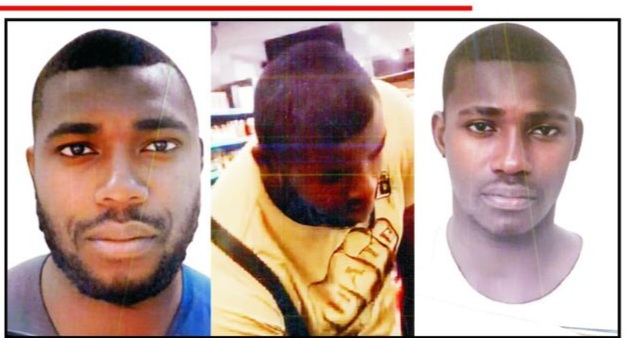
The Lagos State Command of the Nigerian Police Force has declared one Iroegbu Alexandra Chisom aka Biggy or Omoba Salvage wanted over alleged criminal conspiracy and murder, according to a Wanted Notice issued by the Deputy Commissioner of Police, SCID, Panti, Yaba, and made available to National Association of Online Security News Publishers (NAOSNP).
The notice informed that the Warrant of Arrest was issued against the suspect by the Federal High Court, Lagos.
Iirogbu, 30, is wanted for stabbing one Mr. Olusanya to death with a jackknife at Pearl Service Apartment, Lekki, Ajah, Lagos State.
Iroegbu Alexandra Chisom, according to the notice, “is Igbo by tribe, aged 30, Height 1.82, Heavily Built, oval face, long broad nose, large mouth, thick lips, good teeth, white and black eyes, dark in complexion, round chin, thick hair, large head, high forehead, deformities limping in one of the legs, very vocal in habit, normal youth dress.
“His last known address is 23 Road X Close Block 1 Flat 3 Area 1, FESTAC Town, Lagos State, Nigeria.”
“If seen, arrest and hand over to the nearest Police Station or to the Lagos State CID, Panti Lagos.’

The FRSC Lagos Sector Command’s Spokesperson, SRC Oluwadamilola Jayeola has extended hearty congratulatory messages to the duo of DSP Oluseyi B. Babaseyi and Superintendent Route Commander AD Odunsi-Oyewole, on their various appointments as the Police Public Relations Officer of the Ogun Police Command, and Public Education Officer of the FRSC Ogun Sector Command respectively.
SRC Jayeola described both appointments as well-deserved, noting that the duo bring to their new responsibilities proven professionalism, depth of experience, and strong commitment to public service.
She emphasized that effective public communication remains critical to public safety, security awareness, and trust-building, particularly in a strategic state like Ogun, which serves as a major transit corridor between Lagos and other parts of the country.
SRC Jayeola expressed confidence that the synergy between the FRSC Ogun Sector Command and the Ogun State Police Command, through their Public Relations and Public Education Officers, will further strengthen inter-agency collaboration, improve information management, and enhance public enlightenment on road safety and security matters across the state.
She assured both officers of her full support and readiness to sustain a cordial and productive working relationship, stressing that cooperation, information sharing, and mutual support among sister agencies remain vital to achieving safer roads and a more secure society.
SRC Jayeola wished Superintendent Route Commander AD Odunsi-Oyewole and DSP Oluseyi B. Babaseyi a successful tenure, marked by impact, professionalism, and excellent service delivery to the people of Ogun State.

The Nigeria Police Force (NPF) has argued that no court restrained it from enforcing the tinted glass permit regulation, maintaining that the directive remains valid until a competent judicial pronouncement rules otherwise.
Force Public Relations Officer (FPRO), CSP Benjamin Hundeyin, made the clarification while addressing journalists during the presentation of criminal suspects arrested by operatives of the Intelligence Response Team.
He stated that the police would continue enforcement of the tinted glass permit order, stressing that there had been no judicial directive halting the exercise.
Hundeyin explained that criminal groups had exploited previous pauses in enforcement to commit violent crimes, including kidnapping and armed attacks.
He cited a recent incident in Edo State where a Lexus SUV with tinted windows allegedly refused to stop at a checkpoint, leading to a pursuit during which its occupants opened fire on officers, killing a police inspector and injuring others.
He further clarified that the earlier suspension of enforcement announced by the Inspector-General of Police, Kayode Egbetokun, had been misinterpreted by sections of the public and professional bodies, including the Nigerian Bar Association (NBA).
“The Inspector-General of Police, out of respect and understanding, temporarily suspended enforcement to give Nigerians additional time to regularise their tinted glass permits.
That decision was not based on any court order but was a discretionary move to accommodate public concerns,” Hundeyin said.
Acknowledging that the matter is before the courts, Hundeyin noted that the legal process has been slow. He stressed that, pending any contrary ruling, the police would continue enforcement.
“The position remains that enforcement continues until a court directs otherwise. At no point did any court restrain the Nigeria Police Force or the Inspector-General of Police from implementing the tinted glass permit order,” he added.
Responding to reports that the NBA may initiate contempt proceedings against the Inspector-General over the renewed enforcement, Hundeyin said the police legal department would address any action if it arises.
He reiterated that enforcement of the tinted glass permit was necessary for public safety, particularly in curbing crimes committed with vehicles whose occupants are concealed.
The police position comes amid growing debate between the Force and the Nigerian Bar Association (NBA), which has argued that the policy is unconstitutional and currently subject to litigation.


