
Headlines
Tinubu Addresses 78th UN General Assembly (Full Text of Speech)

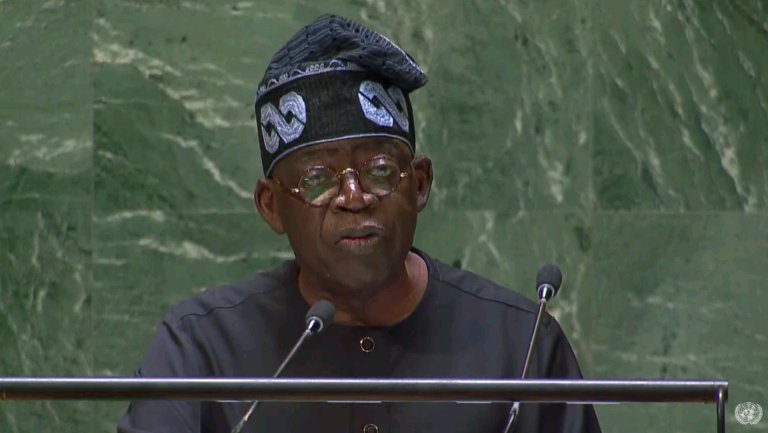
Nigeria’s president, Bola Tinubu, on Tuesday addressed the 78th session of the United Nations General Assembly, ongoing in New York.
Read full speech below:
STATEMENT DELIVERED BY HIS EXCELLENCY, BOLA AHMED TINUBU, GCFR PRESIDENT, FEDERAL REPUBLIC OF NIGERIA AT THE GENERAL DEBATE OF THE 78TH SESSION OF UNITED NATIONS GENERAL ASSEMBLY, 18TH SEPTEMBER 2023
Mr. President,
Heads of State and Government, Secretary-General,
Distinguished Delegates, Ladies and Gentlemen,
Mr. President,
On behalf of the people of Nigeria, I congratulate you on your well-deserved election as President of this Session of the United Nations General Assembly.
We commend your predecessor, His Excellency, Mr. Csaba Korosi for his able stewardship of the Assembly.
We also commend His Excellency, Antonio Guterres, Secretary General of the United Nations, for his work seeking to forge solutions to humanity’s common challenges.
This is my first address before the General Assembly. Permit me to say a few words on behalf of Nigeria, on behalf of Africa, regarding this year’s theme.
Many proclamations have been made, yet our troubles remain close at hand. Failures in good governance have hindered Africa. But broken promises, unfair treatment and outright exploitation from abroad have also exacted a heavy toll on our ability to progress.
Given this long history, if this year’s theme is to mean anything at all, it must mean something special and particular to Africa.
In the aftermath of the Second World War, nations gathered in an attempt to rebuild their war- torn societies. A new global system was born and this great body, the United Nations, was established as a symbol and protector of the aspirations and finest ideals of humankind.
Nations saw that it was in their own interests to help others exit the rubble and wasteland of war. Reliable and significant assistance allowed countries emaciated by war to grow into strong and productive societies.
The period was a highwater mark for trust in global institutions and the belief that humanity had learned the necessary lessons to move forward in global solidarity and harmony.
Today and for several decades, Africa has been asking for the same level of political commitment and devotion of resource that described the Marshall Plan.
We realize that underlying conditions and causes of the economic challenges facing today’s Africa are significantly different from those of post war Europe.
We are not asking for identical programs and actions. What we seek is an equally firm commitment to partnership. We seek enhanced international cooperation with African nations to achieve the 2030 agenda and Sustainable Development Goals.
There are five important points I want to highlight.
First, if this year’s theme is to have any impact at all, global institutions, other nations and their private sector actors must see African development as a priority, not just for Africa but in their interests as well.
Due to both longstanding internal and external factors, Nigeria’s and Africa’s economic structures have been skewed to impede development, industrial expansion, job creation, and the equitable distribution of wealth.
If Nigeria is to fulfil its duty to its people and the rest of Africa, we must create jobs and the belief in a better future for our people.
We must also lead by example.
To foster economic growth and investor confidence in Nigeria, I removed the costly and corrupt fuel subsidy while also discarding a noxious exchange rate system in my first days in office. Other growth and job oriented reforms are in the wings.
I am mindful of the transient hardship that reform can cause. However, it is necessary to go through this phase in order to establish a foundation for durable growth and investment to build the economy our people deserve.
We welcome partnerships with those who do not mind seeing Nigeria and Africa assume larger roles in the global community.
The question is not whether Nigeria is open for business. The question is how much of the world is truly open to doing business with Nigeria and Africa in an equal, mutually beneficial manner.
Direct investment in critical industries, opening their ports to a wider range and larger quantity of African exports and meaningful debt relief are important aspects of the cooperation we seek.
Second, we must affirm democratic governance as the best guarantor of the sovereign will and well-being of the people. Military coups are wrong, as is any tilted civilian political arrangement that perpetuates injustice.
The wave crossing parts of Africa does not demonstrate favour towards coups. It is a demand for solutions to perennial problems.
Regarding Niger, we are negotiating with the military leaders. As Chairman of ECOWAS, I seek to help re-establish democratic governance in a manner that addresses the political and economic challenges confronting that nation, including the violent extremists who seek to foment instability in our region. I extend a hand of friendship to all who genuinely support this mission.
This brings me to my third crucial point. Our entire region is locked in protracted battle against violent extremists. In the turmoil, a dark channel of inhumane commerce has formed. Along the route, everything is for sale. Men, women and children are seen as chattel.
Yet, thousands risk the Sahara’s hot sand and the Mediterranean’s cold depths in search of a better life. At the same time, mercenaries and extremists with their lethal weapons and vile ideologies invade our region from the north.
This harmful traffic undermines the peace and stability of an entire region. African nations will improve our economies so that our people do not risk their lives to sweep the floors and streets of other nations. We also shall devote ourselves to disbanding extremist groups on our turf.
Yet, to fully corral this threat, the international community must strengthen its commitment to arrest the flow of arms and violent people into West Africa.
The fourth important aspect of global trust and solidarity is to secure the continent’s mineral rich areas from pilfering and conflict. Many such areas have become catacombs of misery and exploitation. The Democratic Republic of the Congo has suffered this for decades, despite the strong UN presence there. The world economy owes the DRC much but gives her very little.
The mayhem visited on resource rich areas does not respect national boundaries. Sudan, Mali, Burkina Faso, CAR, the list grows.
The problems also knocks Nigeria’s door.
Foreign entities abetted by local criminals who aspire to be petty warlords have drafted thousands of people into servitude to illegally mine gold and other resources. Billions of dollars meant to improve the nation now fuel violent enterprises. If left unchecked, they will threaten peace and place national security at grave risk.
Given the extent of this injustice and the high stakes involved, many Africans are asking whether this phenomenon is by accident or by design.
Member nations must reply by working with us to deter their firms and nationals from this 21st century pillage of the continent’s riches.
Fifth, climate change severely impacts Nigeria and Africa. Northern Nigeria is hounded by desert encroachment on once arable land. Our south is pounded by the rising tide of coastal flooding and erosion. In the middle, the rainy season brings floods that kill and displace multitudes.
As I lament deaths at home, I also lament the grave loss of life in Morocco and Libya. The Nigerian people are with you.
African nations will fight climate change but must do so on our own terms. To achieve the needed popular consensus, this campaign must accord with overall economic efforts.
In Nigeria, we shall build political consensus by highlighting remedial actions which also promote economic good. Projects such as a Green Wall to stop desert encroachment, halting the destruction of our forests by mass production and distribution of gas burning stoves, and providing employment in local water management and irrigation projects are examples of efforts that equally advance both economic and climate change objectives.
Continental efforts regarding climate change will register important victories if established economies were more forthcoming with public and private sector investment for Africa’s preferred initiatives.
Again, this would go far in demonstrating that global solidarity is real and working.
CONCLUSION
As I close, let me emphasize that Nigeria’s objectives accord with the guiding principles of this world body: peace, security, human rights and development.
In fundamental ways, nature has been kind to Africa, giving abundant land, resources and creative and industrious people. Yet, man has too often been unkind to his fellow man and this sad tendency has brought sustained hardship to Africa’s doorstep.
To keep faith with the tenets of this world body and the theme of this year’s Assembly, the poverty of nations must end. The pillage of one nation’s resources by the overreach of firms and people of stronger nations must end. The will of the people must be respected. This beauty, generous and forgiving planet must be protected.
As for Africa, we seek to be neither appendage nor patron. We do not wish to replace old shackles with new ones.
Instead, we hope to walk the rich African soil and live under the magnificent African sky free of the wrongs of the past and clear of their associated encumbrances. We desire a prosperous, vibrant democratic living space for our people.
To the rest of the world, I say walk with us as true friends and partners. Africa is not a problem to be avoided nor is it to be pitied. Africa is nothing less than the key to the world’s future.


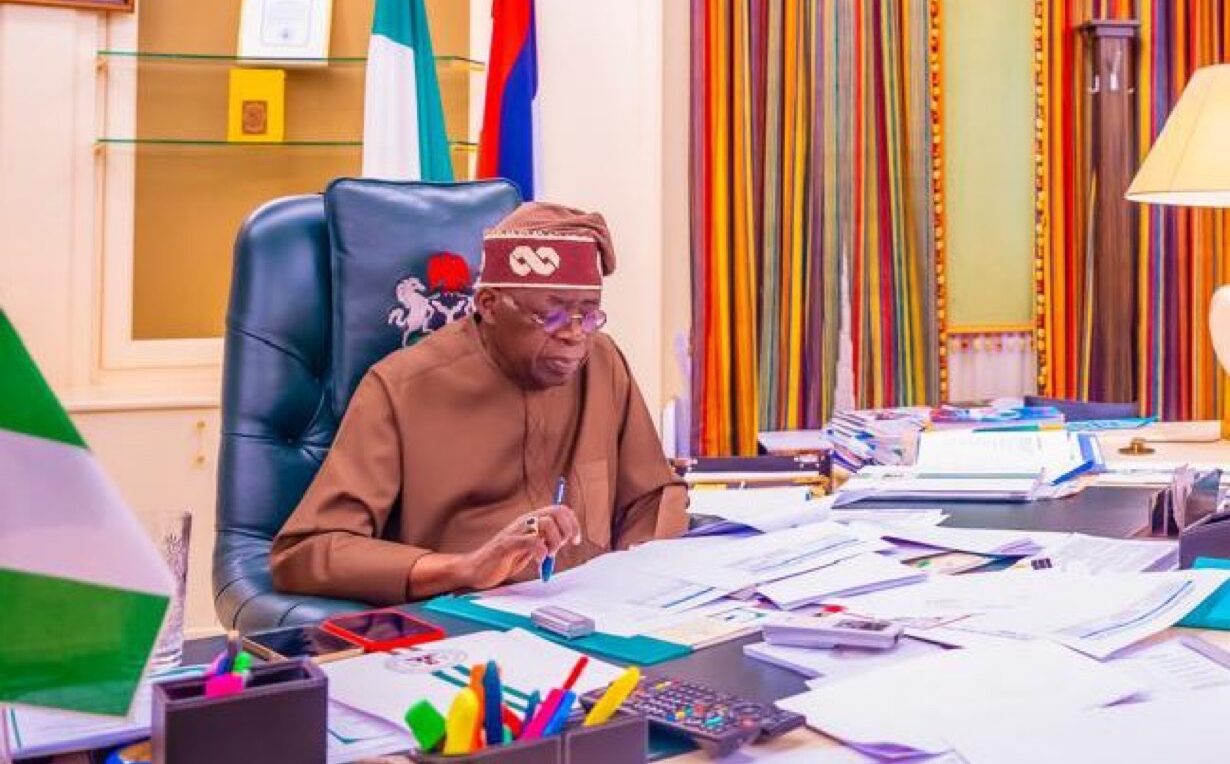
An Abuja High Court has cleared the way for the implementation of Nigeria’s new tax regime scheduled to commence on January 1, 2026, dismissing a suit seeking to halt the programme.
The ruling gives the Federal government, the Federal Inland Revenue Service (FIRS) and the National Assembly full legal backing to proceed with the take-off of the new tax laws.
The suit was filed by the Incorporated Trustees of African Initiative for Abuse of Public Trustees, which dragged the Federal Republic of Nigeria, the President, the Attorney-General of the Federation, the President of the Senate, Speaker of the House of Representatives and the National Assembly before the court over alleged discrepancies in the recently enacted tax laws.
In an ex-parte motion, the plaintiff sought an interim injunction restraining the Federal Government, FIRS, the National Assembly and related agencies from implementing or enforcing the provisions of the Nigeria Tax Act, 2025; Nigeria Tax Administration Act, 2025; Nigeria Revenue Service (Establishment) Act, 2025; and the Joint Revenue Board of Nigeria (Establishment) Act, 2025, pending the determination of the substantive suit.
The group also asked the court to restrain the President from implementing the laws in any part of the federation pending the hearing of its motion on notice.
However, in a ruling delivered on Tuesday, Justice Kawu struck out the application, holding that it lacked merit and failed to establish sufficient legal grounds to warrant the grant of the reliefs sought.
The court ruled that the plaintiffs did not demonstrate how the implementation of the new tax laws would occasion irreparable harm or violate any provision of the Constitution, stressing that matters of fiscal policy and economic reforms fall squarely within the powers of government.
Justice Kawu further held that once a law has been duly enacted and gazetted, any alleged errors or controversies can only be addressed through legislative amendment or a substantive court order, noting that disagreements over tax laws cannot stop the implementation of an existing law.
Consequently, the court affirmed that there was no legal impediment to the commencement of the new tax regime and directed that implementation should proceed as scheduled from January 1, 2026.
The new tax regime is anchored on four landmark tax reform bills signed into law in 2025 as part of the Federal Government’s broader fiscal and economic reform agenda aimed at boosting revenue, simplifying the tax system and reducing leakages.
The laws — the Nigeria Tax Act, 2025, Nigeria Tax Administration Act, 2025, Nigeria Revenue Service (Establishment) Act, 2025, and the Joint Revenue Board of Nigeria (Establishment) Act, 2025 — consolidate and replace several existing tax statutes, including laws governing companies income tax, personal income tax, value added tax, capital gains tax and stamp duties.
Key elements of the reforms include the harmonisation of multiple taxes into a more streamlined framework, expansion of the tax base, protection for low-income earners and small businesses, and the introduction of modern, technology-driven tax administration systems such as digital filing and electronic compliance monitoring.
The reforms also provide for the restructuring of federal tax administration, including the creation of the Nigeria Revenue Service, to strengthen efficiency, coordination and revenue collection across government levels.
While the Federal government has described the reforms as critical to stabilising public finances and funding infrastructure and social services, the laws have generated intense public debate, with some civil society groups and political actors alleging discrepancies between the versions passed by the National Assembly and those later gazetted.
These concerns sparked calls for suspension, re-gazetting and legal action, culminating in the suit dismissed by the Abuja High Court.
Reacting to the judgment, stakeholders described the ruling as a major boost for the reforms, saying it has removed all legal obstacles that could have delayed the implementation of the new tax framework.
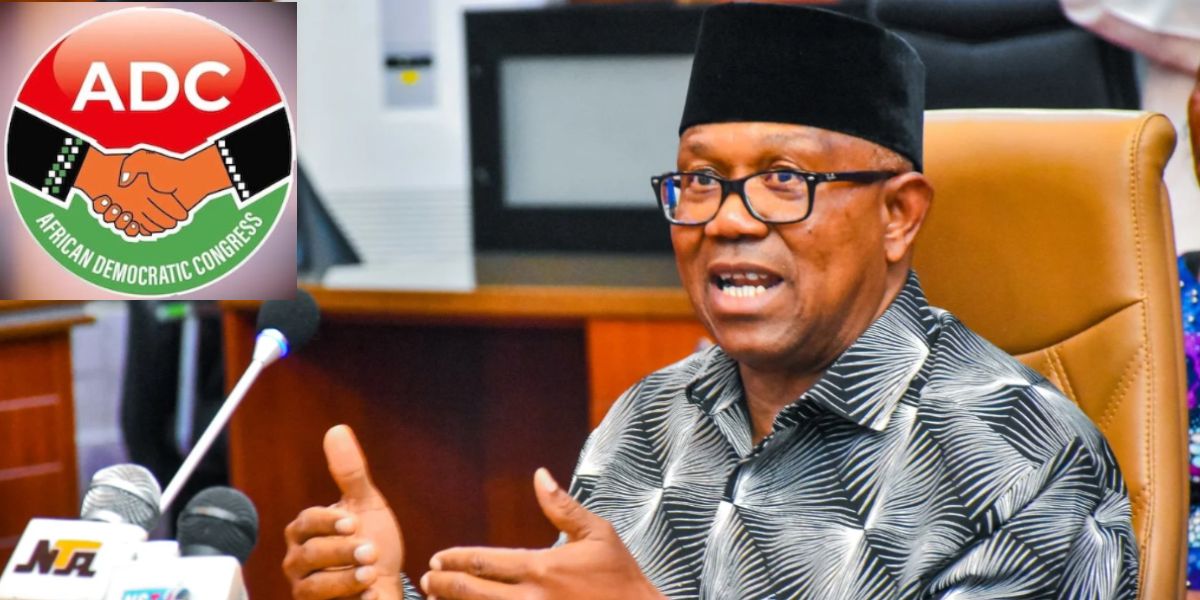
Former governor of Anambra State, presidential candidate of the Labour Party (LP) in the 2023 election, Mr. Peter Obi, has officially defected to the coalition-backed African Democratic Congress (ADC).
Obi announced the decision on Tuesday at an event held at the Nike Lake Resort, Enugu.
“We are ending this year with the hope that in 2026 we will begin a rescue journey,” Obi said.
The National Chairman of the ADC, David Mark, was among the attendees.

United States Representative Riley Moors has said further military strikes against Islamic State-linked militants in Nigeria could follow recent operations ordered by President Donald Trump, describing the actions as aimed at improving security and protecting Christian communities facing violence.
Moore made the remarks during a televised interview in which he addressed U.S. military strikes carried out on Christmas Day against militant targets in North-west Nigeria.
The strikes were conducted in coordination with the Nigerian government, according to U.S. and Nigerian officials.
“President Trump is not trying to bring war to Nigeria, he’s bringing peace and security to Nigeria and to the thousands of Christians who face horrific violence and death,” Moore said.
He said the Christmas Day strikes against Islamic State affiliates had provided hope to Christians in Nigeria, particularly in areas affected by repeated attacks during past festive periods.
According to U.S. authorities, the strikes targeted camps used by Islamic State-linked groups operating in parts of north-west Nigeria.
Nigerian officials confirmed that the operation was carried out with intelligence support from Nigerian security agencies as part of ongoing counter-terrorism cooperation between both countries.
The United States Africa Command said the operation was intended to degrade the operational capacity of extremist groups responsible for attacks on civilians and security forces.
Nigerian authorities have described the targeted groups as a threat to national security, noting their involvement in killings, kidnappings and raids on rural communities.
Moore said the strikes marked a shift from previous years in which attacks were carried out against civilians during the Christmas period. He said the U.S. administration was focused on preventing further violence by targeting militant groups before they could launch attacks.
U.S. officials have said the military action was carried out with the consent of the Nigerian government and formed part of broader security cooperation between the two countries. Nigeria has received intelligence, training and logistical support from international partners as it seeks to contain militant activity.
Moore had previously called for stronger international attention to attacks on Christian communities in Nigeria and has urged continued U.S. engagement in addressing extremist violence. He said further action would depend on developments on the ground and continued coordination with Nigerian authorities.
Nigerian officials have maintained that counter-terrorism operations are directed at armed groups threatening civilians, regardless of religion, and have reiterated their commitment to restoring security across affected regions.


