
Headlines
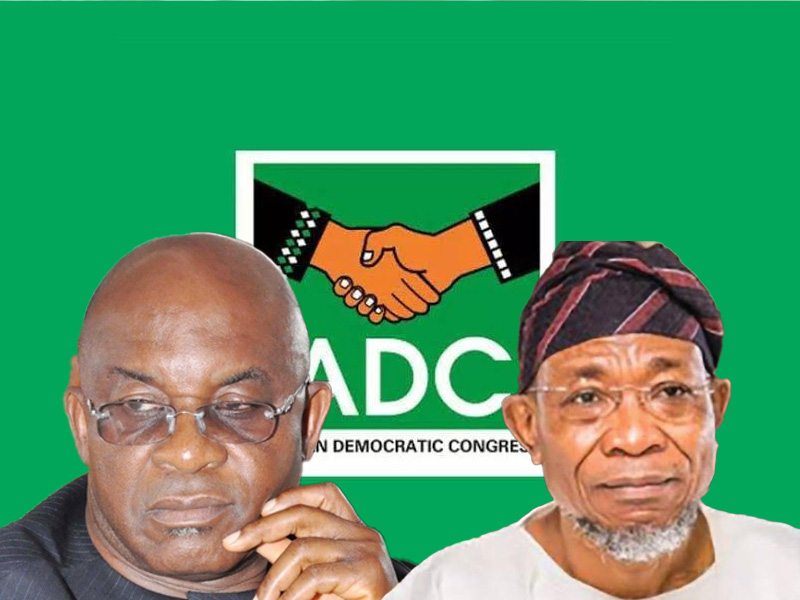
Tinubu’s Candidacy: PDP, APC in War of Words


- /home/rhoncare/pointblank.ng/wp-content/plugins/mvp-social-buttons/mvp-social-buttons.php on line 27
https://pointblank.ng/wp-content/uploads/2019/04/APC-vs-PDP.jpg&description=Tinubu’s Candidacy: PDP, APC in War of Words', 'pinterestShare', 'width=750,height=350'); return false;" title="Pin This Post">
- Share
- Tweet /home/rhoncare/pointblank.ng/wp-content/plugins/mvp-social-buttons/mvp-social-buttons.php on line 69
https://pointblank.ng/wp-content/uploads/2019/04/APC-vs-PDP.jpg&description=Tinubu’s Candidacy: PDP, APC in War of Words', 'pinterestShare', 'width=750,height=350'); return false;" title="Pin This Post">
The Peoples Democratic Party has said that it has every option to challenge the candidacy of the presidential candidate of the All Progressives Congress, Asiwaju Bola Tinubu, including his eligibility to contest the 2023 general elections having been allegedly indicted and subjected to criminal forfeiture judgement for a narcotic related offence by a United States Court in Northern Illinois, Chicago.
This was made known by the Publicity Secretary of the party, Debo Ologunagba, at a press conference held at the party’s Secretariat on Sunday in Abuja.
Ologunagba stated that the APC presidential candidate is “ineligible to contest the February 2023 Presidential election having been reportedly indicted and subjected to criminal forfeiture judgement for a narcotic-related offence by a United States Court in Northern Illinois.
“Nigerians are however appalled by the lame attempt by the APC Presidential Campaign which, after admitting that there was a $460,000 drug money criminal forfeiture judgment against accounts traced to the APC Presidential Candidate, is now desperately trying to pull a wool over the eyes of the Nigerians people and our democratic institutions.
“Seeing that it is technically out of the Presidential contest and further distraught because it cannot also field candidates at all levels in the 2023 general elections due to its illegal and unconstitutional congresses, the APC has resorted to unleashing hoodlums to attack PDP Presidential Campaign rallies and other innocent Nigerians going about their legitimate endeavors as witnessed in Kaduna and Borno States, in a bid to trigger crisis and scuttle the elections.”
The spokesperson added that by the provision of Section 137 (1) (d) of the Constitution of the Federal Republic of Nigeria 1999 (as amended) Asiwaju Tinubu is not eligible to contest the Presidential election in Nigeria.
He noted for emphasis the US Court “Ordered that the funds in the amount of $460,000 in account 263226700 held by First Heritage Bank in the name of Bola Tinubu represent proceeds of narcotics trafficking or were involved in financial transactions in violation of 18 U.S.C. S1956 and 1957 and therefore these funds are forfeited to the United States pursuant to 21 U.S.C. S881(a)(6) and 18 U.S.C S981.”
However, the APC Presidential Campaign Council has fingered the Peoples Democratic Party and the Labour Party as responsible for the sponsorship of fake news against Tinubu in a bid to disqualify him.
In a statement on Sunday, the Director of Media and Publicity of the PCC, Bayo Onanuga, called on the police to investigate the circulation of the forged INEC statement and serve justice to those responsible.
He said, “The opposition Peoples Democratic Party and its subsidiary Labour Party having realised they have no sure path to victory in the February 2023 presidential election upped their campaign of calumny, disinformation and misinformation on Saturday by sponsoring fake news against the APC presidential candidate, Asiwaju Bola Ahmed Tinubu.
“They did it by forging the letterhead of the Independent National Electoral Commission and the signature of its national commissioner, Festus Okoye. The forged statement purportedly issued by INEC was disseminated to deceive the gullible public that INEC was investigating allegations against Asiwaju Tinubu that, they desperately hoped, will ultimately lead to the disqualification of the frontline APC presidential candidate.
“This inglorious path has been taken before since 2003 and in the run-up to the primaries of the ruling APC that produced Asiwaju Tinubu as the presidential torch bearer. Those who took this damned path of infamy lost their bet because Asiwaju Tinubu stands rock solid and indestructible.”
The Punch


The Federal Government has suspended its proposed increase in registration fees for the 2027 West African Senior School Certificate Examination (WASSCE) and the National Examinations Council Senior School Certificate Examination (NECO SSCE), following public concerns over the move.
In a statement issued on Monday by the Federal Ministry of Education, the government announced the withdrawal of a June 18, 2026 letter that had communicated the proposed adjustment in examination fees.
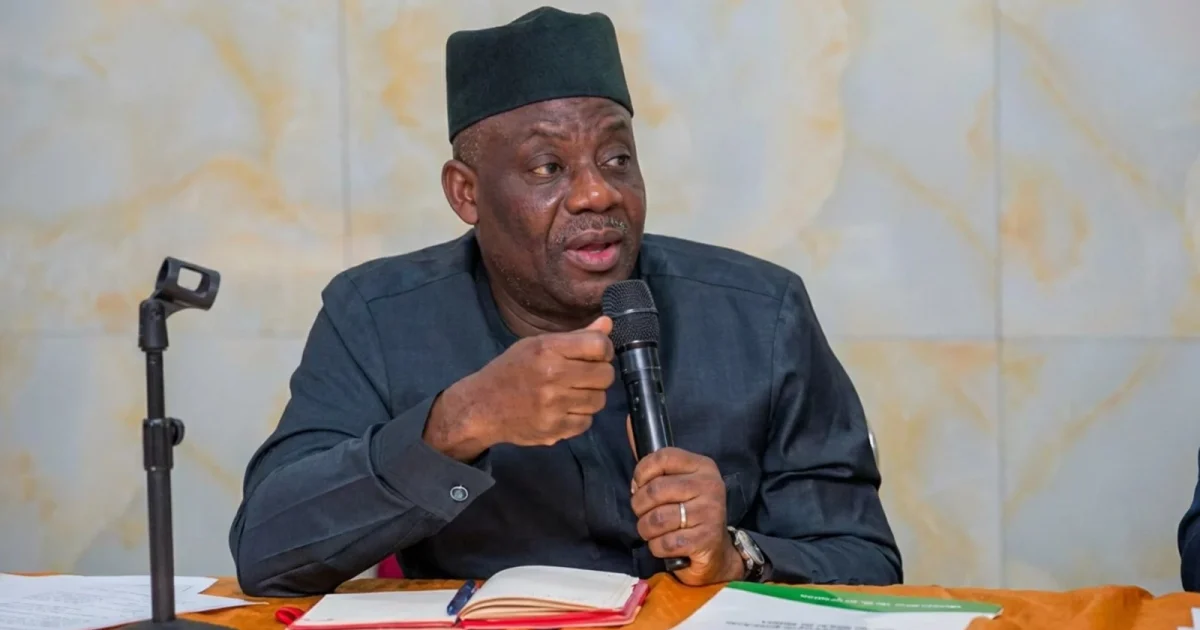
According to the statement signed by the ministry’s Director of Press and Public Relations, Folasade Boriowo, the decision was taken to allow for broader consultations and a fresh review of the proposal before any final determination is made.
“The Federal Ministry of Education announced that the letter conveying the proposed fee adjustment, dated 18 June 2026, has been withdrawn to allow for a comprehensive review and broader consultations with all relevant stakeholders before a final decision is taken,” the statement read.
The proposed increase would have raised the registration fee for both WAEC and NECO examinations from N27,500 to N50,000 beginning in 2027, representing an 82 per cent increase.
The ministry explained that the planned review was prompted by the rising cost of conducting public examinations across the country. It noted that examination fees have remained largely unchanged for years despite significant increases in operational expenses.
According to the ministry, growing costs in areas such as logistics, security, printing of examination materials, technology deployment, quality assurance and other critical services have continued to put pressure on examination bodies.
However, it said the Minister of Education, Dr Maruf Tunji Alausa, had directed that implementation of the proposal be halted pending consultations.
“The Honourable Minister of Education, Dr. Maruf Tunji Alausa, CON, has directed that the proposal be placed on hold in line with the Federal Government’s commitment to inclusive, transparent and evidence-based policymaking,” the statement said.
The ministry stressed that no adjustment to examination fees would take effect until discussions with stakeholders are concluded.
It disclosed that consultations would involve examination bodies, state ministries of education, school proprietors and administrators, parents’ associations, organised labour, education stakeholders and other relevant partners.
The statement added that the government remains committed to ensuring that policies affecting students and their families are subjected to adequate scrutiny and reflect public interest.
Reaffirming its position, the ministry said students’ welfare, equitable access to quality education and responsible policymaking remain central to the Federal Government’s education agenda.
It also pledged to keep Nigerians informed throughout the consultation process before any decision is reached on the proposed fee review.
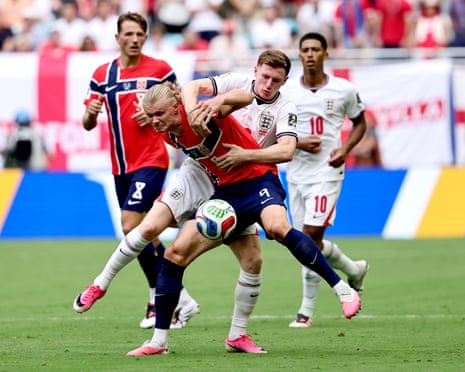
Jude Bellingham scored a dramatic extra-time winner as England overcame an unfortunate Norway to reach the semi-finals of the 2026 World Cup.
Bellingham slid home the winning goal in the first half of extra time after a second Norway goal was ruled out by the VAR for an Erling Haaland foul.
Andreas Schjelderup had given Norway the lead, but Bellingham equalised with a brilliant finish — although England were fortunate the goal stood after the ball struck the Spidercam during the build-up.
England rode their luck at times but will now face either Switzerland or old rivals Argentina as they seek to reach the World Cup final for the first time since 1966.
New York Times


