
Headlines
Tragedy As Gunmen Kill Three Traditional Rulers in Imo

Tragedy struck in Imo State on Tuesday evening as yet-to-be identified gunmen opened fire on traditional rulers during a meeting, killing three of them.
The traditional rulers were having a stakeholders’ meeting at the Njaba local council headquarters at Nnenasa when the hoodlums struck.
Our correspondent learnt that other traditional rulers were left with varying degrees of injuries.
As of the time of filing this report, the council headquarters was in a state of panic.
The police spokesperson in the state, Mike Abattam, said two of the traditional rulers had been confirmed dead while the command had commenced investigation into the incident.
Among the monarchs confirmed dead were the Obi 1 of Okwudor autonomous community, Eze E. Anayochukwu Durueburuo and Eze Sampson Osunwa of Ihebineowerre autonomous community.



President John Mahama of Ghana has ordered the immediate recall of Mohammed Ahmed, known as Baba Jamal, from his position as the country’s high commissioner to Nigeria over allegations of vote buying in Saturday’s parliamentary primaries.
Mahama’s decision was in response to claims that delegates were induced during the National Democratic Congress (NDC) primaries.
Jamal was a candidate in the polls, which he later won.
During the election, Jamal’s campaign team offered 32-inch televisions and boiled eggs to delegates who took part in the primaries.
“So if you give television sets to people, what is wrong with it when you give things to people?” he asked, according to local media JoyOnline.
“Is this the first time I am giving things to people?”
Explaining the reason behind Jamal’s recall, Felix Ofosu, Mahama’s spokesperson, said that while the allegations of vote buying were made against multiple candidates who contested the primaries, Jamal was the only serving public officer among them.
“The President has also noted the public statement by the General Secretary of the NDC indicating that the Party has commenced its own investigations into the allegations arising from the primaries,” the statement reads.
“Without prejudice to the ongoing internal party processes, and strictly in view of the standards of conduct expected of public officers, the President considers it necessary to act decisively to preserve the integrity of public office and to avoid any perception of impropriety or conflict with the Government’s Code of Conduct for Political Appointees.”
Ofosu said the high commissioner’s recall takes effect immediately, and that directives had been issued to the minister for foreign affairs to take the necessary administrative steps.
The All Progressives Congress, APC, has reconstituted the leadership of its 2026 National Convention Central Coordination Committee, appointing former Katsina State Governor, Aminu Bello Masari, as the new chairman.
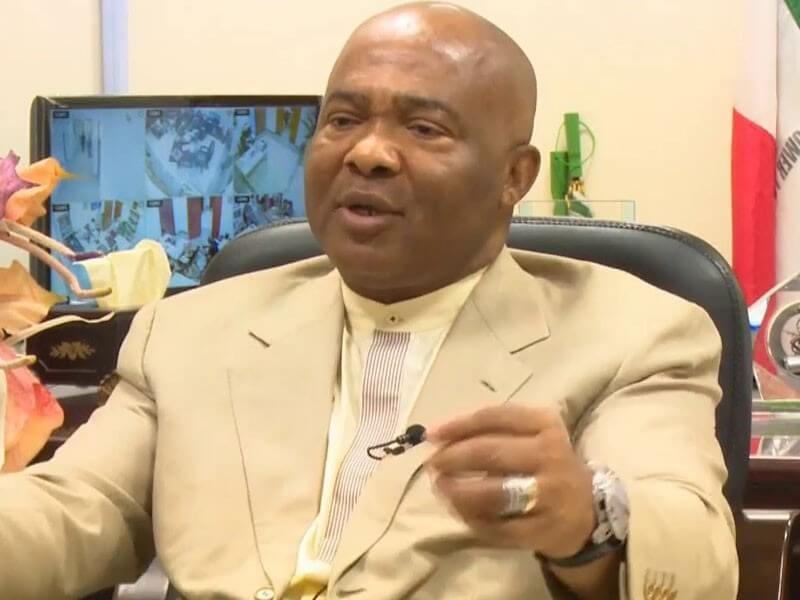
Governor Hope Uzodimma of Imo State, who was initially named chairman of the committee, has been reassigned to serve as treasurer.
In addition, the APC expanded the committee’s membership from 73 to 90 members to accommodate more party stakeholders.
Newly added members include Senator Barry Mpigi and several other prominent APC chieftains.
According to the party, the adjustments form part of the revised 2026 APC National Convention Central Coordination Committee and were made to reflect zoning considerations and other strategic exigencies.

The Senate, yesterday, passed the Electoral Bill 2026 following hours of robust debate. But it rejected a proposal to mandate real-time electronic transmission of election results while approving significant reforms to election timelines, penalties for electoral offences and voting technology.
At the centre of the controversy was Section 60, which governs the transmission of polling unit results. Senators voted down a recommendation by the Senate Committee on Electoral Matters that would have compelled presiding officers to upload results to the INEC Result Viewing (IReV) portal in real time.
Instead, lawmakers retained the approach in the 2022 Electoral Act, which allows electronic transmission after votes are counted and publicly announced at the polling unit.
Relatedly, the Independent National Electoral Commission (INEC), which concluded work on the timetable and schedule of activities for the 2027 general election, is unable to release it due to ongoing amendments to the Electoral Act by the National Assembly.
It also identified the inclusion of deceased persons on the voters’ register, prompting plans for a nationwide verification exercise.
On its part, the African Democratic Congress (ADC) raised the alarm over the National Assembly’s delay in passing the Electoral Act amendments, warning that the situation could expose political parties to technical and legal pitfalls ahead of the 2027 general elections.
Under the retained provisions, presiding officers are required to: count votes at the polling unit, record results on prescribed forms, announce them publicly and transmit them electronically to the appropriate collation centre.
Copies must also be provided to polling agents and security personnel where available. Violators face fines of up to N500,000 or a minimum of six months’ imprisonment.
Senators opposing the real-time upload argued that inconsistent network coverage and logistical challenges could trigger legal disputes and undermine electoral credibility.
Chairman of the Senate Committee on Media and Public Affairs, Adeyemi Adaramodu, described the debate as largely semantic.
“Electronic transmission remains part of the law,” he said, “and results will continue to be available to the public both electronically and through physical forms, ensuring verifiable records for disputes.”
Beyond the transmission debate, the Senate approved far-reaching amendments to Nigeria’s electoral calendar. The election notice period was reduced from 360 days to 180 days, the deadline for submission of party candidate lists was shortened from 120 to 90 days, and the nomination period was cut from 180 to 90 days.
To deter electoral malpractice, the fine for unlawful possession of voters’ cards was increased from N500,000 to N5 million, though the Senate rejected a proposal for a 10-year ban on vote-buyers, opting for stiffer financial penalties instead. The smart card reader was officially removed from the electoral framework and replaced with the Bimodal Voter Accreditation System (BVAS).
INEC Chairman, Prof Joash Amupitan, noted the delay yesterday in Abuja at INEC’s first quarterly consultative meeting with Civil Society Organisations (CSOs).
The e-transmission of results, if approved, would have required INEC presiding officers to upload results from each polling unit to the IReV portal in real time, immediately after completing Form EC&A, which must be signed and stamped by the presiding officer and countersigned by party agents.
Instead, the senators chose to retain the present Electoral Act provision, which mandates that “the presiding officer shall transfer the results, including the total number of accredited voters and the results of the ballot, in a manner as prescribed by the Commission.”
The rejected proposal was contained in the new Clause 60(5) of the draft bill, which aimed to mandate presiding officers to electronically transmit polling unit results in real time after completing and signing Form EC8A.
The clause was designed to strengthen transparency and reduce electoral malpractice through technology-driven result management.
The motion to reject the electronic transmission clause was swiftly seconded by the Deputy President of the Senate, Barau Jibrin.
Similarly, the Senate also rejected a proposed amendment under Clause 47 that would have allowed voters to present electronically-generated voter identification, including a downloadable voter card with a unique Quick Response (QR) code, as a valid means of accreditation.
The Senate further upheld the provision mandating the use of the Bimodal Voter Accreditation System (BVAS) or any other technological device prescribed by INEC for voter verification and authentication, rather than allowing alternative digital identification methods as proposed in the new bill.
With these decisions, the Senate reaffirmed the use of PVC and BVAS-based accreditation while rejecting efforts to expand digital voter identification and make electronic transmission of results compulsory.
The Guardian


