Business
TTP: Nestlé Nigeria Graduates 6th Batch, Celebrates Best Graduating Student

- /home/rhoncare/pointblank.ng/wp-content/plugins/mvp-social-buttons/mvp-social-buttons.php on line 27
https://pointblank.ng/wp-content/uploads/2022/12/Agbara-TTC-1000x600.jpg&description=TTP: Nestlé Nigeria Graduates 6th Batch, Celebrates Best Graduating Student', 'pinterestShare', 'width=750,height=350'); return false;" title="Pin This Post">
- Share
- Tweet /home/rhoncare/pointblank.ng/wp-content/plugins/mvp-social-buttons/mvp-social-buttons.php on line 69
https://pointblank.ng/wp-content/uploads/2022/12/Agbara-TTC-1000x600.jpg&description=TTP: Nestlé Nigeria Graduates 6th Batch, Celebrates Best Graduating Student', 'pinterestShare', 'width=750,height=350'); return false;" title="Pin This Post">
Oluwadarasinmi Adesakin is a beneficiary of Nestlé Nigeria’s 18-month Technical Training program which aims to bridge the skills gap by equipping youth with the required expertise to support industrialization. He is the best graduating student of Batch 6.
A citizen of Oyo State in Western Nigeria, Darasinmi obtained his National Diploma in Mechanical Engineering from the Petroleum Training Institute in Warri, Delta State.
Although he was already working, he aspired to develop himself further and was elated to be accepted into the technical training program. He therefore set his mind to make the best of the opportunity and to attain the best possible result.
Darasinmi’s determination paid off as he finished his studies in flying colours, achieving a total of 29 distinctions, out of 36 courses in the City and Guilds examinations, the best result since the program started in 2011.
“Today was a huge surprise for my father, Mr. Adesakin Adeoye, a Mechanical Engineer himself,” Darasinmi said. “He did not know I was the best graduating student or that I would be going to Switzerland for an internship program. He was so elated and could not hold back his joy. This, for me, was very fulfilling.”
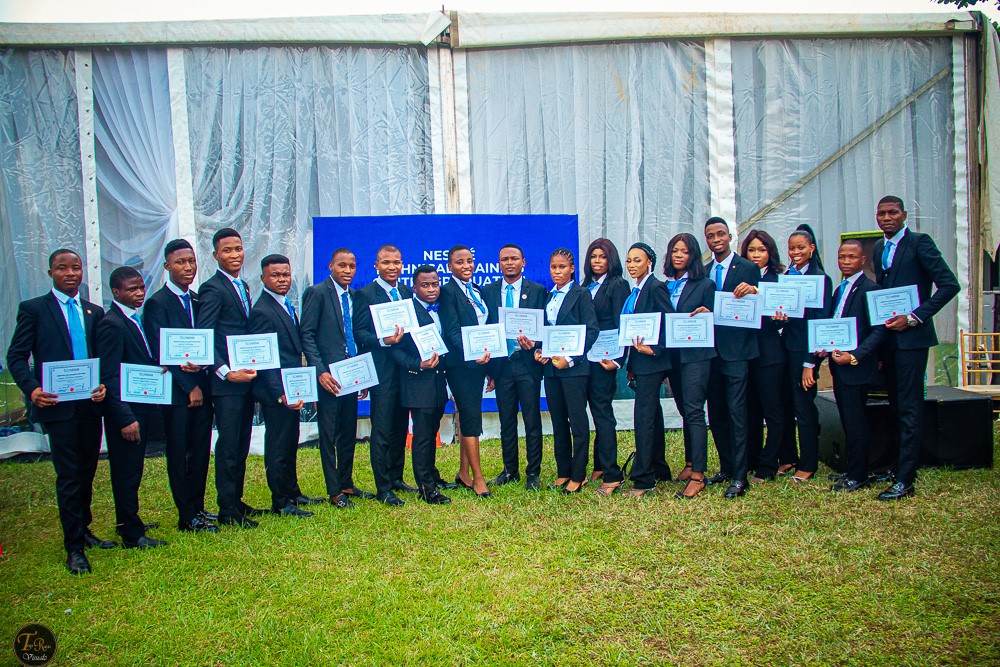
Oluwadarasinmi Adesakin was ecstatic as he joined his colleagues at the 6th graduation ceremony which took place at Nestlé Nigeria’s Technical Training Center in Agbara, Ogun State. All of the 20 trainees excelled at the Diploma 3, 4 and 5 examinations of London City and Guilds, obtaining distinctions in Thermodynamics, and the best overall results in West Africa.
Speaking at the ceremony, the MD/CEO, Nestlé Nigeria, Mr Wassim Elhusseini said, “At Nestlé, we believe that young people have a key role to play in building thriving, resilient communities. Young people are our future, they are the entrepreneurs and innovators of tomorrow. They do not only help their communities thrive, but also benefit Nestlé with their fresh ideas, diverse perspectives, and energy. This is why we are passionate about helping them to build the capabilities and skills they need to contribute towards accelerating the industrialization we need to grow our economy.”
In his comments, Thomas Schneider, Consul General, Consulate of Switzerland in Lagos, said, “We are delighted that for eleven years on, this joint training program between the Switzerland Government and Nestlé Nigeria is still making impact on young people within the country, creating job opportunities.”
Inaugurated in 2011, The 18-month intensive program trains participants in machining, mechanical fitting operations, electrical operations, instrumentation operations and automation. The program culminates in the prestigious London City and Guilds technical certification with the top five graduates of each batch undergoing a further three-month internship program at a Nestlé factory in Switzerland, sponsored by the Swiss Embassy in Nigeria.
Over 160 students have benefitted from the program since its inception, with over 90% of them directly employed by Nestlé Nigeria. All the participants of batch 6, 40% of them females, successfully completed the training and the top 5 performers will be undertaking an internship and mentoring program at Nestlé factories in Switzerland in the first few months of 2023. 95% of the graduates, including Darasinmi, have been employed by Nestlé Nigeria.
Parents of the graduates, the Traditional Ruler of Agbara, and representatives of the Ogun State Government present at the event all expressed their appreciation of the value that the TTC has been adding over the past 11 years.
The Ogun State Commissioner for Education, Science and Technology, Prof. Abayomi Arigbagbu, represented by the Zonal Education Officer, Ado-Odo Ota, Mr Olugbenga Kikisuhu said, “Education is the bedrock of any meaningful social and economic development, and we all must accord education the priority it deserves. Nestlé Nigeria PLC has today taken another giant step on her journey of empowering young Nigerians for a better tomorrow by upskilling and employing the graduates. I congratulate the beneficiaries of this laudable technical training program and particularly appreciate the Management of Nestlé Nigeria PLC for her consistent contribution to educational development in the state.”
In his remarks, the Ogun State Commissioner for Youth and Sports Development, Dr. Kehinde Oluwadare, represented by Adetokunbo Salami, Director, Youth Development for the Ministry, said, “I am delighted to witness another batch of young Nigerians graduating from the Nestlé technical training program. Initiatives such as these are well aligned with the vision of the Ogun State Government on youth empowerment. I commend Nestlé for this sustained intervention which not only equips young people with relevant industry skills and expertise but is also providing economic and job opportunities.”
On his part, the Alagbara of Agbara, HRM Oba (Barr.) Lukman Jaiyeola Agunbiade, commended Nestlé for the positive impact the company is making within the Agbara community, especially in capacity development and empowerment of young people. He described Nestlé Nigeria as a valued stakeholder, and congratulated all graduates, encouraging them to maximally utilize the opportunity provided by the company.
Speaking on behalf of his colleagues, Oluwadarasinmi Adesakin, said, “We are grateful for this excellent platform created by Nestlé Nigeria for young Nigerians. The training program has been an unforgettable journey and a robust experience that has equipped my colleagues and I with knowledge, skills and core values such as integrity, leadership and accountability required to thrive in life.
We are sincerely grateful to Nestlé, the Swiss Consulate and all the partners supporting this program. I commend all my colleagues for the passion, teamwork and dedication that has enabled us to successfully complete the program.”



While conversations about the future of retail increasingly focus on supermarkets, shopping malls and online shopping platforms, millions of African consumers continue to rely on a more familiar and accessible business: the neighbourhood shop.
From small provision stores and corner shops to kiosks and informal retailers, these businesses remain an important part of everyday commerce, connecting communities to essential household products. However, behind their convenience lies a supply chain challenge that often limits their growth.
For many small retailers, sourcing products, managing inventory and securing enough working capital to keep their shelves stocked can be difficult. Fragmented distribution networks, multiple intermediaries and limited access to financing often make it harder for them to compete and expand.
Technology is beginning to offer a different possibility.
Digital platforms can simplify the way neighbourhood retailers purchase goods by connecting them more directly with manufacturers and distributors. They can streamline ordering, improve product availability and make inventory management more efficient.
Access to financial technology can further strengthen these businesses by helping eligible retailers secure the working capital required to replenish stock, respond to customer demand and grow sustainably.
One Nigerian technology company working to address these challenges is TradeDepot, which is using digital innovation to connect small retailers with manufacturers and distributors.
By making product sourcing and distribution more efficient, the company is helping to address some of the longstanding barriers facing small businesses in Africa’s retail sector.
However, scaling technology-driven solutions across a fragmented retail market requires more than innovation. It also demands significant investment.
This is where development finance and venture capital become important.
Through Boost Africa, the European Investment Bank (EIB) invested in Partech Africa Fund, a venture capital fund that subsequently backed TradeDepot. The investment illustrates how development finance can reach innovative African businesses through investment funds, providing capital to companies working to solve real economic challenges.
Boost Africa is a joint initiative of the European Investment Bank and the African Development Bank, with support from the European Union. The initiative supports African businesses and strengthens the continent’s entrepreneurial ecosystem by improving access to finance and opportunities for growth.
The wider significance of this investment goes beyond the technology platform itself. Strengthening neighbourhood retailers can contribute to more efficient supply chains, support small business growth and improve access to everyday consumer goods across communities.
For Africa, where small retailers remain central to local economies, the opportunity is substantial.
The future of retail may not necessarily involve replacing traditional neighbourhood shops with large supermarkets or online marketplaces. Instead, it could depend on equipping these existing businesses with better technology, stronger distribution networks and improved access to finance.
Ultimately, transforming retail may begin with something as familiar as the shop around the corner.
Boost Africa: From Capital to Impact.
Watch how TradeDepot is bringing commerce closer to communities through technology and investment

Ever wondered how the products on your neighbourhood shop shelves get there? Behind everyday purchases is a supply chain that can be costly, complex and inefficient, particularly for small retailers.
Nigerian technology company TradeDepot is changing this process by using technology to connect small retailers with manufacturers and distributors, making it easier for shop owners to order and receive the goods they need.
But transforming retail distribution takes more than an innovative idea. It requires investment to build, expand and scale.
Through Boost Africa, the European Investment Bank (EIB), alongside the African Development Bank and with support from the European Union, is helping strengthen the financing ecosystem for innovative African businesses.
One example is the EIB’s investment in Partech Africa Fund, which subsequently backed TradeDepot, helping channel capital into a Nigerian business working to improve how goods move from suppliers to neighbourhood shops.
The impact goes beyond technology. More efficient distribution can help small retailers access inventory, strengthen connections between manufacturers and suppliers, and bring commerce closer to the communities they serve.
Ultimately, TradeDepot’s story demonstrates how investment can go beyond funding to support stronger businesses, more efficient markets and opportunities for small retailers.
Boost Africa: From Capital to Impact.
Watch how TradeDepot is bringing commerce closer to communities.
▶ https://www.youtube.com/watch?v=zw9t2asF9Pc
Business
Beyond University Degrees: How ChipMango is Preparing African Engineers for Global Tech Industry
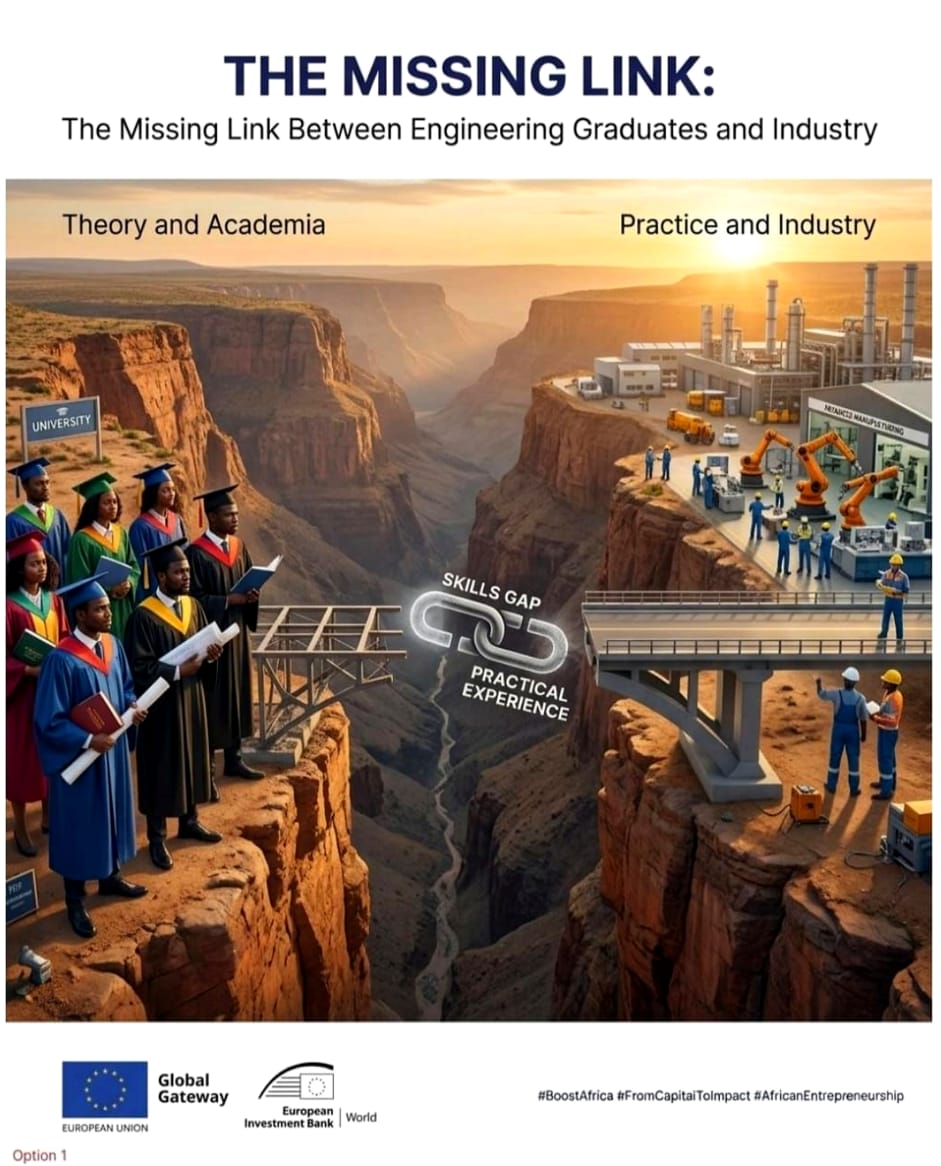
A university degree is a starting point, but practical industry experience can make all the difference.
Nigerian technology company ChipMango is bridging the gap through specialised semiconductor training and real-world chip design and verification projects, preparing African engineers for opportunities in the global technology industry.
Through Boost Africa, the EIB, AfDB and EU are strengthening the investment ecosystem supporting innovative African businesses.
Watch the video to discover how ChipMango is connecting engineering talent to real industry opportunities.
Watch the video: