
Business
Unity Bank Disburses N270m to Corpreneurship Winners


Unity Bank Plc has disbursed over N270 million in grants to young Nigerian entrepreneurs under its Youth Entrepreneurship Development Initiative: Corpreneurship Challenge, bringing the total number of beneficiaries since inception in 2019 to 608 corps members nationwide.
The initiative, implemented in partnership with the National Youth Service Corps (NYSC) through its Skill Acquisition and Entrepreneurship Development (SAED) programme, continues to equip fresh graduates with the funding, confidence, and support required to launch and scale viable businesses.
In the most recent edition of the Corpreneurship Challenge, held between November 18 and December 9, 2025, across 10 NYSC orientation camps nationwide, 30 youth corps members emerged as winners during the Batch C, Stream I, 2025 exercise of the programme.
The latest beneficiaries were selected from orientation camps in Lagos, Delta, Kaduna, Jigawa, Kwara, Enugu, Abia, the Federal Capital Territory (FCT), Akwa Ibom, and Plateau (Jos), after pitching innovative business ideas across diverse sectors of the economy.
Unity Bank’s cumulative investment in the Corpreneurship Challenge underscores the Bank’s long-standing commitment to youth empowerment, MSME development, and job creation in Nigeria.
Speaking on the continued impact of the initiative, Unity Bank’s Divisional Head, Retail & SME, Mrs. Adenike Abimbola, reaffirmed the Bank’s belief in entrepreneurship as a catalyst for economic transformation.
“At Unity Bank, we recognise that entrepreneurship remains one of the most effective tools for tackling youth unemployment and driving inclusive economic growth. Through the Corpreneurship Challenge, we are not only providing financial support, but also instilling confidence in young graduates to transform viable ideas into sustainable businesses. Reaching over 600 beneficiaries since inception reinforces our belief in the immense potential of Nigeria’s youth,” she said.
Mrs. Abimbola further emphasised the programme’s role in strengthening Nigeria’s MSME ecosystem and creating long-term economic value.
“Small and medium-scale enterprises are the backbone of any resilient economy. By supporting corps members at the earliest stage of their entrepreneurial journey, we are helping to build businesses that can create jobs, stimulate local economies, and contribute meaningfully to national development. Our focus is on impact that goes beyond grants, impact that translates into lasting livelihoods,” she added.
The Corpreneurship Challenge provides a competitive platform where corps members pitch business ideas, assessed on originality, feasibility, market demand, scalability, and job-creation potential. Successful participants receive financial grants to kick-start or expand their ventures, alongside exposure to business guidance and mentorship.
Since its launch, the initiative has supported youth-led businesses across value chains, including fashion, agribusiness, food processing, creative services, manufacturing, and retail. Over the years, it has become an integral part of the NYSC experience, attracting thousands of applications annually and earning national recognition for its contribution to youth empowerment.
By sustaining and expanding the Corpreneurship Challenge, Unity Bank continues to reinforce its role as a strategic partner in Nigeria’s entrepreneurial and MSME development landscape.


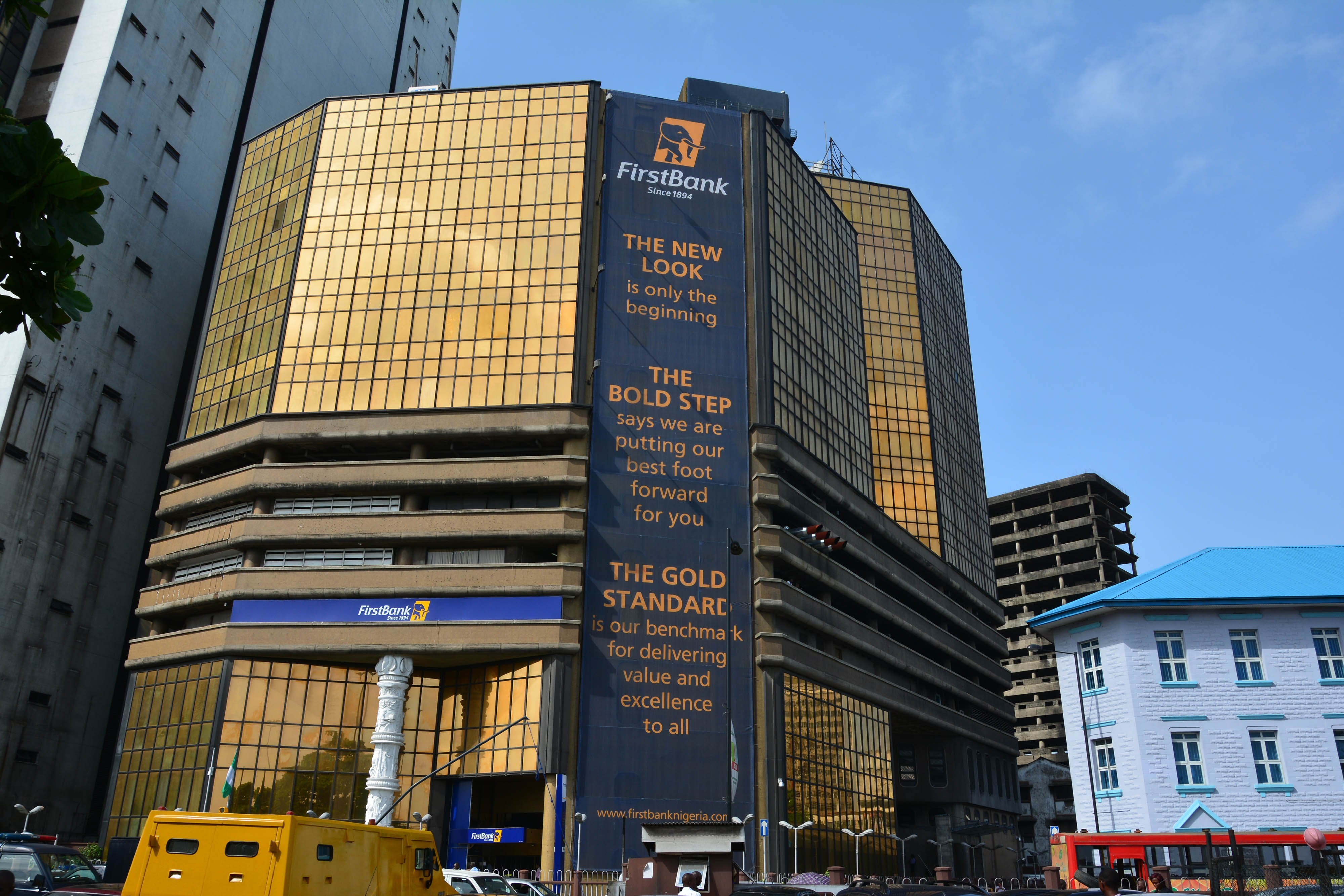
First HoldCo Plc has announced its unaudited financial results for the year ended 31 December 2025, reflecting a year of deliberate strategic actions aimed at strengthening its balance sheet, improving asset quality, and positioning the business for more resilient and sustainable growth amidst successful capital raise activities.
As stated in the unaudited Group financial statement, FirstHoldCo recorded a 4.8% year-on-year (y-o-y) increase in its Gross earnings to N3.4 trillion, supported by a 36.3% y-o-y growth in net interest income of N1.9 trillion on the back of enhanced earnings yield and margins of 17.11% and 11.0%, respectively. Similarly, net fees and commissions improved by 18.7% y-o-y to N290.7 billion. These are clear indications of the strength of the revenue generating capacity of the core business which continues to be solid. Earnings for the year were, however, lower than the prior year, primarily due to higher impairment charges in the commercial banking segment. This is in line with a deliberate strategic decision to accelerate balance sheet clean-up and adopt more aggressive provisioning standards. Management views this as a prudent step that enhances transparency, strengthens investor confidence, and aligns fully with evolving regulatory expectations.
Additionally, increased regulatory costs affected profitability. These charges, while weighing on the results, underscore the Group’s compliance with Nigeria’s financial system stability framework and its commitment to ensuring systemic confidence. Despite these pressures, underlying performance of the Group remains strong.
Deposit liabilities grew by 10.0% y-o-y, driven by sustained deposit mobilisation and continued investment in digital banking platforms. This growth reflects strong customer confidence and deepening engagement across key segments. The deposit mix also showed a deliberate reduction in foreign currency deposits, resulting from the repayment of expensive funding and the impact of naira appreciation. This shift supports improved funding efficiency and reduces foreign exchange risk.
Gross loans and advances declined marginally, reflecting a disciplined approach to credit growth, strengthened risk management, loan repayments, write-offs, and the translation impact of a stronger naira on foreign currency facilities. The Group intensified its commitment to ensuring a high-quality, cleaner asset base, aiming to optimise the portfolio and enhance future earnings potential.
Furthermore, performance in earnings was impacted by a decline in non-interest income, mainly due to lower fair value gains on financial instruments following the naira appreciation in 2025. However, this was partially offset by stronger foreign exchange (FX) trading income and reduced FX revaluation losses. Net fees and commission income also grew, supported by higher electronic banking fees, letters of credit commissions, custodian fees, and account maintenance income, reflecting the continued success of the Group’s digital-innovation strategy.
While impairment charges increased following the end of regulatory forbearance, management has intensified recovery initiatives and reinforced credit oversight. Excluding impairment and fair value gains, pre-provision operating profit grew by 23.9% y-o-y to N973.3 billion demonstrating robust performance of the core business.
Apart from the commercial banking impairments, performance across the rest of the Group remained resilient, supported by steady customer activity and disciplined execution.
Looking ahead, the Group will continue to prioritise disciplined execution of its strategic objectives, with emphasises on enhancing efficiency and profitability, continuing to build on the Group’s digital and data capabilities, while sustaining a robust balance sheet to support increased value creation and returns for shareholders. Alongside this, the Group will pursue selective growth initiatives, including new revenue streams, additional business verticals, and deeper participation in targeted African markets, in line with our strategy and risk appetite.
Further details and insights are to be provided when the audited full-year results are published and during the subsequent investor and analyst earnings call.
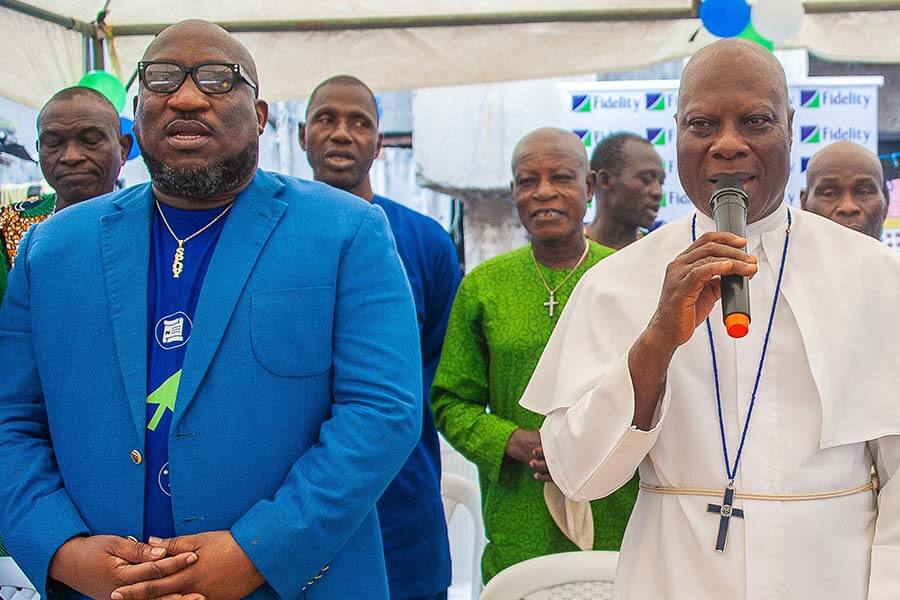
Leading financial institution, Fidelity Bank Plc has reinforced its commitment to community development and youth empowerment with the donation of educational and hygiene materials to pupils of Wesley Nursery and Primary School in the Makoko Waterfront Community, Lagos, under its Fidelity Helping Hands Programme (FHHP).
The FHHP outreach was led by the Bank’s Risk Management Directorate as part of a “Back to School” intervention aimed at improving learning conditions and promoting personal hygiene among children in one of Nigeria’s most underserved waterfront communities. Through the FHHP, staff receive matching financial support from the bank’s management to execute projects identified in response to their communities’ crucial needs.
A total of 124 primary school pupils benefitted from the initiative. Items donated included school bags, exercise books, writing materials, towels, soap, toothpaste and toothbrushes, designed to support both academic learning and healthy living.
Speaking at the outreach, Divisional Head, Remedial Assets, Fidelity Bank Plc, Dr. Damian Orizu, who represented the Executive Director and Chief Risk Officer, Fidelity Bank, Mr. Kevin Ugwuoke, said the initiative underscores the bank’s belief that its long-term success is closely linked to the wellbeing of the communities in which it operates.
“At Fidelity Bank, we strongly believe that our growth and success are closely tied to the wellbeing of the communities where we operate,” Dr. Orizu said. “This outreach is our way of investing in the future of Makoko’s children by supporting their education and promoting good hygiene, which are critical foundations for long-term development.”
Orizu further added, “The FHHP reflects the passion and commitment of our employees to make a tangible difference. I commend the Risk Management Directorate for championing this intervention and demonstrating that corporate responsibility starts from within.”
The Baale, Adogbo (1) Community, Makoko, Chief Victor Panke, thanked Fidelity Bank for its consistent support, noting the severe financial and transportation challenges faced by children in the area. “This support will go a long way in easing the burden on our children and their families,” Chief Panke said. “Many pupils struggle daily with transportation across the lagoon just to attend school. We are grateful to Fidelity Bank and appeal for continued assistance, especially in the area of boats to help our children access education more safely and easily.”
The Makoko outreach is the Bank’s third intervention in the community within the last two months. Through the Fidelity Helping Hands Programme, Fidelity Bank continues to demonstrate its commitment to education, hygiene and sustainable community development, with a special focus on vulnerable communities such as Makoko.
Ranked among the best banks in Nigeria, Fidelity Bank Plc is a full-fledged Commercial Deposit Money Bank serving over 9.1 million customers through digital banking channels, its 255 business offices in Nigeria and United Kingdom subsidiary, FidBank UK Limited.
The Bank is a recipient of multiple local and international Awards, including the 2024 Excellence in Digital Transformation & MSME Banking Award by BusinessDay Banks and Financial Institutions (BAFI) Awards; the 2024 Most Innovative Mobile Banking Application award for its Fidelity Mobile App by Global Business Outlook, and the 2024 Most Innovative Investment Banking Service Provider award by Global Brands Magazine. Additionally, the Bank was recognized as the Best Bank for SMEs in Nigeria by the Euromoney Awards for Excellence and as the Export Financing Bank of the Year by the BusinessDay Banks and Financial Institutions (BAFI) Awards.
Ecobank Nigeria, in partnership with Soto Gallery, has announced plans to host the third edition of the +234 Art Fair, scheduled to take place from 5–8 March 2026 at the Ecobank Pan‑African Centre, Victoria Island, Lagos.
The 2026 edition, themed “Inclusivity,” underscores Ecobank and Soto Gallery’s shared commitment to creative entrepreneurship, equitable access, and the deliberate expansion of opportunity within Nigeria’s contemporary art ecosystem.
The +234 Art Fair has quickly established itself as one of Lagos’ most important contemporary art platforms, with a distinct focus on emerging and often ungalleried Nigerian artists. In just a few years, the fair has become a critical gateway—connecting local talent to collectors, patrons, cultural institutions, and global audiences, while strengthening Nigeria’s creative economy.
Speaking on the 2026 edition, Tola Akerele, Founder of Soto Gallery and Curator of the +234 Art Fair, said the theme “Inclusivity” reflects a clear intent to widen representation and reposition visibility within the art space.
“Inclusivity is about opening doors wider and changing who gets seen, supported, and celebrated,” she said. “We are already receiving exceptional works from artists who might otherwise not have access to platforms like this. The application remains open, and I encourage Nigerian artists to seize this opportunity to be recognised among the continent’s finest.”
Also commenting, Omoboye Odu, Head, SME Partnerships and Collaborations at Ecobank Nigeria, described the 2026 fair as a purposeful intervention aimed at reshaping how Nigerian creativity is discovered, supported, and sustained.
“For the third edition of the +234 Art Fair, we celebrate Inclusivity as both a principle and a practice,” Odu said. “Art belongs to everyone. This fair intentionally broadens the frame—moving beyond traditional centres of access to spotlight talent from the margins, from new geographies, and from voices that deserve to be heard.”
She added:
“If you are an artist working across boundaries, challenging perspectives, or creating outside established systems, this is your moment. +234 Art Fair 2026 is about building a more equitable creative future—together.”
The event is expected to attract a diverse audience, including art lovers from across Nigeria, residents of the African diaspora, senior government officials, policymakers, members of the diplomatic community, collectors, and global art enthusiasts.


