
Business
US Journal Announces Dangote as World’s 11th Greatest Leader

- /home/rhoncare/pointblank.ng/wp-content/plugins/mvp-social-buttons/mvp-social-buttons.php on line 27
https://pointblank.ng/wp-content/uploads/2019/05/Dangote.jpeg&description=US Journal Announces Dangote as World’s 11th Greatest Leader', 'pinterestShare', 'width=750,height=350'); return false;" title="Pin This Post">
- Share
- Tweet /home/rhoncare/pointblank.ng/wp-content/plugins/mvp-social-buttons/mvp-social-buttons.php on line 69
https://pointblank.ng/wp-content/uploads/2019/05/Dangote.jpeg&description=US Journal Announces Dangote as World’s 11th Greatest Leader', 'pinterestShare', 'width=750,height=350'); return false;" title="Pin This Post">
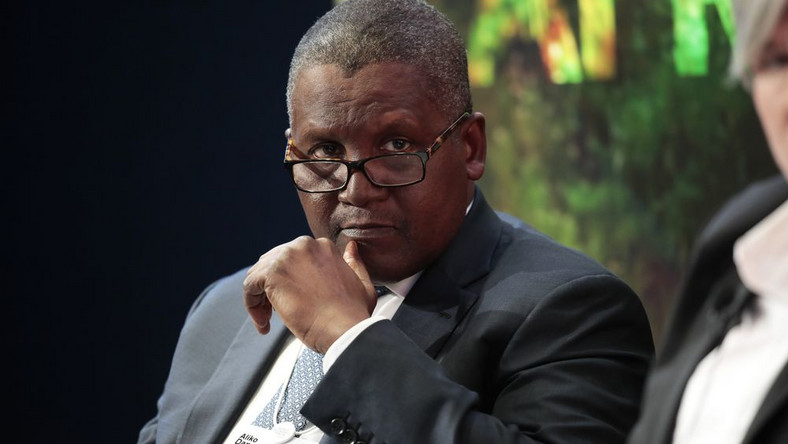
Africa’s richest man Aliko Dangote has been ranked 11th in the club of World’s 50 Greatest Leaders for this year.
The rating was announced by Fortune, a multinational business magazine based in New York City, United States. It focuses mainly on privately-run businesses and how their promoters have used them to impact their society positively.
The magazine, which had its maiden edition published in February 1930, said the world’s greatest leaders (both men and women) are transforming the world and inspiring others to do so in business, government, philanthropy and the arts.
It said: “These thinkers, speakers and doers make bold choices and take big risks – and move others to do the same.”
It was learnt that Fortune magazine was recognising and including Aliko Dangote in the annual ranking for the first time. Specifically, Dangote having popped up in the magazine’s radar earned nomination after being adjudged as having used business to acquire wealth and converting the wealth into impactful philanthropy through his Aliko Dangote Foundation.
The top 10 greatest men and women, according to Fortune are: Bill and Melinda Gates; Jacinda Ardem (Prime Minister, New Zealand); Robert Mueller (Special Counsel, Department of Justice); Pony Ma (Founder and CEO, Tencent); Satya Nadella (CEO, Microsoft); Greta Thunberg (Student and climate activist, Sweden); Margrethe Vestager (Commissioner for Competition, European Union); Anna Nimiriano (Editor-in-Chief, Juba Monitor); Jose Andres (Chef/Founder, World Central Kitchen); and Dough Mcmillon and Lisa Woods (CEO; Senior Director, Strategy & Design for U.S. Benefits, Walmart).
Dangote’s rating as one of the greatest business leaders has attracted comments by eminent persons around the world, who described him as worthy of the nomination going by his business acumen and philanthropic gestures.
Global business giant and founder of Bill and Melinda Gates Foundation, Mr. Bill Gate, extolled the efforts of Dangote in making businesses play roles in provision of sound public health through his various interventions in health care issues, especially in the fight against malnutrition and routine polio.
Gates, who tops the list of World’s Greatest Leaders, said: “Aliko Dangote, through his leadership at the Aliko Dangote Foundation, is a key partner in the Polio eradication effort, strengthening routine immunisation and fighting malnutrition in Nigeria and across Africa. Aliko bridges the gap between private business and public health in a unique way and our shared belief that Nigeria will thrive when every Nigerian is able to thrive drives our partnership.”
Renowned activist and co-founder of ONE, Paul David Hewson (popularly called Mr. Bono), said he was not surprised at Dangote’s feat globally, describing his vision “as big as the African continent”.
Bono, a global campaigner on taking action to end extreme poverty, especially in Africa said: “Aliko has a vision just the size of his continent, but with humility of somebody who has just started his first job. It’s no surprise to me that Fortune would recognise his leadership because we have seen first-hand, through his service on ONE’s Board, the benefits of his wise counsel and grace.”
Also, economic analyst Bismark Rewane, stated: “Aliko remains understated but very potent and Africa’s most successful and decorated entrepreneur. He is a global financial and managerial behemoth.”
That wealth is based on a big bet on Nigeria’s economic independence: Dangote’s peers give him credit for helping the country become self-sufficient in the sectors in which his companies compete (cement, agriculture and mining)
The Aliko Dangote Foundation (ADF) is the Philanthropic endeavor of the business mogul. The main objective of the Foundation is to reduce the number of lives lost to malnutrition and disease. The Foundation is poised to combat Severe Acute Malnutrition (SAM) in children, as the core of its programming. It has also resolved to use its investments in health, education, and economic empowerment to help lift people out of poverty.
Dangote was last year ranked among 75 most powerful persons on the planet. He was rated ahead of U.S. Vice President Mike Pence.
He has been named among most powerful persons in the world for the past five consecutive years. According to the Forbe’s 2018 ranking of the World Powerful people, Dangote ranked among world leaders like Chinese President Xi Jinping, Russian President Vladimir Putin and U.S. President Donald Trump – all of whom were ranked first, second and third respectively.
He was the only Nigerian on the list and one of the only two Africans who made the list with the other being the Egyptian President, Abdel Fattah el-Sisi, who was ranked 45th most powerful.
He was named among the 100 most influential personalities in the world in 2018 byTime Magazine, a leading business broadcast organisation. The CNBC had earlier in same year ranked Dangote as one of the 25 people that have had most profound impact on business and finance worldwide.
He was rated the most influential African by Jeune Afrique in their classification of the most influential 50 Africans in 2018, and was also named the 6th most charitable person in the world in the same year according to Richtopia, a United Kingdom-based digital platform. He is, in addition, the richest African, according to Forbes.
Dangote stepped up his humanitarian activities recently spending billions of to build hospitals and critical hospital equipment, the lack of which has promoted medical tourism among the few privileged.
He recently donated a N1.2 billion Business School complex to the Bayero University in Kano and another one for the University of Ibadan Business School. Last month, he donated 10 blocks of hall of students’ hostel with capacity for 2,160 beds to the Ahmadu Bello University, Zaria, Kaduna State
Dangote has, through the Foundation been disbursing N10 billion to vulnerable women across the 774 local governments in the country.
Dangote made a donation of $2 million to the World Food Programme as part of efforts to help Pakistani nationals devastated by floods in the year 2010.
He was made the chairperson of the Presidential Committee on Flood Relief, which raised in excess of N11.35 billion, of which Dangote himself contributed N2.5 billion, an amount higher than the entire contribution from the 36 state governors in Nigeria.
The Foundation has spent over N7 billion in the troubled Northeast for the reintegration of the Internally Displaced Persons (IDPs).


The United Bank for Africa (UBA) is poised to give five young Nigerians a shot at getting a share of N41million in educational grants towards their university education.
The Bank, through UBA Foundation National Essay Competition (NEC), is the much talked about life changing opportunity and it is back for with the 16th edition, and this year, with even more reason for young writers to put pen to paper and change their lives in the process.
Previously, there was a lot of talk around education not given priority or due reward as against reality shows or ephemeral activities. Now that talk is gone with the wind.
The UBA annual competition is designed to give senior secondary school students across Nigeria a platform to express their ideas, showcase their writing and critical thinking skills, which will see the top five finalists, receive financial support throughout their university education.
Most importantly, the prize pot has just gotten bigger as the first-place winner will receive a N15 million university grant, while the second and third-place winners will receive N10 million and N7.5 million respectively. It gets even more rewarding as the fourth and fifth-place winners – introduced for the first time ever in the competition – will also receive N5 million and N3.5 million each.
Participants will be expected to tackle a question that directly affects Nigeria’s future: “No nation can develop without food security. How can Nigeria deal with this problem?” That means this is a chance not just to write, but to think, question, and propose practical ideas for a challenge that affects everyone.
The opportunity is open to Nigerian every senior secondary school student.
According to a statement made available to this medium, applications close Friday, October 23, 2026.
The essay is expected to be handwritten and in not more than 750 words, with applications submitted through the competition’s digital portal, https://www.ubagroup.com/nec/
Business
Dangote Refinery Surpasses Nameplate Capacity, Strengthens Nigeria’s Energy Security, Export Position
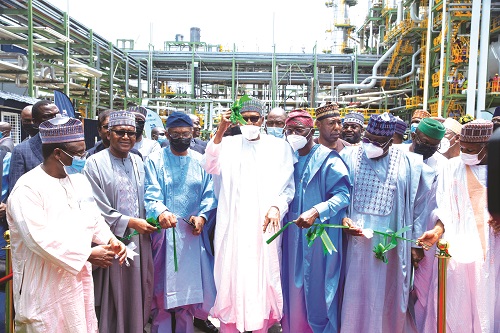
Dangote Petroleum Refinery has achieved a significant operational milestone, recording an average capacity utilization of 105.21 percent in August 2026, according to data released by the Nigerian Midstream and Downstream Petroleum Regulatory Authority (NMDPRA).
The 700,000 barrels-per-day refinery processed an average of 736,470 barrels of crude oil per day in August, a substantial increase from 497,000 barrels per day in July when utilization stood at 71 percent.
The strong performance was supported by a rebound in domestic crude oil supply, with deliveries rising by 16.75 percent to 683,000 barrels per day during the month, enabling the refinery to ramp up throughput.
The improved throughput translated into average daily production of 84.43 million litres of refined white products, including Premium Motor Spirit, PMS, Automotive Gas Oil, AGO or diesel, and Aviation Turbine Kerosene, ATK, further reinforcing its role as a major supplier of refined petroleum products across Nigeria and the wider West African region.
Speaking on the development, the Dangote Group said the achievement underscores the refinery’s growing contribution to Nigeria’s energy security, foreign exchange conservation, and industrial growth agenda.
The refinery continued to significantly reduce Nigeria’s dependence on imported petroleum products during the review period. Domestic PMS deliveries from the refinery rose by 39 percent month-on-month to 35.87 million litres per day in August, accounting for approximately 71 percent of total domestic petrol supply.
The increased local supply contributed to a sharp decline in fuel imports, with national PMS imports falling by 26 percent to 14.60 million litres per day, highlighting the refinery’s expanding impact on the domestic fuel market.
Beyond meeting a significant portion of Nigeria’s domestic fuel requirements, the refinery also strengthened the country’s export profile through robust shipments of refined products.
In August, the refinery exported an average of 9.73 million litres of PMS daily, alongside 8.75 million litres of diesel and 21.30 million litres of aviation fuel. These volumes further support Nigeria’s emergence as a net exporter of refined petroleum products and contribute to increased foreign exchange earnings for the country.
The refinery’s growing production capacity was particularly evident in the diesel market, where domestic AGO deliveries averaged 12.37 million litres per day. This level of output substantially reduced the need for imported diesel, with national diesel imports declining from 7.90 million litres per day in July to 1.30 million litres per day in August.
The development reflects the refinery’s increasing ability to support critical sectors of the economy, including transportation, manufacturing, agriculture, telecommunications, and power generation.
According to the Group, the ability to operate above nameplate capacity demonstrates the efficiency, reliability, and resilience of its operations. The milestone also reinforces investor confidence as the refinery’s ongoing public offering continues to attract significant market attention.
Dangote Group reiterated its commitment to maximizing local value addition, supporting economic diversification, and ensuring the sustainable supply of high-quality refined petroleum products to Nigeria, Africa, and global markets.
The road to the 2026 Zenith Bank NBBF Women’s Basketball League title reaches its climax as eight top teams converge on Lagos for the highly anticipated National Finals.
The finals will hold from September 28 to October 3, 2026, at the Indoor Sports Hall of the National Stadium, Surulere, Lagos.
Emerging from fiercely contested Atlantic and Savannah Conference campaigns, Nigeria Customs, AS Sky Queens, Titans, Air Warriors, MFM, First Bank, Victoria Queens, and Bayelsa Blue Whales have booked their place in the battle for national honours.
Last year’s champions, Dolphins Basketball Club, who lifted the trophy after defeating First Bank in the final, will not be in contention this year after failing to make the top four of the Atlantic Conference. Their absence leaves the title wide open for a new champion.
The trophy will however be contested by teams with rich championship pedigree. First Bank, last year’s finalist and the most successful team in the history of the competition, arrives with a record nine league titles, while MFM will be banking on its recent dominance after winning back-to-back championships in 2023 and 2024.
It is a level of competition that reflects the growth of a league that has, for more than two decades, provided a platform for Nigeria’s best female basketball talents to emerge, compete and develop. At the heart of that journey has been Zenith Bank, the sole sponsor of the National Women’s Basketball League since 2005.
Through its partnership with the Nigeria Basketball Federation (NBBF), Zenith Bank has consistently supported the development of women’s basketball, helping to provide and sustain a competitive platform where talents can be discovered, nurtured and prepared for the highest level of the sport.
The league has also served as a vital pathway to the National Women Basketball team, D’Tigress, with several players who have featured prominently for Nigeria emerging from the domestic competition.
Beyond the national team, the league continues to contribute to youth development by giving young female athletes the opportunity to build confidence, skill, discipline, teamwork and professional sporting careers.
For Zenith Bank, the sponsorship of the Women’s Basketball League represents more than support for a sporting competition.
It reflects the Bank’s broader commitment to creating platforms that provide opportunities, develop potential and make a meaningful difference in the lives of young Nigerians.
This commitment extends across several areas of community development, with notable initiatives including the reconstruction and beautification of Ajose Adeogun Street and Roundabout, the annual Zenith Bank Youth Parade and Light-Up Ceremony, the construction of ICT Centres in tertiary institutions across the country, and the construction of the ultra-modern Iga Iduganran Primary Healthcare Centre, among others.
Through these initiatives and its longstanding support for women’s basketball, Zenith Bank Plc continues to demonstrate that its commitment to society goes beyond banking, with a focus on creating opportunities and contributing to the development of communities and the next generation.


