
Business
2021 NCOY: FirstBank Partners Junior Achievement Nigeria, Reiterates Commitment to Innovation, Education


- /home/rhoncare/pointblank.ng/wp-content/plugins/mvp-social-buttons/mvp-social-buttons.php on line 27
https://pointblank.ng/wp-content/uploads/2020/03/Dr.-Adesola-Adeduntan-FirstBank-CEO-1000x600.jpg&description=2021 NCOY: FirstBank Partners Junior Achievement Nigeria, Reiterates Commitment to Innovation, Education', 'pinterestShare', 'width=750,height=350'); return false;" title="Pin This Post">
- Share
- Tweet /home/rhoncare/pointblank.ng/wp-content/plugins/mvp-social-buttons/mvp-social-buttons.php on line 69
https://pointblank.ng/wp-content/uploads/2020/03/Dr.-Adesola-Adeduntan-FirstBank-CEO-1000x600.jpg&description=2021 NCOY: FirstBank Partners Junior Achievement Nigeria, Reiterates Commitment to Innovation, Education', 'pinterestShare', 'width=750,height=350'); return false;" title="Pin This Post">
For 11 years, Nigeria’s premier and leading financial inclusion services provider, First Bank of Nigeria Limited has partnered with Junior Achievement Nigeria (JAN) to host its annual flagship event; the National Company of the Year competition (NCOY), which convenes winners of the JA Company Regional Competitions across Nigeria to compete for the National Company of the Year Award.
This year, the event will bring together outstanding ‘student business teams’ across Nigeria to compete for prizes and an opportunity to represent the country at the national competition – JA African Company of the Year Competition (ACOY). The 2021 edition of the NCOY competition will be held virtually via Zoom meetings at 10am on Saturday, 27th November 2021. Interested participants are to register via the link https://us06web.zoom.us/meeting/register/tZEtd-qvqz4pE90NXOHcy-tve6aEXpY_yYAE
The competition themed ‘Innovation with Grit’ will have 12 teams from 12 schools pitch their innovations to a team of 5 guests judges. The represented schools at the competition include: The Seer company from Alvana High School; Sonic Informatics company from Heritage Global Academy; Nexus Queens company from Queens School; JA Stars from Theological College of Northern Nigeria (TCNN); Amazing Amazon Students from Government Girls’ Secondary School, Abaji; KereTerra Company from Secondary School Etoi, Uyo and The Exploit thinkers from Taidob College.
Other teams competing include: Mystic Global Company from Rosa Mystica High School, Agulu; PetraMech Tech from Petra Schools; The Amazing Inventors from Government Secondary School Tudun Wada; Blue crystal company from Methodist Girls school and the Artisans from Igbobi College.
Judges at the event include: Oludolapo Adigun, Group Head, Retail Banking Lagos & West First Bank of Nigeria Limited; Chidimma Juliana Okparah, Project Management Consultant (PMIEF); Sheila Ojei, Head of Communications Jobberman; Gbenga Sesan, Executive Director of Paradigm Initiative and Simbo Olatoregun, Policy Programs Manager for Facebook in Africa. In attendance also is the Honourable Commissioner for Education Lagos State, Mrs. Folashade Adefisayo as a Special Guest.
The 2021 National Company of the Year Program will also feature SPARK Competition. SPARK as an initiative of First Bank of Nigeria Limited, is an acronym for Start Performing Acts of Random Kindness. SPARK reiterates the Bank’s commitment to institutionalise kindness in Nigeria by encouraging and amplifying a culture of kindness.
The SPARK competition will feature 15 finalist schools across Nigeria, whose CSR projects align with the Bank’s Corporate Responsibility and Sustainability pillars of Education, Welfare and Health, Financial inclusion and Responsible Lending and Procurement.
Speaking on the event, the Group Head, Marketing & Corporate Communications, Folake Ani-Mumuney said “FirstBank’s partnership under its Future First initiative with JA Nigeria Company programme has positively impacted over 100,000 people in different locations across the country in preparing and teaching them how to generate wealth, effectively manage it and how to apply entrepreneurial thinking to the workplace. Our commitment to fostering entrepreneurial development amongst youths is mainly the driving force behind our support of the National Company of the Year (NCOY) and Africa Company of the Year (ACOY) competitions in past 11 years”.
According to the Executive Director, JAN, ‘’the National Company of the Year Company competition provides our students with a platform to show how innovative they are while displaying their dexterity and grit especially as it relates to creating sustainable business solutions to problems in their immediate community. The students have learned critical skills during the implementation of the Company Programme and we are proud to celebrate them as they compete in the National competition. I would like to specially appreciate FirstBank Nigeria for their continued support and belief in the boundless potential of young Nigerians.’’



While conversations about the future of retail increasingly focus on supermarkets, shopping malls and online shopping platforms, millions of African consumers continue to rely on a more familiar and accessible business: the neighbourhood shop.
From small provision stores and corner shops to kiosks and informal retailers, these businesses remain an important part of everyday commerce, connecting communities to essential household products. However, behind their convenience lies a supply chain challenge that often limits their growth.
For many small retailers, sourcing products, managing inventory and securing enough working capital to keep their shelves stocked can be difficult. Fragmented distribution networks, multiple intermediaries and limited access to financing often make it harder for them to compete and expand.
Technology is beginning to offer a different possibility.
Digital platforms can simplify the way neighbourhood retailers purchase goods by connecting them more directly with manufacturers and distributors. They can streamline ordering, improve product availability and make inventory management more efficient.
Access to financial technology can further strengthen these businesses by helping eligible retailers secure the working capital required to replenish stock, respond to customer demand and grow sustainably.
One Nigerian technology company working to address these challenges is TradeDepot, which is using digital innovation to connect small retailers with manufacturers and distributors.
By making product sourcing and distribution more efficient, the company is helping to address some of the longstanding barriers facing small businesses in Africa’s retail sector.
However, scaling technology-driven solutions across a fragmented retail market requires more than innovation. It also demands significant investment.
This is where development finance and venture capital become important.
Through Boost Africa, the European Investment Bank (EIB) invested in Partech Africa Fund, a venture capital fund that subsequently backed TradeDepot. The investment illustrates how development finance can reach innovative African businesses through investment funds, providing capital to companies working to solve real economic challenges.
Boost Africa is a joint initiative of the European Investment Bank and the African Development Bank, with support from the European Union. The initiative supports African businesses and strengthens the continent’s entrepreneurial ecosystem by improving access to finance and opportunities for growth.
The wider significance of this investment goes beyond the technology platform itself. Strengthening neighbourhood retailers can contribute to more efficient supply chains, support small business growth and improve access to everyday consumer goods across communities.
For Africa, where small retailers remain central to local economies, the opportunity is substantial.
The future of retail may not necessarily involve replacing traditional neighbourhood shops with large supermarkets or online marketplaces. Instead, it could depend on equipping these existing businesses with better technology, stronger distribution networks and improved access to finance.
Ultimately, transforming retail may begin with something as familiar as the shop around the corner.
Boost Africa: From Capital to Impact.
Watch how TradeDepot is bringing commerce closer to communities through technology and investment

Ever wondered how the products on your neighbourhood shop shelves get there? Behind everyday purchases is a supply chain that can be costly, complex and inefficient, particularly for small retailers.
Nigerian technology company TradeDepot is changing this process by using technology to connect small retailers with manufacturers and distributors, making it easier for shop owners to order and receive the goods they need.
But transforming retail distribution takes more than an innovative idea. It requires investment to build, expand and scale.
Through Boost Africa, the European Investment Bank (EIB), alongside the African Development Bank and with support from the European Union, is helping strengthen the financing ecosystem for innovative African businesses.
One example is the EIB’s investment in Partech Africa Fund, which subsequently backed TradeDepot, helping channel capital into a Nigerian business working to improve how goods move from suppliers to neighbourhood shops.
The impact goes beyond technology. More efficient distribution can help small retailers access inventory, strengthen connections between manufacturers and suppliers, and bring commerce closer to the communities they serve.
Ultimately, TradeDepot’s story demonstrates how investment can go beyond funding to support stronger businesses, more efficient markets and opportunities for small retailers.
Boost Africa: From Capital to Impact.
Watch how TradeDepot is bringing commerce closer to communities.
▶ https://www.youtube.com/watch?v=zw9t2asF9Pc
Business
Beyond University Degrees: How ChipMango is Preparing African Engineers for Global Tech Industry
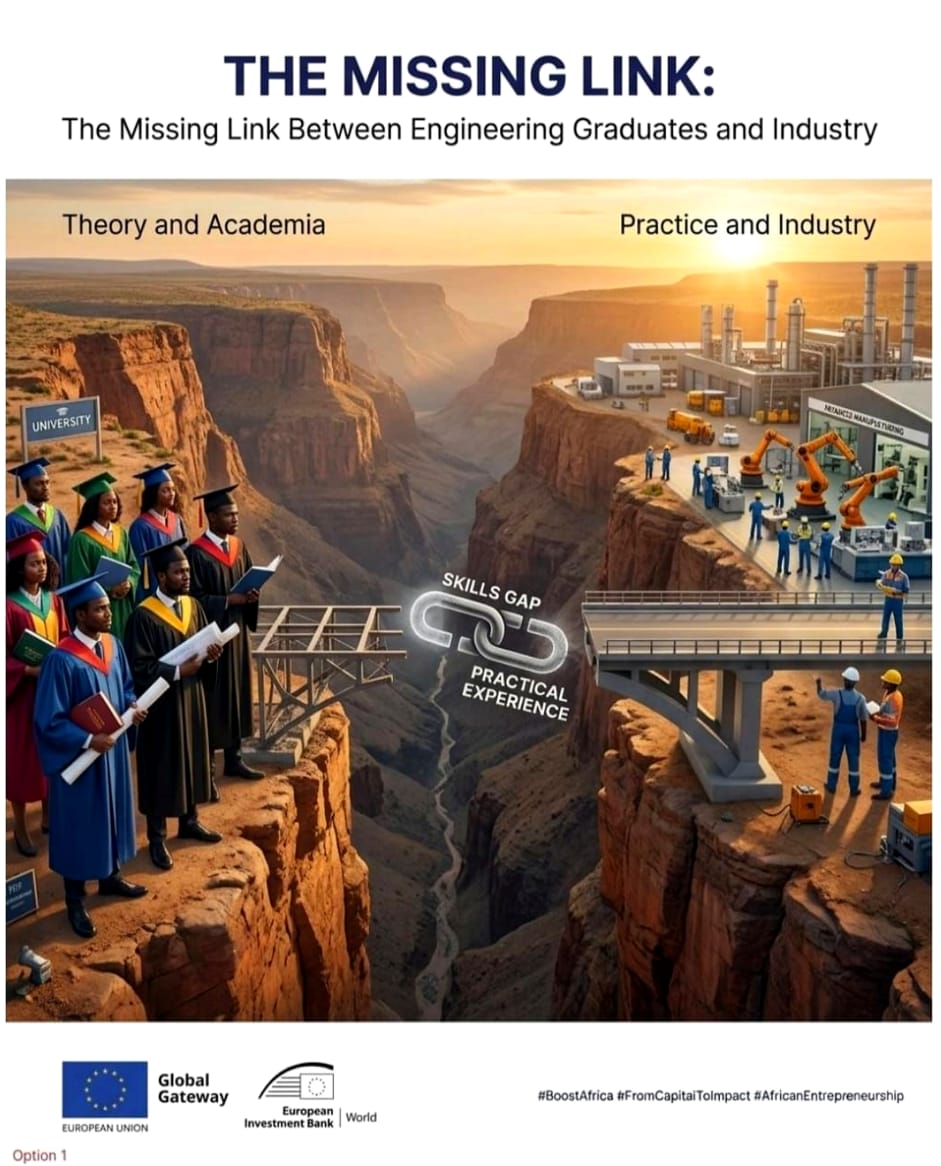
A university degree is a starting point, but practical industry experience can make all the difference.
Nigerian technology company ChipMango is bridging the gap through specialised semiconductor training and real-world chip design and verification projects, preparing African engineers for opportunities in the global technology industry.
Through Boost Africa, the EIB, AfDB and EU are strengthening the investment ecosystem supporting innovative African businesses.
Watch the video to discover how ChipMango is connecting engineering talent to real industry opportunities.
Watch the video:



