
Business
2022: New Access Holdings Plc Reports Gross Earnings of N1.39trn

- /home/rhoncare/pointblank.ng/wp-content/plugins/mvp-social-buttons/mvp-social-buttons.php on line 27
https://pointblank.ng/wp-content/uploads/2020/08/Access.jpeg&description=2022: New Access Holdings Plc Reports Gross Earnings of N1.39trn', 'pinterestShare', 'width=750,height=350'); return false;" title="Pin This Post">
- Share
- Tweet /home/rhoncare/pointblank.ng/wp-content/plugins/mvp-social-buttons/mvp-social-buttons.php on line 69
https://pointblank.ng/wp-content/uploads/2020/08/Access.jpeg&description=2022: New Access Holdings Plc Reports Gross Earnings of N1.39trn', 'pinterestShare', 'width=750,height=350'); return false;" title="Pin This Post">
Access Holdings Plc has announced the release of its audited financial statements for the year ended 31st December 2022.
The Group’s gross earnings was up by 43% to N1.39 trillion from N971.89 billion reported in 2021, driven by strong growth in interest income.
Profit before Ttx dropped by 5% to N167.68 billion as against N176.58 billion posted in 2021.
According to the bank, net interest income rose by 19.32% to N359.63 billion from N301.41 billion in 2021.
This is on the back of increasing inflation which the economy continues to struggle. Headline inflation rate rose to 22.04% in March, a 0.13% increase from the 21.91% rate recorded in February, according to the latest report published by the Nigerian Bureau of Statistics (NBS) on Friday.
The report said the increase was buoyed by the jump in prices of food, housing, fuel and gas, among others. The figure shows a consistent increase in inflation rate for the last two years.
On a year-on-year basis, the headline inflation rate was 6.13% points higher compared to the rate recorded in March 2022 which was 15.92%.
Access Holdings’ Other Operating Expenses grew by 46.98% to N341.32 billion from N232.21 billion in 2021.
The Board of Directors proposed final dividend of N1.30k per ordinary share of 50 Kobo each on the 35,545,225,622 issued ordinary shares of 50k each payable to shareholders on the register of shareholding at the closure date. Withholding Tax will be deducted at the time of payment.


The road to the 2026 Zenith Bank NBBF Women’s Basketball League title reaches its climax as eight top teams converge on Lagos for the highly anticipated National Finals.
The finals will hold from September 28 to October 3, 2026, at the Indoor Sports Hall of the National Stadium, Surulere, Lagos.
Emerging from fiercely contested Atlantic and Savannah Conference campaigns, Nigeria Customs, AS Sky Queens, Titans, Air Warriors, MFM, First Bank, Victoria Queens, and Bayelsa Blue Whales have booked their place in the battle for national honours.
Last year’s champions, Dolphins Basketball Club, who lifted the trophy after defeating First Bank in the final, will not be in contention this year after failing to make the top four of the Atlantic Conference. Their absence leaves the title wide open for a new champion.
The trophy will however be contested by teams with rich championship pedigree. First Bank, last year’s finalist and the most successful team in the history of the competition, arrives with a record nine league titles, while MFM will be banking on its recent dominance after winning back-to-back championships in 2023 and 2024.
It is a level of competition that reflects the growth of a league that has, for more than two decades, provided a platform for Nigeria’s best female basketball talents to emerge, compete and develop. At the heart of that journey has been Zenith Bank, the sole sponsor of the National Women’s Basketball League since 2005.
Through its partnership with the Nigeria Basketball Federation (NBBF), Zenith Bank has consistently supported the development of women’s basketball, helping to provide and sustain a competitive platform where talents can be discovered, nurtured and prepared for the highest level of the sport.
The league has also served as a vital pathway to the National Women Basketball team, D’Tigress, with several players who have featured prominently for Nigeria emerging from the domestic competition.
Beyond the national team, the league continues to contribute to youth development by giving young female athletes the opportunity to build confidence, skill, discipline, teamwork and professional sporting careers.
For Zenith Bank, the sponsorship of the Women’s Basketball League represents more than support for a sporting competition.
It reflects the Bank’s broader commitment to creating platforms that provide opportunities, develop potential and make a meaningful difference in the lives of young Nigerians.
This commitment extends across several areas of community development, with notable initiatives including the reconstruction and beautification of Ajose Adeogun Street and Roundabout, the annual Zenith Bank Youth Parade and Light-Up Ceremony, the construction of ICT Centres in tertiary institutions across the country, and the construction of the ultra-modern Iga Iduganran Primary Healthcare Centre, among others.
Through these initiatives and its longstanding support for women’s basketball, Zenith Bank Plc continues to demonstrate that its commitment to society goes beyond banking, with a focus on creating opportunities and contributing to the development of communities and the next generation.
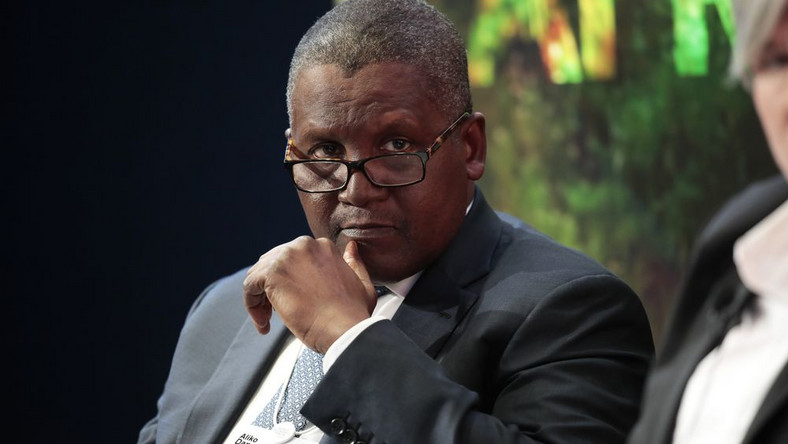
Africa’s richest man, Aliko Dangote, has revealed that he would be investing over $10 billion dollars in the coming years to tackle the power crisis in Nigeria and drive industrialisation.
He spoke during an interview with Al Jazeera, where he identified inconsistent government policies and inadequate electricity supply as major challenges discouraging Africans from investing in the continent.
He disclosed that the group is considering redirecting funds from certain businesses, including steel, towards electricity generation and other power-related investments.
“And I’m telling you in the next three to four years, there will be a major transformation in Africa, and that’s why we’re looking at power. We are going to invest in power. There are one or two businesses that we might cancel, like steel, and we will put the money in power. We want to invest over $10billion alone in power.”
He expressed concern that more than 600 million Africans continued to live without electricity, describing the situation as one that the continent must address, saying, “We Africans should not really allow over 600 million of our people to remain in darkness.”
The industrialist linked electricity supply to economic development and argued that governments that successfully deliver power to their citizens may not need to go for campaigns again during elections.
“You know, if some politicians work hard and have a plan, when you deliver power, you don’t need to go for a campaign when you’re going for an election. Power is key; we will never create growth without power. That’s why they say power is growth. When I say power, I mean electricity is growth.”
He said Africa would be unable to create jobs and achieve sustainable economic growth without industrialisation, stressing that the continent must reduce its dependence on imported goods.
On what some are saying about not investing in Africa, he said: “The problem really is, it takes two to tango. I think in the past, there’s been a lot of flip-flops in government policies. Government policies are changing every day, and then, the lack of electricity is also there.
“So, these two issues haven’t gone away. They are still there. But for some of us that really mean business, we are here, and we know that yes, without our intervention, Africa will never be able to create jobs. If there’s no industrialisation, how do you create jobs? You can’t,” he said.
Dangote warned that Africa could eventually lack the financial resources to continue importing the goods it consumes, making industrial development and local production necessary for the continent’s future.
“One day we will not have money to import what we are consuming. So how can we remain an import continent? It has to change. But that change can only happen when Africans believe in Africa, and they invest in Africa,” he stated.
According to the businessman, a growing number of investors are showing interest in supporting African businesses because of the opportunities available on the continent. He added that his investment approach was focused on spreading wealth, expanding participation in businesses and strengthening corporate governance.
“We want to make sure it’s about spreading the wealth. It’s about getting more people in the business. It’s also about corporate governance. So that’s the direction.”
Responding to accusations that his business activities were creating a monopoly, Dangote said he would remain focused on his objectives rather than be distracted by his critics.
He used football star Lionel Messi as an example, explaining that a player must concentrate on the ball rather than the audience while playing.
“Well, you know, if I’m going to listen to that, have you ever seen a footballer looking at the audience? He has to continue looking at the ball. If I’m Messi, for example, I’m kicking the ball, and I’m looking at the audience, do you think I won’t miss the ball? I will miss the ball,” he stated.
Dangote argued that people would not always be satisfied with the activities of businesses, adding that accusations of monopoly would not stop him from pursuing his investment plans.
“If I’m going to make my continent great and people want to call me a monopoly for no reason, so be it. I mean, it’s not going to reduce the colour of my face or whatever. You can call me whatever you want to call me; I didn’t stop anybody; it is an opportunity given to everybody, every one of us has that opportunity whether Africans, foreigners or whoever,” he stressed.
He said the government had not granted his businesses exclusive rights to operate in any sector, maintaining that opportunities were available to investors who were willing to participate.
“There’s nothing that the government gave us and say, ‘this is only for Dangote ’. The government will create a policy around a sector, and they will blow a whistle and say, ‘ Yes, this is it,” he noted.
Using a 100-metre race as an illustration, Dangote said investors who had chosen not to participate should not blame those who entered and won.
“If there’s a 100-metre race, some people were on the bench while I’m on the track, and I agreed to run that race, and I won that race alone, are you going to blame me or are you going to blame people who just sat on the bench?” he asked.
The businessman added that businesses and individuals needed to believe in Africa and invest in its development if they want to benefit from the continent’s economic opportunities.
“They’re not ready, they’re not prepared, they don’t even believe in Africa itself. If you don’t invest, you are not going to get fruit of that labour,” he replied to those accusing him of monopoly.
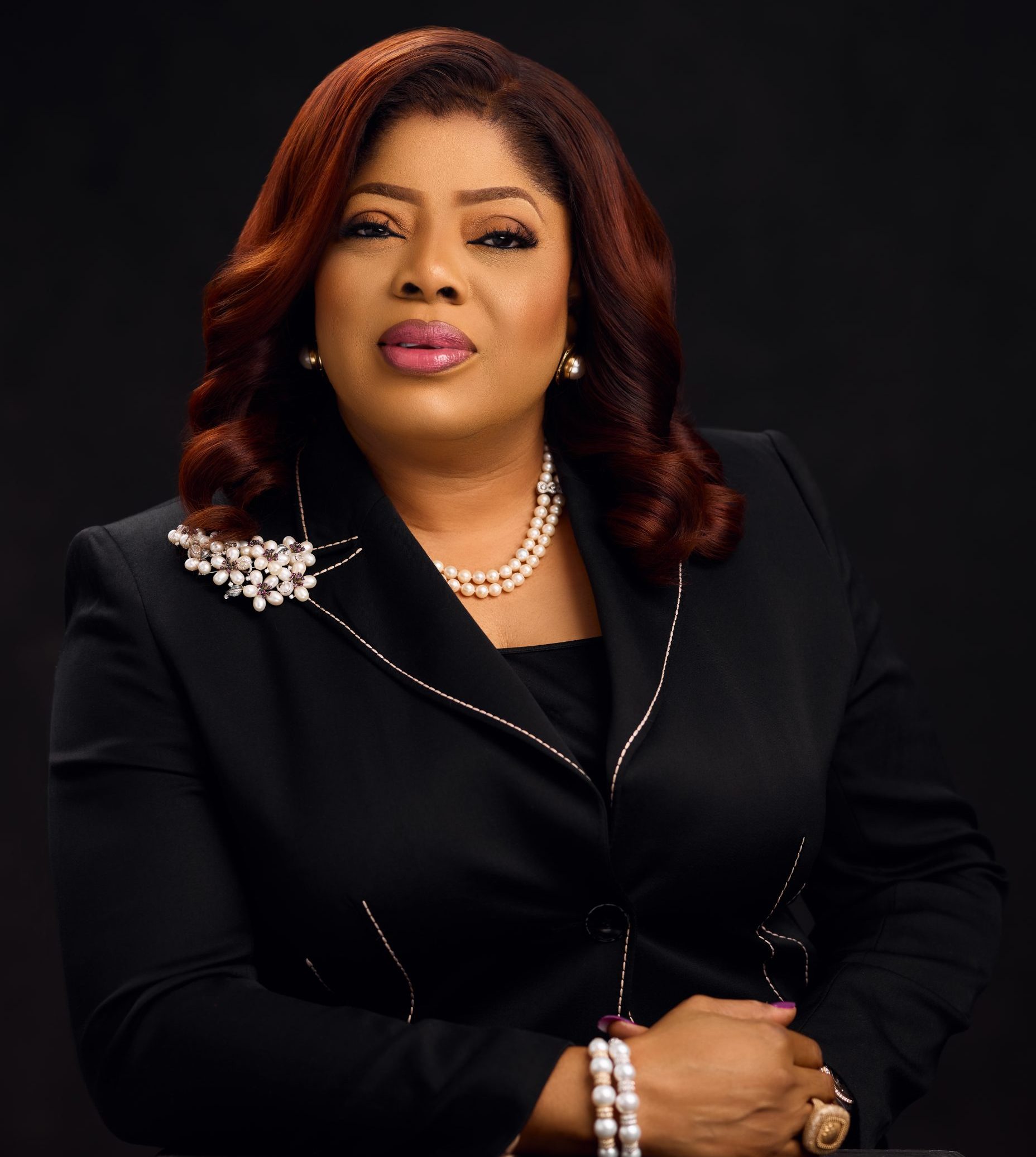
Leading financial institution, Fidelity Bank Plc, has announced the promotion of 433 employees through its 2026 Promotion and Notch Award Exercise.
Approximately 13 per cent of the Bank’s workforce benefited from the exercise, reflecting a steady increase from the 12 per cent and 11 per cent recorded in 2025 and 2024, when 376 and 337 employees were promoted, respectively.
The initiative reflects the Bank’s unwavering commitment to recognizing excellence, rewarding outstanding performance, and fostering a high-performance culture across the organization.
Since assuming office as Managing Director and Chief Executive Officer, Nneka Onyeali Ikpe has overseen annual promotion exercises designed to recognise employee contributions, strengthen institutional capabilities and build a robust leadership pipeline.
Beyond promotions, Fidelity Bank has continued to invest in employee welfare through initiatives aimed at improving productivity, workplace satisfaction and overall staff wellbeing.
The Bank increased salaries across all categories and grade levels in 2022, 2024 and 2025. It also deployed staff buses to ease commuting, enhanced medical support and expanded learning and development programmes. In addition, the Bank extended its mortgage loan and home ownership scheme to employees from Assistant Banking Executive to Deputy Manager cadres, while increasing the applicable mortgage limits for qualified staff in line with current market realities. This positions Fidelity Bank among the few institutions that provide mortgage support to employees below the Manager cadre.
The Bank has also sustained initiatives that promote employee engagement, collaboration, work-life balance, professional certification, and continuous upskilling, underscoring its focus on building a motivated and future-ready workforce.
Industry observers note that these investments have helped reinforce Fidelity Bank’s reputation as a great place to work and a preferred employer within Nigeria’s financial services industry.
The 2025 promotion exercise reflects Fidelity Bank’s broader people strategy to attract, develop, reward and retain top talent by recognising discipline, professionalism, innovation, customer-focus and sustained performance, while preparing employees for greater responsibilities and strengthening the Bank’s position as an employer of choice.
Ranked among the best banks in Nigeria, Fidelity Bank Plc is a full-fledged Commercial Deposit Money Bank serving over 10 million customers through digital banking channels, its 255 business offices in Nigeria and United Kingdom subsidiary, FidBank UK Limited.
The Bank is a recipient of multiple local and international awards, including the 2025 Development Bank of Nigeria (DBN) Innovation Award for MSME support; Best Retail and SME Bank Award from Independent Newspapers; Best Bank for Export & Trade Finance and Most Innovative Bank of the Year at the 2025 BusinessDay Banks and Financial Institutions (BAFI) Awards; and Nigeria’s Best Private Bank at the 2025 Euromoney Awards. The Bank also received the inaugural Most Improved Commercial Bank of the Year award by Nairametrics, the SME Bank of the Year award by NewsDirect, and the Straight-Through Processing (STP) Excellence Award by Citi Group, in addition to recognition by Global Brands Magazine for Excellence in Community Empowerment.


